• Fri frakt över 249 kr
  • •
  • Snabba leveranser
  • •
  • Billiga böcker
Kundservice

Du är på sajten för privatpersoner.

Företag, bibliotek eller offentlig verksamhet?

Du handlar på classic.bokus.com, där alla dina funktioner finns intakta.
Till classic.bokus.com
Bokus logotyp. Gå till startsidan.
  • Erbjudanden
  • Nyheter
  • Student
  • Topplistor
  • Barn & ungdom
  • Bokus Play
  • E-böcker
  • Pocketböcker
  • Spel & pussel

10% rabatt på allt med kod: NYSTART10 →

Sidfot

Mina sidor

    Hjälp

    • Kundservice
    • Vanliga frågor och svar
    • Frakt och leverans
    • Retur vid ångerrätt
    • Reklamera vara
    • Betalning
    • Köpvillkor
    • Allmänna villkor
    • Information om webbplatsens tillgänglighet

    Om Bokus

    • Om oss
    • Pressrum
    • För studenter
    • För företag
    • För bibliotek och offentlig verksamhet
    • För leverantörer
    • Hållbarhet

    Populärt

    • Aktuella erbjudanden
    • Presentkort
    • Studentlitteratur
    • Nya böcker
    • Topplistor
    • Signerade böcker
    • Engelska böcker

    Inspiration

    • Boktips
    • BookTok
    • Populära bokserier
    • Barnbokskaraktärer
    • Populära författare
    Logotyp för Bokus
    Följ oss på Facebook (extern länk)Följ oss på Instagram (extern länk)Följ oss på YouTube (extern länk)Följ oss på TikTok (extern länk)
    bokus @ CookiesAnpassa cookiesIntegritetspolicyKöpvillkor
    Till Citymail hemsida (extern länk)Till Budbee hemsida (extern länk)Till Postnord hemsida (extern länk)Till Schenker hemsida (extern länk)Till Early Bird hemsida (extern länk)Till Walleys hemsida (extern länk)
    1. Historia och arkeologi
    2. Historia
    3. Europas historia

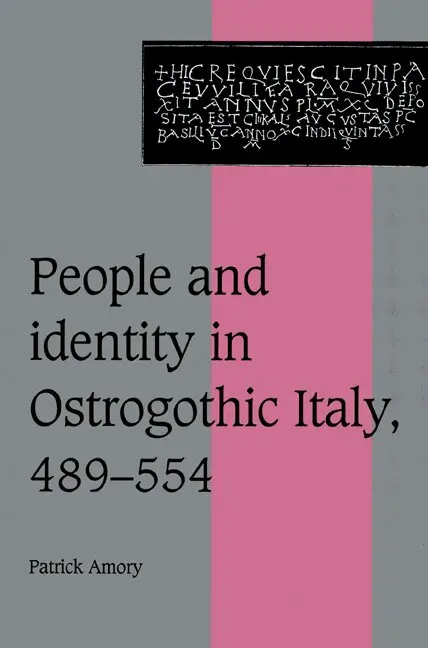
    People and Identity in Ostrogothic Italy, 489-554

    AvPatrick Amory,Rosamond McKitterick

    Häftad, Engelska, 2003

    Del 33 i serien Cambridge Studies in Medieval Life and Thought: Fourth Series

    587 kr

    Beställningsvara. Skickas inom 10-15 vardagar. Fri frakt över 249 kr.

    Fler format och utgåvor

    Inbunden

    2 010 kr

    Beskrivning

    The barbarians of the fifth and sixth centuries were long thought to be races, tribes or ethnic groups who toppled the Roman Empire and racist, nationalist assumptions about the composition of the barbarian groups still permeate much scholarship on the subject. This book proposes a new view, through a case-study of the Goths of Italy between 489 and 554. It contains a detailed examination of the personal details and biographies of 379 individuals and compares their behaviour with ideological texts of the time. This inquiry suggests wholly new ways of understanding the appearance of barbarian groups and the end of the western Roman Empire, as well as proposing new models of regional and professional loyalty and group cohesion. In addition, the book proposes a complete reinterpretation of the evolution of Christian conceptions of community, and of so-called 'Germanic' Arianism.

    Produktinformation

    • Utgivningsdatum:2003-10-16
    • Mått:153 x 229 x 32 mm
    • Vikt:839 g
    • Format:Häftad
    • Språk:Engelska
    • Serie:Cambridge Studies in Medieval Life and Thought: Fourth Series
    • Antal sidor:548
    • Förlag:Cambridge University Press
    • ISBN:9780521526357

    Utforska kategorier

    • Europas historia inom Historia och arkeologi

    Recensioner i media

    'This is a marvellous book.' History

    Innehållsförteckning

    • Preface; Map of Ostrogothic Italy; List of rulers; Introduction: studying the barbarians in late antiquity; 1. Ethnicity, ethnography and community in the fifth and sixth centuries; 2. The Ravenna government and ethnographic identity: from civitas to bellicositas; 3. Individual reactions to ideology. I: names, language and profession; 4. Complementary and competing ideals of community: Italy and the Roman empire; 5. Individual reactions to ideology. II: soldiers, civilians and political allegiance; 6. Catholic communities and Christian empire; 7. Individual reactions to ideology. III: Catholics and Arians; 8. The origin of the Goths and Balkan military culture; Conclusion; Appendix 1: the inquiry into Gundila's property; Appendix 2: the Germanic culture construct; Appendix 3: archaeological and toponymic research on Ostrogothic Italy; Appendix 4: dress, hairstyle and military customs; Prosopographical appendix: a prosopography of the Goths in Italy, 489–554.