Paul Curzon - Böcker
Visar alla böcker från författaren Paul Curzon. Handla med fri frakt och snabb leverans.
6 produkter
6 produkter
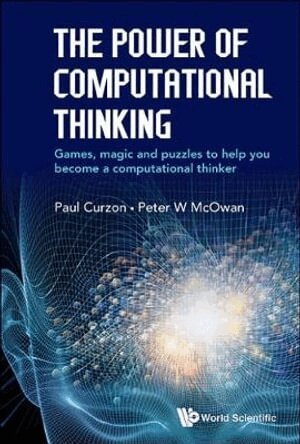
Power Of Computational Thinking, The: Games, Magic And Puzzles To Help You Become A Computational Thinker
Inbunden, Engelska, 2017
737 kr
Skickas inom 5-8 vardagar
From the team behind Computer Science for Fun (cs4fn), The Power of Computational Thinking shows that learning to think can be fascinating fun.Yes, and this book shows you how.Computational thinking has changed the way we all live, work and play. It has changed the way science is done too; won wars, created whole new industries and saved lives. It is at the heart of computer programming and is a powerful approach to problem solving, with or without computers. It is so important that many countries now require that primary school children learn the skills.Professors Paul Curzon and Peter McOwan of Queen Mary University of London have written a unique and enjoyable introduction. They describe the elements of computational thinking — such as algorithmic thinking, decomposition, abstraction and pattern matching — in an entertaining and accessible way, using magic tricks, games and puzzles, as well as through real and challenging problems that computer scientists work on.This book gives you a head start in learning the skills needed for coding, and will improve your real life problem solving skills. It will help you design and evaluate new technologies, as well as understand both your own brain and the digital world in a deeper way.
Power Of Computational Thinking, The: Games, Magic And Puzzles To Help You Become A Computational Thinker
Häftad, Engelska, 2017
316 kr
Skickas inom 5-8 vardagar
From the team behind Computer Science for Fun (cs4fn), The Power of Computational Thinking shows that learning to think can be fascinating fun.Yes, and this book shows you how.Computational thinking has changed the way we all live, work and play. It has changed the way science is done too; won wars, created whole new industries and saved lives. It is at the heart of computer programming and is a powerful approach to problem solving, with or without computers. It is so important that many countries now require that primary school children learn the skills.Professors Paul Curzon and Peter McOwan of Queen Mary University of London have written a unique and enjoyable introduction. They describe the elements of computational thinking — such as algorithmic thinking, decomposition, abstraction and pattern matching — in an entertaining and accessible way, using magic tricks, games and puzzles, as well as through real and challenging problems that computer scientists work on.This book gives you a head start in learning the skills needed for coding, and will improve your real life problem solving skills. It will help you design and evaluate new technologies, as well as understand both your own brain and the digital world in a deeper way.
1 637 kr
Skickas inom 10-15 vardagar
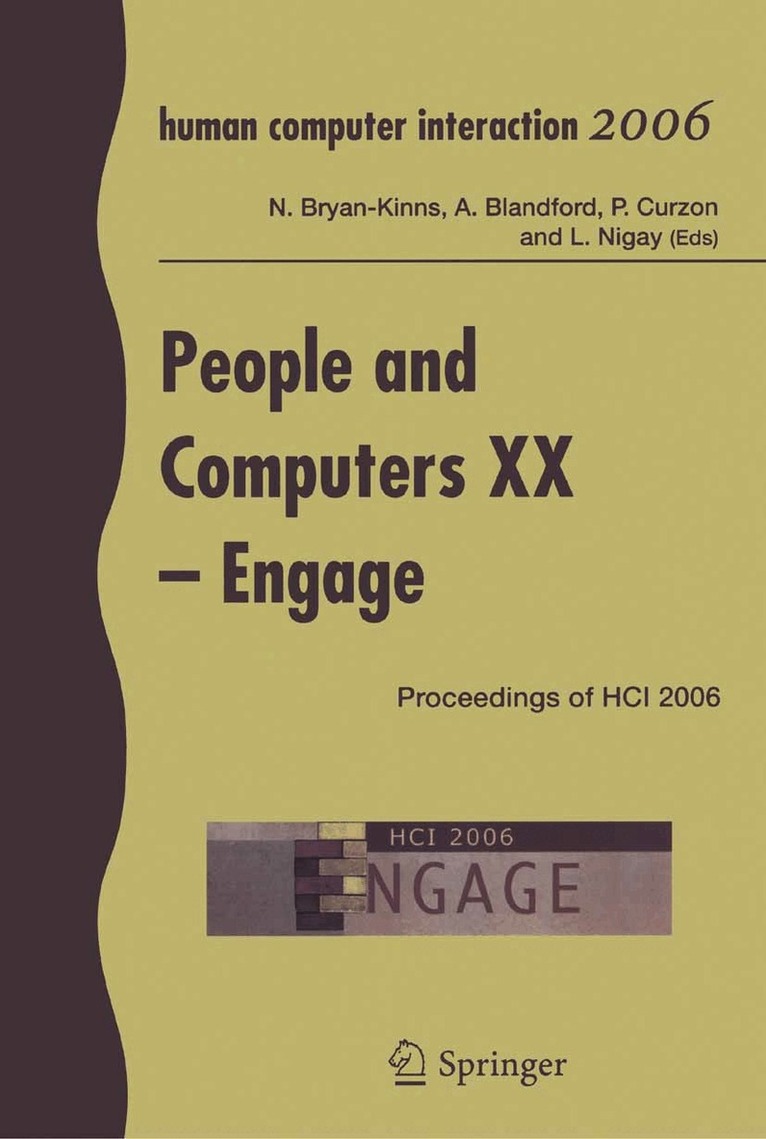
Reading has arguably the longest and richest history of any domain for scientifically considering the impact of technology on the user. From the 1920s to the 1950s, Miles Tinker [1963] and other researchers ran hundreds of user tests that examined the effects of different fonts and text layout variables, such as the amount of vertical space between each line of text (called leading). Their research focused on user performance, and reading speed was the favoured measure. They charted the effect of the manipulated variables on reading speed, looking for the point at which their participants could read the fastest. Their assumption was that faster reading speeds created a more optimal experience. Printers and publishers eagerly consumed this research. In recent years, some of these variables have been reexamined as the technology and capabilities evolve with the advent of computers and computer screens. Dillon [1992] examined how to design textual information for an electronic environment. Boyarski et al. [1998] examined the effect of fonts that were designed for computer screens. Dyson & Kipping [1998] examined the effect of line length on computer screens. Larson et al. [2000] examined the effect of 3-D rotation on reading. Gugerty et al. [2004] demonstrated a reading performance advantage with the Microsoft ClearType display technology.
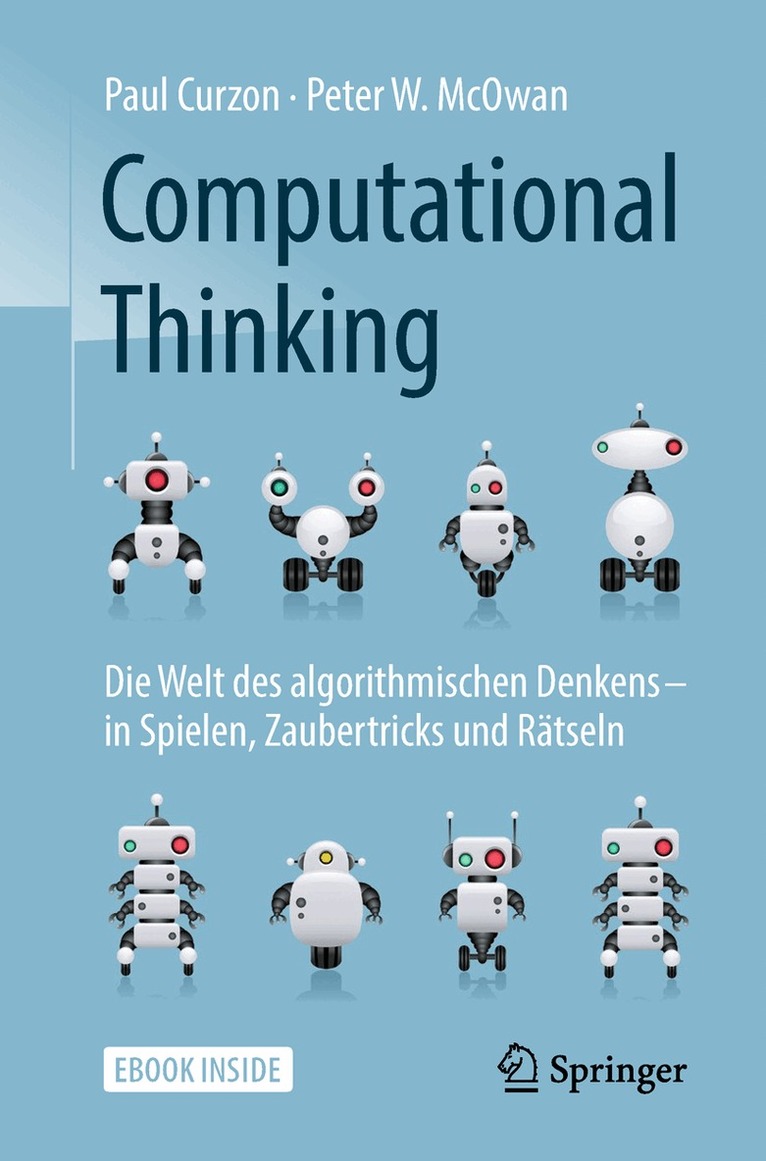
Computational Thinking
Die Welt des algorithmischen Denkens – in Spielen, Zaubertricks und Rätseln
2018
427 kr
Skickas inom 10-15 vardagar
In diesem Buch lernen Sie die Grundzüge und Vorteile des Computational Thinking kennen, also des analytischen, von Algorithmen geprägten Denkens. Die Autoren behandeln dabei unterhaltsam und anwendungsbezogen die Grundelemente dieser Denkweise - darunter Denken in Algorithmen, Zerlegung, Abstraktion und Mustererkennung. Diese Prinzipien werden anschaulich an Hand von Zaubertricks, Spielen und Rätseln, aber auch an echten, anspruchsvollen Problemen erklärt. Sie erkunden dabei auch die Verbindungen zwischen Computational Thinking und wissenschaftlichem, aber auch kreativem Denken - und wie daraus Innovationen entstehen können.Computational Thinking hat die Art und Weise, wie wir alle leben, arbeiten und spielen, verändert. Es hat Auswirkungen darauf, wie Wissenschaft betrieben wird, Kriege gewonnen, ganz neue Industrien geschaffen und Leben gerettet werden. Es ist das Herzstück der Programmierung und ein leistungsfähiger Ansatzzur Problemlösung, mit oder ohne Computer. In einigen Ländern werden bereits Kindern in der Grundschule diese Fertigkeiten beigebracht.Ob Sie also einfach wissen wollen, um was es beim Computational Thinking geht oder ob Sie neue Möglichkeiten finden wollen, auch im Alltag effektiver zu werden, ob Sie (Informatik-)Lehrer oder Schüler sind oder einfach Spaß an Spielen und Rätseln haben – in diesem Buch finden Sie die nötigen Grundlagen.
984 kr
Skickas
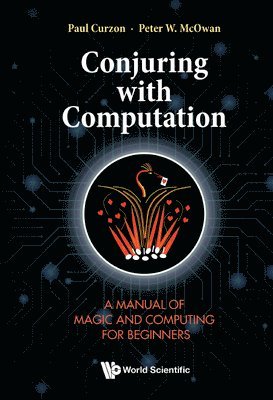
The team behind Computer Science for Fun (CS4FN), brings you Conjuring with Computation: A Manual of Magic and Computing for Beginners. Develop your skills as a magician while also learning the basics of computer science by exploring its links to magic. Each chapter explains how to do a simple magic trick, step-by-step, then uses the trick to introduce linked fundamental ideas in computer science in a fun way.By reading the book you will learn to do self-working tricks, be able to hold magic shows, create your own versions of tricks, and with creativity even invent your own. We cover:The book includes profiles of computer scientists, alongside magicians with links to technology, through history.Master conjuring and thinking computationally.
480 kr
Skickas inom 5-8 vardagar
The team behind Computer Science for Fun (CS4FN), brings you Conjuring with Computation: A Manual of Magic and Computing for Beginners. Develop your skills as a magician while also learning the basics of computer science by exploring its links to magic. Each chapter explains how to do a simple magic trick, step-by-step, then uses the trick to introduce linked fundamental ideas in computer science in a fun way.By reading the book you will learn to do self-working tricks, be able to hold magic shows, create your own versions of tricks, and with creativity even invent your own. We cover:The book includes profiles of computer scientists, alongside magicians with links to technology, through history.Master conjuring and thinking computationally.