Paul J. H. Schoemaker - Böcker
Visar alla böcker från författaren Paul J. H. Schoemaker. Handla med fri frakt och snabb leverans.
8 produkter
8 produkter
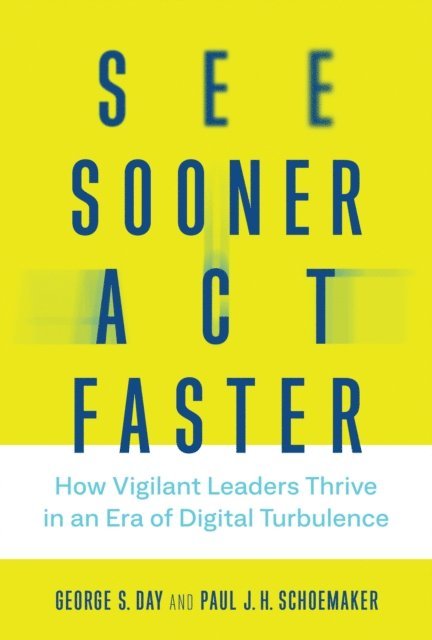
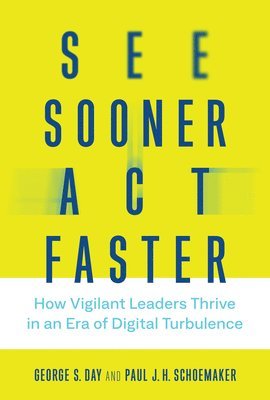
See Sooner, Act Faster
How Vigilant Leaders Thrive in an Era of Digital Turbulence
Inbunden, Engelska, 2019
277 kr
Tillfälligt slut
406 kr
Skickas inom 7-10 vardagar
Emerging technologies such as the Internet and biotechnology have the potential to create new industries and transform existing ones. Incumbent firms, despite their superior resources, often lose out to smaller rivals in developing emerging technologies. Why do these incumbents have so much difficulty with disruptive technologies? How can they anticipate and overcome their handicaps? Wharton on Managing Emerging Technologies presents insights, tools, and frameworks from leading busi-ness thinkers based on the research of Wharton's Emerging Technologies Management Research Program. This pioneering industry-academic partnership, established in 1994, is one of the longest and broadest initiatives on the management of emerging technologies. For the first time, this book distills the insights from the program into a single volume for managers, covering a wide range of issues related to the successful management of emerging technologies.The editors contend that managing emerging technologies represents a "different game," requiring a different set of management skills, frameworks, and strategies than those used by established firms to manage existing technologies. In this book, experts from diverse fields examine key issues such as: Common pitfalls and potential solutions for incumbent firms in managing emerging technologiesStrategies for assessing the potential of new markets and designing technologies to take advantage of market "lumpiness"The need for scenario planning and "disciplined imagination" to develop strategies under uncertaintyThe limits of patents in protecting gains from technology, and the use of lead time and other strategiesThe power of innovative financial strategies and the use of real options in making investmentsUsing alliances and new organizational formsDeveloping a "customized workplace"Wharton on Managing Emerging Technologies represents a powerful survival kit for managers "dropped behind the lines" of these new technologies. The authors provide a comprehensive set of tools and insights that will help you understand the new challenges and develop effective strategies to succeed at this different game. Praise for WHARTON on MANAGING EMERGING TECHNOLOGIES"New technologies are transforming markets, businesses, and society at an ever-increasing rate. We have a critical need for better road maps for managing our way through this new terrain. This book offers critical insights and useful new models for thinking through these challenges."—Professor Thomas Gerrity, Director of the Wharton e-Commerce Forum"Wharton on Managing Emerging Technologies covers the emerging technology landscape-from strategy to finance to human resources-in a way that only a group of top scholars from many disciplines could do. Insightful, accessible, and smart ideas that make for 'must reading' for thoughtful executives in today's turbulent economy. The authors prove, once again, the power of research to yield deep insight into tough business problems."—Kathleen M. Eisenhardt, Professor of Strategy and Organization, Stanford University and coauthor, Competing on the Edge: Strategy As Structured Chaos"Wharton on Managing Emerging Technologies offers valuable insight for large established companies seeking growth in a dynamic market of rapid technological advancement. The entertaining cases and thoughtful analyses help managers create strategies, select options, and organize to successfully manage the interface between imagination and knowledge."—Jerry Karabelas, PhD, CEO, Novartis Pharma AG
285 kr
Skickas inom 7-10 vardagar
Emerging technologies such as the Internet and biotechnology have the potential to create new industries and transform existing ones. Incumbent firms, despite their superior resources, often lose out to smaller rivals in developing emerging technologies. Why do these incumbents have so much difficulty with disruptive technologies? How can they anticipate and overcome their handicaps? Wharton on Managing Emerging Technologies presents insights, tools, and frameworks from leading busi-ness thinkers based on the research of Wharton's Emerging Technologies Management Research Program. This pioneering industry-academic partnership, established in 1994, is one of the longest and broadest initiatives on the management of emerging technologies. For the first time, this book distills the insights from the program into a single volume for managers, covering a wide range of issues related to the successful management of emerging technologies.The editors contend that managing emerging technologies represents a "different game," requiring a different set of management skills, frameworks, and strategies than those used by established firms to manage existing technologies. In this book, experts from diverse fields examine key issues such as: Common pitfalls and potential solutions for incumbent firms in managing emerging technologiesStrategies for assessing the potential of new markets and designing technologies to take advantage of market "lumpiness"The need for scenario planning and "disciplined imagination" to develop strategies under uncertaintyThe limits of patents in protecting gains from technology, and the use of lead time and other strategiesThe power of innovative financial strategies and the use of real options in making investmentsUsing alliances and new organizational formsDeveloping a "customized workplace"Wharton on Managing Emerging Technologies represents a powerful survival kit for managers "dropped behind the lines" of these new technologies. The authors provide a comprehensive set of tools and insights that will help you understand the new challenges and develop effective strategies to succeed at this different game. Praise for WHARTON on MANAGING EMERGING TECHNOLOGIES"New technologies are transforming markets, businesses, and society at an ever-increasing rate. We have a critical need for better road maps for managing our way through this new terrain. This book offers critical insights and useful new models for thinking through these challenges."—Professor Thomas Gerrity, Director of the Wharton e-Commerce Forum"Wharton on Managing Emerging Technologies covers the emerging technology landscape-from strategy to finance to human resources-in a way that only a group of top scholars from many disciplines could do. Insightful, accessible, and smart ideas that make for 'must reading' for thoughtful executives in today's turbulent economy. The authors prove, once again, the power of research to yield deep insight into tough business problems."—Kathleen M. Eisenhardt, Professor of Strategy and Organization, Stanford University and coauthor, Competing on the Edge: Strategy As Structured Chaos"Wharton on Managing Emerging Technologies offers valuable insight for large established companies seeking growth in a dynamic market of rapid technological advancement. The entertaining cases and thoughtful analyses help managers create strategies, select options, and organize to successfully manage the interface between imagination and knowledge."—Jerry Karabelas, PhD, CEO, Novartis Pharma AG
1 200 kr
Skickas inom 7-10 vardagar
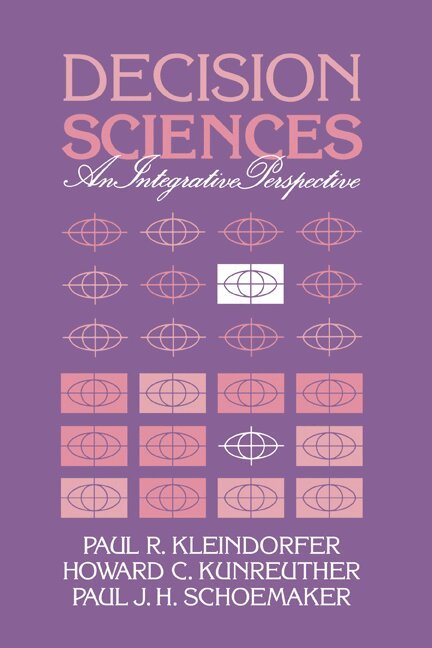
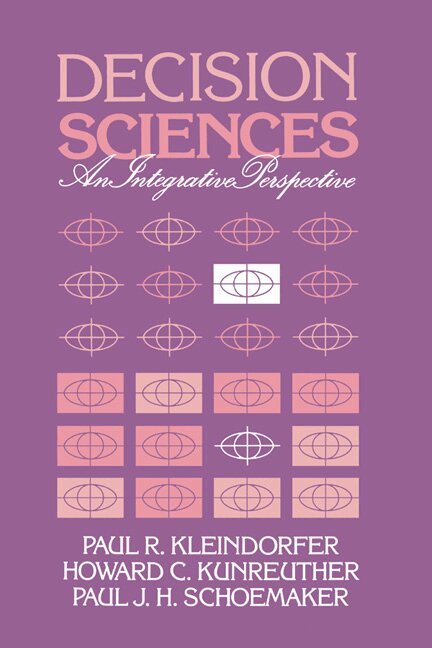
This long-awaited textbook provides a unified perspective of a rich and varied field. It recognises that in order to develop strategies for improving the decision-making process one needs to understand how decisions are made in practice and in what ways behaviour differs from guidelines implied by normative theories of choice. It is the interplay between descriptive, normative, and prescriptive analysis that gives this book a special flavour. Using a set of illustrative examples, Decision Sciences synthesises current research about different types of decision making, including individual, group, organisational, and societal. Special attention is given to the linkage between problem finding and problem solving. The principal message emerging from the book is that decision making entails a complex set of processes that need to be understood in order to develop sound prescriptions or policy advice.
578 kr
Skickas inom 7-10 vardagar
This long-awaited textbook provides a unified perspective of a rich and varied field. It recognises that in order to develop strategies for improving the decision-making process one needs to understand how decisions are made in practice and in what ways behaviour differs from guidelines implied by normative theories of choice. It is the interplay between descriptive, normative, and prescriptive analysis that gives this book a special flavour. Using a set of illustrative examples, Decision Sciences synthesises current research about different types of decision making, including individual, group, organisational, and societal. Special attention is given to the linkage between problem finding and problem solving. The principal message emerging from the book is that decision making entails a complex set of processes that need to be understood in order to develop sound prescriptions or policy advice.
Peripheral Vision
Detecting the Weak Signals that Will Make or Break Your Company
Inbunden, Engelska, 2006
338 kr
Tillfälligt slut
From emerging technologies to changes in consumer tastes, tremendous opportunities and threats often begin as weak signals from the periphery How good is your organisation at sensing, interpreting, and acting on these signals? George S. Day and Paul J. H. Schoemaker call this capability peripheral vision--and their research shows that less than 20 percent of firms have developed it in sufficient capacity to remain competitive. In this book, they reveal a systematic process for developing peripheral vision and offer practical tools and strategies for building "vigilant organisations" that are constantly attuned to changes in the environment. Through detailed case studies ranging from LED lighting to low-carb foods to children's dolls, the authors show how vigilant organisations win by: scoping widely and asking the right questions; scanning actively in the right places; interpreting what signals mean; probing carefully for more information; and acting wisely on signals before competitors do. This book will help your organisation see farther to seize the opportunities and avoid the risks that come from the periphery.
197 kr
Skickas inom 7-10 vardagar
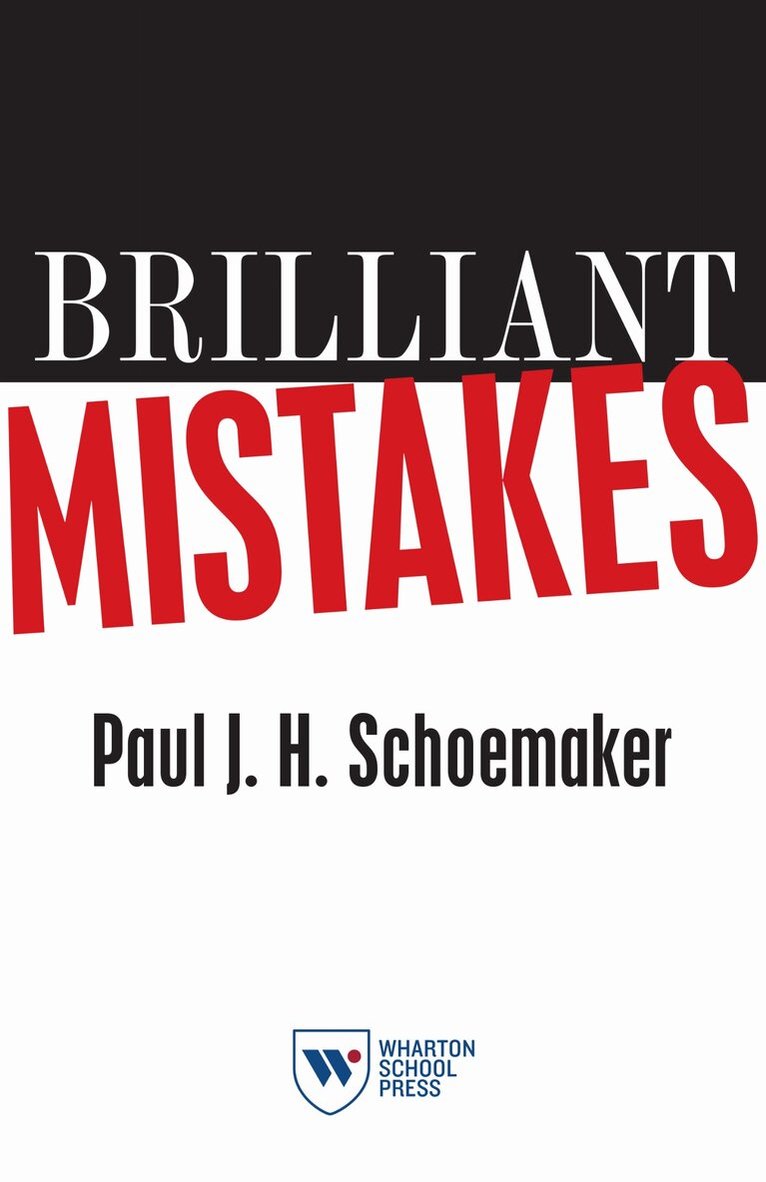
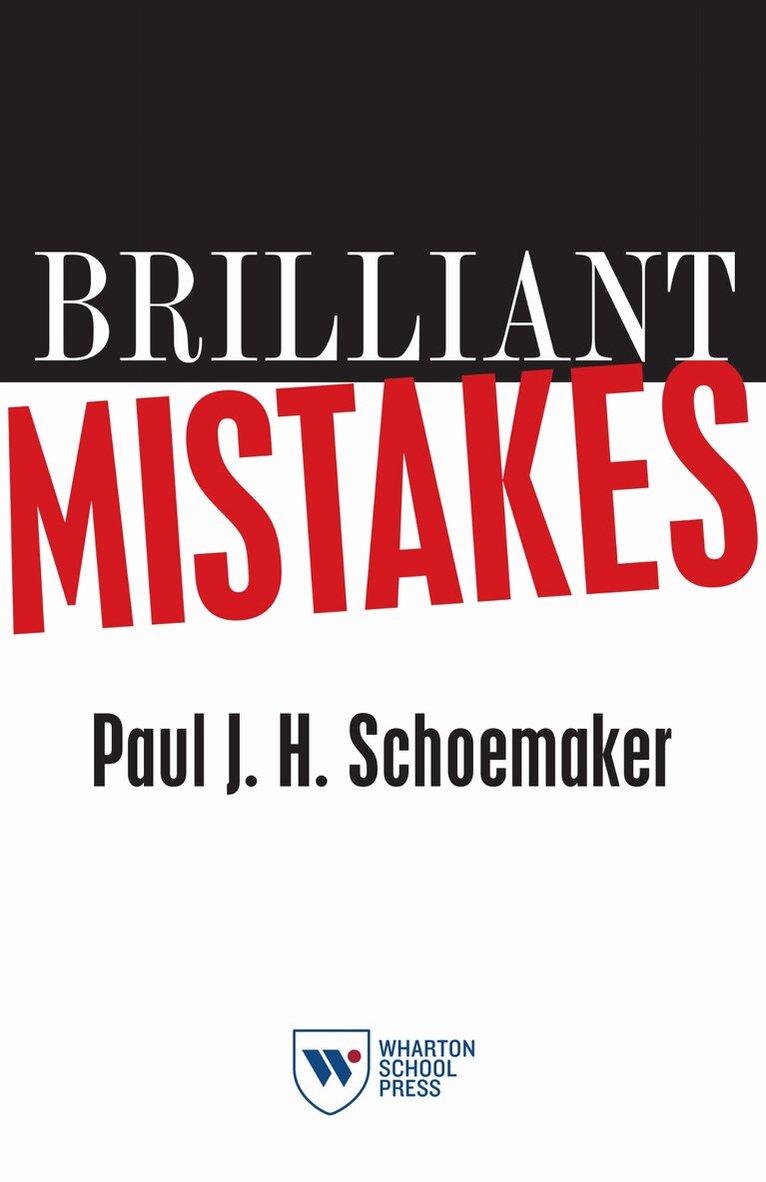
Named #1 Best Business Book of 2011, by Patriot-News-PennLive.comIf you have ever flown in an airplane, used electricity from a nuclear power plant, or taken an antibiotic, you have benefited from a brilliant mistake.Each of these life-changing innovations was the result of many missteps and an occasional brilliant insight that turned a mistake into a surprising portal of discovery. In Brilliant Mistakes, Paul Schoemaker, founder and chairman of Decision Strategies International, shares critical insights on the surprising benefits of making well-chosen mistakes.Brilliant Mistakes explores why minimizing mistakes may be the greatest mistake of all, situations when mistakes are most beneficial and when they should be avoided, the counter-intuitive idea that we should deliberately permit errors at times, and how to make the most of brilliant mistakes to improve business results.Brilliant Mistakes is based on solid academic research and insights from Schoemaker's work with more than 100 organizations, as well as his provocative Harvard Business Review article with Robert Gunther, "The Wisdom of Deliberate Mistakes." Schoemaker provides a practical roadmap for using mistakes to accelerate learning for your organization and yourself.
203 kr
Skickas inom 5-8 vardagar
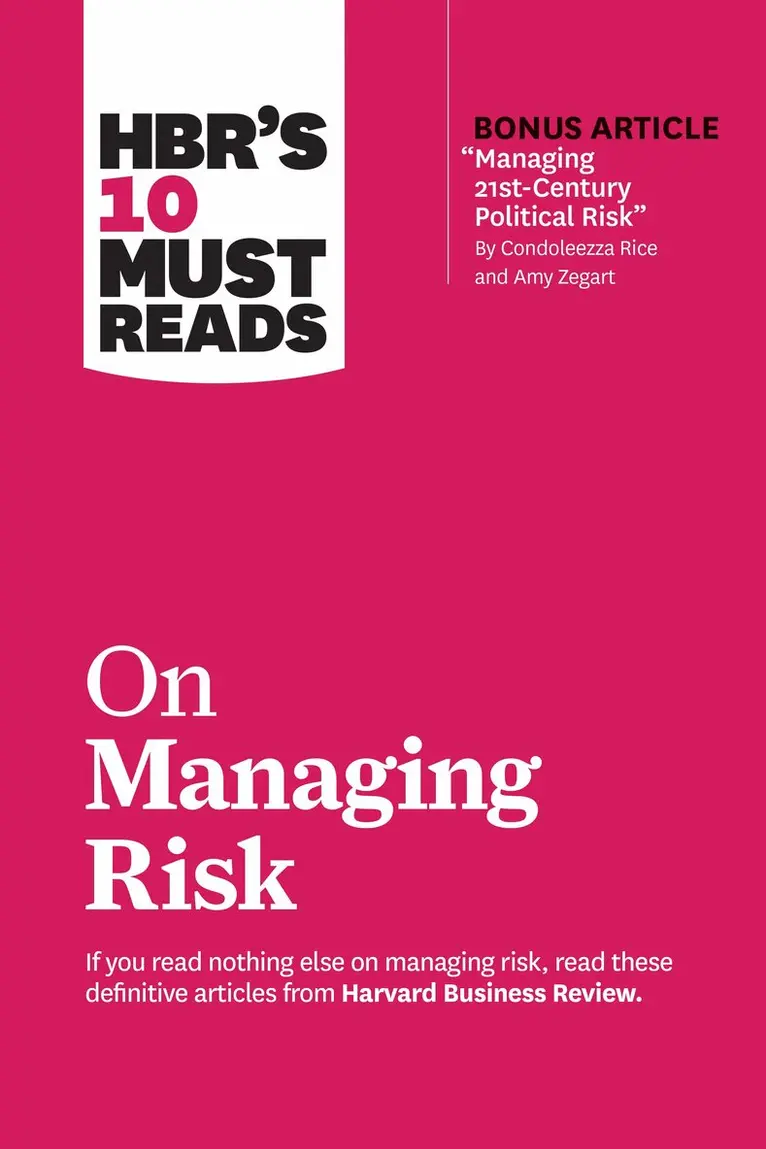
Is your business playing it safe—or taking the right risks?If you read nothing else on managing risk, read these 10 articles. We've combed through hundreds of Harvard Business Review articles and selected the most important ones to help your company make smart decisions and thrive, even when the future is unclear.This book will inspire you to:Avoid the most common errors in risk managementUnderstand the three distinct categories of risk and tailor your risk-management processes accordinglyEmbrace uncertainty as a key element of breakthrough innovationAdopt best practices for mitigating political threatsUpgrade your organization's forecasting capabilities to gain a competitive edgeDetect and neutralize cyberattacks originating inside your companyThis collection of articles includes "Managing Risks: A New Framework," by Robert S. Kaplan and Anette Mikes; "How to Build Risk into Your Business Model," by Karan Girotra and Serguei Netessine; "The Six Mistakes Executives Make in Risk Management," by Nassim N. Taleb, Daniel G. Goldstein, and Mark W. Spitznagel; "From Superstorms to Factory Fires: Managing Unpredictable Supply-Chain Disruptions," by David Simchi-Levi, William Schmidt, and Yehua Wei; "Is It Real? Can We Win? Is It Worth Doing?: Managing Risk and Reward in an Innovation Portfolio," by George S. Day; “Superforecasting: How to Upgrade Your Company's Judgment," by Paul J. H. Schoemaker and Philip E. Tetlock; "Managing 21st-Century Political Risk," by Condoleezza Rice and Amy Zegart; "How to Scandal-Proof Your Company," by Paul Healy and George Serafeim; "Beating the Odds When You Launch a New Venture," by Clark Gilbert and Matthew Eyring; "The Danger from Within," by David M. Upton and Sadie Creese; and "Future-Proof Your Climate Strategy," by Joseph E. Aldy and Gianfranco Gianfrate.