Per Pinstrup-Andersen - Böcker
Visar alla böcker från författaren Per Pinstrup-Andersen. Handla med fri frakt och snabb leverans.
12 produkter
12 produkter
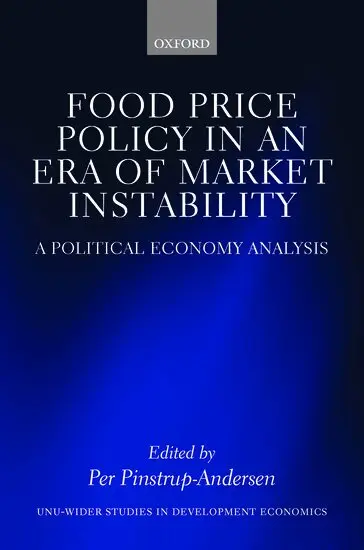
Food Price Policy in an Era of Market Instability
A Political Economy Analysis
Inbunden, Engelska, 2014
2 658 kr
Skickas inom 3-6 vardagar
This is an open access title available under the terms of a CC BY-NC-SA 3.0 IGO licence. It is free to read at Oxford Scholarship Online and offered as a free PDF download from OUP and selected open access locations.Food price volatility is one of the major challenges facing current and future global food systems. Since 2006, global food prices have fluctuated greatly around an increasing trend and price spikes were observed for key food commodities such as rice, wheat, and maize. The full or partial transmission of these global food price changes to individual developing countries, together with domestic food price changes, caused by domestic factors such as extreme weather events and market disruptions, caused governments to respond in a variety of ways. While there is ample description of the nature, content, and causes of food price fluctuations during the last 5 to 7 years, very little is known about the processes that led to policy responses or the relative power and behaviour of the participating stakeholder groups. Understanding how and why governments responded as they did is important to enhance the existing knowledge of the political economy of food price policy and to assist governments in their policy-making as they confront future food price fluctuations. This book presents results from political economy studies of food price policy in 14 developing countries as well as the United States and the European Union.
573 kr
Skickas inom 7-10 vardagar
This is an open access title available under the terms of a CC BY-NC-SA 3.0 IGO licence. It is free to read at Oxford Scholarship Online and offered as a free PDF download from OUP and selected open access locations. Food price volatility is one of the major challenges facing current and future global food systems. Since 2006, global food prices have fluctuated greatly around an increasing trend and price spikes were observed for key food commodities such as rice, wheat, and maize. The full or partial transmission of these global food price changes to individual developing countries, together with domestic food price changes, caused by domestic factors such as extreme weather events and market disruptions, caused governments to respond in a variety of ways. While there is ample description of the nature, content, and causes of food price fluctuations during the last 5 to 7 years, very little is known about the processes that led to policy responses or the relative power and behaviour of the participating stakeholder groups. Understanding how and why governments responded as they did is important to enhance the existing knowledge of the political economy of food price policy and to assist governments in their policy-making as they confront future food price fluctuations. This book presents results from political economy studies of food price policy in 14 developing countries as well as the United States and the European Union.
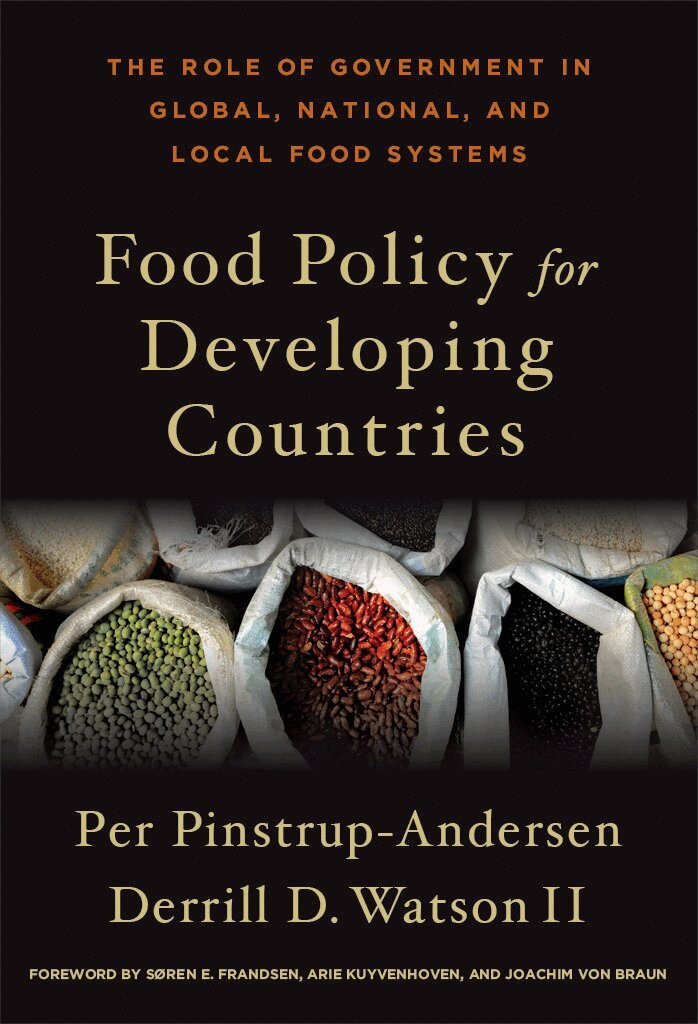
Food Policy for Developing Countries
The Role of Government in Global, National, and Local Food Systems
Inbunden, Engelska, 2011
602 kr
Skickas inom 7-10 vardagar
Despite technological advances in agriculture, nearly a billion people around the world still suffer from hunger and poor nutrition while a billion are overweight or obese. This imbalance highlights the need not only to focus on food production but also to implement successful food policies. In this new textbook intended to be used with the three volumes of Case Studies in Food Policy for Developing Countries (also from Cornell), the 2001 World Food Prize laureate Per Pinstrup-Andersen and his colleague Derrill D. Watson II analyze international food policies and discuss how such policies can and must address the many complex challenges that lie ahead in view of continued poverty, globalization, climate change, food price volatility, natural resource degradation, demographic and dietary transitions, and increasing interests in local and organic food production.Food Policy for Developing Countries offers a "social entrepreneurship" approach to food policy analysis. Calling on a wide variety of disciplines including economics, nutrition, sociology, anthropology, environmental science, medicine, and geography, the authors show how all elements in the food system function together.
Case Studies in Food Policy for Developing Countries
Policies for Health, Nutrition, Food Consumption, and Poverty
Häftad, Engelska, 2008
409 kr
Skickas inom 10-15 vardagar
The food problems now facing the world—scarcity and starvation, contamination and illness, overabundance and obesity—are both diverse and complex. What are their causes? How severe are they? Why do they persist? What are the solutions?In three volumes that serve as valuable teaching tools and have been designed to complement the textbook Food Policy for Developing Countries by Per Pinstrup-Andersen and Derrill D. Watson II, they call upon the wisdom of disciplines including economics, nutrition, sociology, anthropology, environmental science, medicine, and geography to create a holistic picture of the state of the world's food systems today.Volume I of the Case Studies addresses policies related to health, nutrition, food consumption, and poverty.
Case Studies in Food Policy for Developing Countries
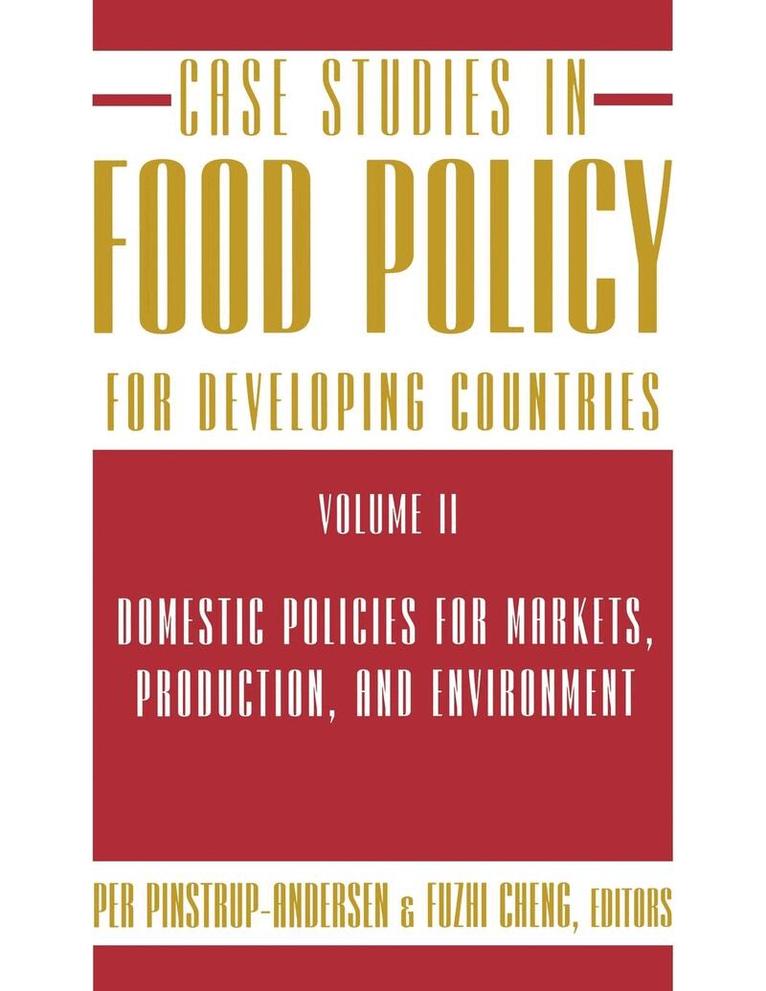
Domestic Policies for Markets, Production, and Environment
Häftad, Engelska, 2008
409 kr
Skickas inom 10-15 vardagar
The food problems now facing the world—scarcity and starvation, contamination and illness, overabundance and obesity—are both diverse and complex. What are their causes? How severe are they? Why do they persist? What are the solutions?In three volumes that serve as valuable teaching tools and have been designed to complement the textbook Food Policy for Developing Countries by Per Pinstrup-Andersen and Derrill D. Watson II, they call upon the wisdom of disciplines including economics, nutrition, sociology, anthropology, environmental science, medicine, and geography to create a holistic picture of the state of the world's food systems today.Volume II of the Case Studies addresses the issues of domestic policies for markets, production, and the environment.
Case Studies in Food Policy for Developing Countries
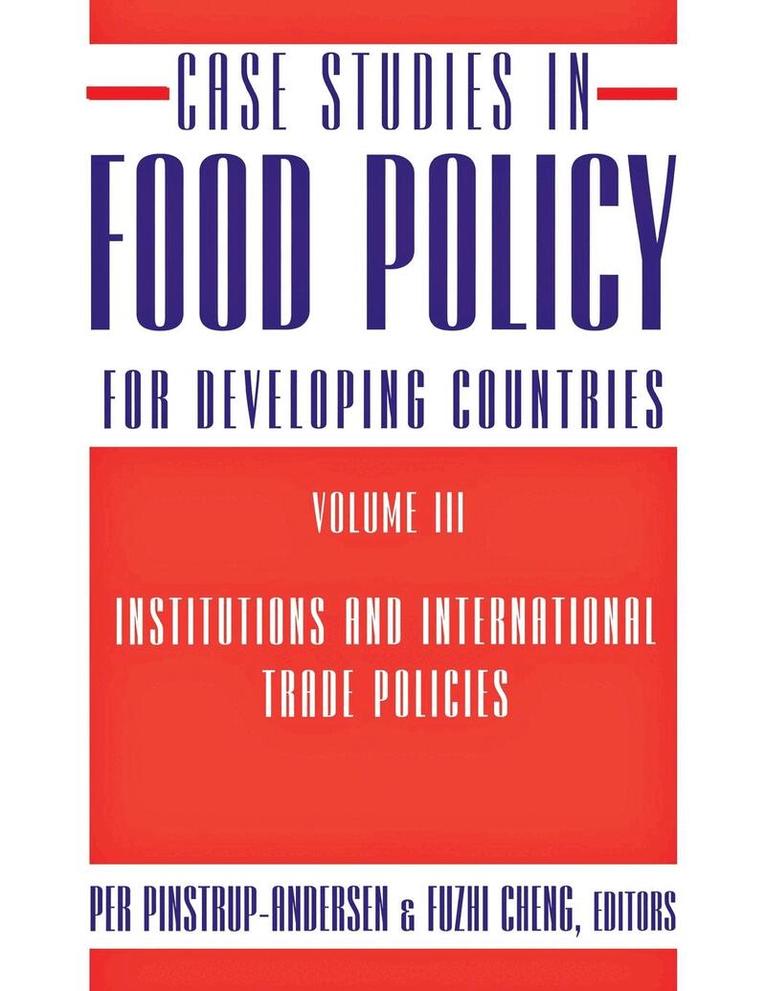
Institutions and International Trade Policies
Häftad, Engelska, 2008
436 kr
Skickas inom 10-15 vardagar
The food problems now facing the world—scarcity and starvation, contamination and illness, overabundance and obesity—are both diverse and complex. What are their causes? How severe are they? Why do they persist? What are the solutions?In three volumes that serve as valuable teaching tools and have been designed to complement the textbook Food Policy for Developing Countries by Per Pinstrup-Andersen and Derrill D. Watson II, they call upon the wisdom of disciplines including economics, nutrition, sociology, anthropology, environmental science, medicine, and geography to create a holistic picture of the state of the world's food systems today.Volume III of the Case Studies addresses global institutions and international trade policies.
352 kr
Skickas inom 10-15 vardagar
Hunger, malnutrition, poor health, and deficient food systems are widespread in Sub-Saharan Africa. While much is known about African food systems and about African health and nutrition, our understanding of the interaction between food systems and health and nutrition is deficient. Moreover, the potential health gains from changes in the food system are frequently overlooked in policy design and implementation. The authors of The African Food System and its Interactions with Human Health and Nutrition examine how public policy and research aimed at the food system and its interaction with human health and nutrition can improve the well-being of Africans and help achieve the United Nations Millennium Development Goals (MDGs). Several of the MDGs focus on health-related challenges: hunger alleviation; maternal, infant, and child mortality; the control of HIV/AIDS, tuberculosis, and malaria; and the provision of safe water and improved sanitation. These challenges are intensified by problems of low agricultural and food system productivity, gender inequity, lack of basic infrastructure, and environmental degradation, all of which have direct and indirect detrimental effects on health, nutrition, and the food system. Reflecting the complexity and multidisciplinary nature of these problems and their solutions, this book features contributions by world-renowned experts in economics, agriculture, health, nutrition, food science, and demography.
2 101 kr
Skickas inom 10-15 vardagar
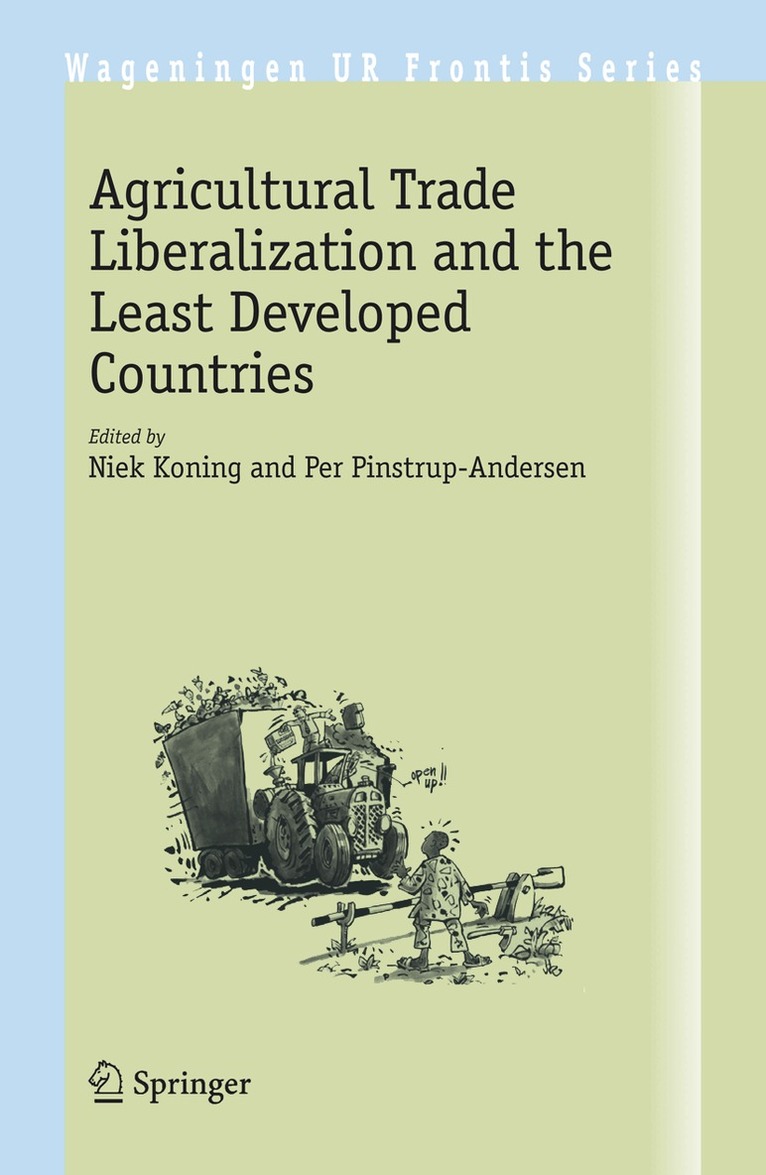
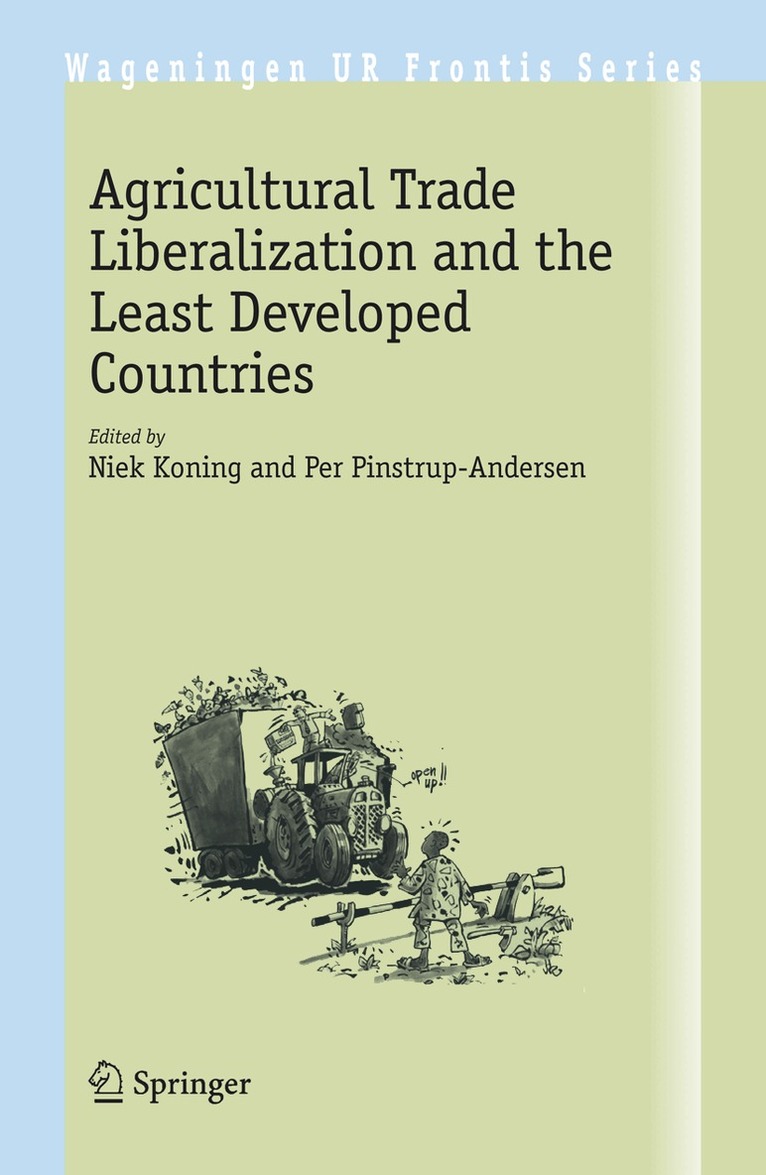
Although the current round of international trade negotiations was called a ‘Development Round’, very little was accomplished before the negotiations stalled in mid-2006. Developing countries as a group stand to gain very substantially from trade reform in agricultural commodities. It is less clear how the 50 countries identified by the United Nations as the ‘Least Developed Countries’ (LDCs), which have been subject to special consideration in international trade negotiations, would fare. Would they lose their preferential trade access to the OECD markets and, if so, would these losses exceed the potential gains from liberalized trade? Or would low-income countries that currently receive high prices for commodities such as sugar in some OECD-country markets be out-competed by countries such as Brazil in a liberalized market? More generally, would any benefits from liberalized agricultural trade be captured by middle-income countries with good domestic infrastructure and well-functioning markets, leaving few or no economic benefits to the LDCs? How should the LDCs prepare for multilateral reform of agricultural trade, and should they take policy action now in response to the continuation of the trade-distorting agricultural policies pursued by the OECD countries? To what extent do the LDCs and the middle-income developing countries have common interests with respect to the desired outcomes of the trade round? Are the LDCs well represented by the Group of 21, which consists primarily of middle-income countries with strong export potential in agriculture, or should they pursue a different set of goals in future negotiations? In this book, several experts on international trade and development address these and related questions.
2 101 kr
Skickas inom 10-15 vardagar
Although the current round of international trade negotiations was called a ‘Development Round’, very little was accomplished before the negotiations stalled in mid-2006. Developing countries as a group stand to gain very substantially from trade reform in agricultural commodities. It is less clear how the 50 countries identified by the United Nations as the ‘Least Developed Countries’ (LDCs), which have been subject to special consideration in international trade negotiations, would fare. Would they lose their preferential trade access to the OECD markets and, if so, would these losses exceed the potential gains from liberalized trade? Or would low-income countries that currently receive high prices for commodities such as sugar in some OECD-country markets be out-competed by countries such as Brazil in a liberalized market? More generally, would any benefits from liberalized agricultural trade be captured by middle-income countries with good domestic infrastructure and well-functioning markets, leaving few or no economic benefits to the LDCs? How should the LDCs prepare for multilateral reform of agricultural trade, and should they take policy action now in response to the continuation of the trade-distorting agricultural policies pursued by the OECD countries? To what extent do the LDCs and the middle-income developing countries have common interests with respect to the desired outcomes of the trade round? Are the LDCs well represented by the Group of 21, which consists primarily of middle-income countries with strong export potential in agriculture, or should they pursue a different set of goals in future negotiations? In this book, several experts on international trade and development address these and related questions.
1 578 kr
Skickas inom 10-15 vardagar
“Ethics, Hunger and Globalization” adds an ethics dimension to the debate and research about poverty, hunger, and globalization. Outstanding scholars and practitioners from several disciplines discuss what action is needed for ethics to play a bigger role in action by governments, civil society, and the private sector to reduce poverty and hunger within the context of globalization. The book concludes that much of the rhetoric by policy makers is not followed up with appropriate action, and discusses the role of ethics in attempts to match action with rhetoric. The book also concludes that a better understanding of the values underlying both public and private sector action towards the alleviation of poverty and hunger would lead to more enlightened policies and greater success in attempts to achieve the Millennium Development Goals. The interaction between ethical, economic, and policy aspects is discussed and scholars and experienced practitioners from several disciplines suggest how such integration may be promoted.
344 kr
Skickas inom 10-15 vardagar
Das Thema der gentechnisch veränderten Lebensmittel wird vor allem in Europa zur Zeit intensiv diskutiert. Meist wird die Gentechnologie für Lebensmittel abgelehnt. Dabei herrschen emotionsgeladene Schlagworte statt wissenschaftlich begründeter Argumente vor. Biotechnologie wird – so Pinstrup-Andersen und Schiøler – keine Wunder bewirken und auch die Nahrungsmittelknappheit nicht mit einem Schlag lösen, sie ist aber ein unabdingbares Hilfsmittel im Kampf gegen Hunger und Unterernährung. Die Autoren treten einerseits für eine umfassende Überprüfung der Konsequenzen für Umwelt und Gesundheit ein. Andererseits plädieren sie dafür, die möglichen Vorteile der Gentechnologie in der Lebensmittelproduktion nicht zu vergessen. Für die Entwicklungsländer bedeutet sie mehr, und vor allem auch gehaltvollere Nahrung, und kann so mithelfen, das drängende Problem der Hungersnöte und der permanenten Unterernährung in diesen Weltteilen zu lösen – jedoch nur, wenn die Industrienationen sich nicht aktiv gegen diese Entwicklungen stellen.Per Pinstrup-Andersen erhielt für seine außergewöhnlichen Leistungen in der Lebensmittelpolitik und -forschung für die Entwicklungsländer den internationalen "2001 World Food Prize".
1 584 kr
Skickas inom 10-15 vardagar
“Ethics, Hunger and Globalization” adds an ethics dimension to the debate and research about poverty, hunger, and globalization. Outstanding scholars and practitioners from several disciplines discuss what action is needed for ethics to play a bigger role in action by governments, civil society, and the private sector to reduce poverty and hunger within the context of globalization. The book concludes that much of the rhetoric by policy makers is not followed up with appropriate action, and discusses the role of ethics in attempts to match action with rhetoric. The book also concludes that a better understanding of the values underlying both public and private sector action towards the alleviation of poverty and hunger would lead to more enlightened policies and greater success in attempts to achieve the Millennium Development Goals. The interaction between ethical, economic, and policy aspects is discussed and scholars and experienced practitioners from several disciplines suggest how such integration may be promoted.