Philip A. Schwartzkroin – författare
Visar alla böcker från författaren Philip A. Schwartzkroin. Handla med fri frakt och snabb leverans.
5 produkter
5 produkter
E-bok
Engelska, 20052 280 kr
Läs direkt efter köp
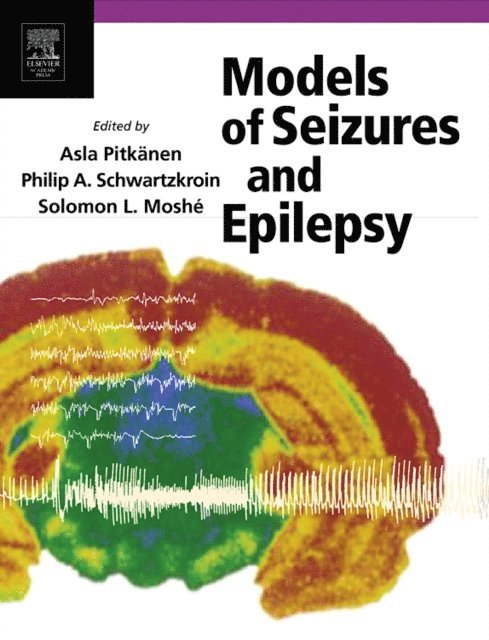
An understanding of mechanisms underlying seizure disorders depends critically on the insights provided by model systems. In particular with the development of cellular, molecular, and genetic investigative tools, there has been an explosion of basic epilepsy research. Models of Seizures and Epilepsy brings together, for the first time in 30 years, an overview of the most widely-used models of seizures and epilepsy.Chapters cover a broad range of experimental approaches (from in vitro to whole animal preparations), a variety of epileptiform phenomenology (including burst discharges and seizures), and suggestions for model characterization and validation, such as electrographic, morphologic, pharmacologic, and behavioral features. Experts in the field provide not only technical reviews of these models but also conceptual critiques - commenting on the strengths and limitations of these models, their relationship to clinical phenomenology, and their value in developing a better understanding and treatments.Models of Seizures and Epilepsy is a valuable, practical reference for investigators who are searching for the most appropriate laboratory models for addressing key questions in the field. It also provides an important background for physicians, fellows, and students, offering insight into the potential for advances in epilepsy research.- The first comprehensive description of animal models of epilepsy since the early 1970''s- Comprehensive analysis of "What the models model" to guide the selection of each model, and what specific questions it will answer- Elegant examples of the use of novel technologies that can be applied in experimental epilepsy research- World expert opinions on the clinical relevance of each model
Häftad, Engelska, 2009
330 kr
Skickas inom 5-8 vardagar
So You Want to Be a Scientist offers readers a glimpse into the "job" of being a research scientist. It is not intended to be a step-by-step "how to" book. Rather, it is intended to fill a hole in the education of most would-be scientists, addressing explicitly many issues that are rarely addressed directly in training programs. Starting with thoughts about how to decide whether you'd want to pursue such a career (and if so, how to get started), the book works through some of the obvious topics relevant to a research profession (e.g. how to write a paper, give a talk, construct a grant proposal). It also examines less obvious, but equally important topics that are generally incorporated into a research education only by trial and error-e.g., "thinking" like a scientist, negotiating scientific politics, dealing with research ethics, and understanding social interactions. Chapters on the challenges and rewards of a career in research science include reflections on science as art and on the social responsibilities of scientists in the modern world. The book is not designed to convince the reader one way or another about a career as a research scientist. Rather, it provides information and insights, based on the author's long career in the laboratory and his rich experience with trainees, that will help the young scientist make better decisions and choices. It may also be useful to teachers, counselors, and parents for a realistic look at the demands and requirements for success in a research career.
E-bok
PDF, Engelska, 2009252 kr
Läs direkt efter köp
What does it take to be a scientist? Equally important, what does it take to be happy as a scientist? Drawing on thirty years of experience, Philip Schwartzkroin offers the budding scientist an invaluable glimpse into the day-to-day life of the researcher, filling a huge hole in the education of most would-be scientists--whether undergraduates or high school seniors. As Schwartzkroin points out, many of the most important things researchers learn as they hone their craft are not written down anywhere. And many of these insights come as a surprise to the naïve and well-meaning student who somehow believes that "doing research" is an occupation that is substantially different from doing a job in "the real world." This book looks at the "job" of science. Starting with suggestions about how to decide whether you''d want to pursue such a career (and if so, how to get started), the book works through some of the obvious topics relevant to a research profession--how to write a paper, give a talk, construct a grant proposal. It also examines less obvious topics that are generally incorporated into a research education only by trial and error--"thinking" like a scientist, negotiating scientific politics, dealing with research ethics, and understanding social interactions. And the book includes many "real-life situations" that may confront the young scientist, along with the author''s advice on how to solve these problems. Based on the author''s long career in the laboratory and his rich experience mentoring trainees, So You Want to be a Scientist provides information and insights that will help the young scientist make better decisions and choices. It will also be useful to teachers, counselors, and parents for its realistic look at the demands and requirements for success in a research career.
E-bok
Engelska, 2009252 kr
Läs direkt efter köp
What does it take to be a scientist? Equally important, what does it take to be happy as a scientist? Drawing on thirty years of experience, Philip Schwartzkroin offers the budding scientist an invaluable glimpse into the day-to-day life of the researcher, filling a huge hole in the education of most would-be scientists--whether undergraduates or high school seniors. As Schwartzkroin points out, many of the most important things researchers learn as they hone their craft are not written down anywhere. And many of these insights come as a surprise to the naïve and well-meaning student who somehow believes that "doing research" is an occupation that is substantially different from doing a job in "the real world." This book looks at the "job" of science. Starting with suggestions about how to decide whether you''d want to pursue such a career (and if so, how to get started), the book works through some of the obvious topics relevant to a research profession--how to write a paper, give a talk, construct a grant proposal. It also examines less obvious topics that are generally incorporated into a research education only by trial and error--"thinking" like a scientist, negotiating scientific politics, dealing with research ethics, and understanding social interactions. And the book includes many "real-life situations" that may confront the young scientist, along with the author''s advice on how to solve these problems. Based on the author''s long career in the laboratory and his rich experience mentoring trainees, So You Want to be a Scientist provides information and insights that will help the young scientist make better decisions and choices. It will also be useful to teachers, counselors, and parents for its realistic look at the demands and requirements for success in a research career.
Häftad, Engelska, 2007
1 272 kr
Skickas inom 7-10 vardagar
Advances in epilepsy research are occurring at a rapid rate, resulting in a bewildering wealth of data. The implications of this knowledge for future research and clinical practice can be confusing. This volume concentrates on the concepts and models of epilepsy which have been developed as a result of this research. Written by prominent researchers in the field, this book presents a number of major concepts and hypotheses through which epilepsy research has been advanced. Chapters focus on the pathways and mechanisms through which seizure activity is initiated and spread, in both normal and abnormal brain tissues, and discuss the special properties of epileptogenesis in the immature brain. In a field in which rapid advances lead to constant update of empirical data, this book takes a conceptual approach to the subject and provides a solid framework within which to understand the emerging issues. It will be relevant to basic neuroscientists, neurologists and neurosurgeons.