Philip Woodhouse – författare
637 kr
Skickas inom 10-15 vardagar
2 389 kr
Skickas inom 10-15 vardagar
637 kr
Skickas inom 10-15 vardagar
325 kr
Skickas inom 10-15 vardagar
737 kr
Läs direkt efter köp
730 kr
Läs direkt efter köp
2 179 kr
Skickas inom 10-15 vardagar
720 kr
Läs direkt efter köp
Policy-makers are increasingly trying to assign economic values to areas such as ecologies, the atmosphere, even human lives. These new values, assigned to areas previously considered outside of economic systems, often act to qualify, alter or replace former non-pecuniary values. Valuing Development, Environment and Conservation looks to explore the complex interdependencies, contradictions and trade-offs that can take place between economic values and the social, environmental, political and ethical systems that inform non-monetary valuation processes.
Using rich empirical material, the book explores the processes of valuation, their components, calculative technologies, and outcomes in different social, ecological and conservation domains. The book gives reasons for why economic calculation tends to dominate in practice, but also presents new insights on how the disobedient materiality of things and the ingenuity of human and non-human agencies can combine and frustrate the dominant economic models within calculative processes.
This book highlights the tension between, on the one hand, a dominant model that emphasises technical and ‘universalising’ criteria, and on the other hand, valuation practice in specific local contexts which is more likely to negotiate criteria that are plural, incommensurable and political. This book is perfect for researchers and students within development studies, environment, geography, politics, sociology and anthropology who are looking for new insights into how processes of valuation take place in the 21st century, and with what consequential outcomes.
720 kr
Läs direkt efter köp
Policy-makers are increasingly trying to assign economic values to areas such as ecologies, the atmosphere, even human lives. These new values, assigned to areas previously considered outside of economic systems, often act to qualify, alter or replace former non-pecuniary values. Valuing Development, Environment and Conservation looks to explore the complex interdependencies, contradictions and trade-offs that can take place between economic values and the social, environmental, political and ethical systems that inform non-monetary valuation processes.
Using rich empirical material, the book explores the processes of valuation, their components, calculative technologies, and outcomes in different social, ecological and conservation domains. The book gives reasons for why economic calculation tends to dominate in practice, but also presents new insights on how the disobedient materiality of things and the ingenuity of human and non-human agencies can combine and frustrate the dominant economic models within calculative processes.
This book highlights the tension between, on the one hand, a dominant model that emphasises technical and ‘universalising’ criteria, and on the other hand, valuation practice in specific local contexts which is more likely to negotiate criteria that are plural, incommensurable and political. This book is perfect for researchers and students within development studies, environment, geography, politics, sociology and anthropology who are looking for new insights into how processes of valuation take place in the 21st century, and with what consequential outcomes.
281 kr
Skickas inom 5-8 vardagar
53 kr
Läs direkt efter köp
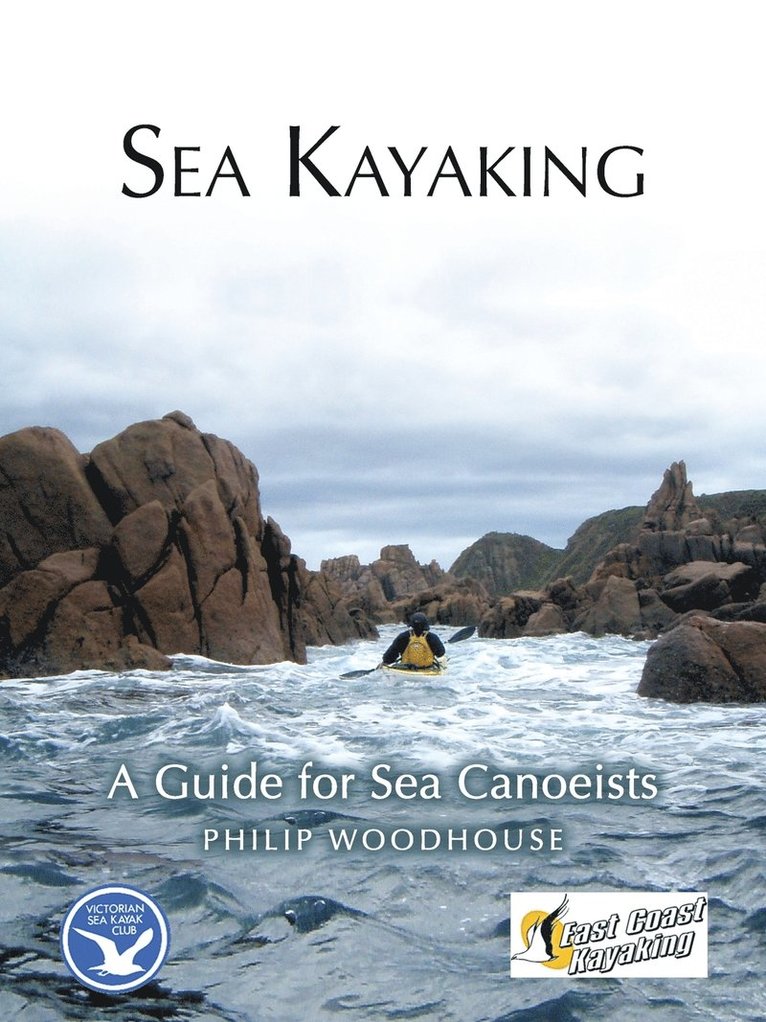
In Sea Kayaking, , comprehensive guide for those who travel the open waters in the Southern Hemisphere, Philip Woodhouse, Australian paddler and Royal Australian Air Force veteran, shares his years of experience, technical training, and military teaching skills.
What began as a personal reference was soon developed as a training manual, recommended by the Victorian Sea Kayak Club to its membersand East Coast Kayaking to their patrons and Australian Canoeing students.
Sea Kayaking covers boat design, kit requirements, paddling skills, health and well-being, meteorology, the ocean environment, navigation, communications, conservation andminimal-impact camping, conservation, seamanship, electrical bilge pumps, solar panels, light sources, boat repairs, leadership, risk management, basic safety and survival strategies , as well as a brief overview about the history and various types of canoeing.. There is also a comprehensive glossary to assist the reader in understanding the terms and concepts discussed in the main text.
Woodhouses work differs from most manuals about sea kayaking in that it is written from the perspective of someone who paddles the Southern Hemisphere. As such, the major differences between the two hemispheresweather patterns, navigation, laws, and terminologyare discussed, as well as compared to their Northern Hemisphere counterparts.
In the end, paddling skills are paddling skills, hypothermia is hypothermia, and twenty-five-knot winds are twenty-five-knot winds. A three-metre tidal range can still produce a long haul across mud flats when the tide is outand landing through two-metre surf is still scary (though a lot of fun), no matter where you paddle.