Sarah Bracking - Böcker
Visar alla böcker från författaren Sarah Bracking. Handla med fri frakt och snabb leverans.
5 produkter
5 produkter
691 kr
Skickas inom 10-15 vardagar
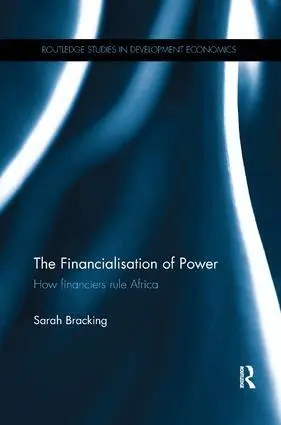
The financial crash of 2008 led people all over the world to ask how far financiers are in control of our lives. To what extent does what they do with our money affect our everyday lives? This book asks whether the crisis, and subsequent use of public subsidies to help the international economy recover, was a unique event, or a symptom of a wider malaise where financiers have effectively usurped the power of governments and are running the political economy themselves. The Financialisation of Power in Africa argues that growth is not always a good thing. The development of more derivatives and faster financial exchanges are draining businesses of investment capital rather than serving to supply it; applying financial logic does not save nature or protect biodiversity and other species. This book outlines the concept of financialisation and how it has been used in various ways to explain the post-2008 crisis and global political economy. There is a particular focus on these issues in reference to Africa, which has a particular dependence on international money. It takes the perspective of the modern state, exploring how the political economy of development actually works in relation to African governance. This book is of interest to students of international development and political economy and is a key source for policy makers interested in African studies and economic development.
617 kr
Skickas inom 10-15 vardagar
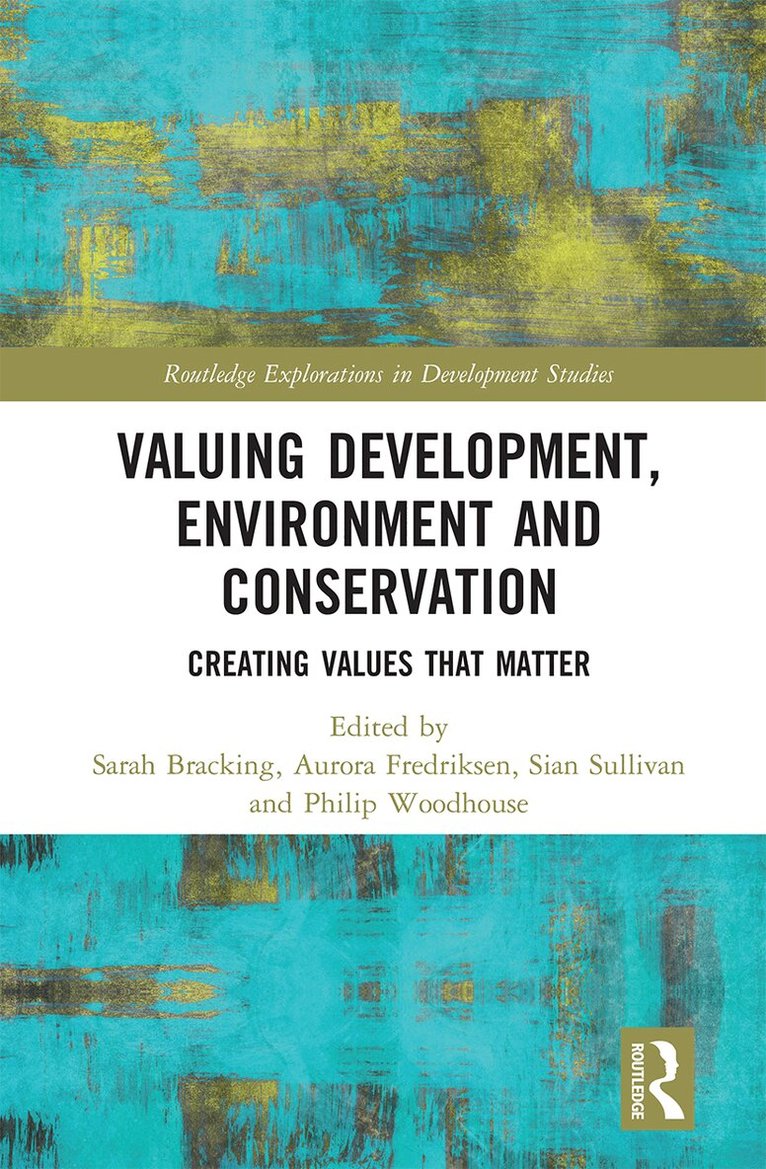
Policy-makers are increasingly trying to assign economic values to areas such as ecologies, the atmosphere, even human lives. These new values, assigned to areas previously considered outside of economic systems, often act to qualify, alter or replace former non-pecuniary values. Valuing Development, Environment and Conservation looks to explore the complex interdependencies, contradictions and trade-offs that can take place between economic values and the social, environmental, political and ethical systems that inform non-monetary valuation processes.Using rich empirical material, the book explores the processes of valuation, their components, calculative technologies, and outcomes in different social, ecological and conservation domains. The book gives reasons for why economic calculation tends to dominate in practice, but also presents new insights on how the disobedient materiality of things and the ingenuity of human and non-human agencies can combine and frustrate the dominant economic models within calculative processes.This book highlights the tension between, on the one hand, a dominant model that emphasises technical and ‘universalising’ criteria, and on the other hand, valuation practice in specific local contexts which is more likely to negotiate criteria that are plural, incommensurable and political. This book is perfect for researchers and students within development studies, environment, geography, politics, sociology and anthropology who are looking for new insights into how processes of valuation take place in the 21st century, and with what consequential outcomes.
2 219 kr
Skickas inom 10-15 vardagar
The financial crash of 2008 led people all over the world to ask how far financiers are in control of our lives. To what extent does what they do with our money affect our everyday lives? This book asks whether the crisis, and subsequent use of public subsidies to help the international economy recover, was a unique event, or a symptom of a wider malaise where financiers have effectively usurped the power of governments and are running the political economy themselves. The Financialisation of Power in Africa argues that growth is not always a good thing. The development of more derivatives and faster financial exchanges are draining businesses of investment capital rather than serving to supply it; applying financial logic does not save nature or protect biodiversity and other species. This book outlines the concept of financialisation and how it has been used in various ways to explain the post-2008 crisis and global political economy. There is a particular focus on these issues in reference to Africa, which has a particular dependence on international money. It takes the perspective of the modern state, exploring how the political economy of development actually works in relation to African governance. This book is of interest to students of international development and political economy and is a key source for policy makers interested in African studies and economic development.
329 kr
Skickas inom 7-10 vardagar
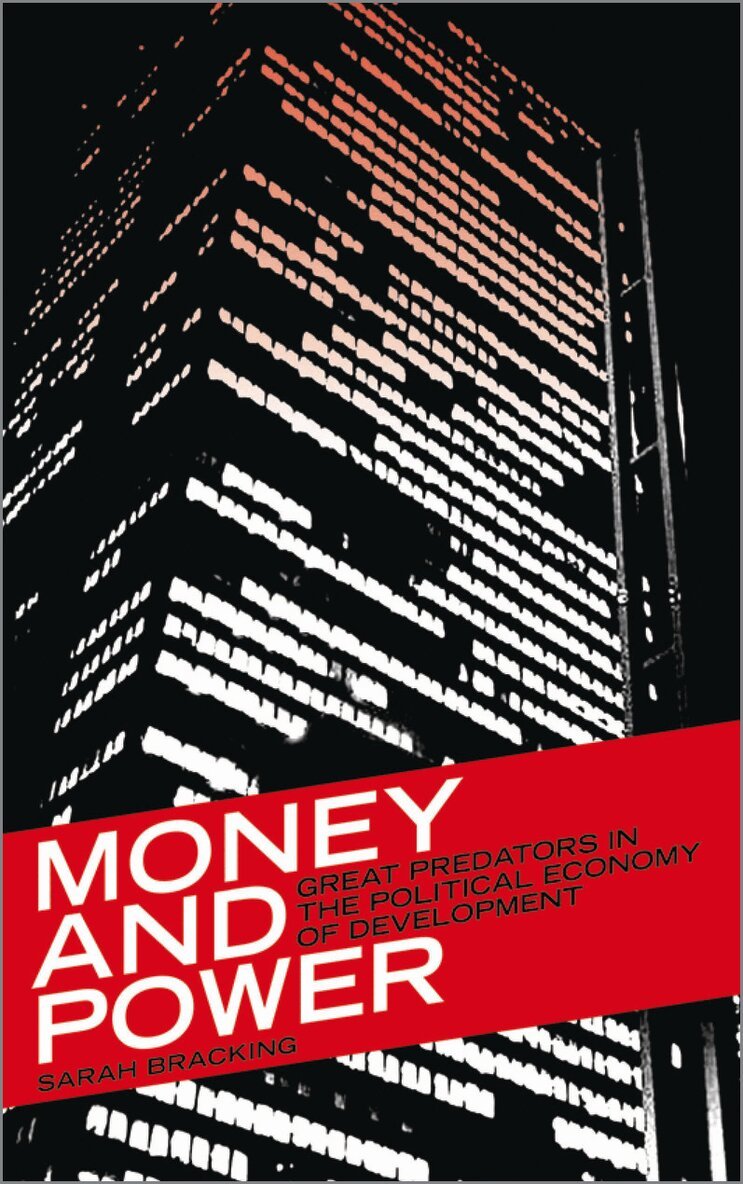
This book explores the role of governments and financial institutions in managing the markets in the developing world.These 'Great Predators' are trapping the populations of the Global South in a permanent cycle of austerity. Through a framework of political economy, Money and Power shows how pseudo-public 'development' institutions retain complete economic control over developing markets, while the international system remains unregulated. Operating in the interests of North America and the European Union, these Great Predators have a political purpose, and yet serve to cloud the brute power relations between states.
Valuing Development, Environment and Conservation
Creating Values that Matter
Inbunden, Engelska, 2018
2 088 kr
Skickas inom 10-15 vardagar
Policy-makers are increasingly trying to assign economic values to areas such as ecologies, the atmosphere, even human lives. These new values, assigned to areas previously considered outside of economic systems, often act to qualify, alter or replace former non-pecuniary values. Valuing Development, Environment and Conservation looks to explore the complex interdependencies, contradictions and trade-offs that can take place between economic values and the social, environmental, political and ethical systems that inform non-monetary valuation processes.Using rich empirical material, the book explores the processes of valuation, their components, calculative technologies, and outcomes in different social, ecological and conservation domains. The book gives reasons for why economic calculation tends to dominate in practice, but also presents new insights on how the disobedient materiality of things and the ingenuity of human and non-human agencies can combine and frustrate the dominant economic models within calculative processes.This book highlights the tension between, on the one hand, a dominant model that emphasises technical and ‘universalising’ criteria, and on the other hand, valuation practice in specific local contexts which is more likely to negotiate criteria that are plural, incommensurable and political. This book is perfect for researchers and students within development studies, environment, geography, politics, sociology and anthropology who are looking for new insights into how processes of valuation take place in the 21st century, and with what consequential outcomes.