Philippe Ségéral – författare
2 842 kr
Skickas inom 5-8 vardagar
2 779 kr
Läs direkt efter köp
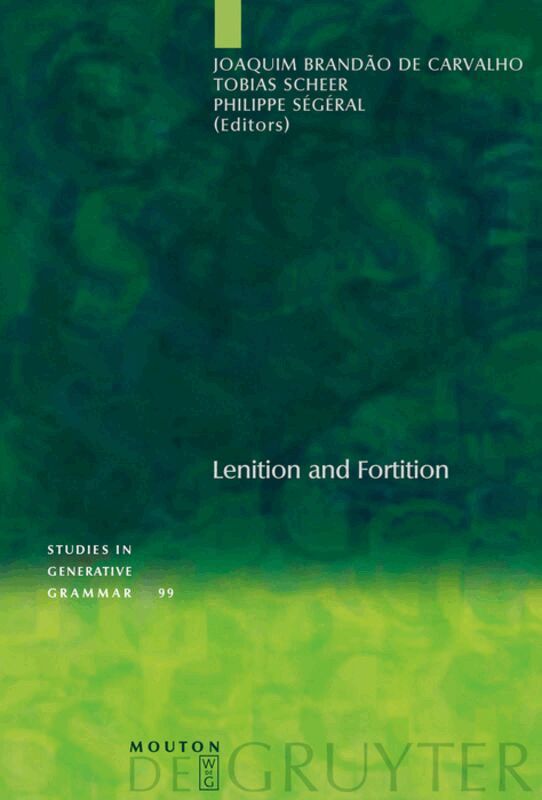
There are books on tone, coronals, the internal structure of segments, vowel harmony, and a couple of other topics in phonology. This book aims to fill the gap for Lenition and Fortition, which is one of the first phenomena that was addressed by phonologists in the 19th century, and ever since contributed to phonological thinking. It is certainly one of the core phenomena that is found in the phonology of natural language: together with assimilations, the other important family of phenomena, Lenition and Fortition constitute the heart of what phonology can do to sound.The book aims to provide an overall treatment of the question in its many aspects: historical, typological, synchronic, diachronic, empirical and theoretical. Various current approaches to phonology are represented.The book is structured into three parts: 1) properties and behaviour of Lenition/Fortition, 2) lenition patterns in particular languages and language families, 3) how Lenition/Fortition work. Part 1 describes the properties of lenition and fortition: what counts as such? What kind of behaviour is observed? Which factors bear on it (positional, stress-related)? Which role has it played in phonology since (and even before) the 19th century? The everything-you-always-wanted-to-know-about-lenition-and-fortition philosophy that guides the conception of the book supposes a descriptive, generalisation-oriented style of writing that relies on a kind of phonological lingua franca, rather than on theory-laden vocabulary. Also, no prior knowledge other than about general phonological categories should be required when reading through Part 1. The goal is to provide a broad picture of what lenition is, how it behaves, which factors it is conditioned by and what generalisations it obeys. This record may then be used as a yardstick for competing theories.Part 2 presents a number of case studies that show how Lenition/Fortition behave in a number of languages that include systems which are notoriously emblematic for Lenition/Fortition: Celtic, Western Romance, Germanic and Finnish.Finally, Part 3 is concerned with the analysis of the patterns that have been described in Parts 1 and 2. Given their analytic orientation, Part 3 chapters are theory-specific. They look at the same empirical record, or at a subset thereof, and try to explain what they see. Even though Part 3 chapters are couched in a specific theoretical environment that most of the time supposes prior conceptual knowledge, authors have been asked to assure theoretical interoperability as much as they could.
333 kr
Skickas inom 3-6 vardagar
317 kr
Läs direkt efter köp
L’Abrégé de Phonétique Historique est une introduction à l’évolution de la phonétique du français depuis le latin, à travers l''ancien français, le moyen français, le français classique et jusqu''au français moderne. Présentant les faits principaux de manière succincte et pédagogique, il s’adresse aux étudiants qui préparent l’épreuve d’ancien français de l’agrégation de Lettres Modernes et aux professeurs.
Basé sur la partie concernant la phonétique historique de la Grande Grammaire Historique du Français (GGHF), l’ouvrage valorise les acquis de la tradition séculaire dans le domaine (depuis Bourciez jusqu’à Straka), mais engage également les développements de la phonologie moderne – et ce en particulier concernant la structure syllabique et les représentations autosegmentales plus largement. Il prend le parti d’une présentation par position syllabique, plutôt que par les voyelles et consonnes individuelles. Ainsi les consonnes en position forte (initiale et appuyée) sont examinées ensemble, et il en va de même pour la position intervocalique et la coda. Le même principe régit la présentation des voyelles, en position libre et entravée.
L''Abrégé est accompagné d''une série de ressources supplémentaires en ligne ("Annexes" à télécharger ci-dessous) : un index lexical avec son mode d''emploi, une liste de 180 mots importants pour le concours, des exercices supplémentaires ainsi qu''une liste d''errata.
328 kr
Läs direkt efter köp
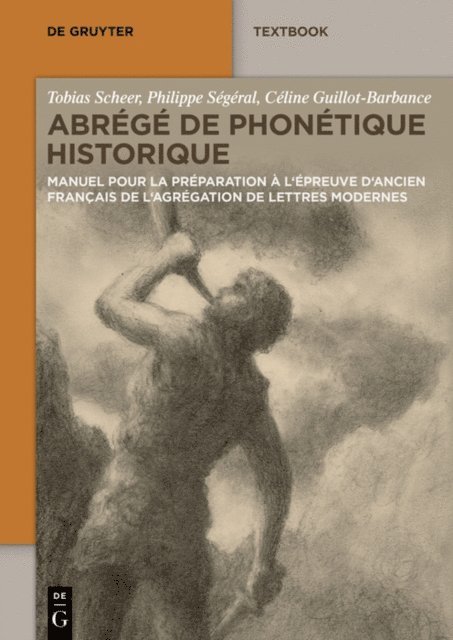
L’Abrégé de Phonétique Historique est une introduction à l’évolution de la phonétique du français depuis le latin, à travers l''ancien français, le moyen français, le français classique et jusqu''au français moderne. Présentant les faits principaux de manière succincte et pédagogique, il s’adresse aux étudiants qui préparent l’épreuve d’ancien français de l’agrégation de Lettres Modernes et aux professeurs.
Basé sur la partie concernant la phonétique historique de la Grande Grammaire Historique du Français (GGHF), l’ouvrage valorise les acquis de la tradition séculaire dans le domaine (depuis Bourciez jusqu’à Straka), mais engage également les développements de la phonologie moderne – et ce en particulier concernant la structure syllabique et les représentations autosegmentales plus largement. Il prend le parti d’une présentation par position syllabique, plutôt que par les voyelles et consonnes individuelles. Ainsi les consonnes en position forte (initiale et appuyée) sont examinées ensemble, et il en va de même pour la position intervocalique et la coda. Le même principe régit la présentation des voyelles, en position libre et entravée.
L''Abrégé est accompagné d''une série de ressources supplémentaires en ligne ("Annexes" à télécharger ci-dessous) : un index lexical avec son mode d''emploi, une liste de 180 mots importants pour le concours, des exercices supplémentaires ainsi qu''une liste d''errata.