Prakash S. Bisen - Böcker
Visar alla böcker från författaren Prakash S. Bisen. Handla med fri frakt och snabb leverans.
7 produkter
7 produkter
2 595 kr
Skickas inom 11-20 vardagar
An accessible introduction to the world of microbes—from basic microbe biology through industrial applications Microbes affect our lives in a variety of ways—playing an important role in our health, food, agriculture, and environment. While some microbes are beneficial, others are pathogenic or opportunistic.Microbes: Concepts and Applications describes basic microbe biology and identification and shows not only how they operate in the subfields of medicine, biotechnology, environmental science, bioengineering, agriculture, and food science, but how they can be harnessed as a resource. It provides readers with a solid grasp of etiologic agents, pathogenic processes, epidemiology, and the role of microbes as therapeutic agents.Placing a major emphasis on omics technology, the book covers recent developments in the arena of microbes and discusses their role in industry and agriculture, as well as in related fields such as immunology, cell biology, and molecular biology. It offers complete discussions of the major bacterial, viral, fungal, and parasitic pathogens; includes information on emerging infectious diseases, antibiotic resistance, and bioterrorism; and talks about the future challenges in microbiology.The most complete treatment of microbial biology available, Microbes features eye-opening chapters on: Human and Microbial WorldGene Technology: Application and TechniquesMolecular Diagnostic and Medical MicrobiologyIdentification and Classification of MicrobesDiversity of MicroorganismsMicrobes in AgricultureMicrobes as a Tool for Industry and ResearchComplete with charts and figures, this book is an invaluable textbook for university teachers, students, researchers, and people everywhere who care about microorganisms.
2 050 kr
Skickas inom 7-10 vardagar
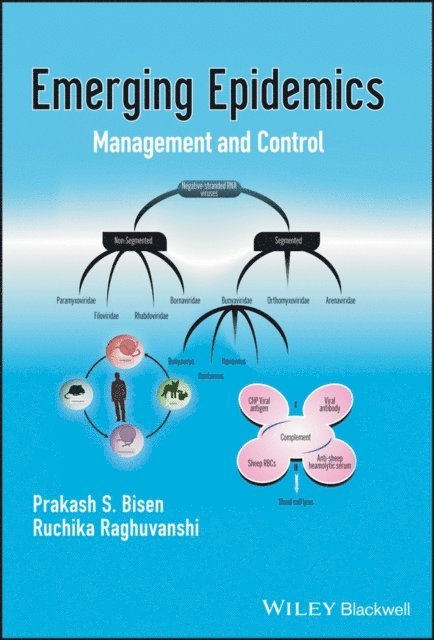
A global perspective on the management and prevention of emerging and re-emerging diseasesEmerging infectious diseases are newly identified or otherwise previously unknown infections that cause public health challenges. Re-emerging infectious diseases are due to both the reappearance of and an increase in the number of infections from a disease that is known, but which had formerly caused so few infections that it was no longer considered a public health problem. The factors that cause the emergence or re-emergence of a disease are diverse.This book takes a look at the world's emerging and re-emerging diseases. It covers the diagnosis, therapy, prevention, and control of a variety of individual diseases, and examines the social and behavioral issues that could contribute to epidemics. Each chapter focuses on an individual disease and provides scientific background and social history as well as the current basics of infection, epidemiology, and control.Emerging Epidemics: Management and Control offers five topics of coverage:FUNDAMENTALS Epidemics fundamentalsDisasters and epidemicsBiosafetyRE-EMERGING EPIDEMICS TuberculosisPlagueNEWLY EMERGING EPIDEMICS LeptospirosisDengueJapanese EncephalitisChikungunya FeverWest Nile VirusChandipura Virus EncephalitisKyasanur Forest DiseaseHantavirusHuman, Avian, and Swine InfluenzaSevere Acute Respiratory SyndromeNipah VirusParagonimiasisMelioidosisPOTENTIAL EPIDEMICS Biowarfare and bioterrorismFood contamination and food terrorismAntimicrobial resistanceVECTOR CONTROL METHODS Mosquito controlOther disease vectors and their controlOffering an integrated, worldwide overview of the complexity of the epidemiology of infections, Emerging Epidemics will be a valuable resource for students, physicians, and scientists working in veterinary, medical, and the pharmaceutical sciences.
940 kr
Skickas inom 10-15 vardagar
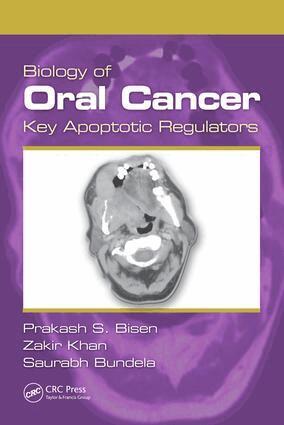
Cancer is a class of disease or disorders characterized by uncontrolled division of cells and the ability of these cells to invade other tissues. One new approach in dealing with cancer is through apoptotic regulators, which is the process of controlling cell growth by abnormally prolonging cell survival, facilitating the accumulation of transforming mutations and promoting resistance. Despite a decline in developed countries, cancer has consistently maintained its status as one of the top killers since time immemorial. Exploring cancer management and treatment at the molecular level, Biology of Oral Cancer: Key Apoptotic Regulators presents a key molecular event-apoptosis-in relation to genesis and progression of oral cancer. This book uses oral cancers as the specific means to demonstrate this technique with this particular type of cancer, which is quite prevalent in India and other parts of Asia.
2 375 kr
Skickas inom 10-15 vardagar
Cancer is a class of disease or disorders characterized by uncontrolled division of cells and the ability of these cells to invade other tissues. One new approach in dealing with cancer is through apoptotic regulators, which is the process of controlling cell growth by abnormally prolonging cell survival, facilitating the accumulation of transforming mutations and promoting resistance. Despite a decline in developed countries, cancer has consistently maintained its status as one of the top killers since time immemorial. Exploring cancer management and treatment at the molecular level, Biology of Oral Cancer: Key Apoptotic Regulators presents a key molecular event-apoptosis-in relation to genesis and progression of oral cancer. This book uses oral cancers as the specific means to demonstrate this technique with this particular type of cancer, which is quite prevalent in India and other parts of Asia.
1 676 kr
Skickas inom 5-8 vardagar
1 967 kr
Skickas inom 10-15 vardagar
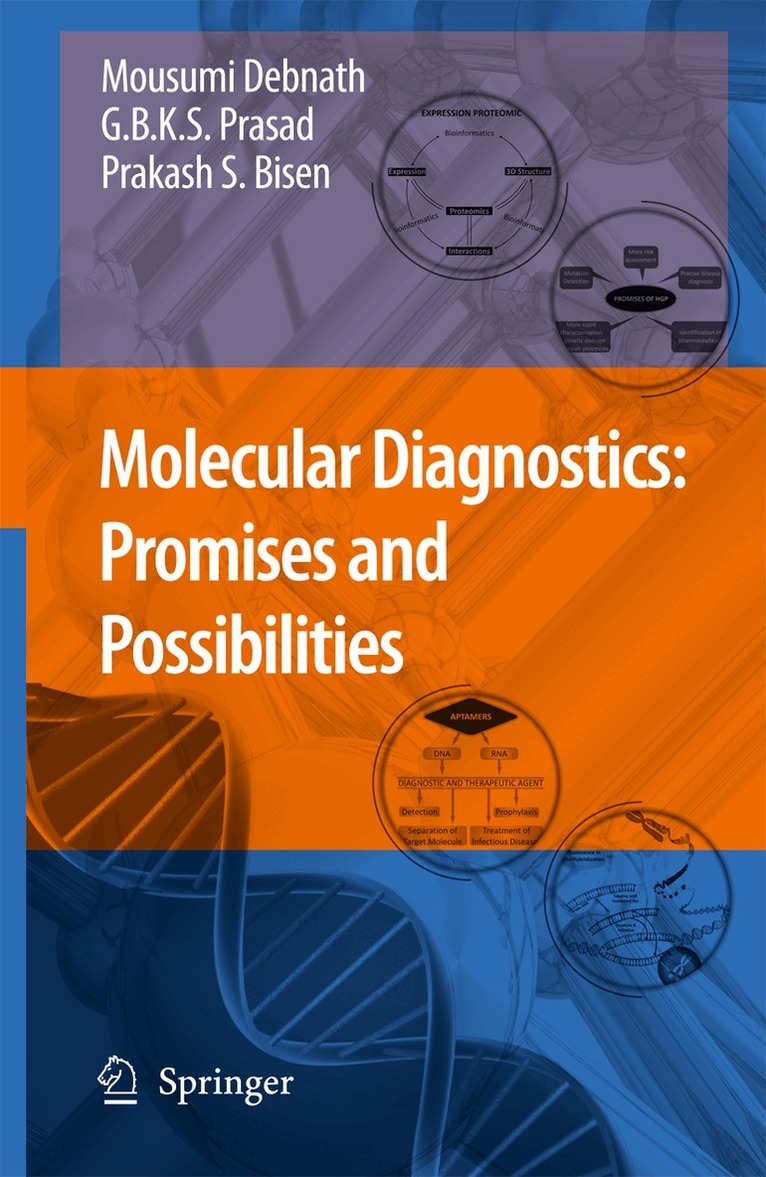
This book covers the principles of molecular biology along with genomes and nucleic acid alterations, techniques, instrumentation, applications and market of molecular diagnostics. It also includes advanced molecular diagnostic techniques.
1 839 kr
Skickas inom 10-15 vardagar
A rapid development in diverse areas of molecular biology and genetic engineering resulted in emergence of variety of tools. These tools are not only applicable to basic researches being carried out world over, but also exploited for precise detection of abnormal conditions in plants, animals and human body. Although a basic researcher is well versed with few techniques used by him/her in the laboratory, they may not be well acquainted with methodologies, which can be used to work out some of their own research problems. The picture is more blurred when the molecular diagnostic tools are to be used by physicians, scientists and technicians working in diagnostic laboratories in hospitals, industry and academic institutions. Since many of them are not trained in basics of these methods, they come across several gray areas in understanding of these tools. The accurate application of molecular diagnostic tools demands in depth understanding of the methodology for precise detection of the abnormal condition of living body. To meet the requirements of a good book on molecular diagnostics of students, physicians, scientists working in agricultural, veterinary, medical and pharmaceutical sciences, it needs to expose the reader lucidly to:Give basic science behind commonly used tools in diagnosticsExpose the readers to detailed applications of these tools and Make them aware the availability of such diagnostic toolsThe book will attract additional audience of pathologists, medical microbiologists, pharmaceutical sciences, agricultural scientists and veterinary doctors if the following topics are incorporated at appropriate places in Unit II or separately as a part of Unit-III in the book.Molecular diagnosis of diseases in agricultural cropsMolecular diagnosis of veterinary diseases.Molecular epidemiology, which helps to differentiate various epidemic strains and sources of disease outbreaks. Even in different units of the same hospital, the infections could be by different strains of the same species and the information becomes valuable for infection control strategies.Drug resistance is a growing problem for bacterial, fungal and parasitic microbes and the molecular biology tools can help to detect the drug resistance genes without the cultivation and in vitro sensitivity testing. Molecular diagnostics offers faster help in the selection of the proper antibiotic for the treatment of tuberculosis, which is a major problem of the in the developing world. The conventional culture and drug sensitivity testing of tuberculosis bacilli is laborious and time consuming, whereas molecular diagnosis offers rapid drug resistant gene detection even from direct clinical samples. The same approach for HIV, malaria and many more diseases needs to be considered.Molecular diagnostics in the detection of diseases during foetal life is an upcoming area in the foetal medicine in case of genetic abnormalities and infectious like TORCH complex etc.The book will be equally useful to students, scientists and professionals working in the field of molecular diagnostics.