Prof. Philip Payton – författare
1 146 kr
Läs direkt efter köp
A new edition of Philip Payton’s modern classic Cornwall: A History, published now by University of Exeter Press, telling the story of Cornwall from earliest times to the present day.Drawing upon a wide range of original and secondary sources, it begins with Cornwall’s geology and prehistory, moving through Celtic times to the creation of the kingdom of Kernow and its relationship with neighbouring England. The political accommodation of medieval Cornwall by the expanding English state through the twin institutions of the Duchy and Stannaries is examined, as is the flowering in the middle ages of literature in the Cornish language. Resistance to English intrusion – in the rebellions of 1497 and 1549 and in the Civil War – is explored.So too is Cornwall’s role in the subsequent expansion of Britain’s global influence, and Cornwall as an early centre of the industrial revolution is also discussed.Mining and Methodism became twin strands of an assertive transnational identity which emigrant Cornish transplanted across the globe in the nineteenth-century. Thereafter, as the book shows, a vigorous Celtic revivalist movement championed the rebirth of the Cornish language and Cornwall’s status as a Celtic nation. At the same time, tourism, with its emphasis on Cornish distinctiveness, moved in the twentieth century to fill the gap left by the decline of mining.The book concludes by examining the nature of twenty-first century Cornwall, contrasting an apparent heightening of Cornish consciousness with the increasing threats to Cornwall’s environment and identity.
295 kr
Läs direkt efter köp
A new edition of Philip Payton’s modern classic Cornwall: A History, published now by University of Exeter Press, telling the story of Cornwall from earliest times to the present day.Drawing upon a wide range of original and secondary sources, it begins with Cornwall’s geology and prehistory, moving through Celtic times to the creation of the kingdom of Kernow and its relationship with neighbouring England. The political accommodation of medieval Cornwall by the expanding English state through the twin institutions of the Duchy and Stannaries is examined, as is the flowering in the middle ages of literature in the Cornish language. Resistance to English intrusion – in the rebellions of 1497 and 1549 and in the Civil War – is explored.So too is Cornwall’s role in the subsequent expansion of Britain’s global influence, and Cornwall as an early centre of the industrial revolution is also discussed.Mining and Methodism became twin strands of an assertive transnational identity which emigrant Cornish transplanted across the globe in the nineteenth-century. Thereafter, as the book shows, a vigorous Celtic revivalist movement championed the rebirth of the Cornish language and Cornwall’s status as a Celtic nation. At the same time, tourism, with its emphasis on Cornish distinctiveness, moved in the twentieth century to fill the gap left by the decline of mining.The book concludes by examining the nature of twenty-first century Cornwall, contrasting an apparent heightening of Cornish consciousness with the increasing threats to Cornwall’s environment and identity.
284 kr
Läs direkt efter köp
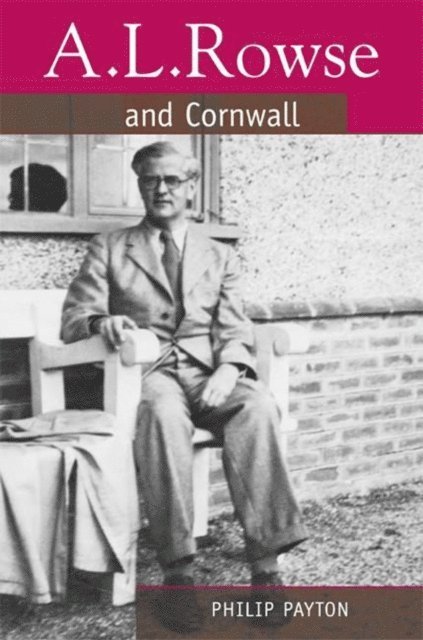
Winner of the Adult Non-Fiction section of the Holyer an Gof Awards 2006, and Overall Winner of the Holyer an Gof Trophy, this gripping biographical study, published here for the first time in paperback, explores the immensely complicated relationship that existed between A.L. Rowse and his native Cornwall.Rowse’s books, A Cornish Childhood and Tudor Cornwall, remain in strong demand and are essential reading for the general reader and historian alike, and for all those who know and love Cornwall. By shedding new light on this complex character, Payton invites a greater understanding of the broader issues of Cornish identity as well as assessing Rowse’s highly original contribution to the writing of British and Cornish history.
304 kr
Läs direkt efter köp
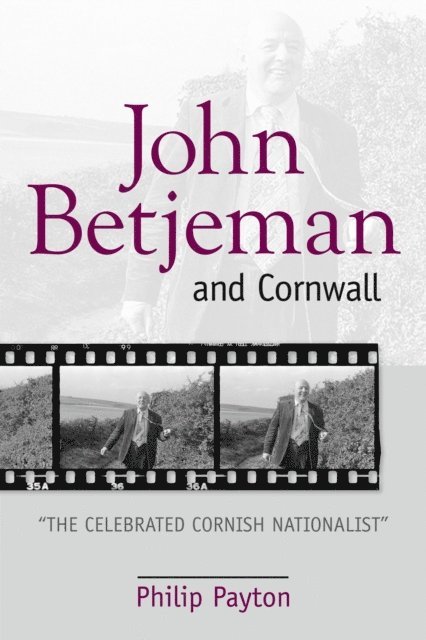
“I was one of the 8,000-strong ‘Betjemaniacs’ gathered at Carruan farm in Cornwall in August 2006 to celebrate the hundredth birthday of Sir John Betjeman, the late Poet Laureate. Situated high above Polzeath, with tremendous views out to the azure Atlantic and the great headland of Pentire, Carruan was, with its exhilarating sense of space, an inspirational choice for this great event. I stood in the pasty-queue with the Archbishop of Canterbury, watched the poetic performance of Bert Biscoe, and browsed among the bookstalls in the hope of finding second-hand copies of rare Betjeman books to add to my collection. Here was that Patrick Taylor-Martin volume that had eluded me for years, and Betjeman’s Britain – compiled by Candida Lycett Green, Betjeman’s daughter – together with more recent editions of old favourites.” Philip Payton, in the preface to John Betjeman and Cornwall
Quintessentially English, Betjeman was an ''outsider'' in England - and doubly so in Cornwall where, as he was the first to admit, he was a ‘foreigner’. And yet, as this book describes, Betjeman also strove to acquire a veneer of ‘Cornishness'', cultivating an alternative Celtic identity, and finding inspiration in Cornwall''s Anglo-Catholic tradition.He was also active in Cornish affairs, insisting that Cornwall was not part of England, and championing Cornish environmental concerns that anticipated today''s focus on sustainability.The new research in this book includes a wealth of previously ignored source material, forming a lively new account of Betjeman''s life and work and his defining relationship with Cornwall. This book is likely to be controversial and to provoke debate.
295 kr
Läs direkt efter köp
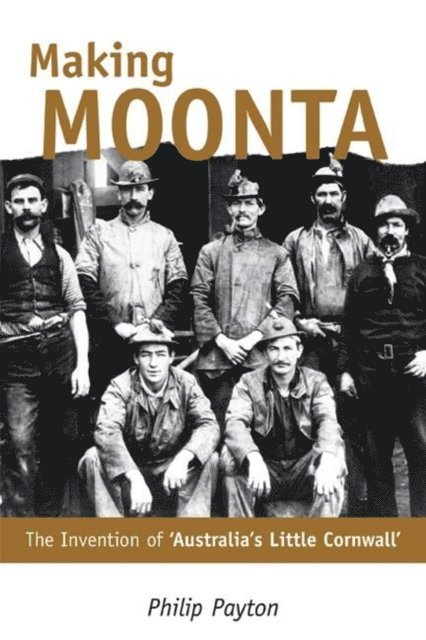
Winner of the 2008 Holyer An Gof Award for non-fiction. An investigation of the popular tradition of ‘Australia’s Little Cornwall’: how one town in South Australia gained and perpetuated this identity into the twenty-first century. This book is about Moonta and its special place in the Cornish transnational identity. Today Moonta is a small town on South Australia’s northern Yorke Peninsula; along with the neighbouring townships of of Wallaroo and Kadina, it is an agricultural and heritage tourism centre. In the second half of the nineteenth century, however, Moonta was the focus of a major copper mining industry.
This book is about Moonta and its special place in the Cornish transnational identity. Today Moonta is a small town on South Australia’s northern Yorke Peninsula; along with the neighbouring townships of of Wallaroo and Kadina, it is an agricultural and heritage tourism centre. In the second half of the nineteenth century, however, Moonta was the focus of a major copper mining industry.
From the beginning, Moonta cast itself as unique among Cornish immigrant communities, becoming ‘the hub of the universe’ according to its inhabitants, forging the myth of ‘Australia’s Little Cornwall’: a myth perpetuated by Oswald Pryor and others that survived the collapse of the copper mines in 1923—and remains vibrant and intact today.
1 032 kr
Läs direkt efter köp
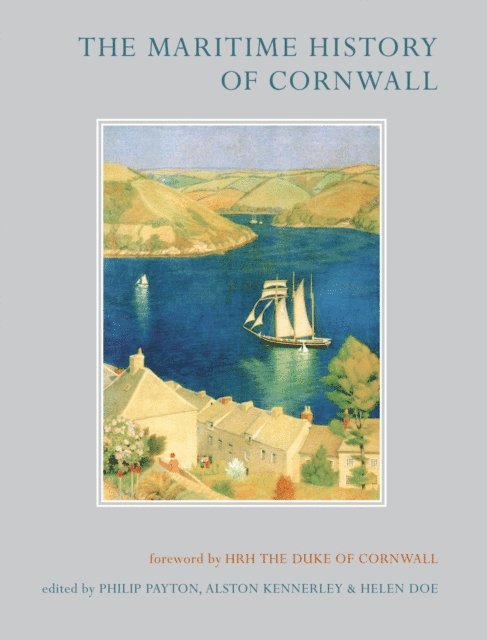
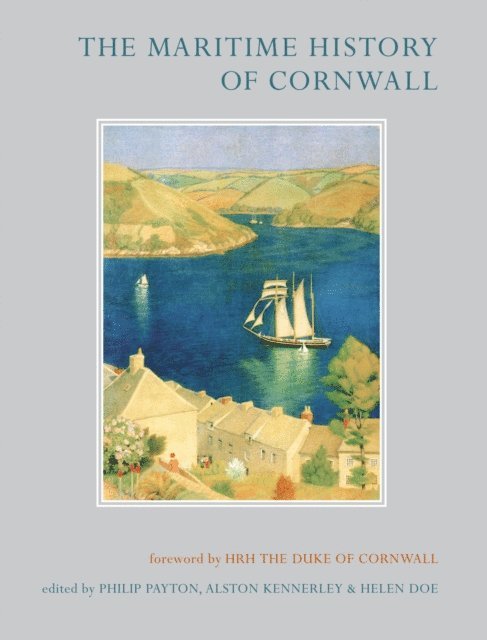
Cornwall is quintessentially a maritime region. Almost an island, nowhere in it is further than 25 miles from the sea. Cornwall’s often distinctive history has been moulded by this omnipresent maritime environment, while its strategic position at the western approaches—jutting out into the Atlantic—has given this history a global impact.It is perhaps surprising then, that, despite the central place of the sea in Cornwall’s history, there has not yet been a full maritime history of Cornwall. The Maritime History of Cornwall sets out to fill this gap, exploring the rich and complex maritime inheritance of this unique peninsula.In a beautifully illustrated volume, individually commissioned contributions from distinguished historians elaborate on the importance of different periods, from the Middle Ages to the twentieth century.The Maritime History of Cornwall is a significant addition to the literature of international maritime history and is indispensable to those with an interest in Cornwall past and present.Winner of the Holyer an Gof Non-Fiction Award 2015.
1 070 kr
Läs direkt efter köp
Cornwall is quintessentially a maritime region. Almost an island, nowhere in it is further than 25 miles from the sea. Cornwall’s often distinctive history has been moulded by this omnipresent maritime environment, while its strategic position at the western approaches—jutting out into the Atlantic—has given this history a global impact.It is perhaps surprising then, that, despite the central place of the sea in Cornwall’s history, there has not yet been a full maritime history of Cornwall. The Maritime History of Cornwall sets out to fill this gap, exploring the rich and complex maritime inheritance of this unique peninsula.In a beautifully illustrated volume, individually commissioned contributions from distinguished historians elaborate on the importance of different periods, from the Middle Ages to the twentieth century.The Maritime History of Cornwall is a significant addition to the literature of international maritime history and is indispensable to those with an interest in Cornwall past and present.Winner of the Holyer an Gof Non-Fiction Award 2015.
1 339 kr
Läs direkt efter köp
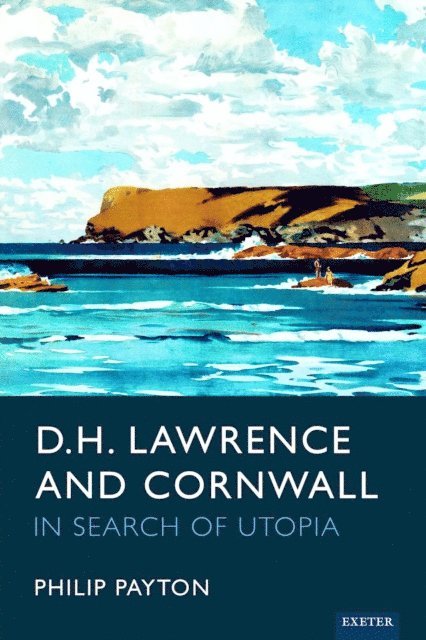
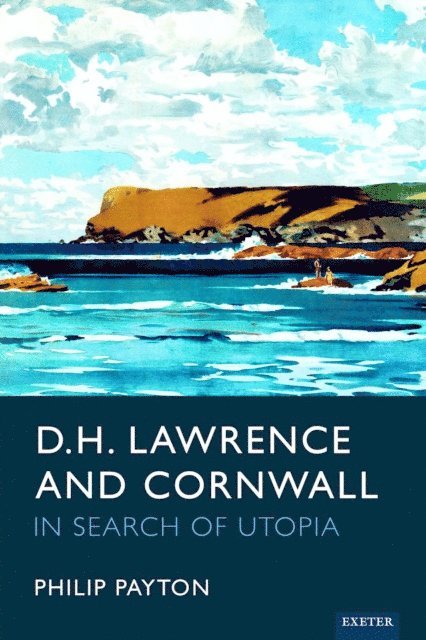
This book examines D.H. Lawrence’s attempt to create a utopian community of likeminded idealists in Cornwall, a quest that was given greater urgency by the outbreak of the First World War, an event Lawrence viewed with horror. He saw Cornwall as a ‘Celtic other’, beyond England’s reach. But he was ultimately disillusioned by the gradual intrusion of England’s ‘war spirit’ and was expelled from Cornwall by the authorities, ending up in Australia where he wrote about his Cornish sojourn in the semi-autobiographical novel Kangaroo.
The Cornish adventure was a key event in Lawrence’s life and this book alights upon several significant features that have not been fully described or understood before, notably the impact of ‘Celtic revivalism’ upon his imagining of Cornwall and the changing nature of the maritime war in and around Cornwall—not least its effect on Lawrence himself. Discussing the genesis and development of his ill-fated (invitation-only) community, the text follows Lawrence as he moves to Cornwall, first to Porthcothan, then to Zennor, and considers his evolving (and often contradictory) estimation of the Cornish people. Increasingly under suspicion as a possible German spy responsible for the upsurge in U-boat activity along the Cornish coast, he nonetheless formed close relationships with the local community at Zennor.
Considering D.H. Lawrence through a new prism, or rather a series of new prisms, this volume offers a fresh perspective on his life, writing and thinking. It also furnishes new insights into Cornwall’s ambiguous place in the English imagination and the complexity of Cornish identity, including its international dimension. As well as scholars and students, this book will be of great interest to both Cornish and D.H. Lawrence enthusiasts, along with the general reading public.
1 292 kr
Läs direkt efter köp
This book examines D.H. Lawrence’s attempt to create a utopian community of likeminded idealists in Cornwall, a quest that was given greater urgency by the outbreak of the First World War, an event Lawrence viewed with horror. He saw Cornwall as a ‘Celtic other’, beyond England’s reach. But he was ultimately disillusioned by the gradual intrusion of England’s ‘war spirit’ and was expelled from Cornwall by the authorities, ending up in Australia where he wrote about his Cornish sojourn in the semi-autobiographical novel Kangaroo.
The Cornish adventure was a key event in Lawrence’s life and this book alights upon several significant features that have not been fully described or understood before, notably the impact of ‘Celtic revivalism’ upon his imagining of Cornwall and the changing nature of the maritime war in and around Cornwall—not least its effect on Lawrence himself. Discussing the genesis and development of his ill-fated (invitation-only) community, the text follows Lawrence as he moves to Cornwall, first to Porthcothan, then to Zennor, and considers his evolving (and often contradictory) estimation of the Cornish people. Increasingly under suspicion as a possible German spy responsible for the upsurge in U-boat activity along the Cornish coast, he nonetheless formed close relationships with the local community at Zennor.
Considering D.H. Lawrence through a new prism, or rather a series of new prisms, this volume offers a fresh perspective on his life, writing and thinking. It also furnishes new insights into Cornwall’s ambiguous place in the English imagination and the complexity of Cornish identity, including its international dimension. As well as scholars and students, this book will be of great interest to both Cornish and D.H. Lawrence enthusiasts, along with the general reading public.
1 116 kr
Läs direkt efter köp
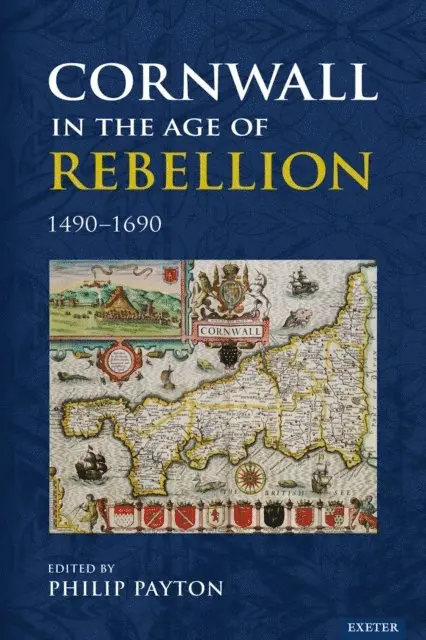
The expansion of the English state in the early modern era provoked resistance throughout Britain and Ireland, not least in Cornwall where this intrusion was challenged in a series of dramatic uprisings in the two centuries between 1490 and 1690.In this wide-ranging collection of chapters, several based on articles published previously in the series Cornish Studies, Philip Payton brings together an impressive team of international scholars, including Paul Cockerham, Bernard Deacon, D.H. Frost, Lynette Olson, Joanna Mattingly, Matthew Spriggs, and Mark Stoyle, to present a history of early modern Cornwall, focusing especially on the related issues of language, religion, identity and rebellion.
DOI: https://doi.org/10.47788/LZGH4973
1 106 kr
Läs direkt efter köp
The expansion of the English state in the early modern era provoked resistance throughout Britain and Ireland, not least in Cornwall where this intrusion was challenged in a series of dramatic uprisings in the two centuries between 1490 and 1690.In this wide-ranging collection of chapters, several based on articles published previously in the series Cornish Studies, Philip Payton brings together an impressive team of international scholars, including Paul Cockerham, Bernard Deacon, D.H. Frost, Lynette Olson, Joanna Mattingly, Matthew Spriggs, and Mark Stoyle, to present a history of early modern Cornwall, focusing especially on the related issues of language, religion, identity and rebellion.
DOI: https://doi.org/10.47788/LZGH4973