Ralph Izard – författare
Visar alla böcker från författaren Ralph Izard. Handla med fri frakt och snabb leverans.
13 produkter
13 produkter
676 kr
Skickas inom 10-15 vardagar
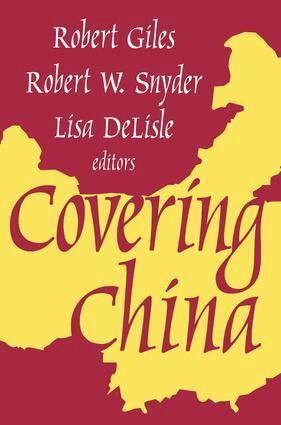
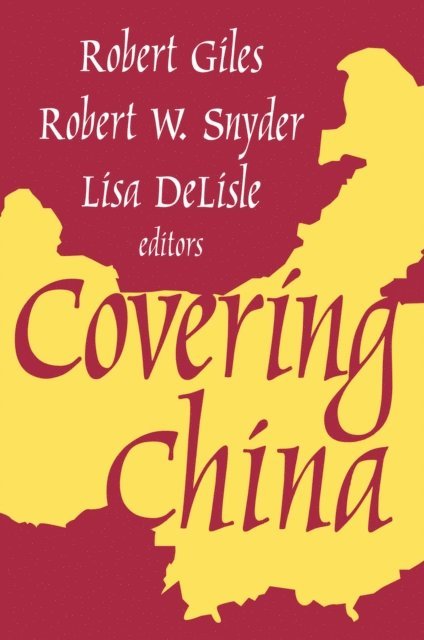
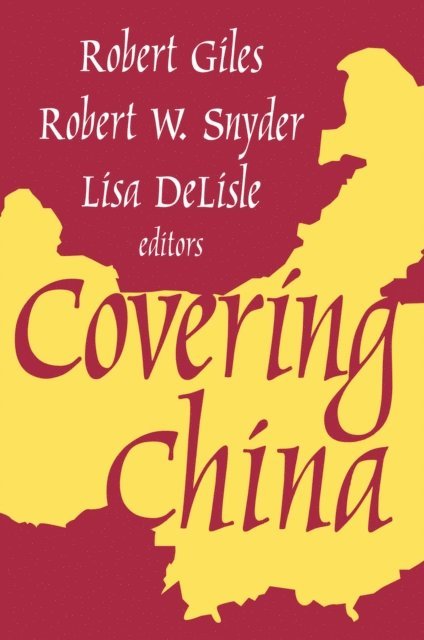
The relationship between China and the United States has been marked by a lack of mutual comprehension that stretches from America's missionary paternalism in the early twentieth century to the fears and fascinations of the present. Throughout the twentieth century China has attracted the attention of American journalists, from the first China hands who covered an ancient country lurching into the modern world, to the chroniclers of World War II and the Chinese civil war, to the reporters who today explore the contradictions of China's economy. Covering China looks at the questions, concerns, and conceptions of all the generations of American reporters against the backdrop of Chinese history and China's own media.Covering China is divided into three sections. "Histories" takes up the events, anniversaries, and processes that have shaped Chinese and American media coverage over the century. Included here are chapters focusing on the civil war and analyzing American reporting in the 1930s and 1940s in their many viewpoints, as well as in the decades when China was closed to American journalists. Other chapters consider the influence on journalism of various political movements from the anti-Western May 4th movement of 1918 to the Tiananmen Square protests of 1989. "Communicating" explores the challenges of explaining China to Americans and America to the Chinese. Among the topics covered here are the Chinese media reaction to the Clinton scandal, the status of Hong Kong as a window between China and the West, Communist efforts to control public opinion in the media, and the pioneering role of Pearl S. Buck in interpreting China for American readers. The concluding section, "Issues," examines important stories now emerging in China that will matter to both journalists and China watchers, including the changing roles of Chinese women, little-covered instances of ethnic unrest, and the complexities of economic and environmental stories.The variety of points of view expressed in Covering China is a testament to the vigor of contemporary writing on China. As one contributor notes, American media coverage of China needs to challenge existing assumptions and be ready for the unexpected. By doing so, journalists can minimize the sense of shock that erupts in America at each swing of Chinese history. Covering China will be of interest to China area specialists, journalists, and cultural historians.Robert W. Snyder is managing editor of the Media Studies Journal, a historian, and author of Transit Talk: New York's Bus and Subway Workers Tell Their Stories. He has taught at Princeton University and New York University.
367 kr
Skickas inom 5-8 vardagar
An anecdotal history published on the occasion of the one hundredth anniversary of Ohio University's renowned E. W. Scripps School of Journalism.After its founding in 1924, what is now the E. W. Scripps School of Journalism at Ohio University quickly became one of the premier programs in the country. For decades, it has produced leaders who have reached the highest levels of journalism and communication in their careers, and their success is a direct product not only of the education they get in Athens but of the community the school fosters.In this book, nearly one hundred alumni, faculty, friends, and students offer their stories of life at and after Scripps. The result is a multilayered, inspiring portrait of the school and how it shapes those who pass through its doors. At the same time, The Scripps School gives a nuanced history of journalism education at Ohio University. From covering assassinations and presidential elections to major moments in sports, alumni have documented the unprecedented and the historic, and here they show just how Scripps prepared them to be there.The Scripps School, edited by former director Ralph Izard, is a love letter to the people and the institution. At a time when journalism is more important than ever, this book humanizes and contextualizes the profession in ways that will resonate in the Scripps community and beyond.
Correspondence of Mr. Ralph Izard, of South Carolina, From the Year 1774 to 1804
Inbunden, Engelska, 2022
444 kr
Skickas inom 5-8 vardagar
Correspondence of Mr. Ralph Izard, of South Carolina, From the Year 1774 to 1804
Häftad, Engelska, 2022
315 kr
Skickas inom 5-8 vardagar
Correspondence of Mr. Ralph Izard, of South Carolina
From the Year 1774 to 1804; With a Short Memoir; Volume 1
Inbunden, Engelska, 2023
444 kr
Tillfälligt slut
Correspondence of Mr. Ralph Izard, of South Carolina
From the Year 1774 to 1804; With a Short Memoir; Volume 1
Häftad, Engelska, 2023
315 kr
Tillfälligt slut
346 kr
Skickas inom 5-8 vardagar
172 kr
Skickas inom 5-8 vardagar
Account Of A Journey To Niagara, Montreal And Quebec, In 1765, Or, "tis Eighty Years Since."
Inbunden, Engelska, 2025
334 kr
Tillfälligt slut
Account Of A Journey To Niagara, Montreal And Quebec, In 1765, Or, "tis Eighty Years Since."
Häftad, Engelska, 2025
167 kr
Tillfälligt slut
2 124 kr
Skickas inom 10-15 vardagar
The relationship between China and the United States has been marked by a lack of mutual comprehension that stretches from America's missionary paternalism in the early twentieth century to the fears and fascinations of the present. Throughout the twentieth century China has attracted the attention of American journalists, from the first China hands who covered an ancient country lurching into the modern world, to the chroniclers of World War II and the Chinese civil war, to the reporters who today explore the contradictions of China's economy. Covering China looks at the questions, concerns, and conceptions of all the generations of American reporters against the backdrop of Chinese history and China's own media.Covering China is divided into three sections. "Histories" takes up the events, anniversaries, and processes that have shaped Chinese and American media coverage over the century. Included here are chapters focusing on the civil war and analyzing American reporting in the 1930s and 1940s in their many viewpoints, as well as in the decades when China was closed to American journalists. Other chapters consider the influence on journalism of various political movements from the anti-Western May 4th movement of 1918 to the Tiananmen Square protests of 1989. "Communicating" explores the challenges of explaining China to Americans and America to the Chinese. Among the topics covered here are the Chinese media reaction to the Clinton scandal, the status of Hong Kong as a window between China and the West, Communist efforts to control public opinion in the media, and the pioneering role of Pearl S. Buck in interpreting China for American readers. The concluding section, "Issues," examines important stories now emerging in China that will matter to both journalists and China watchers, including the changing roles of Chinese women, little-covered instances of ethnic unrest, and the complexities of economic and environmental stories.The variety of points of view expressed in Covering China is a testament to the vigor of contemporary writing on China. As one contributor notes, American media coverage of China needs to challenge existing assumptions and be ready for the unexpected. By doing so, journalists can minimize the sense of shock that erupts in America at each swing of Chinese history. Covering China will be of interest to China area specialists, journalists, and cultural historians.Robert W. Snyder is managing editor of the Media Studies Journal, a historian, and author of Transit Talk: New York's Bus and Subway Workers Tell Their Stories. He has taught at Princeton University and New York University.
1 304 kr
Skickas inom 10-15 vardagar
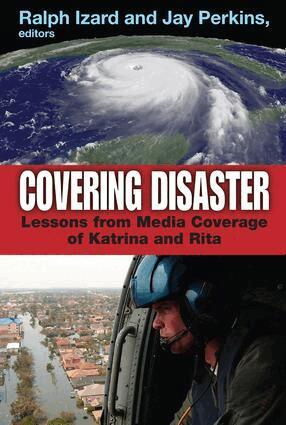
In 2005, journalists faced enormous challenges while covering hurricanes Katrina and Rita along America's Gulf Coast. They struggled to find ways to communicate, move from one place to another, and find reputable information. They witnessed complete chaos, observed human suffering, and were outraged with delayed or ineffective rescue mechanisms. Not only did journalists face these normal problems of crises, since many themselves were among the victims, they were forced to do their jobs under circumstances that seemed impossible.The contributors to Covering Disaster study personal and professional coping mechanisms and lessons that may be learned from media disaster coverage. During Katrina and Rita, journalists responded largely by redefining traditional ideals of fairness, balance, and objectivity and by adopting an emotionally driven and somewhat more subjective reporting style. In this way, they rediscovered and emphasized journalistic purposes and techniques that have long been the hallmarks of greatness. Their work during those months of destruction and pain was applauded by their readers and viewers because it was useful, critical of officials who were not doing their jobs, sought support for those who were suffering, and took a position of public leadership.Now that the winds have died down, flood waters have receded, and rebuilding has begun, the brand of publicoriented journalism found in the midst of the storms must not be forgotten.
457 kr
Skickas inom 10-15 vardagar
In 2005, journalists faced enormous challenges while covering hurricanes Katrina and Rita along America's Gulf Coast. They struggled to find ways to communicate, move from one place to another, and find reputable information. They witnessed complete chaos, observed human suffering, and were outraged with delayed or ineffective rescue mechanisms. Not only did journalists face these normal problems of crises, since many themselves were among the victims, they were forced to do their jobs under circumstances that seemed impossible.The contributors to Covering Disaster study personal and professional coping mechanisms and lessons that may be learned from media disaster coverage. During Katrina and Rita, journalists responded largely by redefining traditional ideals of fairness, balance, and objectivity and by adopting an emotionally driven and somewhat more subjective reporting style. In this way, they rediscovered and emphasized journalistic purposes and techniques that have long been the hallmarks of greatness. Their work during those months of destruction and pain was applauded by their readers and viewers because it was useful, critical of officials who were not doing their jobs, sought support for those who were suffering, and took a position of public leadership.Now that the winds have died down, flood waters have receded, and rebuilding has begun, the brand of publicoriented journalism found in the midst of the storms must not be forgotten.