Randal Rauser – författare
Visar alla böcker från författaren Randal Rauser. Handla med fri frakt och snabb leverans.
10 produkter
10 produkter
E-bok
PDF, Engelska, 20091 048 kr
Läs direkt efter köp
In the history of Western thought, Christian theology was once considered to be ''the Queen of Sciences''. Today it has been marginalised by a prevailing scepticism. Randal Rauser confronts the problem of developing a public voice for the theologian as engaged in true theological science while not compromising the commitment to the Christian community of faith. This book posits a viable account of theological rationality, justification, and knowledge that avoids thetwin pitfalls of modern rationalism and postmodern irrationalism. Theology is freshly understood as a rigorous and rational truth-seeking discipline that seeks theoretical understanding of divine reality.Throughout the modern era the predominant epistemological position has been classical foundationalism, a position now widely rejected by philosophers and theologians alike. Philosophers recognize that it fails to achieve a plausible account of rationality, justification or knowledge, while theologians recognize the extent to which classical foundationalist strictures have distorted Christian doctrine. In its place many philosophers and theologians alike have adopted a nonfoundationalistepistemology, which is in turn often associated with a problematic alethic and metaphysical antirealism. Engaging with the ideas of key thinkers from Descartes, Locke, and Kant, to Bruce Marshall and Alvin Plantinga, Rauser provides an accessible and provocative survey of the theological terrain of themodern - and postmodern - era, arguing in favour of a return to a moderate foundationalism.
Inbunden, Engelska, 2009
1 928 kr
Skickas inom 5-8 vardagar
In the history of Western thought, Christian theology was once considered to be 'the Queen of Sciences'. Today it has been marginalised by a prevailing scepticism. Randal Rauser confronts the problem of developing a public voice for the theologian as engaged in true theological science while not compromising the commitment to the Christian community of faith. This book posits a viable account of theological rationality, justification, and knowledge that avoids the twin pitfalls of modern rationalism and postmodern irrationalism. Theology is freshly understood as a rigorous and rational truth-seeking discipline that seeks theoretical understanding of divine reality. Throughout the modern era the predominant epistemological position has been classical foundationalism, a position now widely rejected by philosophers and theologians alike. Philosophers recognize that it fails to achieve a plausible account of rationality, justification or knowledge, while theologians recognize the extent to which classical foundationalist strictures have distorted Christian doctrine. In its place many philosophers and theologians alike have adopted a nonfoundationalist epistemology, which is in turn often associated with a problematic alethic and metaphysical antirealism. Engaging with the ideas of key thinkers from Descartes, Locke, and Kant, to Bruce Marshall and Alvin Plantinga, Rauser provides an accessible and provocative survey of the theological terrain of the modern - and postmodern - era, arguing in favour of a return to a moderate foundationalism.
Häftad, Engelska, 2006
506 kr
Skickas inom 3-6 vardagar
A handy guide to the major figures and issues in Christian philosophy from Augustine to the present.This volume covers a broad historical sweep and takes into account those non-Christian philosophers that have had a great impact on the Christian tradition. However, it concentrates on the issues that perplex Christian philosophers as they seek to think through their faith in a philosophical way and their philosophical beliefs in the light of their faith. Examples of the topics discussed are the question of whether and how God knows the future, whether we actually know that God exists, and what Athens has to do with Jerusalem. The leaders of the recent revival of Christian analytic philosophy, especially Alvin Plantinga, Nicholas Wolterstorff, William Alston, and Robert Adams are also included.This book will be of interest to those studying Christian philosophy and to Christians seeking to think philosophically about their faith.
Inbunden, Engelska, 2006
1 434 kr
Skickas inom 7-10 vardagar
A handy guide to the major figures and issues in Christian philosophy from Augustine to the present.This volume covers a broad historical sweep and takes into account those non-Christian philosophers that have had a great impact on the Christian tradition. However, it concentrates on the issues that perplex Christian philosophers as they seek to think through their faith in a philosophical way and their philosophical beliefs in the light of their faith. Examples of the topics discussed are the question of whether and how God knows the future, whether we actually know that God exists, and what Athens has to do with Jerusalem. The leaders of the recent revival of Christian analytic philosophy, especially Alvin Plantinga, Nicholas Wolterstorff, William Alston, and Robert Adams are also included.This book will be of interest to those studying Christian philosophy and to Christians seeking to think philosophically about their faith.
E-bok
Engelska, 2013133 kr
Läs direkt efter köp
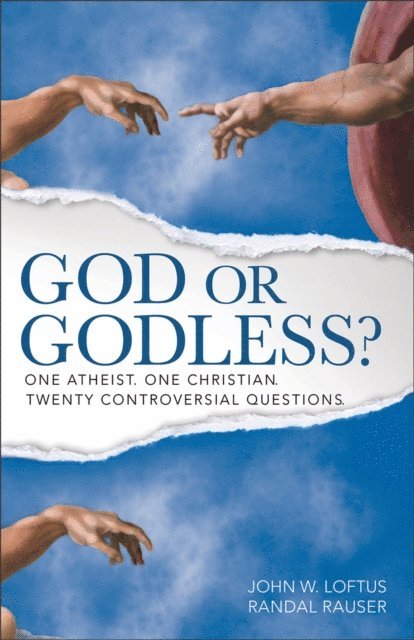
Perhaps the most persistent question in human history is whether or not there is a God. Intelligent people on both sides of the issue have argued, sometimes with deep rancor and bitterness, for generations. The issue can''t be decided by another apologetics book, but the conversation can continue and help each side understand the perspectives of the other.In this unique book, atheist John Loftus and theist Randal Rauser engage in twenty short debates that consider Christianity, the existence of God, and unbelief from a variety of angles. Each concise debate centers on a proposition to be resolved, with either John or Randal arguing in the affirmative and the opponent the negative, and can be read in short bits or big bites. This is the perfect book for Christians and their atheist or agnostic friends to read together, and encourages honest, open, and candid debate on the most important issues of life and faith.
Häftad, Engelska, 2015
189 kr
Skickas inom 5-8 vardagar
E-bok
Engelska, 2015286 kr
Läs direkt efter köp
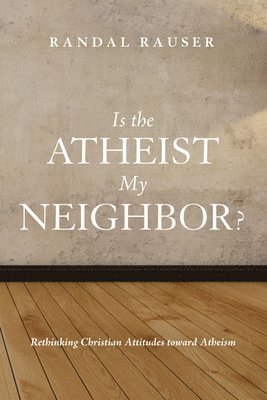
Do atheists hate God? Many Christians seem to think so. For the last three centuries Christians have widely assumed that atheism is always a result of a rebellious, sinful rejection of God. According to this view, at some level atheists really do know there is a God, but they sinfully suppress this knowledge because they want to live independently of God. But what if that is not correct? What if some folks are atheists not because they''re sinful and foolish but because they''ve thought hard, they''ve looked carefully, and they have simply not found God? What if the common Christian assumptions about atheism are little more than an indefensible prejudice? What if the atheist really is our neighbor?
Inbunden, Engelska, 2015
353 kr
Skickas inom 5-8 vardagar
Häftad, Engelska, 2021
260 kr
Skickas inom 3-6 vardagar
Häftad, Engelska, 2016
206 kr
Tillfälligt slut
The question of God is simply too important--and too interesting--to leave to angry polemicists. That is the premise of this friendly, straightforward, and rigorous dialogue between Christian theologian Randal Rauser and atheist Justin Schieber. Setting aside the formality of the traditional debate, the authors invite the reader to join them in an extended, informal conversation. This has the advantage of easing readers into thorny topics that in a debate setting can easily become confusing or difficult to follow.Like any good conversation, this one involves provocative arguments, amusing anecdotes, and some lively banter. Rauser and Schieber begin with the question of why debates about God still matter. They then delve into a number of important topics: the place of reason and faith, the radically different concepts of God in various cultures, morality and its traditional connection with religious beliefs, the problem of a universe that is overwhelmingly hostile to life as we know it, mathematical truths and what they may or may not say about the existence of God, the challenge of suffering and evil to belief in God, and more.Refreshingly upbeat and amicable throughout, this stimulating conversation between two friends from opposing points of view is an ideal introduction to a perennial topic of debate.