Randall T. Hayden – författare
1 831 kr
Skickas
2 085 kr
Läs direkt efter köp
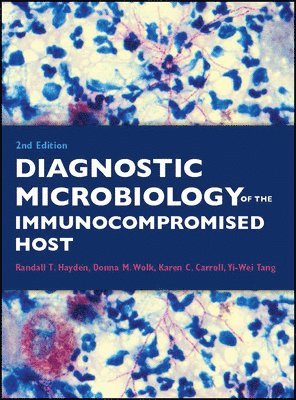
Strategies for providing optimal care to this high-risk patient group
The immunocompromised patient population is increasing throughout the world. Major advances in transplantation techniques have expanded access to lifesaving therapies and improved outcomes in these high-risk populations. An understanding of the biology of these infections, host conditions, and the limitations of technologies used to detect and quantify such pathogens is critical to optimal care.
This new edition of Diagnostic Microbiology of the Immunocompromised Host covers all aspects of state-of-the-art diagnostics for infectious complications in the immunocompromised patient. Editors Randall Hayden, Karen Carroll, Yi-Wei Tang and Donna Wolk, assembled the contributions of a team of preeminent authors to discuss a broad range of topics, including
relevant aspects of host biology, antineoplastic, and transplantation techniques and the basis of immunosuppressive conditions ranging from diabetes to age-related immunosuppression approaches, interpretations, and limitations of laboratory diagnosis of infections by a wide range of specific etiologic agents laboratory diagnosis of infections of specific organ systems, such as respiratory tract infections, gastrointestinal tract infections, and central nervous system infections special topics such as prosthetic devices and catheters, healthcare acquired infections, and morphologic considerations (anatomic pathology) future diagnostic technologies and their potential impact on the fieldDiagnostic Microbiology of the Immunocompromised Host is a resource for laboratory medicine specialists, pathologists, technologists, students, and clinical care professionals who are involved or interested in the care of the immunocompromised host.
If you are looking for online access to the latest clinical microbiology content, please visit www.wiley.com/learn/clinmicronow.
2 590 kr
Läs direkt efter köp
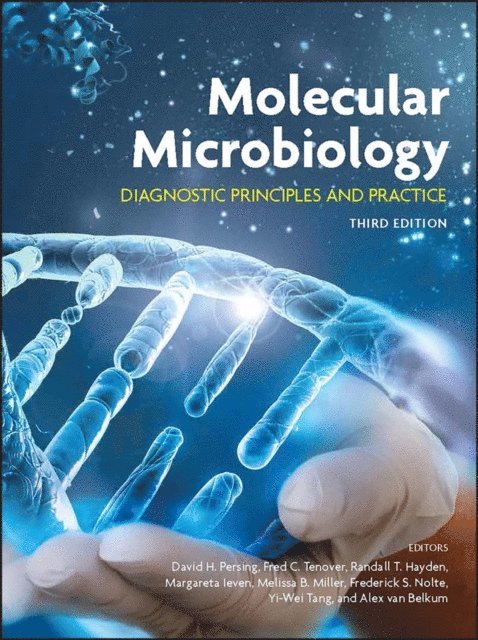
Presenting the latest molecular diagnostic techniques in one comprehensive volume
The molecular diagnostics landscape has changed dramatically since the last edition of Molecular Microbiology: Diagnostic Principles and Practice in 2011. With the spread of molecular testing and the development of new technologies and their opportunities, laboratory professionals and physicians more than ever need a resource to help them navigate this rapidly evolving field.
Editors David Persing and Fred Tenover have brought together a team of experienced researchers and diagnosticians to update this third edition comprehensively, to present the latest developments in molecular diagnostics in the support of clinical care and of basic and clinical research, including next-generation sequencing and whole-genome analysis. These updates are provided in an easy-to-read format and supported by a broad range of practical advice, such as determining the appropriate type and quantity of a specimen, releasing and concentrating the targets, and eliminating inhibitors.
Molecular Microbiology: Diagnostic Principles and Practice
Presents the latest basic scientific theory underlying molecular diagnostics Offers tested and proven applications of molecular diagnostics for the diagnosis of infectious diseases, including point-of-care testing Illustrates and summarizes key concepts and techniques with detailed figures and tables Discusses emerging technologies, including the use of molecular typing methods for real-time tracking of infectious outbreaks and antibiotic resistance Advises on the latest quality control and quality assurance measures Explores the increasing opportunities and capabilities of information technologyMolecular Microbiology: Diagnostic Principles and Practice is a textbook for molecular diagnostics courses that can also be used by anyone involved with diagnostic test selection and interpretation. It is also a useful reference for laboratories and as a continuing education resource for physicians.
If you are looking for online access to the latest clinical microbiology content, please visit www.wiley.com/learn/clinmicronow.
2 208 kr
Skickas inom 11-20 vardagar
1 629 kr
Läs direkt efter köp
The definitive guide for identifying fungi from clinical specimens
Medically Important Fungi will expand your knowledge and support your work by:
Providing detailed descriptions of the major mycoses as viewed in patients'' specimens by direct microscopic examination of stained slides Offering a logical step-by-step process for identification of cultured organisms, utilizing detailed descriptions, images, pointers on organisms'' similarities and distinctions, and selected references for further information Covering nearly 150 of the fungi most commonly encountered in the clinical mycology laboratory Presenting details on each organism''s pathogenicity, growth characteristics, relevant biochemical reactions, and microscopic morphology, illustrated with photomicrographs, Dr. Larone''s unique and elegant drawings, and color photos of colony morphology and various test results Explaining the current changes in fungal taxonomy and nomenclature that are due to information acquired through molecular taxonomic studies of evolutionary fungal relationships Providing basic information on molecular diagnostic methods, e.g., PCR amplification, nucleic acid sequencing, MALDI-TOF mass spectrometry, and other commercial platforms Including an extensive section of easy-to-follow lab protocols, a comprehensive list of media and stain procedures, guidance on collection and preparation of patient specimens, and an illustrated glossaryWith Larone''s Medically Important Fungi: A Guide to Identification, both novices and experienced professionals in clinical microbiology laboratories can continue to confidently identify commonly encountered fungi.If you are looking for online access to the latest clinical microbiology content, please visit www.wiley.com/learn/clinmicronow.
1 629 kr
Läs direkt efter köp
The definitive guide for identifying fungi from clinical specimens
Medically Important Fungi will expand your knowledge and support your work by:
Providing detailed descriptions of the major mycoses as viewed in patients'' specimens by direct microscopic examination of stained slides Offering a logical step-by-step process for identification of cultured organisms, utilizing detailed descriptions, images, pointers on organisms'' similarities and distinctions, and selected references for further information Covering nearly 150 of the fungi most commonly encountered in the clinical mycology laboratory Presenting details on each organism''s pathogenicity, growth characteristics, relevant biochemical reactions, and microscopic morphology, illustrated with photomicrographs, Dr. Larone''s unique and elegant drawings, and color photos of colony morphology and various test results Explaining the current changes in fungal taxonomy and nomenclature that are due to information acquired through molecular taxonomic studies of evolutionary fungal relationships Providing basic information on molecular diagnostic methods, e.g., PCR amplification, nucleic acid sequencing, MALDI-TOF mass spectrometry, and other commercial platforms Including an extensive section of easy-to-follow lab protocols, a comprehensive list of media and stain procedures, guidance on collection and preparation of patient specimens, and an illustrated glossaryWith Larone''s Medically Important Fungi: A Guide to Identification, both novices and experienced professionals in clinical microbiology laboratories can continue to confidently identify commonly encountered fungi.If you are looking for online access to the latest clinical microbiology content, please visit www.wiley.com/learn/clinmicronow.
2 012 kr
Läs direkt efter köp
Strategies for providing optimal care to this high-risk patient group
The immunocompromised patient population is increasing throughout the world. Major advances in transplantation techniques have expanded access to lifesaving therapies and improved outcomes in these high-risk populations. An understanding of the biology of these infections, host conditions, and the limitations of technologies used to detect and quantify such pathogens is critical to optimal care.
This new edition of Diagnostic Microbiology of the Immunocompromised Host covers all aspects of state-of-the-art diagnostics for infectious complications in the immunocompromised patient. Editors Randall Hayden, Karen Carroll, Yi-Wei Tang and Donna Wolk, assembled the contributions of a team of preeminent authors to discuss a broad range of topics, including
relevant aspects of host biology, antineoplastic, and transplantation techniques and the basis of immunosuppressive conditions ranging from diabetes to age-related immunosuppression approaches, interpretations, and limitations of laboratory diagnosis of infections by a wide range of specific etiologic agents laboratory diagnosis of infections of specific organ systems, such as respiratory tract infections, gastrointestinal tract infections, and central nervous system infections special topics such as prosthetic devices and catheters, healthcare acquired infections, and morphologic considerations (anatomic pathology) future diagnostic technologies and their potential impact on the fieldDiagnostic Microbiology of the Immunocompromised Host is a resource for laboratory medicine specialists, pathologists, technologists, students, and clinical care professionals who are involved or interested in the care of the immunocompromised host.
If you are looking for online access to the latest clinical microbiology content, please visit www.wiley.com/learn/clinmicronow.
2 590 kr
Läs direkt efter köp
Presenting the latest molecular diagnostic techniques in one comprehensive volume
The molecular diagnostics landscape has changed dramatically since the last edition of Molecular Microbiology: Diagnostic Principles and Practice in 2011. With the spread of molecular testing and the development of new technologies and their opportunities, laboratory professionals and physicians more than ever need a resource to help them navigate this rapidly evolving field.
Editors David Persing and Fred Tenover have brought together a team of experienced researchers and diagnosticians to update this third edition comprehensively, to present the latest developments in molecular diagnostics in the support of clinical care and of basic and clinical research, including next-generation sequencing and whole-genome analysis. These updates are provided in an easy-to-read format and supported by a broad range of practical advice, such as determining the appropriate type and quantity of a specimen, releasing and concentrating the targets, and eliminating inhibitors.
Molecular Microbiology: Diagnostic Principles and Practice
Presents the latest basic scientific theory underlying molecular diagnostics Offers tested and proven applications of molecular diagnostics for the diagnosis of infectious diseases, including point-of-care testing Illustrates and summarizes key concepts and techniques with detailed figures and tables Discusses emerging technologies, including the use of molecular typing methods for real-time tracking of infectious outbreaks and antibiotic resistance Advises on the latest quality control and quality assurance measures Explores the increasing opportunities and capabilities of information technologyMolecular Microbiology: Diagnostic Principles and Practice is a textbook for molecular diagnostics courses that can also be used by anyone involved with diagnostic test selection and interpretation. It is also a useful reference for laboratories and as a continuing education resource for physicians.
If you are looking for online access to the latest clinical microbiology content, please visit www.wiley.com/learn/clinmicronow.
2 387 kr
Skickas inom 5-8 vardagar
944 kr
Tillfälligt slut