Yi-Wei Tang – författare
8 340 kr
Läs direkt efter köp
Current and Emerging Technologies for the Diagnosis of Microbial Infections
2 206 kr
Skickas inom 10-15 vardagar
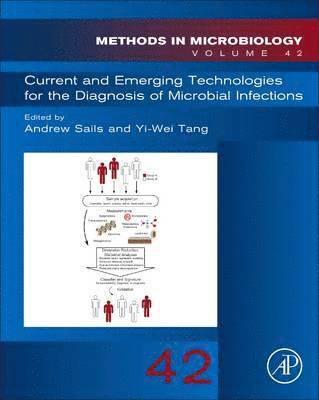
Current and Emerging Technologies in Microbial Diagnostics, the latest volume in the Methods in Microbiology series, provides comprehensive, cutting-edge reviews of current and emerging technologies in the field of clinical microbiology.
The book features a wide variety of state-of-the art methods and techniques for the diagnosis and management of microbial infections, with chapters authored by internationally renowned experts. This volume focuses on current techniques, such as MALDI-TOF mass spectroscopy and molecular diagnostics, along with newly emerging technologies such as host-based diagnostics and next generation sequencing.
Written by recognized leaders and experts in the field Provides a comprehensive and cutting-edge review of current and emerging technologies in the field of clinical microbiology, including discussions of current techniques such as MALDI-TOF mass spectroscopy and molecular diagnostics Includes a broad range and breadth of techniques covered Presents discussions on newly emerging technologies such as host-based diagnostics and next generation sequencing7 706 kr
Skickas inom 10-15 vardagar
10 679 kr
Läs direkt efter köp
2 053 kr
Läs direkt efter köp
Clinical microbiologists are engaged in the field of diagnostic microbiology to determine whether pathogenic microorganisms are present in clinical specimens collected from patients with suspected infections. If microorganisms are found, these are identified and susceptibility profiles, when indicated, are determined. During the past two decades, technical advances in the field of diagnostic microbiology have made constant and enormous progress in various areas, including bacteriology, mycology, mycobacteriology, parasitology, and virology. The diagnostic capabilities of modern clinical microbiology laboratories have improved rapidly and have expanded greatly due to a technological revolution in molecular aspects of microbiology and immunology. In particular, rapid techniques for nucleic acid amplification and characterization combined with automation and user-friendly software have significantly broadened the diagnostic arsenal for the clinical microbiologist. The conventional diagnostic model for clinical microbiology has been labor-intensive and frequently required days to weeks before test results were available. Moreover, due to the complexity and length of such testing, this service was usually directed at the hospitalized patient population. The physical structure of laboratories, staffing patterns, workflow, and turnaround time all have been influenced profoundly by these technical advances. Such changes will undoubtedly continue and lead the field of diagnostic microbiology inevitably to a truly modern discipline.
Advanced Techniques in Diagnostic Microbiology provides a comprehensive and up-to-date description of advanced methods that have evolved for the diagnosis of infectious diseases in the routine clinical microbiology laboratory. The book is divided into two sections. The first techniques section covers the principles and characteristics of techniques ranging from rapid antigen testing, to advanced antibody detection, to in vitro nucleicacid amplification techniques, and to nucleic acid microarray and mass spectrometry. Sufficient space is assigned to cover different nucleic acid amplification formats that are currently being used widely in the diagnostic microbiology field. Within each technique, examples are given regarding its application in the diagnostic field. Commercial product information, if available, is introduced with commentary in each chapter. If several test formats are available for a technique, objective comparisons are given to illustrate the contrasts of their advantages and disadvantages. The second applications section provides practical examples of application of these advanced techniques in several "hot" spots in the diagnostic field. A diverse team of authors presents authoritative and comprehensive information on sequence-based bacterial identification, blood and blood product screening, molecular diagnosis of sexually transmitted diseases, advances in mycobacterial diagnosis, novel and rapid emerging microorganism detection and genotyping, and future directions in the diagnostic microbiology field.
We hope our readers like this technique-based approach and your feedback is highly appreciated. We want to thank the authors who devoted their time and efforts to produce their chapters. We also thank the staff at Springer Press, especially Melissa Ramondetta, who initiated the whole project. Finally, we greatly appreciate the constant encouragement of our family members through this long effort. Without their unwavering faith and full support, we would never have had the courage to commence this project.
1 564 kr
Skickas inom 10-15 vardagar
3 577 kr
Läs direkt efter köp
In the United States, hospitals annually report over 5 million cases of infectious-disease-related illnesses: clinical microbiology laboratories in these hospitals are engaged in detecting and identifying the pathogenic microorganisms in clinical specimens collected from these patients with suspected infections. Clearly, the timely and accurate detection/identification of these microbial pathogens is critical for patient treatment decisions and outcomes for millions of patients each year. Despite an appreciation that the outcome of an infectious-disease-related illness is directly related to the time required to detect and identify a microbial pathogen, clinical microbiology laboratories in the United States as well as worldwide have long been hampered by traditional culture-based assays, which may require prolonged incubation time for slowly growing microorganisms such as Mycobacterium tuberculosis. Moreover, traditional culture-based assays often require multiple steps with additional time needed for discernment of species and/or detection of antimicrobial resistance. Finally, these traditional, slow multistep culture-based assays are labor-intensive and required skilled clinical microbiologists at the bench.
Over the past several decades, advanced molecular techniques in diagnostic microbiology quietly have been revolutionizing the practice of clinical microbiology in the hospital setting. Indeed, molecular diagnostic testing in general and nucleic-acid-based amplification methods in particular have been heralded as diagnostic tools for the new millennium. There is no question that the development of rapid molecular techniques for nucleic acid amplification/characterization combined with automation and user-friendly software has greatly broadened the diagnostic capabilities of the clinical microbiology laboratory. These technical advances in molecular microbiology over the first decade of the 21st Century have profoundly influenced the physical structure of clinical microbiology laboratories as well as their staffing patterns, workflow, and turnaround time. These molecular microbiology advances have also resulted in the need for a revised and updated second edition of Advanced Techniques in Diagnostic Microbiology. This second edition again provides an updated and comprehensive description of the ongoing evolution of molecular methods for the diagnosis of infectious diseases. In addition, many new chapters have been added, including a chapter on the clinical interpretation and relevance of advanced technique results. The second edition, like the first edition, includes both a “techniques” section describing the latest molecular techniques and an “applications” section describing how these advanced molecular techniques are being used in the clinical setting. Finally, the second edition, like the first edition, utilizes a diverse team of authors who have compiled chapters that provide the reader with comprehensive and useable information on advanced molecular microbiology techniques.1 831 kr
Skickas
2 085 kr
Läs direkt efter köp
Strategies for providing optimal care to this high-risk patient group
The immunocompromised patient population is increasing throughout the world. Major advances in transplantation techniques have expanded access to lifesaving therapies and improved outcomes in these high-risk populations. An understanding of the biology of these infections, host conditions, and the limitations of technologies used to detect and quantify such pathogens is critical to optimal care.
This new edition of Diagnostic Microbiology of the Immunocompromised Host covers all aspects of state-of-the-art diagnostics for infectious complications in the immunocompromised patient. Editors Randall Hayden, Karen Carroll, Yi-Wei Tang and Donna Wolk, assembled the contributions of a team of preeminent authors to discuss a broad range of topics, including
relevant aspects of host biology, antineoplastic, and transplantation techniques and the basis of immunosuppressive conditions ranging from diabetes to age-related immunosuppression approaches, interpretations, and limitations of laboratory diagnosis of infections by a wide range of specific etiologic agents laboratory diagnosis of infections of specific organ systems, such as respiratory tract infections, gastrointestinal tract infections, and central nervous system infections special topics such as prosthetic devices and catheters, healthcare acquired infections, and morphologic considerations (anatomic pathology) future diagnostic technologies and their potential impact on the fieldDiagnostic Microbiology of the Immunocompromised Host is a resource for laboratory medicine specialists, pathologists, technologists, students, and clinical care professionals who are involved or interested in the care of the immunocompromised host.
If you are looking for online access to the latest clinical microbiology content, please visit www.wiley.com/learn/clinmicronow.
2 590 kr
Läs direkt efter köp
Presenting the latest molecular diagnostic techniques in one comprehensive volume
The molecular diagnostics landscape has changed dramatically since the last edition of Molecular Microbiology: Diagnostic Principles and Practice in 2011. With the spread of molecular testing and the development of new technologies and their opportunities, laboratory professionals and physicians more than ever need a resource to help them navigate this rapidly evolving field.
Editors David Persing and Fred Tenover have brought together a team of experienced researchers and diagnosticians to update this third edition comprehensively, to present the latest developments in molecular diagnostics in the support of clinical care and of basic and clinical research, including next-generation sequencing and whole-genome analysis. These updates are provided in an easy-to-read format and supported by a broad range of practical advice, such as determining the appropriate type and quantity of a specimen, releasing and concentrating the targets, and eliminating inhibitors.
Molecular Microbiology: Diagnostic Principles and Practice
Presents the latest basic scientific theory underlying molecular diagnostics Offers tested and proven applications of molecular diagnostics for the diagnosis of infectious diseases, including point-of-care testing Illustrates and summarizes key concepts and techniques with detailed figures and tables Discusses emerging technologies, including the use of molecular typing methods for real-time tracking of infectious outbreaks and antibiotic resistance Advises on the latest quality control and quality assurance measures Explores the increasing opportunities and capabilities of information technologyMolecular Microbiology: Diagnostic Principles and Practice is a textbook for molecular diagnostics courses that can also be used by anyone involved with diagnostic test selection and interpretation. It is also a useful reference for laboratories and as a continuing education resource for physicians.
If you are looking for online access to the latest clinical microbiology content, please visit www.wiley.com/learn/clinmicronow.
2 208 kr
Skickas inom 11-20 vardagar
2 085 kr
Läs direkt efter köp
Strategies for providing optimal care to this high-risk patient group
The immunocompromised patient population is increasing throughout the world. Major advances in transplantation techniques have expanded access to lifesaving therapies and improved outcomes in these high-risk populations. An understanding of the biology of these infections, host conditions, and the limitations of technologies used to detect and quantify such pathogens is critical to optimal care.
This new edition of Diagnostic Microbiology of the Immunocompromised Host covers all aspects of state-of-the-art diagnostics for infectious complications in the immunocompromised patient. Editors Randall Hayden, Karen Carroll, Yi-Wei Tang and Donna Wolk, assembled the contributions of a team of preeminent authors to discuss a broad range of topics, including
relevant aspects of host biology, antineoplastic, and transplantation techniques and the basis of immunosuppressive conditions ranging from diabetes to age-related immunosuppression approaches, interpretations, and limitations of laboratory diagnosis of infections by a wide range of specific etiologic agents laboratory diagnosis of infections of specific organ systems, such as respiratory tract infections, gastrointestinal tract infections, and central nervous system infections special topics such as prosthetic devices and catheters, healthcare acquired infections, and morphologic considerations (anatomic pathology) future diagnostic technologies and their potential impact on the fieldDiagnostic Microbiology of the Immunocompromised Host is a resource for laboratory medicine specialists, pathologists, technologists, students, and clinical care professionals who are involved or interested in the care of the immunocompromised host.
If you are looking for online access to the latest clinical microbiology content, please visit www.wiley.com/learn/clinmicronow.
2 590 kr
Läs direkt efter köp
Presenting the latest molecular diagnostic techniques in one comprehensive volume
The molecular diagnostics landscape has changed dramatically since the last edition of Molecular Microbiology: Diagnostic Principles and Practice in 2011. With the spread of molecular testing and the development of new technologies and their opportunities, laboratory professionals and physicians more than ever need a resource to help them navigate this rapidly evolving field.
Editors David Persing and Fred Tenover have brought together a team of experienced researchers and diagnosticians to update this third edition comprehensively, to present the latest developments in molecular diagnostics in the support of clinical care and of basic and clinical research, including next-generation sequencing and whole-genome analysis. These updates are provided in an easy-to-read format and supported by a broad range of practical advice, such as determining the appropriate type and quantity of a specimen, releasing and concentrating the targets, and eliminating inhibitors.
Molecular Microbiology: Diagnostic Principles and Practice
Presents the latest basic scientific theory underlying molecular diagnostics Offers tested and proven applications of molecular diagnostics for the diagnosis of infectious diseases, including point-of-care testing Illustrates and summarizes key concepts and techniques with detailed figures and tables Discusses emerging technologies, including the use of molecular typing methods for real-time tracking of infectious outbreaks and antibiotic resistance Advises on the latest quality control and quality assurance measures Explores the increasing opportunities and capabilities of information technologyMolecular Microbiology: Diagnostic Principles and Practice is a textbook for molecular diagnostics courses that can also be used by anyone involved with diagnostic test selection and interpretation. It is also a useful reference for laboratories and as a continuing education resource for physicians.
If you are looking for online access to the latest clinical microbiology content, please visit www.wiley.com/learn/clinmicronow.
1 664 kr
Skickas inom 10-15 vardagar
2 110 kr
Läs direkt efter köp
In recent years, advanced molecular techniques in diagnostic microbiology have been revolutionizing the practice of clinical microbiology in the hospital setting. Molecular diagnostic testing in general and nucleic acid-based amplification methods in particular have been heralded as diagnostic tools for the new millennium. This third edition covers not only the most recent updates and advances, but details newly invented omic techniques, such as next generation sequencing. It is divided into two distinct volumes, with Volume 1 describing the techniques, and Volume 2 addressing their applications in the field. In addition, both volumes focus more so on the clinical relevance of the test results generated by these techniques than previous editions.
1 664 kr
Skickas inom 10-15 vardagar
2 110 kr
Läs direkt efter köp
2 203 kr
Skickas inom 5-8 vardagar
2 361 kr
Skickas inom 5-8 vardagar