Reniel Rodriguez Ramos – författare
Visar alla böcker från författaren Reniel Rodriguez Ramos. Handla med fri frakt och snabb leverans.
3 produkter
3 produkter
Inbunden, Engelska, 2013
2 916 kr
Skickas inom 7-10 vardagar
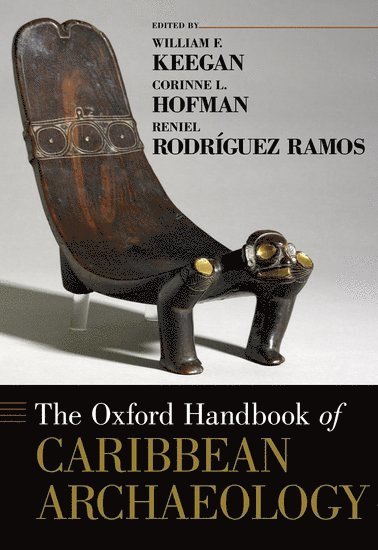
The Oxford Handbook of Caribbean Archaeology provides an overview of archaeological investigations in the insular Caribbean, understood here as the islands whose shores surround the Caribbean Sea and the islands of the Bahama Archipelago. Though these islands were never isolated from the surrounding mainland, their histories are sufficiently diverse to warrant their identification as distinct areas of culture. Over the past 20 years, Caribbean archaeology has been transformed from a focus on reconstructing culture histories to one on the mobility and exchange expressed in cultural and social dynamics. This Handbook brings together, for the first time, examples of the best research conducted by scholars from across the globe to address the complexity of the Caribbean past.The Handbook is divided into five sections. Part I, Islands of History and the Precolonial History of the Caribbean Islands, provides an introduction to Caribbean Archaeology and its history. The papers in the following Ethnohistory section address the diversity of cultural practices expressed in the insular Caribbean and develop historical descriptions in concert with archaeological evidence in order to place language, social organization, and the native Taínos and Island Caribs in perspective. The following section, Culture History, provides the latest research on specific geographical locations and cross-cultural engagements, from Jamaica and the Bahama archigelago to the Saladoid and the Isthmo-Antillean Engagements. Creating History, the fourth section, includes papers on specific issues related to the field, such as Zooarchaeology, Rock Art, and DNA analysis, among others. The final section, World History, centers on the consequences of European colonization.
E-bok
PDF, Engelska, 20131 980 kr
Läs direkt efter köp
The Oxford Handbook of Caribbean Archaeology provides an overview of archaeological investigations in the insular Caribbean, understood here as the islands whose shores surround the Caribbean Sea and the islands of the Bahama Archipelago. Though these islands were never isolated from the surrounding mainland, their histories are sufficiently diverse to warrant their identification as distinct areas of culture. Over the past 20 years, Caribbean archaeology has been transformed from a focus on reconstructing culture histories to one on the mobility and exchange expressed in cultural and social dynamics. This Handbook brings together, for the first time, examples of the best research conducted by scholars from across the globe to address the complexity of the Caribbean past.The Handbook is divided into five sections. Part I, Islands of History and the Precolonial History of the Caribbean Islands, provides an introduction to Caribbean Archaeology and its history. The papers in the following Ethnohistory section address the diversity of cultural practices expressed in the insular Caribbean and develop historical descriptions in concert with archaeological evidence in order to place language, social organization, and the native Taínos and Island Caribs in perspective. The following section, Culture History, provides the latest research on specific geographical locations and cross-cultural engagements, from Jamaica and the Bahama archigelago to the Saladoid and the Isthmo-Antillean Engagements. Creating History, the fourth section, includes papers on specific issues related to the field, such as Zooarchaeology, Rock Art, and DNA analysis, among others. The final section, World History, centers on the consequences of European colonization.
E-bok
Engelska, 2010568 kr
Läs direkt efter köp
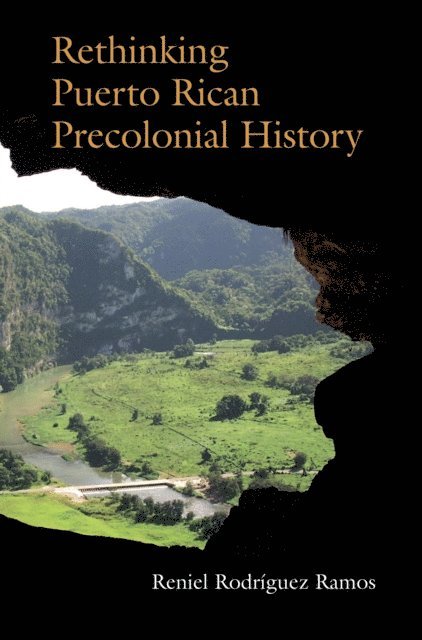
Focuses on the successive indigenous cultures of Puerto Rico prior to 1493 The history of Puerto Rico has usually been envisioned as a sequence of colonizations-various indigenous peoples from Archaic through Taíno were successively invaded, assimilated, or eliminated, followed by the Spanish entrada, which was then modified by African traditions and, since 1898, by the United States. The truth is more complex, but in many ways Puerto Rico remains one of the last colonies in the world. This volume focuses on the successive indigenous cultures of Puerto Rico prior to 1493. Traditional studies of the cultures of indigenous peoples of the Caribbean have centered on ceramic studies, based on the archaeological model developed by Irving Rouse which has guided Caribbean archaeology for decades. Rodríguez Ramos departs from this methodology by implementing lithics as the primary unit for tracing the origins and developments of the indigenous peoples of Puerto Rico. Analyzing the technological styles involved in the production of stone artifacts in the island through time, as well as the evaluation of an inventory of more than 500 radiocarbon dates recovered since Rouse''s model emerged, the author presents a truly innovative study revealing alternative perspectives on Puerto Rico''s pre-Columbian culture-historical sequence. By applying a multiscalar design, he not only not only provides an analysis of the plural ways in which the precolonial peoples of the island interacted and negotiated their identities but also shows how the cultural landscapes of Puerto Rico, the Antilles, and the Greater Caribbean shaped and were shaped by mutually constituting processes through time.