Richard Wiese – författare
Visar alla böcker från författaren Richard Wiese. Handla med fri frakt och snabb leverans.
12 produkter
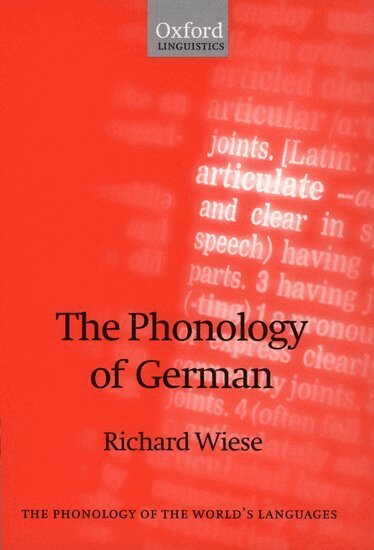
The Phonology of German
Häftad, 2000
1280 kr
Lägg i varukorg
In this book, Richard Wiese provides the most complete and up-to-date description presently available of the phonology of German. Starting with a presentation of phonemes and their features, the author then describes in detail syllables, higher prosodic units, phonological conditions of word …
Empirical Approaches to the Phonological Structure of Words
Av Christiane Ulbrich, Alexander Werth m. fl.
Inbunden, 2018
1844 kr
Lägg i varukorg
One of the basic grammatical categories in linguistics is the phonological word. But how are words made up in terms of their sounds? And how is the information on the sound structure of words used in the processing of words? The multidimensionality of the phonological word relates it to semantics, …
Empirical Approaches to the Phonological Structure of Words
Av Richard Wiese, Alexander Werth m. fl.
E-bok, 2018
1825 kr
Lägg i varukorg
One of the basic grammatical categories in linguistics is the phonological word. But how are words made up in terms of their sounds? And how is the information on the sound structure of words used in the processing of words? The multidimensionality of the phonological word relates it to semantics, …
Empirical Approaches to the Phonological Structure of Words
Av Richard Wiese, Alexander Werth m. fl.
E-bok, 2018
1865 kr
Lägg i varukorg
One of the basic grammatical categories in linguistics is the phonological word. But how are words made up in terms of their sounds? And how is the information on the sound structure of words used in the processing of words? The multidimensionality of the phonological word relates it to semantics, …
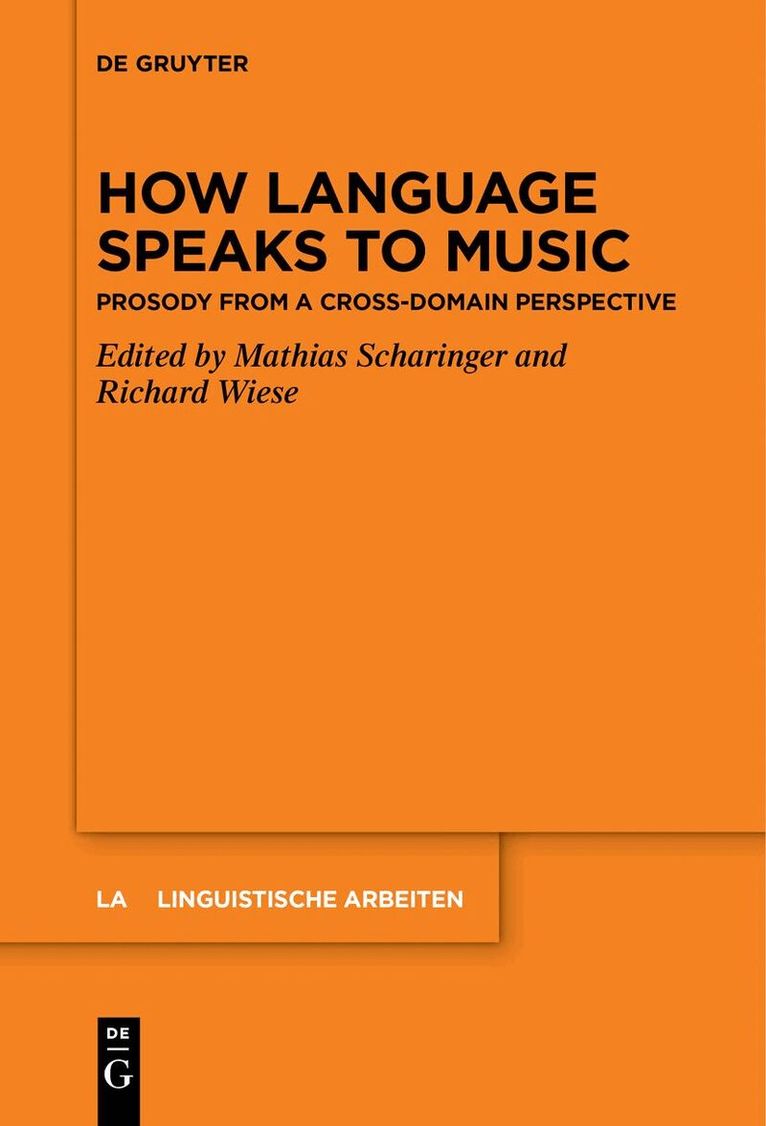
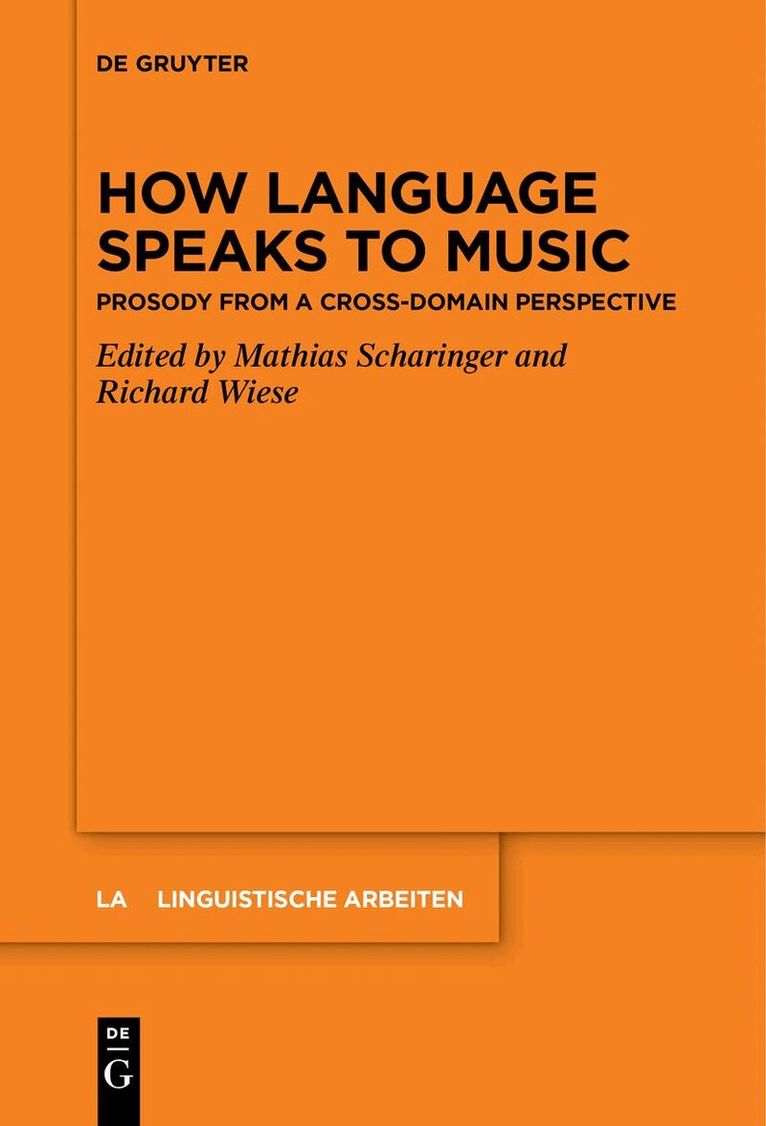
How Language Speaks to Music
Prosody from a Cross-domain Perspective
Av Mathias Scharinger, Richard Wiese
Inbunden, 2022
1520 kr
Lägg i varukorg
Prosody as a system of suprasegmental linguistic information such as rhythm and intonation is a prime candidate for looking at the relation between language and music in a principled way. This claim is based on several aspects: First, prosody is concerned with acoustic correlates of language and …
How Language Speaks to Music
Prosody from a Cross-domain Perspective
Av Richard Wiese, Mathias Scharinger
E-bok, 2022
1308 kr
Lägg i varukorg
Prosody as a system of suprasegmental linguistic information such as rhythm and intonation is a prime candidate for looking at the relation between language and music in a principled way. This claim is based on several aspects: First, prosody is concerned with acoustic correlates of language and …
How Language Speaks to Music
Prosody from a Cross-domain Perspective
Av Richard Wiese, Mathias Scharinger
E-bok, 2022
1337 kr
Lägg i varukorg
Prosody as a system of suprasegmental linguistic information such as rhythm and intonation is a prime candidate for looking at the relation between language and music in a principled way. This claim is based on several aspects: First, prosody is concerned with acoustic correlates of language and …
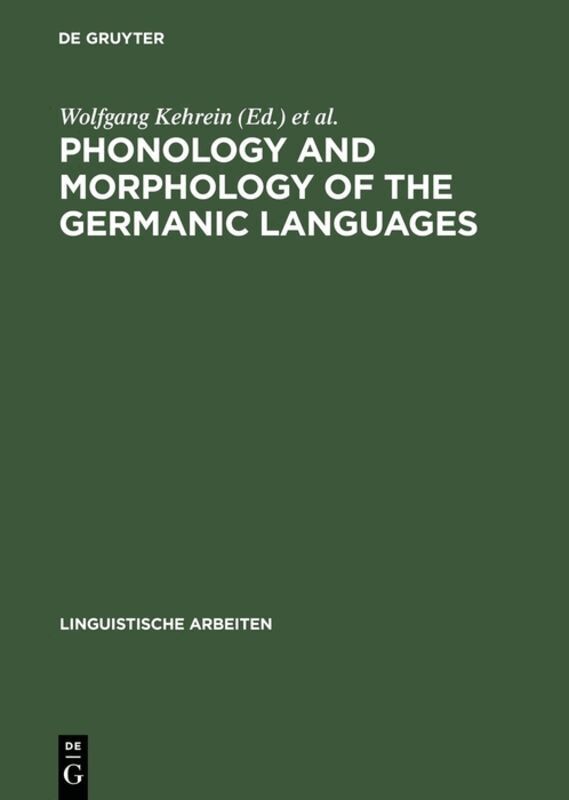
Phonology and Morphology of the Germanic Languages
Av Richard Wiese, Wolfgang Kehrein
E-bok, 2014
1821 kr
Lägg i varukorg
The papers collected in this volume apply principles of phonology and morphology to the Germanic languages. Phonological phenomena range from subsegmental over phonemic to prosodic units (as syllables, pitch accent, stress). Morphology includes properties of roots, derivation, inflection, and …
How Language Speaks to Music
Prosody from a Cross-domain Perspective
Av Mathias Scharinger, Richard Wiese
Häftad, 2024
252 kr
Lägg i varukorg
Prosody as a system of suprasegmental linguistic information such as rhythm and intonation is a prime candidate for looking at the relation between language and music in a principled way. This claim is based on several aspects: First, prosody is concerned with acoustic correlates of language and …
Silbische und lexikalische Phonologie
Studien zum Chinesischen und Deutschen
E-bok, 2010
1550 kr
Lägg i varukorg
Phonology and Morphology of the Germanic Languages
Av Wolfgang Kehrein, Richard Wiese
Inbunden, 1998
1995 kr
Lägg i varukorg
The papers collected in this volume apply principles of phonology and morphology to the Germanic languages. Phonological phenomena range from subsegmental over phonemic to prosodic units (as syllables, pitch accent, stress). Morphology includes properties of roots, derivation, inflection, and …