Rino Micheloni - Böcker
Visar alla böcker från författaren Rino Micheloni. Handla med fri frakt och snabb leverans.
16 produkter
16 produkter
1 625 kr
Skickas inom 10-15 vardagar
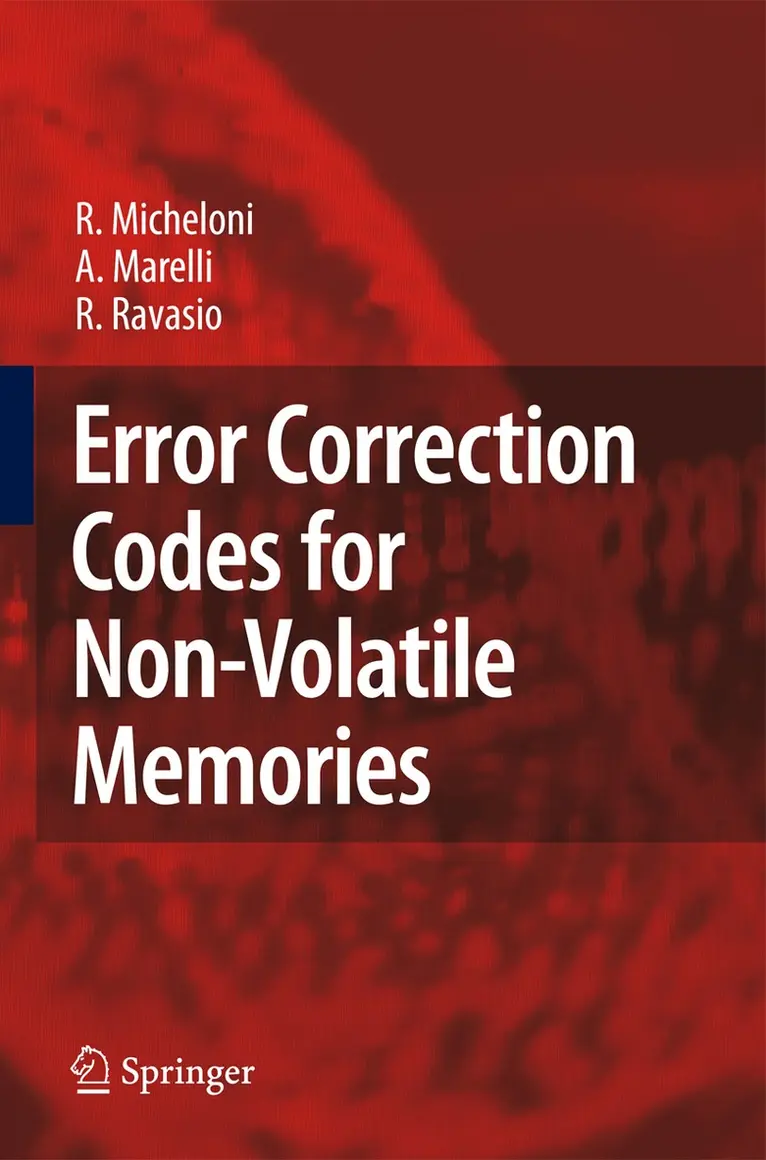
This book presents the basics of coding theory needed to understand the application to memories, as well as the relevant design topics, with reference to both NOR and NAND Flash architectures. It also includes a collection of software routines.
1 578 kr
Skickas inom 10-15 vardagar
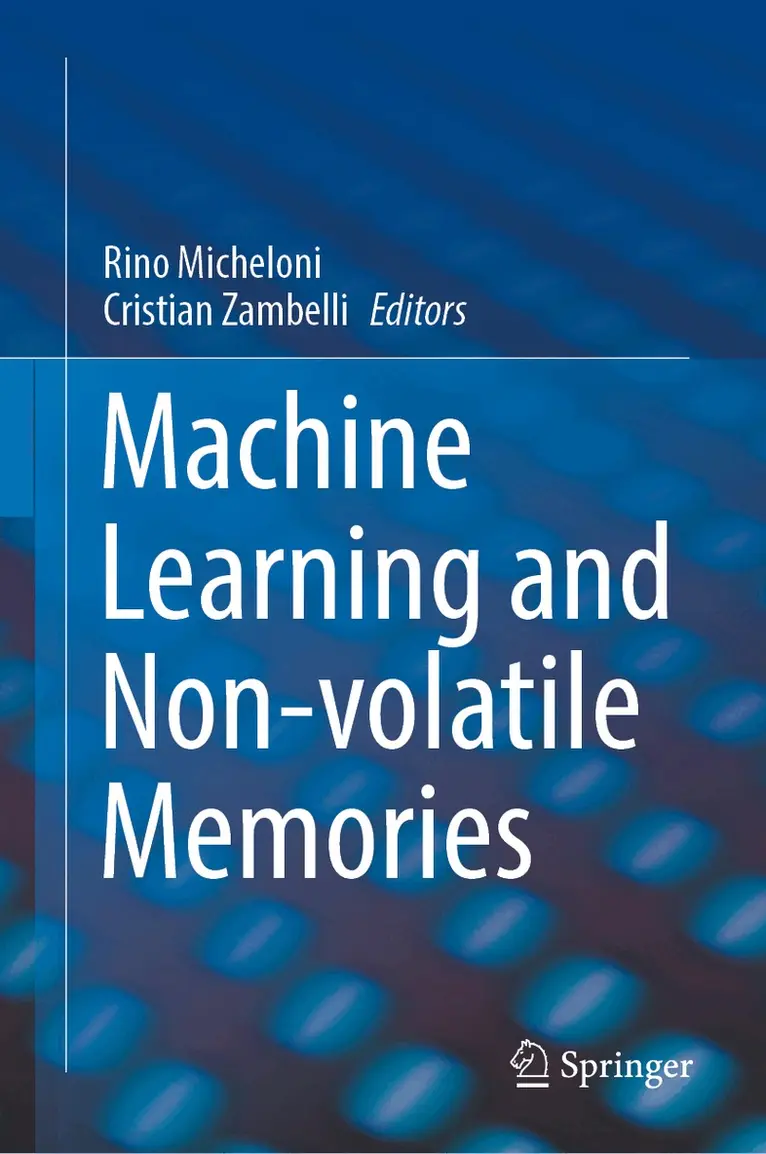
This book presents the basics of both NAND flash storage and machine learning, detailing the storage problems the latter can help to solve. At a first sight, machine learning and non-volatile memories seem very far away from each other. Machine learning implies mathematics, algorithms and a lot of computation; non-volatile memories are solid-state devices used to store information, having the amazing capability of retaining the information even without power supply. This book will help the reader understand how these two worlds can work together, bringing a lot of value to each other. In particular, the book covers two main fields of application: analog neural networks (NNs) and solid-state drives (SSDs).After reviewing the basics of machine learning in Chapter 1, Chapter 2 shows how neural networks can mimic the human brain; to accomplish this result, neural networks have to perform a specific computation called vector-by-matrix (VbM) multiplication, which isparticularly power hungry. In the digital domain, VbM is implemented by means of logic gates which dictate both the area occupation and the power consumption; the combination of the two poses serious challenges to the hardware scalability, thus limiting the size of the neural network itself, especially in terms of the number of processable inputs and outputs. Non-volatile memories (phase change memories in Chapter 3, resistive memories in Chapter 4, and 3D flash memories in Chapter 5 and Chapter 6) enable the analog implementation of the VbM (also called “neuromorphic architecture”), which can easily beat the equivalent digital implementation in terms of both speed and energy consumption.SSDs and flash memories are strictly coupled together; as 3D flash scales, there is a significant amount of work that has to be done in order to optimize the overall performances of SSDs. Machine learning has emerged as a viable solution in many stages of this process. After introducing the main flash reliability issues, Chapter 7 shows both supervised and un-supervised machine learning techniques that can be applied to NAND. In addition, Chapter 7 deals with algorithms and techniques for a pro-active reliability management of SSDs. Last but not least, the last section of Chapter 7 discusses the next challenge for machine learning in the context of the so-called computational storage.No doubt that machine learning and non-volatile memories can help each other, but we are just at the beginning of the journey; this book helps researchers understand the basics of each field by providing real application examples, hopefully, providing a good starting point for the next level of development.
1 578 kr
Skickas inom 10-15 vardagar
This book presents the basics of both NAND flash storage and machine learning, detailing the storage problems the latter can help to solve. At a first sight, machine learning and non-volatile memories seem very far away from each other. Machine learning implies mathematics, algorithms and a lot of computation; non-volatile memories are solid-state devices used to store information, having the amazing capability of retaining the information even without power supply. This book will help the reader understand how these two worlds can work together, bringing a lot of value to each other. In particular, the book covers two main fields of application: analog neural networks (NNs) and solid-state drives (SSDs).After reviewing the basics of machine learning in Chapter 1, Chapter 2 shows how neural networks can mimic the human brain; to accomplish this result, neural networks have to perform a specific computation called vector-by-matrix (VbM) multiplication, which isparticularly power hungry. In the digital domain, VbM is implemented by means of logic gates which dictate both the area occupation and the power consumption; the combination of the two poses serious challenges to the hardware scalability, thus limiting the size of the neural network itself, especially in terms of the number of processable inputs and outputs. Non-volatile memories (phase change memories in Chapter 3, resistive memories in Chapter 4, and 3D flash memories in Chapter 5 and Chapter 6) enable the analog implementation of the VbM (also called “neuromorphic architecture”), which can easily beat the equivalent digital implementation in terms of both speed and energy consumption.SSDs and flash memories are strictly coupled together; as 3D flash scales, there is a significant amount of work that has to be done in order to optimize the overall performances of SSDs. Machine learning has emerged as a viable solution in many stages of this process. After introducing the main flash reliability issues, Chapter 7 shows both supervised and un-supervised machine learning techniques that can be applied to NAND. In addition, Chapter 7 deals with algorithms and techniques for a pro-active reliability management of SSDs. Last but not least, the last section of Chapter 7 discusses the next challenge for machine learning in the context of the so-called computational storage.No doubt that machine learning and non-volatile memories can help each other, but we are just at the beginning of the journey; this book helps researchers understand the basics of each field by providing real application examples, hopefully, providing a good starting point for the next level of development.
1 564 kr
Skickas inom 5-8 vardagar
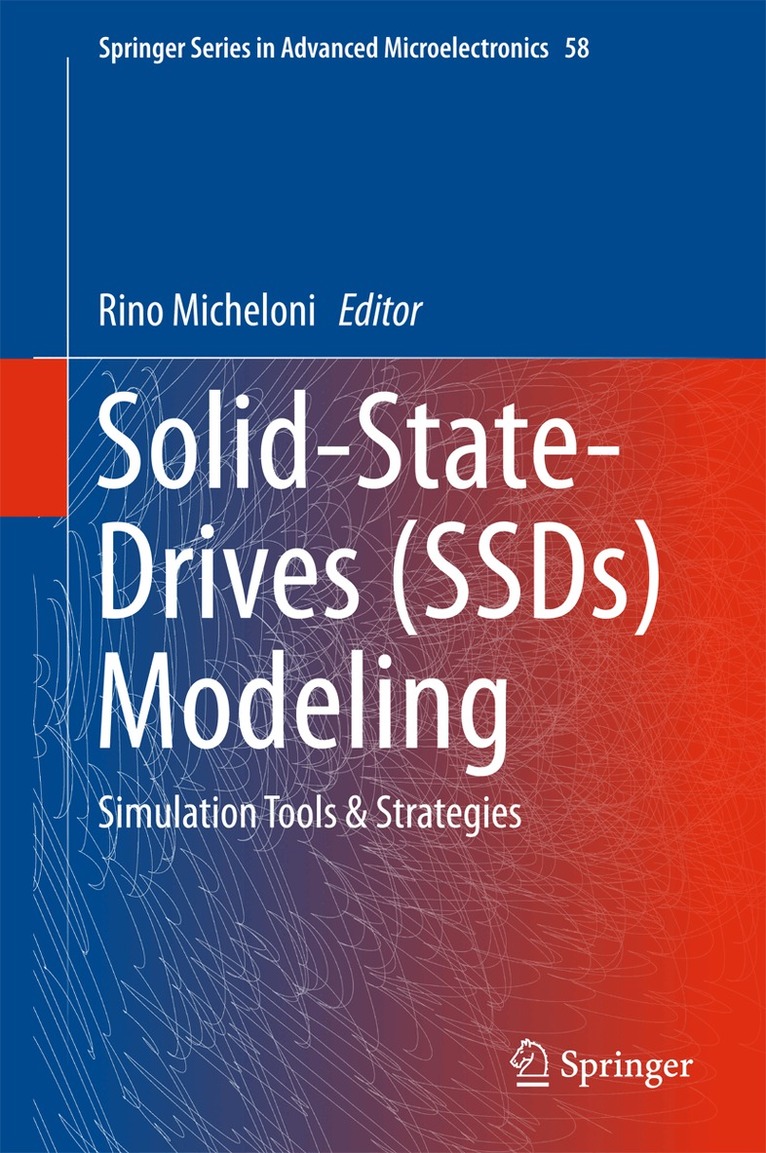
This book introduces simulation tools and strategies for complex systems of solid-state-drives (SSDs) which consist of a flash multi-core microcontroller plus NAND flash memories. It provides a broad overview of the most popular simulation tools, with special focus on open source solutions. VSSIM, NANDFlashSim and DiskSim are benchmarked against performances of real SSDs under different traffic workloads. PROs and CONs of each simulator are analyzed, and it is clearly indicated which kind of answers each of them can give and at a what price. It is explained, that speed and precision do not go hand in hand, and it is important to understand when to simulate what, and with which tool. Being able to simulate SSD’s performances is mandatory to meet time-to-market, together with product cost and quality.Over the last few years the authors developed an advanced simulator named “SSDExplorer” which has been used to evaluate multiple phenomena with great accuracy, from QoS (Quality Of Service) to Read Retry, from LDPC Soft Information to power, from Flash aging to FTL. SSD simulators are also addressed in a broader context in this book, i.e. the analysis of what happens when SSDs are connected to the OS (Operating System) and to the end-user application (for example, a database search). The authors walk the reader through the full simulation flow of a real system-level by combining SSD Explorer with the QEMU virtual platform. The reader will be impressed by the level of know-how and the combination of models that such simulations are asking for.
1 564 kr
Skickas inom 5-8 vardagar
This book introduces simulation tools and strategies for complex systems of solid-state-drives (SSDs) which consist of a flash multi-core microcontroller plus NAND flash memories.
2 416 kr
Skickas inom 10-15 vardagar
VLSI-Design for Non-Volatile Memories is intended for electrical engineers and graduate students who want to enter into the integrated circuit design world. Non-volatile memories are treated as an example to explain general design concepts. Practical illustrative examples of non-volatile memories, including flash types, are showcased to give insightful examples of the discussed design approaches. A collection of photos is included to make the reader familiar with silicon aspects. Throughout all parts of this book, the authors have taken a practical and applications-driven point of view, providing a comprehensive and easily understood approach to all the concepts discussed. Giovanni Campardo and Rino Micheloni have a solid track record of leading design activities at the STMicroelectronics Flash Division. David Novosel is President and founder of Intelligent Micro Design, Inc., Pittsburg, PA.
1 578 kr
Skickas inom 10-15 vardagar
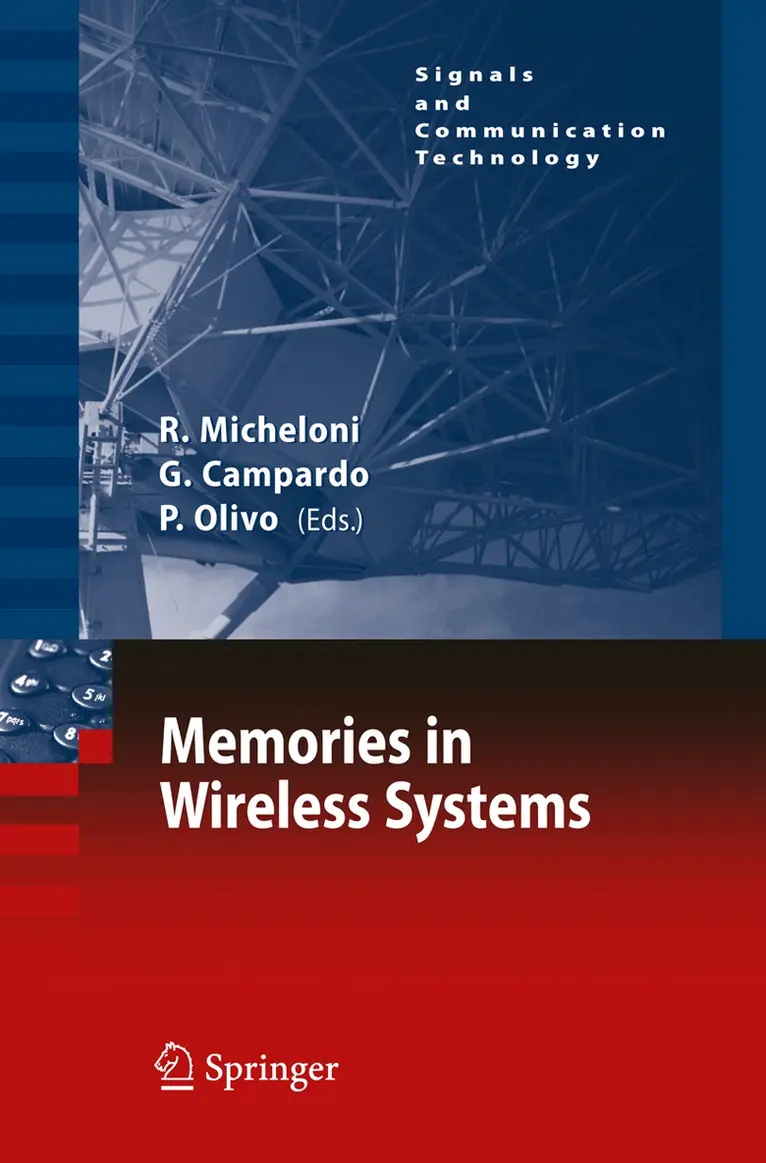
For the technological progress in communication technology it is necessary that the advanced studies in circuit and software design are accompanied with recent results of the technological research and physics in order to exceed its limitations.This book is a guide which treats many components used in mobile communications, and in particular focuses on non-volatile memories. It emerges following the conducting line of the non-volatile memory in the wireless system: On the one hand it develops the foundations of the interdisciplinary issues needed for design analysis and testing of the system. On the other hand it deals with many of the problems appearing when the systems are realized in industrial production. These cover the difficulties from the mobile system to the different types of non-volatile memories. The book explores memory cards, multichip technologies, and algorithms of the software management as well as error handling. It also presents techniques of assurance for the single components and a guide through the Datasheet lectures.
2 338 kr
Skickas inom 5-8 vardagar
VLSI-Design for Non-Volatile Memories is intended for electrical engineers and graduate students who want to enter into the integrated circuit design world. Non-volatile memories are treated as an example to explain general design concepts. Practical illustrative examples of non-volatile memories, including flash types, are showcased to give insightful examples of the discussed design approaches. A collection of photos is included to make the reader familiar with silicon aspects. Throughout all parts of this book, the authors have taken a practical and applications-driven point of view, providing a comprehensive and easily understood approach to all the concepts discussed. Giovanni Campardo and Rino Micheloni have a solid track record of leading design activities at the STMicroelectronics Flash Division. David Novosel is President and founder of Intelligent Micro Design, Inc., Pittsburg, PA.
1 170 kr
Skickas inom 10-15 vardagar
For the technological progress in communication technology it is necessary that the advanced studies in circuit and software design are accompanied with recent results of the technological research and physics in order to exceed its limitations.This book is a guide which treats many components used in mobile communications, and in particular focuses on non-volatile memories. It emerges following the conducting line of the non-volatile memory in the wireless system: On the one hand it develops the foundations of the interdisciplinary issues needed for design analysis and testing of the system. On the other hand it deals with many of the problems appearing when the systems are realized in industrial production. These cover the difficulties from the mobile system to the different types of non-volatile memories. The book explores memory cards, multichip technologies, and algorithms of the software management as well as error handling. It also presents techniques of assurance for the single components and a guide through the Datasheet lectures.
1 578 kr
Skickas inom 10-15 vardagar
Nowadays it is hard to find an electronic device which does not use codes: for example, we listen to music via heavily encoded audio CD's and we watch movies via encoded DVD's. There is at least one area where the use of encoding/decoding is not so developed, yet: Flash non-volatile memories. Flash memory high-density, low power, cost effectiveness, and scalable design make it an ideal choice to fuel the explosion of multimedia products, like USB keys, MP3 players, digital cameras and solid-state disk.In ECC for Non-Volatile Memories the authors expose the basics of coding theory needed to understand the application to memories, as well as the relevant design topics, with reference to both NOR and NAND Flash architectures. A collection of software routines is also included for better understanding.The authors form a research group (now at Qimonda) which is the typical example of a fruitful collaboration between mathematicians and engineers.
2 416 kr
Skickas inom 10-15 vardagar
Inside NAND Flash Memories is a comprehensive guide of the NAND world: from circuits design (analog and digital) to Flash reliability (including radiation effects), from testing issues to high-performance (DDR) interface, from error correction codes to NAND applications like Flash cards and SSDs.
2 416 kr
Skickas inom 10-15 vardagar
Inside NAND Flash Memories is a comprehensive guide of the NAND world: from circuits design (analog and digital) to Flash reliability (including radiation effects), from testing issues to high-performance (DDR) interface, from error correction codes to NAND applications like Flash cards and SSDs.
1 682 kr
Skickas inom 10-15 vardagar
This book walks the reader through the next step in the evolution of NAND flash memory technology, namely the development of 3D flash memories, in which multiple layers of memory cells are grown within the same piece of silicon. It describes their working principles, device architectures, fabrication techniques and practical implementations, and highlights why 3D flash is a brand new technology.After reviewing market trends for both NAND and solid state drives (SSDs), the book digs into the details of the flash memory cell itself, covering both floating gate and emerging charge trap technologies. There is a plethora of different materials and vertical integration schemes out there. New memory cells, new materials, new architectures (3D Stacked, BiCS and P-BiCS, 3D FG, 3D VG, 3D advanced architectures); basically, each NAND manufacturer has its own solution. Chapter 3 to chapter 7 offer a broad overview of how 3D can materialize. The 3D wave is impacting emerging memories as well and chapter 8 covers 3D RRAM (resistive RAM) crosspoint arrays. Visualizing 3D structures can be a challenge for the human brain: this is way all these chapters contain a lot of bird’s-eye views and cross sections along the 3 axes.The second part of the book is devoted to other important aspects, such as advanced packaging technology (i.e. TSV in chapter 9) and error correction codes, which have been leveraged to improve flash reliability for decades. Chapter 10 describes the evolution from legacy BCH to the most recent LDPC codes, while chapter 11 deals with some of the most recent advancements in the ECC field. Last but not least, chapter 12 looks at 3D flash memories from a system perspective. Is 14nm the last step for planar cells? Can 100 layers be integrated within the same piece of silicon? Is 4 bit/cell possible with 3D? Will 3D be reliable enough for enterprise and datacenter applications? These are some of the questions that this book helps answering by providing insights into 3D flash memory design, process technology and applications.
1 682 kr
Skickas inom 10-15 vardagar
This book walks the reader through the next step in the evolution of NAND flash memory technology, namely the development of 3D flash memories, in which multiple layers of memory cells are grown within the same piece of silicon. It describes their working principles, device architectures, fabrication techniques and practical implementations, and highlights why 3D flash is a brand new technology.After reviewing market trends for both NAND and solid state drives (SSDs), the book digs into the details of the flash memory cell itself, covering both floating gate and emerging charge trap technologies. There is a plethora of different materials and vertical integration schemes out there. New memory cells, new materials, new architectures (3D Stacked, BiCS and P-BiCS, 3D FG, 3D VG, 3D advanced architectures); basically, each NAND manufacturer has its own solution. Chapter 3 to chapter 7 offer a broad overview of how 3D can materialize. The 3D wave is impacting emerging memories as well and chapter 8 covers 3D RRAM (resistive RAM) crosspoint arrays. Visualizing 3D structures can be a challenge for the human brain: this is way all these chapters contain a lot of bird’s-eye views and cross sections along the 3 axes.The second part of the book is devoted to other important aspects, such as advanced packaging technology (i.e. TSV in chapter 9) and error correction codes, which have been leveraged to improve flash reliability for decades. Chapter 10 describes the evolution from legacy BCH to the most recent LDPC codes, while chapter 11 deals with some of the most recent advancements in the ECC field. Last but not least, chapter 12 looks at 3D flash memories from a system perspective. Is 14nm the last step for planar cells? Can 100 layers be integrated within the same piece of silicon? Is 4 bit/cell possible with 3D? Will 3D be reliable enough for enterprise and datacenter applications? These are some of the questions that this book helps answering by providing insights into 3D flash memory design, process technology and applications.
2 101 kr
Skickas inom 10-15 vardagar
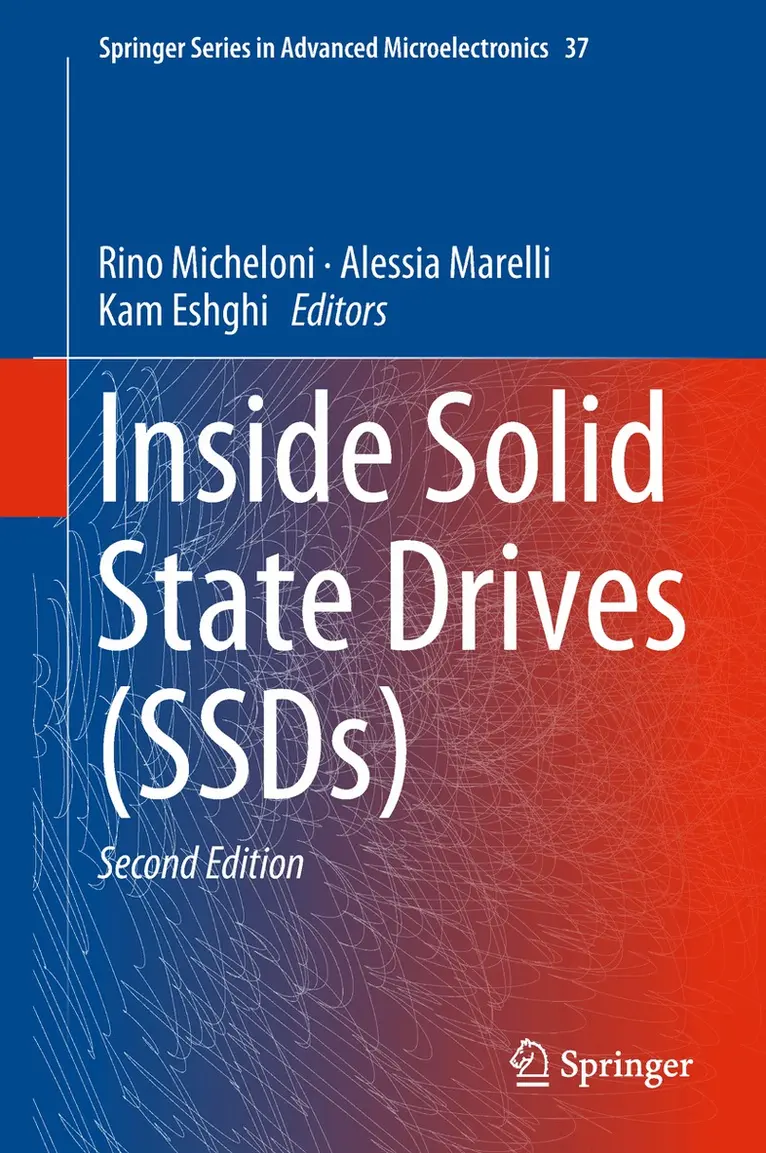
The revised second edition of this respected text provides a state-of-the-art overview of the main topics relating to solid state drives (SSDs), covering NAND flash memories, memory controllers (including booth hardware and software), I/O interfaces (PCIe/SAS/SATA), reliability, error correction codes (BCH and LDPC), encryption, flash signal processing and hybrid storage.Updated throughout to include all recent work in the field, significant changes for the new edition include:A new chapter on flash memory errors and data recovery procedures in SSDs for reliability and lifetime improvementUpdated coverage of SSD Architecture and PCI Express Interfaces moving from PCIe Gen3 to PCIe Gen4 and including a section on NVMe over fabric (NVMf)An additional section on 3D flash memoriesAn update on standard reliability procedures for SSDsExpanded coverage of BCH for SSDs, with a specific section on detectionA new section on non-binary Low-Density Parity-Check (LDPC) codes, the most recent advancement in the fieldA description of randomization in the protection of SSD data against attacks, particularly relevant to 3D architecturesThe SSD market is booming, with many industries placing a huge effort in this space, spending billions of dollars in R&D and product development. Moreover, flash manufacturers are now moving to 3D architectures, thus enabling an even higher level of storage capacity. This book takes the reader through the fundamentals and brings them up to speed with the most recent developments in the field, and is suitable for advanced students, researchers and engineers alike.
2 101 kr
Skickas inom 10-15 vardagar
The revised second edition of this respected text provides a state-of-the-art overview of the main topics relating to solid state drives (SSDs), covering NAND flash memories, memory controllers (including booth hardware and software), I/O interfaces (PCIe/SAS/SATA), reliability, error correction codes (BCH and LDPC), encryption, flash signal processing and hybrid storage.Updated throughout to include all recent work in the field, significant changes for the new edition include:A new chapter on flash memory errors and data recovery procedures in SSDs for reliability and lifetime improvementUpdated coverage of SSD Architecture and PCI Express Interfaces moving from PCIe Gen3 to PCIe Gen4 and including a section on NVMe over fabric (NVMf)An additional section on 3D flash memoriesAn update on standard reliability procedures for SSDsExpanded coverage of BCH for SSDs, with a specific section on detectionA new section on non-binary Low-Density Parity-Check (LDPC) codes, the most recent advancement in the fieldA description of randomization in the protection of SSD data against attacks, particularly relevant to 3D architecturesThe SSD market is booming, with many industries placing a huge effort in this space, spending billions of dollars in R&D and product development. Moreover, flash manufacturers are now moving to 3D architectures, thus enabling an even higher level of storage capacity. This book takes the reader through the fundamentals and brings them up to speed with the most recent developments in the field, and is suitable for advanced students, researchers and engineers alike.