Robert L. Flood – författare
Visar alla böcker från författaren Robert L. Flood. Handla med fri frakt och snabb leverans.
17 produkter
17 produkter
Inbunden, Engelska, 1990
1 664 kr
Skickas inom 10-15 vardagar
Contemporary Systems Thinking is a series of texts, each of which deals comparatively and/or critically with different aspects of holistic thinking at the frontiers of the discipline. Traditionally, writings by systems thinkers have been concerned with single theme propositions such as General Systems Theory, Cybernetics, Operations Research, System Dynamics, Soft Systems Methodology and many others. Recently there have been attempts to fulfil a different yet equally important role by comparative analyses of viewpoints and approaches, each addressing disparate areas of study such as: modeling and simulation, measurement, management, 'problem solving' methods, international relations, social theory and last, but not exhaustively or least, philosophy. In a recent book these were drawn together within a multiform framework as part of an eclectic discussion -a nearly impossible task as I discovered (see Dealing With Complexity -An Introduction to the Theory and Application of Systems Science, R. L. Flood and E. R. Carson, Plenum, New York, 1988). Nevertheless, bringing many sources together led to several achievements, among which was showing a great diversity of approaches, ideas and application areas that systems thinking contributes to (although often with difficulties remaining unresolved). More important, however, while working on that manuscript I became aware of the need for and potential value in a series of books, each focusing in detail on the study areas mentioned above.
Inbunden, Engelska, 1993
1 112 kr
Skickas inom 10-15 vardagar
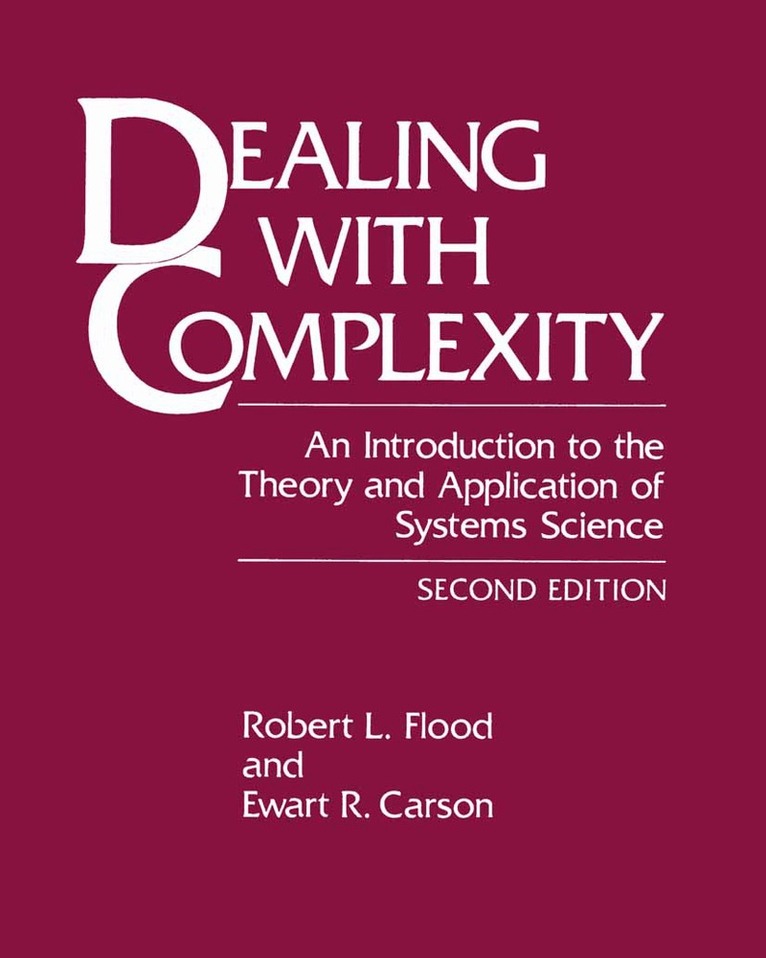
Contents 11. 2. 2. Four Main Areas of Dispute 247 11. 2. 3. Summary . . . 248 11. 3. Making Sense of the Issues . . 248 11. 3. 1. Introduction . . . . 248 11. 3. 2. The Scientific Approach 248 11. 3. 3. Science and Matters of Society . 249 11. 3. 4. Summary . 251 11. 4. Tying It All Together . . . . 251 11. 4. 1. Introduction . . . . 251 11. 4. 2. A Unifying Framework 251 11. 4. 3. Critical Systems Thinking 253 11. 4. 4. Summary 254 11. 5. Conclusion 254 Questions . . . 255 REFERENCES . . . . . . . . . . . . . . . . . . . 257 INDEX . . . . . . . . . . . . . . . . . . . . . . 267 Chapter One SYSTEMS Origin and Evolution, Terms and Concepts 1. 1. INTRODUCTION We start this book with Theme A (see Figure P. I in the Preface), which aims to develop an essential and fundamental understanding of systems science. So, what is systems science? When asked to explain what systems science is all about, many systems scientists are confronted with a rather daunting task. The discipline tends to be presented and understood in a fragmented way and very few people hold an overview understanding of the subject matter, while also having sufficient in-depth competence in many and broad-ranging subject areas where the ideas are used. Indeed, it was precisely this difficulty that identified the need for a comprehensive well-documented account such as is presented here in Dealing with Complexity.
Inbunden, Engelska, 1997
2 216 kr
Skickas inom 10-15 vardagar
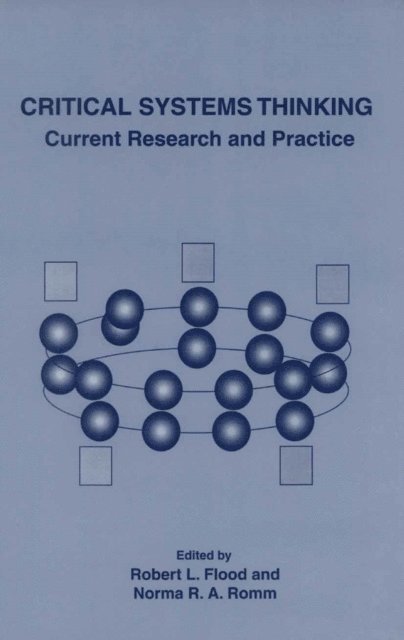
This volume offers comprehensive treatment of the latest developments in critical systems thinking and practice. The book features contributions by researchers at the prestigious Centre for Systems Studies at the University of Hull, England. The emphasis is on rigorous analysis of the wide range of approaches to problem solving reported in the research literature. This work will enhance the studies of researchers and students in the areas of systems problem solving, action research, management science, and operational research.
Inbunden, Engelska, 1991
805 kr
Skickas inom 5-8 vardagar
This book is about helping managers and decision makers to choose and use the most appropriate problem solving approaches available for managing the complexity and diversity of the difficulties that they face. By describing and analysing a range of different approaches, it investigates the strengths and weaknesses of each and provides its own approach for the complementary and integrated use of different system methodologies.
Inbunden, Engelska, 1995
1 508 kr
Skickas inom 5-8 vardagar
Flood introduces a dynamic new problem solving system called Total Systems Intervention (TSI). He provides a clear understanding of TSI in terms of its philosophy, principles and process, explaining what is happening when using this system and how to avoid the main pitfalls in problem solving with TSI. Describes the pros and cons of different catagories of consultants that may be used in the TSI procedure along with guidelines on selecting the right one. Features nine international case studies--each one appraising a diverse type of organisational problem solving using TSI.
Inbunden, Engelska, 1996
1 340 kr
Skickas inom 5-8 vardagar
The approach known as Diversity Management, is about managing the increasing diversity of issues that confront us. It is a response to the ever growing number of approaches ? more models, more methodologies and more theories ? developed to tackle those issues. Diversity Management addresses this new issue to be confronted ? how to choose between the models, methodologies and theories. The book, Diversity Management: Triple Loop Learning, will provide a strong intellectual contribution to the now widely debated issue of managing diversity. It carefully blends theory and practice in order to provide substance to the debate on diversity management in the social and systems sciences. The focus on triple loop learning increases the fullness of learning about the diversity of issues and dilemmas faced. It brings together three main learning centres in one overall awareness so that the process is more reflexive and those involved can operate more intelligently and responsibly. Diversity Management: Triple Loop Learning is thoroughly illustrated with case studies and shows theoreticians and interventionists how they can operate with a consciousness that is more than the sum of its parts.
E-bok
PDF, Engelska, 20072 840 kr
Läs direkt efter köp
This volume offers comprehensive treatment of the latest developments in critical systems thinking and practice. The book features contributions by researchers at the prestigious Centre for Systems Studies at the University of Hull, England. The emphasis is on rigorous analysis of the wide range of approaches to problem solving reported in the research literature. This work will enhance the studies of researchers and students in the areas of systems problem solving, action research, management science, and operational research.
Häftad, Engelska, 2010
1 080 kr
Skickas inom 10-15 vardagar
Contents 11. 2. 2. Four Main Areas of Dispute 247 11. 2. 3. Summary . . . 248 11. 3. Making Sense of the Issues . . 248 11. 3. 1. Introduction . . . . 248 11. 3. 2. The Scientific Approach 248 11. 3. 3. Science and Matters of Society . 249 11. 3. 4. Summary . 251 11. 4. Tying It All Together . . . . 251 11. 4. 1. Introduction . . . . 251 11. 4. 2. A Unifying Framework 251 11. 4. 3. Critical Systems Thinking 253 11. 4. 4. Summary 254 11. 5. Conclusion 254 Questions . . . 255 REFERENCES . . . . . . . . . . . . . . . . . . . 257 INDEX . . . . . . . . . . . . . . . . . . . . . . 267 Chapter One SYSTEMS Origin and Evolution, Terms and Concepts 1. 1. INTRODUCTION We start this book with Theme A (see Figure P. I in the Preface), which aims to develop an essential and fundamental understanding of systems science. So, what is systems science? When asked to explain what systems science is all about, many systems scientists are confronted with a rather daunting task. The discipline tends to be presented and understood in a fragmented way and very few people hold an overview understanding of the subject matter, while also having sufficient in-depth competence in many and broad-ranging subject areas where the ideas are used. Indeed, it was precisely this difficulty that identified the need for a comprehensive well-documented account such as is presented here in Dealing with Complexity.
Häftad, Engelska, 2011
543 kr
Skickas inom 10-15 vardagar
Systems Prospects is a record of the papers presented at the first con ference organised by the United Kingdom Systems Society (UKSS), held at Thwaite Hall, Hull University (UK), on the dates 12th-15th July, 1988. The UKSS originally came together in 1978 as the Barford Group (the first meetings were held in the town of Barford), comprising academics from the four institutions that incorporated departments which primarily were con cerned with developing the theory and practice of so-called systems scienc- namely Aston University, City University, Lancaster University and the Open University. The meetings of the Barford Group were deemed to be successful, so much so that a decision was made to widen its horizons to incorporate more generally those of the United Kingdom systems community (a diffuse number of academics and practitioners) - hence the title UKSS. The society, ten years later, is extant and has achieved new levels of success in the last few years in terms of rising membership and international reputation. The membership is now drawn from a wide variety of academic and commercial and industrial organisations, and from most reaches of the nation. There is also an international contingent in the membership. It is right that there should be such diversity since the UKSS is founded on the notion of equality (of creed, sex, race, class and so on ••• ). This community is "glued" together by the Society's own publication, Systemist, as well as through workshops and now this conference.
E-bok
PDF, Engelska, 2012687 kr
Läs direkt efter köp
Systems Prospects is a record of the papers presented at the first con ference organised by the United Kingdom Systems Society (UKSS), held at Thwaite Hall, Hull University (UK), on the dates 12th-15th July, 1988. The UKSS originally came together in 1978 as the Barford Group (the first meetings were held in the town of Barford), comprising academics from the four institutions that incorporated departments which primarily were con cerned with developing the theory and practice of so-called systems scienc- namely Aston University, City University, Lancaster University and the Open University. The meetings of the Barford Group were deemed to be successful, so much so that a decision was made to widen its horizons to incorporate more generally those of the United Kingdom systems community (a diffuse number of academics and practitioners) - hence the title UKSS. The society, ten years later, is extant and has achieved new levels of success in the last few years in terms of rising membership and international reputation. The membership is now drawn from a wide variety of academic and commercial and industrial organisations, and from most reaches of the nation. There is also an international contingent in the membership. It is right that there should be such diversity since the UKSS is founded on the notion of equality (of creed, sex, race, class and so on ••• ). This community is "glued" together by the Society''s own publication, Systemist, as well as through workshops and now this conference.
Häftad, Engelska, 2012
543 kr
Skickas inom 10-15 vardagar
The theme ofthe conference at which the papers in this book were presented was'Systems Thinking in Europe'. Members of the United Kingdom Systems Society (UKSS) were conscious that the systems movementflourishes notonly in the UK, America and the Antipodes, but also in continental Europe, both East and West, and in the USSR, a nation increasingly being welcomed by the European comity. Membership of the UKSS had not perhaps had the opportunity, however, of hearing important new ideas from continental Europe, and this conference provided an opportunity to do so. Some interesting papers are to be found here from both the West and the East, if the editors may be forgiven for perpetuating what may be an increasingly irrelevant dichotomy. One lesson to be learned from this conference, though, is that systems thinking is truly international. This is not to say that there is one systems paradigm unifonnly applied, however. Perhaps the core of systems thinking is that one is interested in complex 'wholes' with emergent properties, to which cybernetic ideas can be applied. Examples of such systems thinking can be found in these proceedings, for example in the section entitled "Applications of Systems Thinking". Attempts to bring about change with these ideas, however, have given rise to a diversity of approaches, as is evidenced by the papers dealing with the application of methodologies in the 'hard' and 'soft' systems traditions.
E-bok
PDF, Engelska, 2012687 kr
Läs direkt efter köp
The theme ofthe conference at which the papers in this book were presented was''Systems Thinking in Europe''. Members of the United Kingdom Systems Society (UKSS) were conscious that the systems movementflourishes notonly in the UK, America and the Antipodes, but also in continental Europe, both East and West, and in the USSR, a nation increasingly being welcomed by the European comity. Membership of the UKSS had not perhaps had the opportunity, however, of hearing important new ideas from continental Europe, and this conference provided an opportunity to do so. Some interesting papers are to be found here from both the West and the East, if the editors may be forgiven for perpetuating what may be an increasingly irrelevant dichotomy. One lesson to be learned from this conference, though, is that systems thinking is truly international. This is not to say that there is one systems paradigm unifonnly applied, however. Perhaps the core of systems thinking is that one is interested in complex ''wholes'' with emergent properties, to which cybernetic ideas can be applied. Examples of such systems thinking can be found in these proceedings, for example in the section entitled "Applications of Systems Thinking". Attempts to bring about change with these ideas, however, have given rise to a diversity of approaches, as is evidenced by the papers dealing with the application of methodologies in the ''hard'' and ''soft'' systems traditions.
E-bok
PDF, Engelska, 20121 132 kr
Läs direkt efter köp
With technological advance, the difficulties faced by decision makers and researchers become even more complex and hence more difficult to understand and manage. Traditional approaches have their limitations, particularly when dealing with issues that span many fields of endeavor. Fortunately there has emerged, particularly over the past four decades, the discipline of systems science, which provides a framework for dealing with such complexity. This book gives an account of the underlying theory of systems science and illustrates its applicability to a range of "real-world" problems. To gain an understanding of systems science and what motivates the systems scientist requires at least a reasonable degree ofliteracy and numeracy, a consequence of the interdisciplinary nature of the subject. The numerate content of this book, however, is almost entirely confined to Chapters 8 and 9. As a result, those who class themselves as nonnumerate are not continually confronted by equations that would, in some cases, prevent satisfactory comple tion of the text. Nevertheless, it has not been possible to exclude totally all aspects of numerate thinking from the remaining chapters. It would be useful, therefore, for those who class themselves as nonnumerate to read initially the section of Chapter 8 entitled "Using Letters Instead of Numbers. " This provides sufficient material to enable the nonnumerate reader to deal with the small amount of quantitative material outside Chapters 8 and 9.
E-bok
PDF, Engelska, 20131 367 kr
Läs direkt efter köp
Contents 11. 2. 2. Four Main Areas of Dispute 247 11. 2. 3. Summary . . . 248 11. 3. Making Sense of the Issues . . 248 11. 3. 1. Introduction . . . . 248 11. 3. 2. The Scientific Approach 248 11. 3. 3. Science and Matters of Society . 249 11. 3. 4. Summary . 251 11. 4. Tying It All Together . . . . 251 11. 4. 1. Introduction . . . . 251 11. 4. 2. A Unifying Framework 251 11. 4. 3. Critical Systems Thinking 253 11. 4. 4. Summary 254 11. 5. Conclusion 254 Questions . . . 255 REFERENCES . . . . . . . . . . . . . . . . . . . 257 INDEX . . . . . . . . . . . . . . . . . . . . . . 267 Chapter One SYSTEMS Origin and Evolution, Terms and Concepts 1. 1. INTRODUCTION We start this book with Theme A (see Figure P. I in the Preface), which aims to develop an essential and fundamental understanding of systems science. So, what is systems science? When asked to explain what systems science is all about, many systems scientists are confronted with a rather daunting task. The discipline tends to be presented and understood in a fragmented way and very few people hold an overview understanding of the subject matter, while also having sufficient in-depth competence in many and broad-ranging subject areas where the ideas are used. Indeed, it was precisely this difficulty that identified the need for a comprehensive well-documented account such as is presented here in Dealing with Complexity.
Häftad, Engelska, 2013
2 152 kr
Skickas inom 10-15 vardagar
This volume offers comprehensive treatment of the latest developments in critical systems thinking and practice. The book features contributions by researchers at the prestigious Centre for Systems Studies at the University of Hull, England. The emphasis is on rigorous analysis of the wide range of approaches to problem solving reported in the research literature. This work will enhance the studies of researchers and students in the areas of systems problem solving, action research, management science, and operational research.
E-bok
PDF, Engelska, 20131 977 kr
Läs direkt efter köp
Contemporary Systems Thinking is a series of texts, each of which deals comparatively and/or critically with different aspects of holistic thinking at the frontiers of the discipline. Traditionally, writings by systems thinkers have been concerned with single theme propositions such as General Systems Theory, Cybernetics, Operations Research, System Dynamics, Soft Systems Methodology and many others. Recently there have been attempts to fulfil a different yet equally important role by comparative analyses of viewpoints and approaches, each addressing disparate areas of study such as: modeling and simulation, measurement, management, ''problem solving'' methods, international relations, social theory and last, but not exhaustively or least, philosophy. In a recent book these were drawn together within a multiform framework as part of an eclectic discussion -a nearly impossible task as I discovered (see Dealing With Complexity -An Introduction to the Theory and Application of Systems Science, R. L. Flood and E. R. Carson, Plenum, New York, 1988). Nevertheless, bringing many sources together led to several achievements, among which was showing a great diversity of approaches, ideas and application areas that systems thinking contributes to (although often with difficulties remaining unresolved). More important, however, while working on that manuscript I became aware of the need for and potential value in a series of books, each focusing in detail on the study areas mentioned above.
Häftad, Engelska, 2013
1 616 kr
Skickas inom 10-15 vardagar
Contemporary Systems Thinking is a series of texts, each of which deals comparatively and/or critically with different aspects of holistic thinking at the frontiers of the discipline. Traditionally, writings by systems thinkers have been concerned with single theme propositions such as General Systems Theory, Cybernetics, Operations Research, System Dynamics, Soft Systems Methodology and many others. Recently there have been attempts to fulfil a different yet equally important role by comparative analyses of viewpoints and approaches, each addressing disparate areas of study such as: modeling and simulation, measurement, management, 'problem solving' methods, international relations, social theory and last, but not exhaustively or least, philosophy. In a recent book these were drawn together within a multiform framework as part of an eclectic discussion -a nearly impossible task as I discovered (see Dealing With Complexity -An Introduction to the Theory and Application of Systems Science, R. L. Flood and E. R. Carson, Plenum, New York, 1988). Nevertheless, bringing many sources together led to several achievements, among which was showing a great diversity of approaches, ideas and application areas that systems thinking contributes to (although often with difficulties remaining unresolved). More important, however, while working on that manuscript I became aware of the need for and potential value in a series of books, each focusing in detail on the study areas mentioned above.