Robert M. Kaplan - Böcker
Visar alla böcker från författaren Robert M. Kaplan. Handla med fri frakt och snabb leverans.
12 produkter
12 produkter
Del 84 - NATO Science Series A:
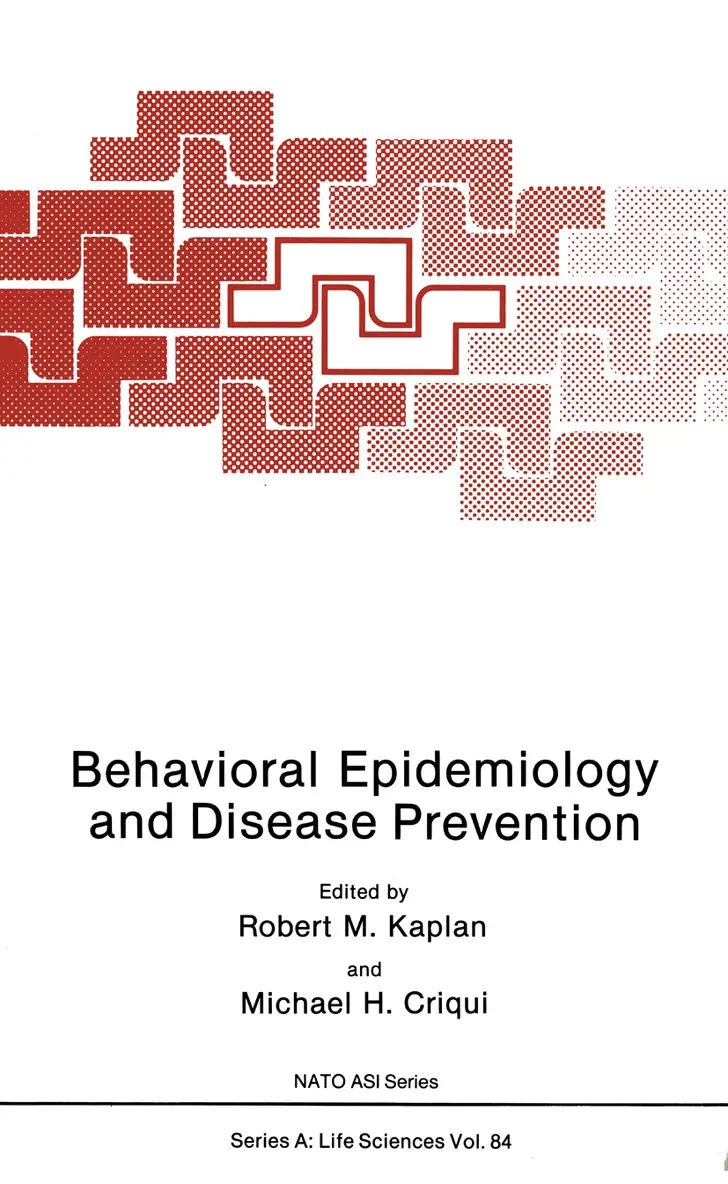
Behavioral Epidemiology and Disease Prevention
Inbunden, Engelska, 1985
1 064 kr
Skickas inom 10-15 vardagar
In the l~nited States and in Europe~ there has been an increasing interest in the relationship between individual behavior and disease. The American National Academy of Sciences (Hamberg, Elliott, and Parron, 1982)' through its Institutes of Medicine, has estimated that as many as 50 percent of chronic disease cases can be traced to individual behaviors such as smoking, diet, exercise, etc. Similar conclusions have been reached by a variety of European investigators and institutes. The World Health Organization has also expressed considerable interest in individual behavior in relation to the development of chronic disease. Thus, throughout the NATO countries there has been increased awareness of the relationship between behavior and disease. However, communication among investigators in different countries has been rather limited. Further, many different scientific disciplines including psychology, sociology, medicine, microbiology, statistics, and epidemiology have all developed new and different literatures in this field. One purpose of this book is to bring together contributions from scientists in each of these fields. Much of the variance in individual health behavior occurs across countries rather than within countries. Thus, we can learn much from comparing behavior-disease relationships across countries. To date, there have been few studies which have had an adequate international basis for these comparisons. Interest in behavioral epidemiology is a relatively recent phenomena. Thus, many scientists are entering the field without uniform background, experience, or training. This book discusses approaches common in a variety of NATO countries.
Ontologies in the Behavioral Sciences
Accelerating Research and the Spread of Knowledge
Häftad, Engelska, 2022
298 kr
Tillfälligt slut
New research in psychology, neuroscience, cognitive science, and other fields is published every day, but the gap between what is known and the capacity to act on that knowledge has never been larger. Scholars and nonscholars alike face the problem of how to organize knowledge and to integrate new observations with what is already known. Ontologies - formal, explicit specifications of the meaning of the concepts and entities that scientists study - provide a way to address these and other challenges, and thus to accelerate progress in behavioral research and its application.Ontologies help researchers precisely define behavioral phenomena and how they relate to each other and reliably classify them. They help researchers identify the inconsistent use of definitions, labels, and measures and provide the basis for sharing knowledge across diverse approaches and methodologies. Although ontologies are an ancient idea, modern researchers rely on them to codify research terms and findings in computer-readable formats and work with large datasets and computer-based analytic techniques.Ontologies in the Behavioral Sciences: Accelerating Research and the Spread of Knowledge describes how ontologies support science and its application to real-world problems. This report details how ontologies function, how they can be engineered to better support the behavioral sciences, and the resources needed to sustain their development and use to help ensure the maximum benefit from investment in behavioral science research.
552 kr
Skickas inom 10-15 vardagar
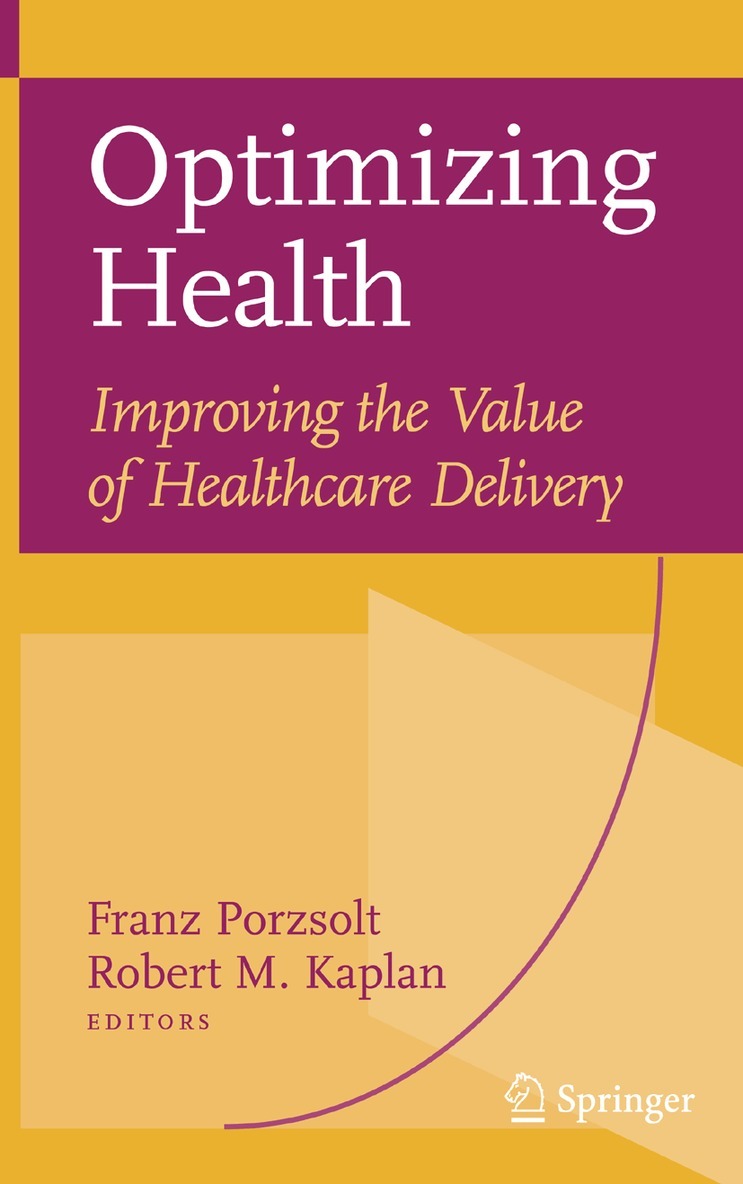
As health care costs soar there is increasing interest in examining what society and, particularly, patients receive in return for these expenditures. Optimizing Health brings together the best thinking from both sides of the Atlantic to explore these issues. It employs disciplinary perspectives from economics, ethics, philosophy, psychology, clinical practice, and epidemiology to explore various ways that value for patients have and can be determined. It concludes with a discussion of changes required in practice, research, and health care systems to maximize the outcomes received from the provision of medical care services from the patient’s perspective.The first section of the book provides theoretical perspectives from economics and systems thinking that help us to focus on how one might determine the value of medical care for patients. The next section considers the ethical and philosophical dilemmas that face developed countries in distributing medical care. How is justice served and evidence-based medicine employed to increase the value of medical care for patients?The section on psychology deals with measuring outcomes from the patient’s perspective and involving patients in medical decision making. Measuring quality of life and gaining valid quality of life information when patients cannot respond for themselves are important topics covered by these chapters. Other chapters consider ways that patients can become more involved in medical decision making with the expectation that this will increase the value of medical care for patients.A major section of the book about clinical practice discusses problems that can reduce the value to patients of medical care. These include overdiagnosis, aggressive treatments that do not result in better patient outcomes, findings that earlier diagnosis does not always result in better outcomes, and the extent of medical error in treatment.The final sections deal withcost-effectiveness analyses and applications of clinical epidemiology. The chapters include a number of original investigations and applications of new methodologies. All-in-all, the volume is must reading for practitioners, policy makers, and researchers who want to find in one place the state-of-the-art thinking and future directions of valuing medical care from the patient’s perspective.
Disease, Diagnoses, and Dollars
Facing the Ever-Expanding Market for Medical Care
Inbunden, Engelska, 2008
257 kr
Skickas inom 10-15 vardagar
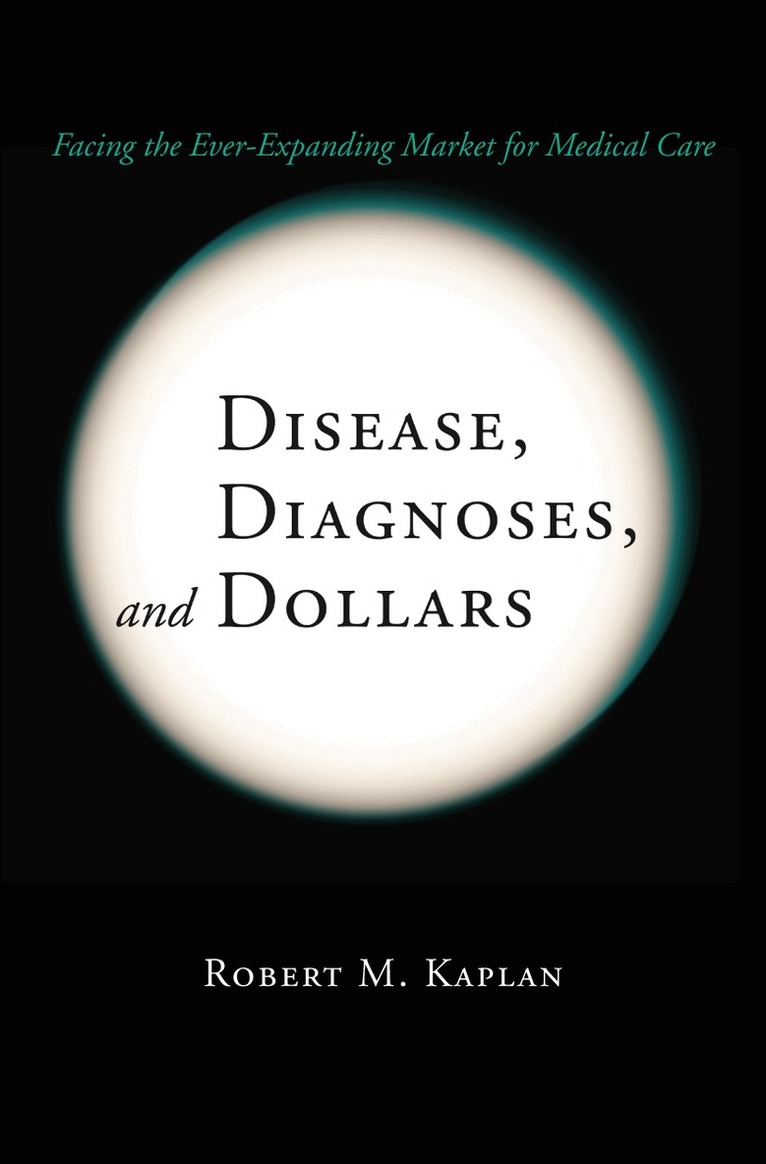
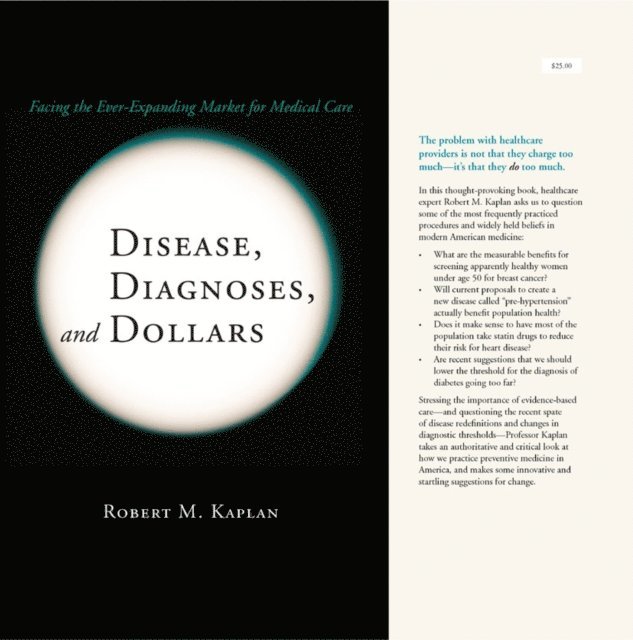
Disease, Diagnoses, and Dollars is about the costs of health care and their impact on health. The U.S. health care system is the largest sector in the biggest economy, and the US spends significantly more per capita on health care than any other country, yet it ranks last among comparison nations on the major health indicators.
284 kr
Skickas inom 10-15 vardagar
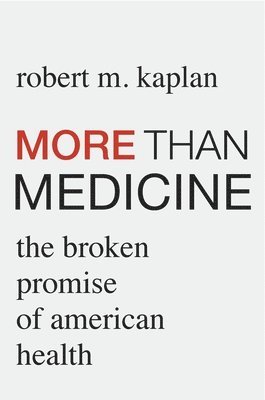
Stanford’s pioneering behavioral scientist draws on a lifetime of research and experience guiding the NIH to make the case that America needs to radically rethink its approach to health care if it wants to stop overspending and overprescribing and improve people’s lives.American science produces the best—and most expensive—medical treatments in the world. Yet U.S. citizens lag behind their global peers in life expectancy and quality of life. Robert Kaplan brings together extensive data to make the case that health care priorities in the United States are sorely misplaced. America’s medical system is invested in attacking disease, but not in addressing the social, behavioral, and environmental problems that engender disease in the first place. Medicine is important, but many Americans act as though it were all important.The United States stakes much of its health funding on the promise of high-tech diagnostics and miracle treatments, while ignoring strong evidence that many of the most significant pathways to health are nonmedical. Americans spend millions on drugs for high cholesterol, which increase life expectancy by only six to eight months on average. But they underfund education, which might extend life expectancy by as much as twelve years. Wars on infectious disease have paid off, but clinical trials for chronic conditions—costing billions—rarely confirm that new treatments extend life. Meanwhile, the National Institutes of Health spends just 3 percent of its budget on research on the social and behavioral determinants of health, even though these factors account for 50 percent of premature deaths.America’s failure to take prevention seriously costs lives. More than Medicine argues that we need a shakeup in how we invest resources, and it offers a bold new vision for longer, healthier living.
2 150 kr
Skickas inom 10-15 vardagar
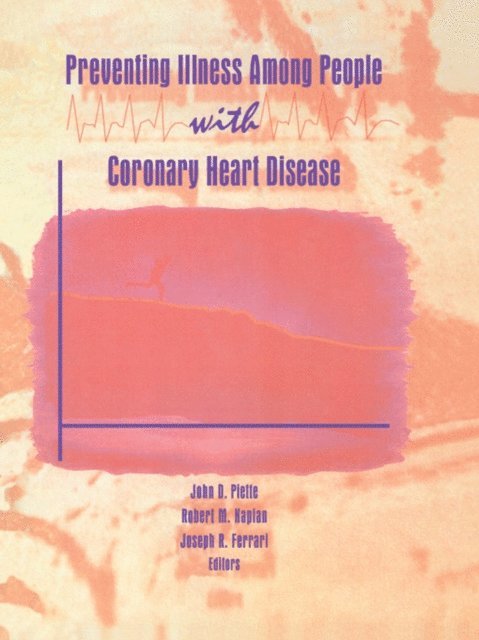
Coronary artery disease (CAD) is the leading cause of death and illness in the United States, and though much progress has been made in reducing cardiac risk factors, obesity and diabetes mellitus are on the rise. Preventing Illness Among People With Coronary Heart Disease explores recent advances in drug treatments for CAD risk factors and how these interventions can play an important role in improving the length and quality of patients’lives by addressing health behaviors and the need for behavioral change. This advanced text shows readers how mental health problems such as anxiety, depression, and alcoholism interplay with patients’physical health and how certain interventions can improve patients’outlook and health status.Preventing Illness Among People With Coronary Heart Disease brings together researchers from a variety of disciplines to address subjects critical to secondary and tertiary preventive care for patients with coronary heart disease (CHD). This outstanding volume concentrates on studies from three major areas to help primary care practitioners and family practice physicians intervene successfully with risky behaviors among their patients prone to or afflicted with coronary artery disease. These include the effects of heart disease on patients’mental health and quality of life and the role of formal behavioral interventions in promoting health among patients with heart disease.Readers of Preventing Illness Among People With Coronary Heart Disease acquire a solid understanding of the factors influencing CAD patients’behavioral patterns and mental states and how the prevalence of CAD can be reduced. Among the vital topics readers learn about are:the effects of alcohol upon CHD and blood pressure CHD risk factors in the elderly exercise interventions coping strategies and cardiac illness strategies for assessment and prevention smoking and cardiovascular diseasePreventing Illness Among People With Coronary Heart Disease seeks to provoke greater discussion and scientific activity among professionals in the field to improve understanding of the interplay of mental health, physical health, and behavioral medicine for patients with heart disease. Primary care practitioners, family practice physicians, medical students, and others interested in preventive cardiology, preventive care, or chronic disease management will learn about recent advances in research and treatment approaches that can be applied immediately to daily practice.
409 kr
Skickas inom 7-10 vardagar
This book provides a comprehensive analysis of biases inherent in contemporary clinical research, challenging traditional methodologies and assumptions. Aimed at students, professionals, and science enthusiasts, the book delves into fundamental principles, research tools, and ethics. It is organized in three sections: The first section covers fundamentals including framing clinical research questions, core research tools, and clinical research ethics. The second section discusses topics relevant to clinical research, organized according to their relevance in the development of a clinical study. Chapters within this section examine the strengths and limitations of traditional and alternative methods, ethical issues, and patient-centered consequences. The third section presents four in-depth case examples, illustrating issues across diverse health conditions and treatments: gastroesophageal reflux disease, hypercholesterolemia, screening for breast cancer, and depression. This examination encourages readers to critically evaluate the methodologies and assumptions underlying clinical research, promoting a nuanced understanding of evidence production in the health sciences.
1 295 kr
Skickas inom 7-10 vardagar
This book provides a comprehensive analysis of biases inherent in contemporary clinical research, challenging traditional methodologies and assumptions. Aimed at students, professionals, and science enthusiasts, the book delves into fundamental principles, research tools, and ethics. It is organized in three sections: The first section covers fundamentals including framing clinical research questions, core research tools, and clinical research ethics. The second section discusses topics relevant to clinical research, organized according to their relevance in the development of a clinical study. Chapters within this section examine the strengths and limitations of traditional and alternative methods, ethical issues, and patient-centered consequences. The third section presents four in-depth case examples, illustrating issues across diverse health conditions and treatments: gastroesophageal reflux disease, hypercholesterolemia, screening for breast cancer, and depression. This examination encourages readers to critically evaluate the methodologies and assumptions underlying clinical research, promoting a nuanced understanding of evidence production in the health sciences.
Disease, Diagnoses, and Dollars
Facing the Ever-Expanding Market for Medical Care
Häftad, Engelska, 2011
257 kr
Skickas inom 10-15 vardagar
Disease, Diagnoses, and Dollars is about the costs of health care and their impact on health. The U.S. health care system is the largest sector in the biggest economy, and the US spends significantly more per capita on health care than any other country, yet it ranks last among comparison nations on the major health indicators.
552 kr
Skickas inom 10-15 vardagar
As health care costs soar there is increasing interest in examining what society and, particularly, patients receive in return for these expenditures. Optimizing Health brings together the best thinking from both sides of the Atlantic to explore these issues. It employs disciplinary perspectives from economics, ethics, philosophy, psychology, clinical practice, and epidemiology to explore various ways that value for patients have and can be determined. It concludes with a discussion of changes required in practice, research, and health care systems to maximize the outcomes received from the provision of medical care services from the patient’s perspective.The first section of the book provides theoretical perspectives from economics and systems thinking that help us to focus on how one might determine the value of medical care for patients. The next section considers the ethical and philosophical dilemmas that face developed countries in distributing medical care. How is justice served and evidence-based medicine employed to increase the value of medical care for patients?The section on psychology deals with measuring outcomes from the patient’s perspective and involving patients in medical decision making. Measuring quality of life and gaining valid quality of life information when patients cannot respond for themselves are important topics covered by these chapters. Other chapters consider ways that patients can become more involved in medical decision making with the expectation that this will increase the value of medical care for patients.A major section of the book about clinical practice discusses problems that can reduce the value to patients of medical care. These include overdiagnosis, aggressive treatments that do not result in better patient outcomes, findings that earlier diagnosis does not always result in better outcomes, and the extent of medical error in treatment.The final sections deal withcost-effectiveness analyses and applications of clinical epidemiology. The chapters include a number of original investigations and applications of new methodologies. All-in-all, the volume is must reading for practitioners, policy makers, and researchers who want to find in one place the state-of-the-art thinking and future directions of valuing medical care from the patient’s perspective.
1 064 kr
Skickas inom 10-15 vardagar
In the l~nited States and in Europe~ there has been an increasing interest in the relationship between individual behavior and disease. The American National Academy of Sciences (Hamberg, Elliott, and Parron, 1982)' through its Institutes of Medicine, has estimated that as many as 50 percent of chronic disease cases can be traced to individual behaviors such as smoking, diet, exercise, etc. Similar conclusions have been reached by a variety of European investigators and institutes. The World Health Organization has also expressed considerable interest in individual behavior in relation to the development of chronic disease. Thus, throughout the NATO countries there has been increased awareness of the relationship between behavior and disease. However, communication among investigators in different countries has been rather limited. Further, many different scientific disciplines including psychology, sociology, medicine, microbiology, statistics, and epidemiology have all developed new and different literatures in this field. One purpose of this book is to bring together contributions from scientists in each of these fields. Much of the variance in individual health behavior occurs across countries rather than within countries. Thus, we can learn much from comparing behavior-disease relationships across countries. To date, there have been few studies which have had an adequate international basis for these comparisons. Interest in behavioral epidemiology is a relatively recent phenomena. Thus, many scientists are entering the field without uniform background, experience, or training. This book discusses approaches common in a variety of NATO countries.
1 583 kr
Skickas inom 7-10 vardagar
What psychological and environmental forces have an impact on health? How does behavior contribute to wellness or illness? This comprehensive volume answers these questions and others with a state-of-the-art overview of theory, research, and practice at the interface of psychology and health. Leading experts from multiple disciplines explore how health and health behaviors are shaped by a wide range of psychological processes and social-environmental factors. The book describes exemplary applications in the prevention and clinical management of today's most pressing health risks and diseases, including coronary heart disease, depression, diabetes, cancer, chronic pain, obesity, sleep disturbances, and smoking. Featuring succinct, accessible chapters on critical concepts and contemporary issues, the Handbook integrates psychological perspectives with cutting-edge work in preventive medicine, epidemiology, public health, genetics, nursing, and the social sciences.