Robert P. Abelson – författare
Visar alla böcker från författaren Robert P. Abelson. Handla med fri frakt och snabb leverans.
13 produkter
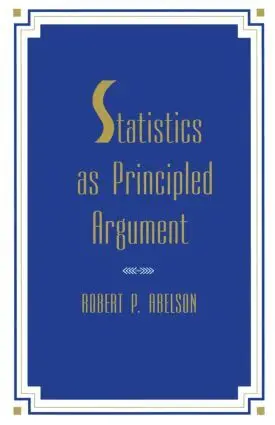
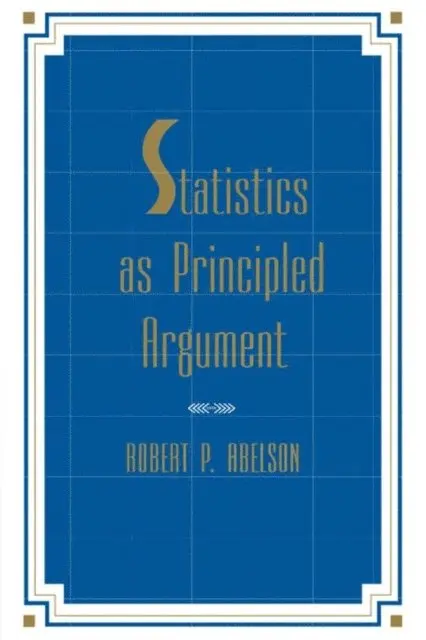
Statistics As Principled Argument
Häftad, 1995
620 kr
Lägg i varukorg
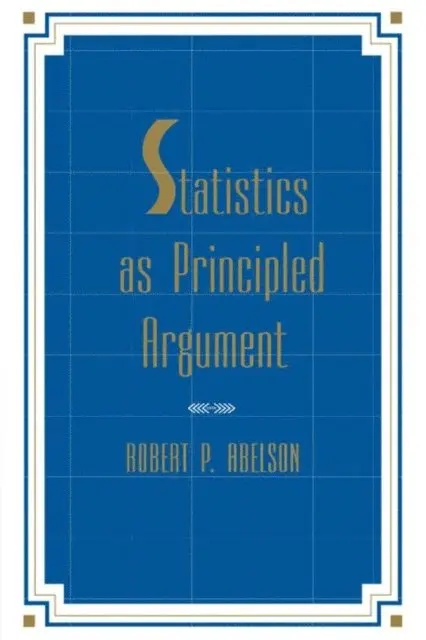
In this illuminating volume, Robert P. Abelson delves into the too-often dismissed problems of interpreting quantitative data and then presenting them in the context of a coherent story about one's research. Unlike too many books on statistics, this is a remarkably engaging read, filled with …
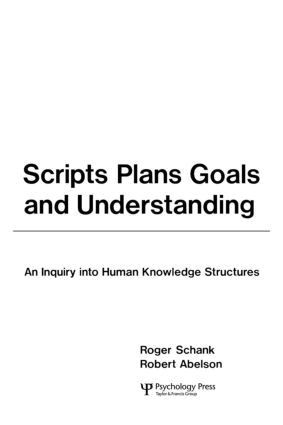
Scripts, Plans, Goals, and Understanding
An Inquiry Into Human Knowledge Structures
Av Roger C. Schank, Robert P. Abelson
Inbunden, 1977
2445 kr
Lägg i varukorg
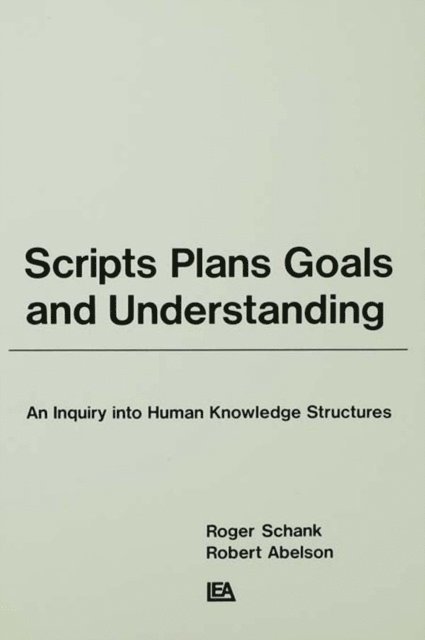
First Published in 1977. In the summer of 1971, there was a workshop in an ill-defined field at the intersection of psychology, artificial intelligence, and linguistics. The fifteen participants were in various ways interested in the representation of large systems of knowledge (or beliefs) based …
Knowledge Structures
Av James A. Galambos, John B. Black m. fl.
Inbunden, 1986
744 kr
Lägg i varukorg
First Published in 1986. This book marks a watershed in cognitive science activity at Yale University. Over the past decade, the cognitive science orientation has become more and more integrated into the mainstream of cognitive psychology, and artificial intelligence workers now feel comfortable …
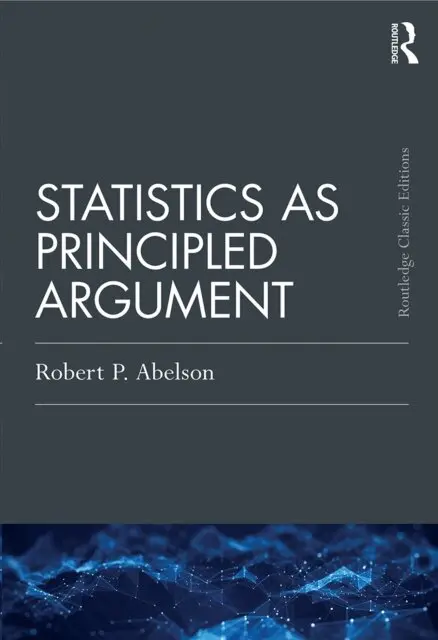
Statistics as Principled Argument
E-bok, 2025
970 kr
Lägg i varukorg
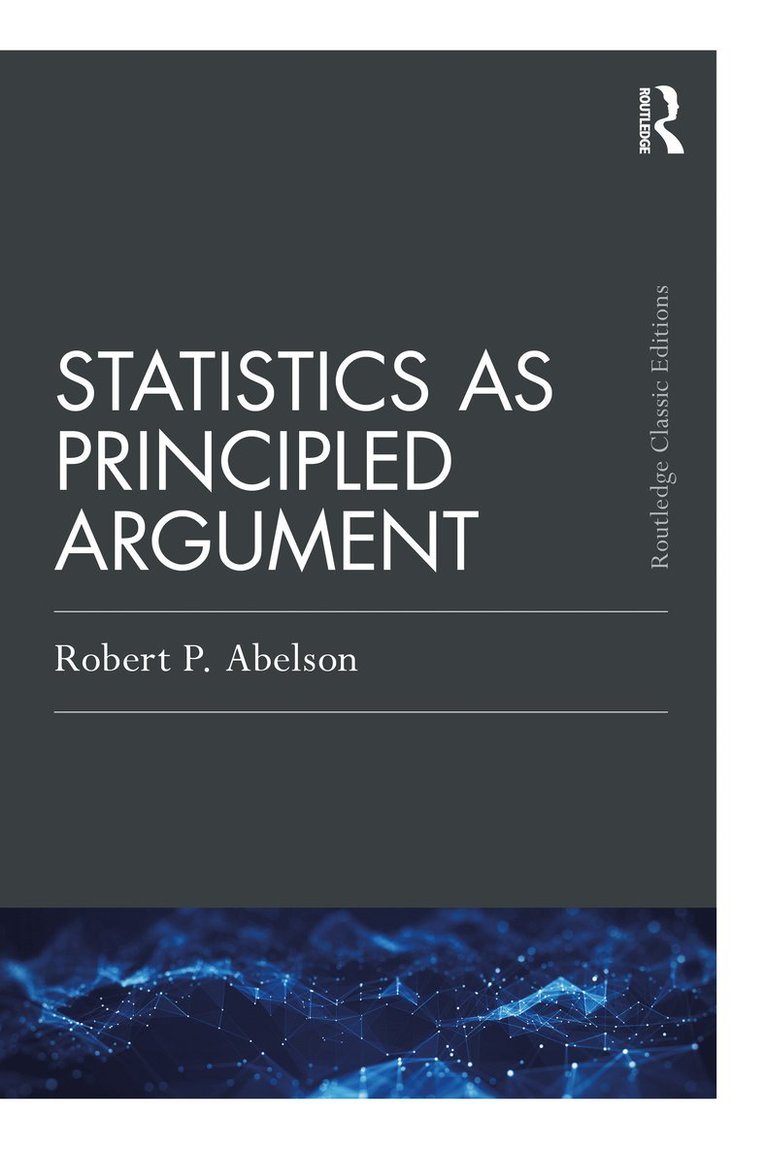
In Statistics as Principled Argument, first published in 1995, Robert P. Abelson exposes the often-overlooked problems in quantitative data interpretation, and the challenge of presenting the data in terms of a coherent narrative about one's research. This classic edition offers a new introduction …
Statistics as Principled Argument
E-bok, 2025
949 kr
Lägg i varukorg
In Statistics as Principled Argument, first published in 1995, Robert P. Abelson exposes the often-overlooked problems in quantitative data interpretation, and the challenge of presenting the data in terms of a coherent narrative about one's research. This classic edition offers a new introduction …
Statistics as Principled Argument
Häftad, 2025
824 kr
Lägg i varukorg
In Statistics as Principled Argument, first published in 1995, Robert P. Abelson exposes the often-overlooked problems in quantitative data interpretation, and the challenge of presenting the data in terms of a coherent narrative about one's research. This classic edition offers a new introduction …
Statistics as Principled Argument
Inbunden, 2025
2516 kr
Lägg i varukorg
In Statistics as Principled Argument, first published in 1995, Robert P. Abelson exposes the often-overlooked problems in quantitative data interpretation, and the challenge of presenting the data in terms of a coherent narrative about one's research. This classic edition offers a new introduction …
Scripts, Plans, Goals, and Understanding
An Inquiry Into Human Knowledge Structures
Av Robert P. Abelson, Roger C. Schank
E-bok, 2013
892 kr
Lägg i varukorg
First Published in 1977. In the summer of 1971, there was a workshop in an ill-defined field at the intersection of psychology, artificial intelligence, and linguistics. The fifteen participants were in various ways interested in the representation of large systems of knowledge (or beliefs) based …
Scripts, Plans, Goals, and Understanding
An Inquiry Into Human Knowledge Structures
Av Robert P. Abelson, Roger C. Schank
E-bok, 2013
892 kr
Lägg i varukorg
First Published in 1977. In the summer of 1971, there was a workshop in an ill-defined field at the intersection of psychology, artificial intelligence, and linguistics. The fifteen participants were in various ways interested in the representation of large systems of knowledge (or beliefs) based …
Knowledge Structures
Av Robert P. Abelson, John B. Black m. fl.
E-bok, 2013
741 kr
Lägg i varukorg
First Published in 1986. This book marks a watershed in cognitive science activity at Yale University. Over the past decade, the cognitive science orientation has become more and more integrated into the mainstream of cognitive psychology, and artificial intelligence workers now feel comfortable …
Knowledge Structures
Av Robert P. Abelson, John B. Black m. fl.
E-bok, 2013
725 kr
Lägg i varukorg
First Published in 1986. This book marks a watershed in cognitive science activity at Yale University. Over the past decade, the cognitive science orientation has become more and more integrated into the mainstream of cognitive psychology, and artificial intelligence workers now feel comfortable …
Statistics As Principled Argument
E-bok, 2012
727 kr
Lägg i varukorg
In this illuminating volume, Robert P. Abelson delves into the too-often dismissed problems of interpreting quantitative data and then presenting them in the context of a coherent story about one''s research. Unlike too many books on statistics, this is a remarkably engaging read, filled with …
Statistics As Principled Argument
E-bok, 2012
727 kr
Lägg i varukorg
In this illuminating volume, Robert P. Abelson delves into the too-often dismissed problems of interpreting quantitative data and then presenting them in the context of a coherent story about one''s research. Unlike too many books on statistics, this is a remarkably engaging read, filled with …