Roger Bate – författare
Visar alla böcker från författaren Roger Bate. Handla med fri frakt och snabb leverans.
9 produkter
9 produkter
E-bok
PDF, Engelska, 2012687 kr
Läs direkt efter köp
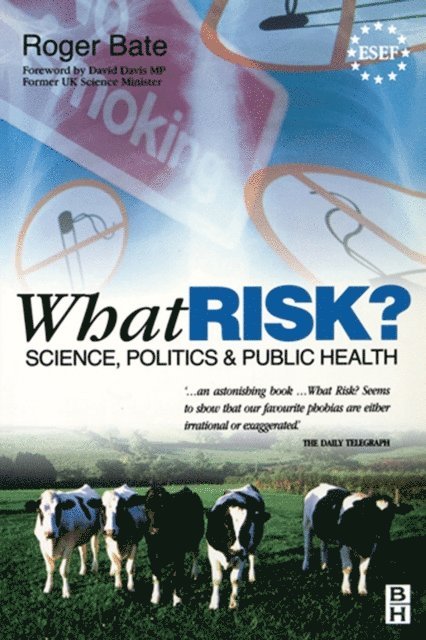
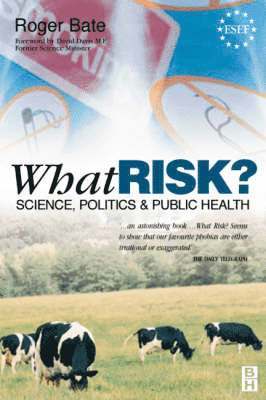
Whether the public or the environment is at risk is a commonly discussed question in numerous areas of public life, most recently and publicly with regard to issues like BSE, passive smoking and the dangers from pesticides in food production. It is therefore of great importance for everyone concerned with these issues - both policy makers and the public who may be subject to their decisions - to understand the basis on which ''risk'' policy is made. The principle objective of this book is to highlight the uncertainties inherent in ''scientific'' estimates of risk to the public and the environment resulting from exposure to certain hazards.Numerous examples of potential and real hazards are given. They all show that injury to personal health or the environment is a function not only of the toxicity (i.e. the lethality of a particular hazard) but of the level of exposure to the hazard concerned - in the words of the old maxim, the dose makes the poison.Existing regulation is criticized for being based on a flawed application of a poor epidemiological methodology, where toxicity is the basis of regulation and dose tends to be ignored. Furthermore, some authors conclude that risk is a subjective phenomenon that cannot be eliminated through regulation.- Leading international expert authors and contributors- Mass-media launch on publication- Important new commercial and H&S area of interest
E-bok
PDF, Engelska, 2012321 kr
Läs direkt efter köp
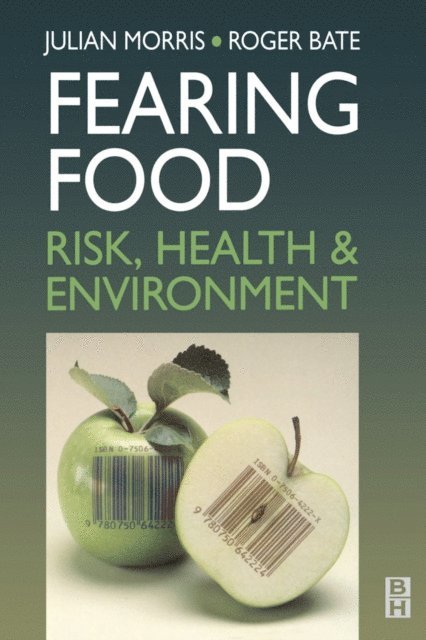
Environmental and consumer activists have for a long time blamed pesticides, fertilizers and other aspects of intensive farming for causing environmental degradation and human disease. Yet, as the authors in this book show, intensive farming has enabled growth in food production at a rate greater than population growth, thereby ensuring that people are better fed than ever before, whilst simultaneously limiting the effect of farming on the environment.The authors debunk numerous pervasive myths, including:Myth: Pesticides are bad for the environment and bad for human healthFact: Synthetic pesticides enable the production of large quantities of fresh fruit and vegetables, which means that people are better protected against cancer. In addition, the synthetic pesticides themselves are often less toxic than natural pesticides. Overall, synthetic pesticides present a net gain in health terms.Myth: Antibiotic resistance in animals is spreading to humans.Fact: The use of antibiotics in young animals keeps meat prices low and does not materially contribute to antibiotic resistance in humans.Myth: Nitrate fertilizers are a threat to human health.Fact: Nitrate fertilizers are probably beneficial to human health.Myth: Genetically modified organisms (GMOs) are bad for the environment and bad for our health.Fact: Many environmental problems associated with agriculture can be reduced by using GMOs, which have the potential to improve yields and quality which simultaneously reducing associated inputs, such as fertilizers, herbicides and pesticides. Commercially produced GM foodcrops have no known impacts on human health and future GM foodcrops are likely to have health benefits (enabling such things as low-fat chips/french fries and non-allergenic peanuts).Myth: Instances of food poisoning would be reduced if we had more regulations.Fact: Instances of food poisoning in the UK may have been exacerbated by over-cautious government regulation.Myth: Subsidies are needed to order to ensure that food and fish are produced in environmentally sound ways.Fact: Subsidies to fisheries and farming have caused widespread environmental degradation.Myth: Packaging and transporting food is environmentally unfriendly.Fact: Packaging enhances the shelf life of products and reduces wastage during transport. Transporting food allows society to take advantage of different environmental and socio-economic conditions that exist in different places.
Häftad, Engelska, 1994
100 kr
Skickas inom 5-8 vardagar
In this study the authors examine the so-called scientific 'consensus' about global warming. They argue climate change is a problem of great complexity, and such analysis as has been made by no means supports the view that climate change would place intolerable burdens on future generations.
Inbunden, Engelska, 2001
185 kr
Skickas inom 5-8 vardagar
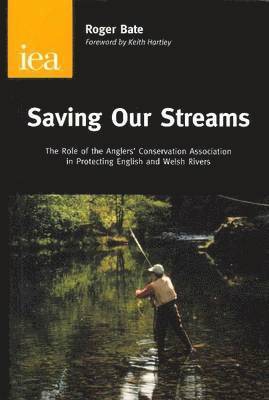
In Saving Our Streams, Roger Bate explains the history of an unusual and remarkably effective 'environmental' organisation - the Anglers' Conservation Association (ACA). Founded in 1948, the ACA is a voluntary association of angling clubs and individual anglers which brings civil suits against polluters who harm fishing. Dr Bate's original and instructive history explores how the ACA, using the common law, has operated to indemnify its members against the cost of litigation, bringing thousands of actions and being awarded hundreds of injunctions and millions of pounds in damages for plaintiffs. Most cases end in out-of-court settlement which, though efficient, brings little public recognition to the ACA. The ACA has not sought the limelight, unlike other environmental groups, but, argues Dr Bate, it is the most efficient and determined pollution prevention body in Britain. Its success demonstrates the value of private initiatives against polluters.
Inbunden, Engelska, 2001
190 kr
Skickas inom 5-8 vardagar
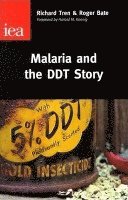
Malaria kills millions of people each year and hundreds of millions more suffer chronic illness. Economic development is inhibited and poverty is perpetuated. Tren and Bate argue that action against malaria is over-centralised and narrowly focused, ignoring local conditions and concerns. Health agencies in developing countries and some companies are trying to stem a resurgent tide of malaria. Their work is, however, hampered by pressure from environmentalist groups and donor agencies which still crusade against the use of DDT and which have a partial victory under the POPs (persistent organic pollutants) convention. A continuing anti-DDT campaign would have as its victims people in some of the world's poorest countries.
Häftad, Engelska, 1998
515 kr
Skickas inom 10-15 vardagar
Whether the public or the environment is at risk is a commonly discussed question in numerous areas of public life, most recently and publicly with regard to issues like BSE, passive smoking and the dangers from pesticides in food production. It is therefore of great importance for everyone concerned with these issues - both policy makers and the public who may be subject to their decisions - to understand the basis on which 'risk' policy is made. The principle objective of this book is to highlight the uncertainties inherent in 'scientific' estimates of risk to the public and the environment resulting from exposure to certain hazards.Numerous examples of potential and real hazards are given. They all show that injury to personal health or the environment is a function not only of the toxicity (i.e. the lethality of a particular hazard) but of the level of exposure to the hazard concerned - in the words of the old maxim, the dose makes the poison.Existing regulation is criticized for being based on a flawed application of a poor epidemiological methodology, where toxicity is the basis of regulation and dose tends to be ignored. Furthermore, some authors conclude that risk is a subjective phenomenon that cannot be eliminated through regulation.
Häftad, Engelska, 2014
482 kr
Skickas inom 3-6 vardagar
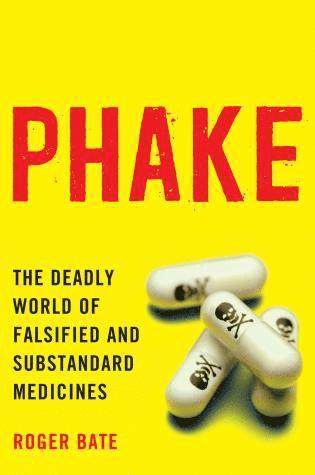
Roger Bate has spent years on the trail of counterfeit medicines in Asia, Africa, and the Middle East, learning the anatomy of a nebulous, far-reaching black market that has resulted in countless deaths and injuries around the world. Phake: The Deadly World of Falsified and Substandard Medicines is the culmination of Bate's research and travels—both a fascinating firsthand account of the counterfeit drug trade and an incisive policy analysis with important ramifications for decision makers in the U.S. Food and Drug Administration and the international World Health Organization.
Häftad, Engelska, 2026
257 kr
Kommande
An investigative narrative revealing how smartphones, deregulation, and pandemic isolation turned America’s pastime into its newest addiction.The House Always Wins traces the rise of legal sports betting from a fringe hobby to a $120-billion-a-year industry, reshaping how Americans watch, wager, and lose. Economist and health policy analyst Roger Bate explores how pandemic isolation, relentless digital marketing, and permissive state policy created a perfect storm of opportunity and risk. Bate draws on original surveys, field interviews, and international case studies to reveal how betting moved from racetracks to smartphones—and how a culture built on self-control began to mistake speed for freedom. From suburban bars to billion-dollar platforms like DraftKings and FanDuel, The House Always Wins uncovers the moral and economic contradictions of a market built on human weakness and where over 95 percent of participants lose, some catastrophically. Bate argues that the challenge isn’t whether people should gamble, but whether a democracy can manage risk at the speed of an app. Combining investigative reportage with humane insight, this book exposes the hidden arithmetic behind America’s newest public-health crisis.
Häftad, Engelska, 2006
227 kr
Tillfälligt slut
Suitable for those involved in post-compulsory education, including academics and policymakers, this title provides a policy analysis of the further education sector. It looks at the justifications for state spending on further education, how resources are allocated and the wider policy context.