Rory McCarthy – författare
Visar alla böcker från författaren Rory McCarthy. Handla med fri frakt och snabb leverans.
8 produkter
8 produkter
E-bok
PDF, Engelska, 2016653 kr
Läs direkt efter köp
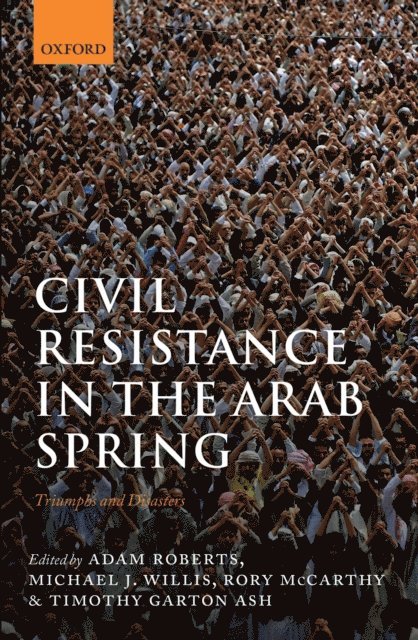
Civil resistance, especially in the form of massive peaceful demonstrations, was at the heart of the Arab Spring-the chain of events in the Middle East and North Africa that erupted in December 2010. It won some notable victories: popular movements helped to bring about the fall of authoritarian governments in Tunisia, Egypt, Libya and Yemen. Yet these apparent triumphs of non-violent action were followed by disasters—wars in Syria, anarchy in Libya and Yemen,reversion to authoritarian rule in Egypt, and counter-revolution backed by external intervention in Bahrain. Looming over these events was the enduring divide between the Sunni and Shi''a branches of Islam.Why did so much go wrong? Was the problem the methods, leadership and aims of the popular movements, or the conditions of their societies? In this book, experts on these countries, and on the techniques of civil resistance, set the events in their historical, social and political contexts. They describe how governments and outside powers—including the US and EU—responded, how Arab monarchies in Jordan and Morocco undertook to introduce reforms to avert revolution, and why the Arab Springfailed to spark a Palestinian one. They indicate how and why Tunisia remained, precariously, the country that experienced the most political change for the lowest cost in bloodshed.This book provides a vivid illustrated account and rigorous scholarly analysis of the course and fate, the strengths and the weaknesses, of the Arab Spring. The authors draw clear and challenging conclusions from these tumultuous events. Above all, they show how civil resistance aiming at regime change is not enough: building the institutions and the trust necessary for reforms to be implemented and democracy to develop is a more difficult but equally crucial task.
E-bok
Engelska, 2016653 kr
Läs direkt efter köp
Civil resistance, especially in the form of massive peaceful demonstrations, was at the heart of the Arab Spring-the chain of events in the Middle East and North Africa that erupted in December 2010. It won some notable victories: popular movements helped to bring about the fall of authoritarian governments in Tunisia, Egypt, Libya and Yemen. Yet these apparent triumphs of non-violent action were followed by disasters—wars in Syria, anarchy in Libya and Yemen,reversion to authoritarian rule in Egypt, and counter-revolution backed by external intervention in Bahrain. Looming over these events was the enduring divide between the Sunni and Shi''a branches of Islam.Why did so much go wrong? Was the problem the methods, leadership and aims of the popular movements, or the conditions of their societies? In this book, experts on these countries, and on the techniques of civil resistance, set the events in their historical, social and political contexts. They describe how governments and outside powers—including the US and EU—responded, how Arab monarchies in Jordan and Morocco undertook to introduce reforms to avert revolution, and why the Arab Springfailed to spark a Palestinian one. They indicate how and why Tunisia remained, precariously, the country that experienced the most political change for the lowest cost in bloodshed.This book provides a vivid illustrated account and rigorous scholarly analysis of the course and fate, the strengths and the weaknesses, of the Arab Spring. The authors draw clear and challenging conclusions from these tumultuous events. Above all, they show how civil resistance aiming at regime change is not enough: building the institutions and the trust necessary for reforms to be implemented and democracy to develop is a more difficult but equally crucial task.
Inbunden, Engelska, 2016
729 kr
Skickas inom 7-10 vardagar
Civil resistance, especially in the form of massive peaceful demonstrations, was at the heart of the Arab Spring-the chain of events in the Middle East and North Africa that erupted in December 2010. It won some notable victories: popular movements helped to bring about the fall of authoritarian governments in Tunisia, Egypt, Libya and Yemen. Yet these apparent triumphs of non-violent action were followed by disasters--wars in Syria, anarchy in Libya and Yemen, reversion to authoritarian rule in Egypt, and counter-revolution backed by external intervention in Bahrain. Looming over these events was the enduring divide between the Sunni and Shi'a branches of Islam.Why did so much go wrong? Was the problem the methods, leadership and aims of the popular movements, or the conditions of their societies? In this book, experts on these countries, and on the techniques of civil resistance, set the events in their historical, social and political contexts. They describe how governments and outside powers--including the US and EU--responded, how Arab monarchies in Jordan and Morocco undertook to introduce reforms to avert revolution, and why the Arab Spring failed to spark a Palestinian one. They indicate how and why Tunisia remained, precariously, the country that experienced the most political change for the lowest cost in bloodshed.This book provides a vivid illustrated account and rigorous scholarly analysis of the course and fate, the strengths and the weaknesses, of the Arab Spring. The authors draw clear and challenging conclusions from these tumultuous events. Above all, they show how civil resistance aiming at regime change is not enough: building the institutions and the trust necessary for reforms to be implemented and democracy to develop is a more difficult but equally crucial task.
Del 53 - Cambridge Middle East Studies
Inside Tunisia's al-Nahda
Between Politics and Preaching
Häftad, Engelska, 2018
330 kr
Skickas inom 7-10 vardagar
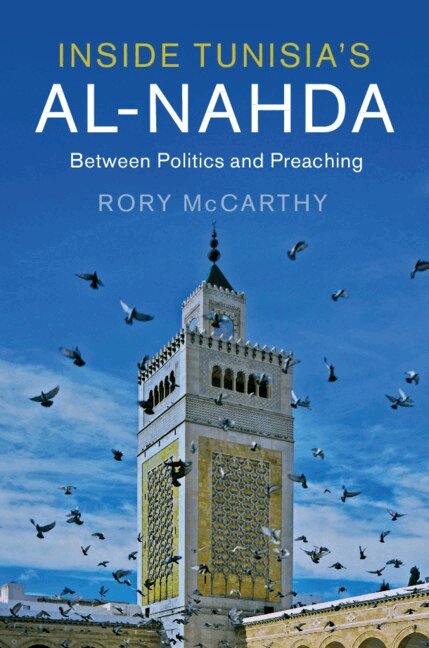
In the wake of the Arab uprisings, al-Nahda voted to transform itself into a political party that would for the first time withdraw from a preaching project built around religious, social, and cultural activism. This turn to the political was not a Tunisian exception but reflects an urgent debate within Islamist movements as they struggle to adjust to a rapidly changing political environment. This book re-orientates how we think about Islamist movements. Drawing on extensive fieldwork with grassroots activists of Tunisia's al-Nahda, Rory McCarthy focuses on the lived experience of activism to offer a challenging new perspective on one of the Middle East's most successful Islamist projects. Original evidence explains how al-Nahda survived two decades of brutal repression in prison and in social exclusion, and reveals what price the movement paid for a new strategy of pragmatism and reform during the Tunisian transition away from authoritarianism.
Del 53 - Cambridge Middle East Studies
Inside Tunisia's al-Nahda
Between Politics and Preaching
Inbunden, Engelska, 2018
1 032 kr
Skickas inom 7-10 vardagar
In the wake of the Arab uprisings, al-Nahda voted to transform itself into a political party that would for the first time withdraw from a preaching project built around religious, social, and cultural activism. This turn to the political was not a Tunisian exception but reflects an urgent debate within Islamist movements as they struggle to adjust to a rapidly changing political environment. This book re-orientates how we think about Islamist movements. Drawing on extensive fieldwork with grassroots activists of Tunisia's al-Nahda, Rory McCarthy focuses on the lived experience of activism to offer a challenging new perspective on one of the Middle East's most successful Islamist projects. Original evidence explains how al-Nahda survived two decades of brutal repression in prison and in social exclusion, and reveals what price the movement paid for a new strategy of pragmatism and reform during the Tunisian transition away from authoritarianism.
E-bok
Engelska, 2018397 kr
Läs direkt efter köp
In the wake of the Arab uprisings, al-Nahda voted to transform itself into a political party that would for the first time withdraw from a preaching project built around religious, social, and cultural activism. This turn to the political was not a Tunisian exception but reflects an urgent debate within Islamist movements as they struggle to adjust to a rapidly changing political environment. This book re-orientates how we think about Islamist movements. Drawing on extensive fieldwork with grassroots activists of Tunisia''s al-Nahda, Rory McCarthy focuses on the lived experience of activism to offer a challenging new perspective on one of the Middle East''s most successful Islamist projects. Original evidence explains how al-Nahda survived two decades of brutal repression in prison and in social exclusion, and reveals what price the movement paid for a new strategy of pragmatism and reform during the Tunisian transition away from authoritarianism.
E-bok
PDF, Engelska, 2018397 kr
Läs direkt efter köp
In the wake of the Arab uprisings, al-Nahda voted to transform itself into a political party that would for the first time withdraw from a preaching project built around religious, social, and cultural activism. This turn to the political was not a Tunisian exception but reflects an urgent debate within Islamist movements as they struggle to adjust to a rapidly changing political environment. This book re-orientates how we think about Islamist movements. Drawing on extensive fieldwork with grassroots activists of Tunisia''s al-Nahda, Rory McCarthy focuses on the lived experience of activism to offer a challenging new perspective on one of the Middle East''s most successful Islamist projects. Original evidence explains how al-Nahda survived two decades of brutal repression in prison and in social exclusion, and reveals what price the movement paid for a new strategy of pragmatism and reform during the Tunisian transition away from authoritarianism.
E-bok
Engelska, 2011161 kr
Läs direkt efter köp
In May 2003 journalist Rory McCarthy went to Iraq to cover what was claimed to be the triumphant rebuilding of the country after the American invasion. Two years later he left a place teetering on the brink of civil war, whose inhabitants longed for the Americans to leave but feared what would happen if they did. Throughout his stay, McCarthy was struck by how little the Iraqi point of view was represented in the media, drowned out by the message of the British and American occupying powers. This book is an attempt to recify that. By telling the stories of some of the Iraqis that McCarthy came to know, it reveals, more subtly and interestingly than any political rhetoric, the fatal extent to which they were misunderstood. From the survivor of one of Sadaam's mass graves to the insurgents of Najaf, McCarthy shows us men and women living the dilemmas of Iraq from day to day, and making crucial decisions about where they stand. The result is a moving and important book that gives a remarkable overview of a nation in turmoil.