Rosemary C. Henze - Böcker
Visar alla böcker från författaren Rosemary C. Henze. Handla med fri frakt och snabb leverans.
6 produkter
6 produkter
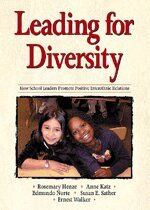
Leading for Diversity
How School Leaders Promote Positive Interethnic Relations
Inbunden, Engelska, 2002
1 292 kr
Skickas inom 3-6 vardagar
"I strongly endorse this book and feel that it holds great promise for the field."Ray TerrellCoauthor of Cultural ProficiencyProactive leadership fosters strong interethnic communities! This timely volume provides powerful models of leadership that are effective in developing schools where positive interethnic relations can flourish. Countering the often-heard belief that troubled race relations are endemic to schools, author Rosemary Henze and her team of researchers face the issue head on by incorporating diversity issues into educational leadership. Schools are vehicles for change in race/ethnic relations when proactive leadership is developed and maintained.Vignettes and case studies allow you to assess and develop your leadership skills in interethnic relations by helping you to Recognize and develop their own leadership strengths in a diverse school Assess how organizational structures support or constrain positive relations Understand the nature of ethnic conflict or tension in your school Identify your school′s priority needs Develop a core vision of interethnic relations Create and implement a plan for promoting positive interethnic relations Document the effectiveness of your planThe broad concept of leadership presented here includes not only principals and administrators, but also teachers, parents, counselors, students, and community human relations professionals who emerge as leaders facing a range of issues—including gang violence, racial conflict, staff divisions, and other issues—that need to be addressed in the area of interethnic interactions. These representatives of schools with diverse populations form leadership teams able to speak out for real educational reform in reducing racism and prejudice in schools.
Leading for Diversity
How School Leaders Promote Positive Interethnic Relations
Häftad, Engelska, 2002
640 kr
Skickas inom 3-6 vardagar
"I strongly endorse this book and feel that it holds great promise for the field."Ray TerrellCoauthor of Cultural ProficiencyProactive leadership fosters strong interethnic communities! This timely volume provides powerful models of leadership that are effective in developing schools where positive interethnic relations can flourish. Countering the often-heard belief that troubled race relations are endemic to schools, author Rosemary Henze and her team of researchers face the issue head on by incorporating diversity issues into educational leadership. Schools are vehicles for change in race/ethnic relations when proactive leadership is developed and maintained.Vignettes and case studies allow you to assess and develop your leadership skills in interethnic relations by helping you to Recognize and develop their own leadership strengths in a diverse school Assess how organizational structures support or constrain positive relations Understand the nature of ethnic conflict or tension in your school Identify your school′s priority needs Develop a core vision of interethnic relations Create and implement a plan for promoting positive interethnic relations Document the effectiveness of your planThe broad concept of leadership presented here includes not only principals and administrators, but also teachers, parents, counselors, students, and community human relations professionals who emerge as leaders facing a range of issues—including gang violence, racial conflict, staff divisions, and other issues—that need to be addressed in the area of interethnic interactions. These representatives of schools with diverse populations form leadership teams able to speak out for real educational reform in reducing racism and prejudice in schools.
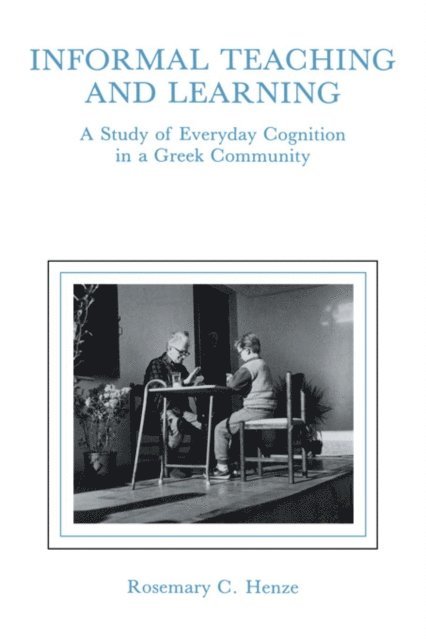
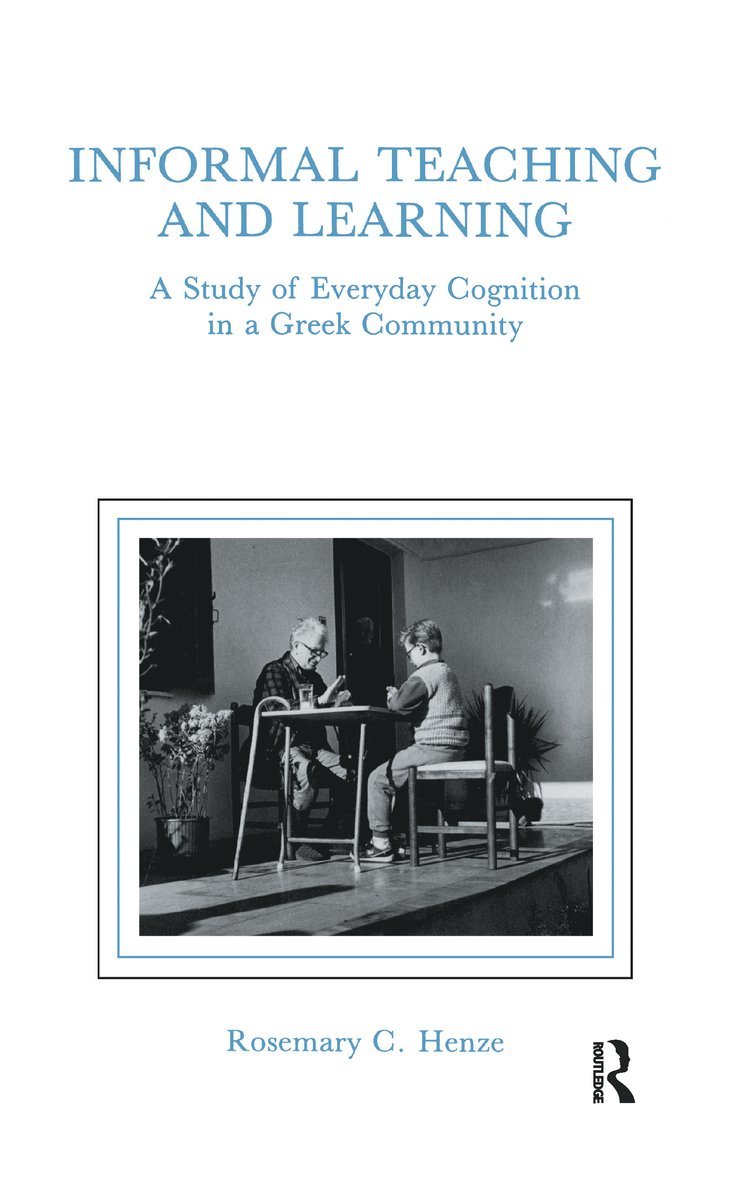
informal Teaching and Learning
A Study of Everyday Cognition in A Greek Community
Inbunden, Engelska, 1992
2 029 kr
Skickas inom 10-15 vardagar
Based on an ethnographic study conducted in a Greek community, this book celebrates the small ways people teach and learn while they are engaged in other, supposedly more important, activities. By examining the intricate ways in which knowledge and skills of everyday life are transmitted, it shows how family, community, and culture shape the cognitive world of learners. Beginning with a rich description of the community and its culture, the book then focuses on six contrasting episodes of informal instruction. Video and audiotaped scenes of learning to dance, learning to perform the healing art of cupping, and learning about kinship, for example, provide material for detailed analyses. The book demonstrates the interplay of culture and learning by exploring how the cultural theme of struggle and the use of different interpretive frames shaped informal instruction in this community and how, at the same time, processes of informal teaching and learning contributed to the evolving construction of culture by its members. Interpretive framing emerges as a key concept that studies of situated cognition must consider. Since formal and informal instruction are closely linked, the culturally specific ways of teaching and learning shown in informal instruction will help all educators meet the needs of diverse student bodies.
informal Teaching and Learning
A Study of Everyday Cognition in A Greek Community
Häftad, Engelska, 2016
692 kr
Skickas inom 10-15 vardagar
Based on an ethnographic study conducted in a Greek community, this book celebrates the small ways people teach and learn while they are engaged in other, supposedly more important, activities. By examining the intricate ways in which knowledge and skills of everyday life are transmitted, it shows how family, community, and culture shape the cognitive world of learners. Beginning with a rich description of the community and its culture, the book then focuses on six contrasting episodes of informal instruction. Video and audiotaped scenes of learning to dance, learning to perform the healing art of cupping, and learning about kinship, for example, provide material for detailed analyses. The book demonstrates the interplay of culture and learning by exploring how the cultural theme of struggle and the use of different interpretive frames shaped informal instruction in this community and how, at the same time, processes of informal teaching and learning contributed to the evolving construction of culture by its members. Interpretive framing emerges as a key concept that studies of situated cognition must consider. Since formal and informal instruction are closely linked, the culturally specific ways of teaching and learning shown in informal instruction will help all educators meet the needs of diverse student bodies.
1 101 kr
Skickas inom 3-6 vardagar
"I couldn′t stop reading this book! It masterfully pinpoints how language plays a critical, fundamental role in our daily lives as educators. Most important, it shows us how our deepest thoughts are manifested in language and how we can deal with them in our continued efforts to dismantle gender, racial, and class prejudice."—Susan Roberta Katz, Professor and Chair of International & Multicultural EducationUniversity of San Francisco"The authors show that by thinking critically about how we interact with others and by making the necessary changes in our own behavior, leaders can model respectful and collaborative ways of addressing and responding to others and gradually change the norms of the whole community."—Gordon Wells, Professor of EducationUniversity of California, Santa Cruz"Any chapter is enough for a year′s worth of conversation, and occasionally a good argument—among students, staff, and families. The book is an invitation to dialogue with one′s peers, but it also prompts dialogue with oneself. A must-read."—Deborah W. Meier, Educational Reformer, Writer, and ActivistUnlock the power of language to promote equity in your school!This enlightening book shows how everyday speech can be a transforming force in today′s schools, creating a more equitable environment for people of all backgrounds. Written by experts on language and diversity, this resource combines research-validated tools and real-world insights for addressing verbal communication issues within the classroom and schoolwide. Readers will find:Case studies and vignettes that show how language contributes to school change and shapes community relationships Thought-provoking exercises that strengthen language awareness and leadership skillsGuidance on effectively coaching students and colleagues on equity issues and the use of appropriate languageBy using language to overcome barriers, foster collaboration, and promote respect, leaders can make a significant difference in the quality of life and work in schools.
563 kr
Skickas inom 3-6 vardagar
"I couldn′t stop reading this book! It masterfully pinpoints how language plays a critical, fundamental role in our daily lives as educators. Most important, it shows us how our deepest thoughts are manifested in language and how we can deal with them in our continued efforts to dismantle gender, racial, and class prejudice."—Susan Roberta Katz, Professor and Chair of International & Multicultural EducationUniversity of San Francisco"The authors show that by thinking critically about how we interact with others and by making the necessary changes in our own behavior, leaders can model respectful and collaborative ways of addressing and responding to others and gradually change the norms of the whole community."—Gordon Wells, Professor of EducationUniversity of California, Santa Cruz"Any chapter is enough for a year′s worth of conversation, and occasionally a good argument—among students, staff, and families. The book is an invitation to dialogue with one′s peers, but it also prompts dialogue with oneself. A must-read."—Deborah W. Meier, Educational Reformer, Writer, and ActivistUnlock the power of language to promote equity in your school!This enlightening book shows how everyday speech can be a transforming force in today′s schools, creating a more equitable environment for people of all backgrounds. Written by experts on language and diversity, this resource combines research-validated tools and real-world insights for addressing verbal communication issues within the classroom and schoolwide. Readers will find:Case studies and vignettes that show how language contributes to school change and shapes community relationships Thought-provoking exercises that strengthen language awareness and leadership skillsGuidance on effectively coaching students and colleagues on equity issues and the use of appropriate languageBy using language to overcome barriers, foster collaboration, and promote respect, leaders can make a significant difference in the quality of life and work in schools.