Roundtable on Genomics and Precision Health – författare
618 kr
Läs direkt efter köp
The process of discovering and developing a new drug or therapy is extremely costly and time consuming, and recently, it has been estimated that the creation of a new medicine costs on average more than $2 billion and takes 10 years to reach patients. The challenges associated with bringing new medicines to market have led many pharmaceutical companies to seek out innovative methods for streamlining their drug discovery research.
One way to increase the odds of success for compounds in the drug development pipeline is to adopt genetically guided strategies for drug discovery, and recognizing the potential benefits of collecting genetic and phenotypic information across specific populations, pharmaceutical companies have started collaborating with healthcare systems and private companies that have curated genetic bioresources, or large databases of genomic information. Large-scale cohort studies offer an effective way to collect and store information that can be used to assess gene–environment interactions, identify new potential drug targets, understand the role of certain genetic variants in the drug response, and further elucidate the underlying mechanisms of disease onset and progression.
To examine how genetic bioresources could be used to improve drug discovery and target validation, the National Academies of Sciences, Engineering, and Medicine hosted a workshop in March 2016. Participants at the workshop explored the current landscape of genomics-enabled drug discovery activities in industry, academia, and government; examined enabling partnerships and business models; and considered gaps and best practices for collecting population data for the purpose of improving the drug discovery process. This publication summarizes the presentations and discussions from the workshop.
819 kr
Läs direkt efter köp
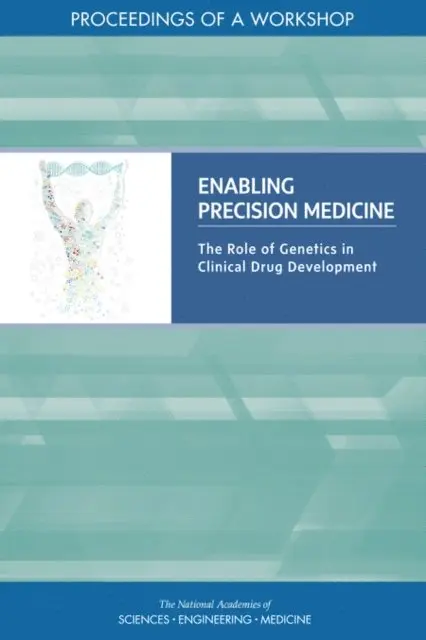
Those involved in the drug development process face challenges of efficiency and overall sustainability due in part to high research costs, lengthy development timelines, and late-stage drug failures. Novel clinical trial designs that enroll participants based on their genetics represent a potentially disruptive change that could improve patient outcomes, reduce costs associated with drug development, and further realize the goals of precision medicine.
On March 8, 2017, the Forum on Drug Discovery, Development, and Translation and the Roundtable on Genomics and Precision Health of the National Academies of Sciences, Engineering, and Medicine hosted the workshop Enabling Precision Medicine: The Role of Genetics in Clinical Drug Development. Participants examined successes, challenges, and possible best practices for effectively using genetic information in the design and implementation of clinical trials to support the development of precision medicines, including exploring the potential advantages and disadvantages of such trials across a variety of disease areas. This publication summarizes the presentations and discussions from the workshop.
685 kr
Läs direkt efter köp
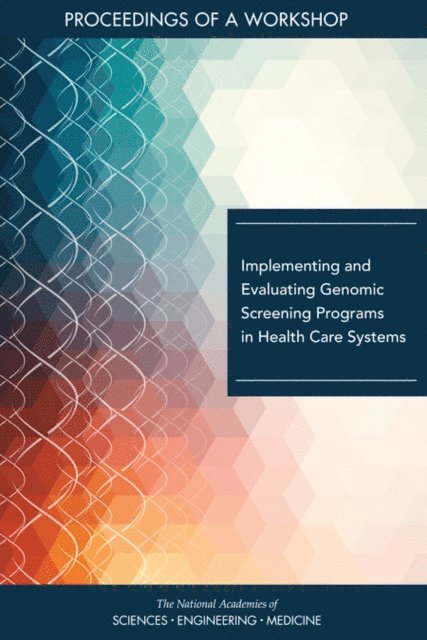
Genomic applications are being integrated into a broad range of clinical and research activities at health care systems across the United States. This trend can be attributed to a variety of factors, including the declining cost of genome sequencing and the potential for improving health outcomes and cutting the costs of care. The goals of these genomics-based programs may be to identify individuals with clinically actionable variants as a way of preventing disease, providing diagnoses for patients with rare diseases, and advancing research on genetic contributions to health and disease. Of particular interest are genomics- based screening programs, which will, in this publication, be clinical screening programs that examine genes or variants in unselected populations in order to identify individuals who are at an increased risk for a particular health concern (e.g., diseases, adverse drug outcomes) and who might benefit from clinical interventions.
On November 1, 2017, the National Academies of Sciences, Engineering, and Medicine hosted a public workshop to explore the challenges and opportunities associated with integrating genomics-based screening programs into health care systems. This workshop was developed as a way to explore the challenges and opportunities associated with integrating genomics-based programs in health care systems in the areas of evidence collection, sustainability, data sharing, infrastructure, and equity of access. This publication summarizes the presentations and discussions from the workshop.
819 kr
Läs direkt efter köp
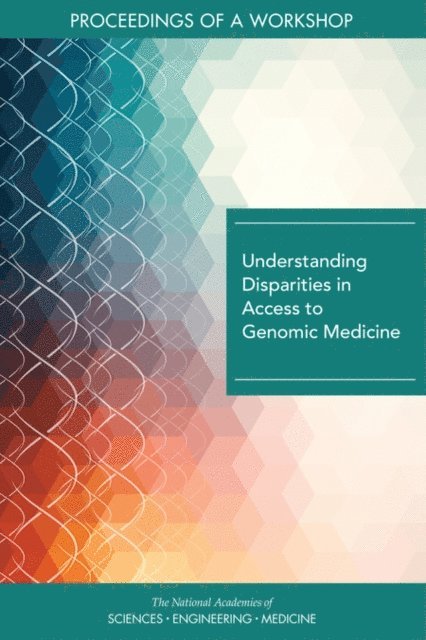
Genomic medicine is defined as the routine use of genomic information about an individual as part of his or her clinical care as well as the health outcomes and policy implications of that clinical use. It is one approach that has the potential to improve the quality of health care by allowing practitioners to tailor prevention, diagnostic, and treatment strategies to individual patients. In recent years, research breakthroughs, technological advances, and the decreasing cost of DNA sequencing have led to the wider adoption of genomic medicine. However, as with the introduction of new technologies into health care, there are concerns that genetic and genomic testing and services will not reach all segments of the population both now and in the near future, and there remains a gap in knowledge regarding potential health care disparities in genomic medicine and precision health approaches.
On June 27, 2018, the National Academies of Sciences, Engineering, and Medicine hosted a public workshop to examine the gaps in knowledge related to access to genomic medicine and to discuss health care disparities and possible approaches to overcoming the disparate use of genomic medicine among populations. Workshop participants discussed research on access to genetics and genomics services in medically underserved areas, model programs of care for diverse patient populations, and current challenges and possible best practices for alleviating health care disparities as they relate to genomics-based approaches. This publication summarizes the presentations and discussions from the workshop.
785 kr
Läs direkt efter köp
Sharing knowledge is what drives scientific progress - each new advance or innovation in biomedical research builds on previous observations. However, for experimental findings to be broadly accepted as credible by the scientific community, they must be verified by other researchers. An essential step is for researchers to report their findings in a manner that is understandable to others in the scientific community and provide sufficient information for others to validate the original results and build on them. In recent years, concern has been growing over a number of studies that have failed to replicate previous results and evidence from larger meta-analyses, which have pointed to the lack of reproducibility in biomedical research.
On September 25 and 26, 2019, the National Academies of Science, Engineering, and Medicine hosted a public workshop in Washington, DC, to discuss the current state of transparency in the reporting of preclinical biomedical research and to explore opportunities for harmonizing reporting guidelines across journals and funding agencies. Convened jointly by the Forum on Drug Discovery, Development, and Translation; the Forum on Neuroscience and Nervous System Disorders; the National Cancer Policy Forum; and the Roundtable on Genomics and Precision Health, the workshop primarily focused on transparent reporting in preclinical research, but also considered lessons learned and best practices from clinical research reporting. This publication summarizes the presentation and discussion of the workshop.
769 kr
Läs direkt efter köp
Consumer genomics, encompassing both direct-to-consumer applications (i.e., genetic testing that is accessed by a consumer directly from a commercial company apart from a health care provider) and consumer-driven genetic testing (i.e., genetic testing ordered by a health care provider in response to an informed patient request), has evolved considerably over the past decade, moving from more personal utility-focused applications outside of traditional health care to interfacing with clinical care in nontraditional ways. As consumer genomics has increasingly intersected with clinical applications, discussions have arisen around the need to demonstrate clinical and analytical validity and clinical utility due to the potential for misinterpretation by consumers. Clinical readiness and interest for this information have presented educational and training challenges for providers. At the same time, consumer genomics has emerged as a potentially innovative mechanism for thinking about health literacy and engaging participants in their health and health care.
To explore the current landscape of consumer genomics and the implications for how genetic test information is used or may be used in research and clinical care, the Roundtable on Genomics and Precision Health of the National Academies of Sciences, Engineering, and Medicine hosted a public workshop on October 29, 2019, in Washington, DC. Discussions included such topics as the diversity of participant populations, the impact of consumer genomics on health literacy and engagement, knowledge gaps related to the use of consumer genomics in clinical care, and regulatory and health policy issues such as data privacy and security. A broad array of stakeholders took part in the workshop, including genomics and consumer genomics experts, epidemiologists, health disparities researchers, clinicians, users of consumer genomics research applications, representatives from patient advocacy groups, payers, bioethicists, regulators, and policy makers. This publication summarizes the presentations and discussion of the workshop.
919 kr
Läs direkt efter köp
On November 18 and 19, 2019, the National Academies of Sciences, Engineering, and Medicine hosted a public workshop in Washington, DC, titled Sharing Clinical Trial Data: Challenges and a Way Forward. The workshop followed the release of the 2015 Institute of Medicine (IOM) consensus study report Sharing Clinical Trial Data: Maximizing Benefits, Minimizing Risk, and was designed to examine the current state of clinical trial data sharing and reuse and to consider ways in which policy, technology, incentives, and governance could be leveraged to further encourage and enhance data sharing. This publication summarizes the presentations and discussions from the workshop.
919 kr
Läs direkt efter köp
On March 24, 2020, a 1-day public workshop titled The Role of Digital Health Technologies in Drug Development was convened by the National Academies of Sciences, Engineering, and Medicine. This workshop builds on prior efforts to explore how virtual clinical trials facilitated by digital health technologies (DHTs) might change the landscape of drug development. To explore the challenges and opportunities in using DHTs for improving the probability of success in drug R&D, enabling better patient care, and improving precision medicine, the workshop featured presentations and panel discussions on the integration of DHTs across all phases of drug development. Throughout the workshop, participants considered how DHTs could be applied to achieve the greatest impact—and perhaps even change the face of how clinical trials are conducted—in ways that are also ethical, equitable, safe, and effective. This publication summarizes the presentations and discussions from the workshop.
284 kr
Läs direkt efter köp
The National Academies Roundtable on Genomics and Precision Health, in collaboration with the National Cancer Policy Forum, hosted a public workshop that examined how genomic data are used in health care, outside of the traditional settings for clinical genetics. The workshop identified opportunities for advancement of precision health care delivery. The event also explored how patients, clinicians, and payers assess and act upon the risks and benefits of genomic screening and diagnostic testing. Discussions focused on strategies to ensure that genomic applications are responsibly and equitably adopted to benefit populations as well as individuals over time. This Proceedings of a Workshop summarizes content from the event.
251 kr
Läs direkt efter köp
Where people live can affect their health because of location-specific exposure to chemicals and toxicants, lifestyle, diet, immune function development, and social and historical determinants of health. A better understanding of the connections between environmental exposures and genetics that are associated with cancer can help inform efforts to identify risks and prevent potentially harmful outcomes. Recent scientific advancements have brought new insights into genomic and epigenomic biomarkers of cancer, which encompasses the toxicogenomic effects of environmental hazards, genetic susceptibility to environmental exposures, and the role of genetic and epigenetic changes in the development of cancer. Public communication around the potential risks of environmental hazards has also been evolving. The National Academies of Sciences, Engineering, and Medicine National Cancer Policy Forum convened a virtual public workshop in collaboration with the Roundtable on Genomics and Precision Health on April 13, 2023 to explore the state of the science in identifying potential genomic and epigenomic biomarkers of environmental exposures associated with cancers, with an emphasis on pediatric cancers. This proceedings document summarizes workshop discussions.
408 kr
Tillfälligt slut
550 kr
Tillfälligt slut
455 kr
Tillfälligt slut
526 kr
Tillfälligt slut
514 kr
Tillfälligt slut
632 kr
Tillfälligt slut
585 kr
Tillfälligt slut
184 kr
Tillfälligt slut