Russell E. Richey – författare
Visar alla böcker från författaren Russell E. Richey. Handla med fri frakt och snabb leverans.
22 produkter
22 produkter
E-bok
Engelska, 2015739 kr
Läs direkt efter köp
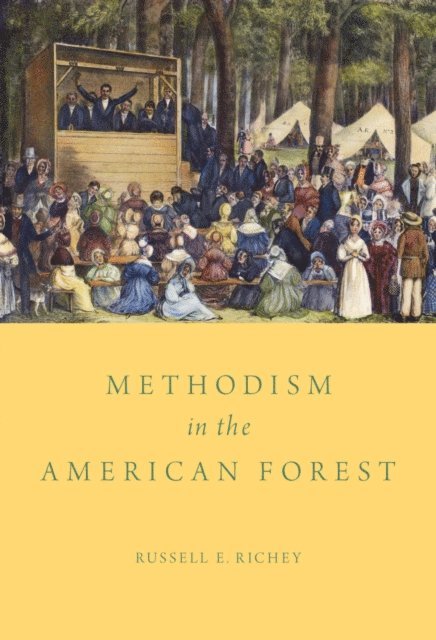
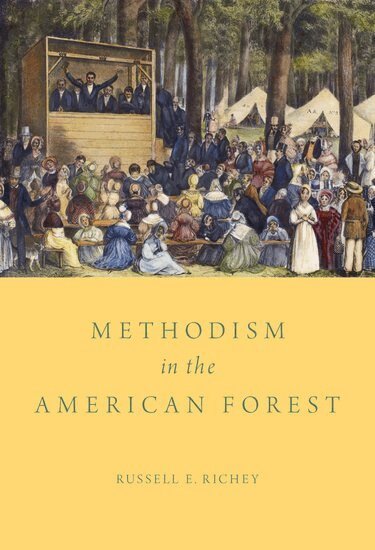
Winner of the 2015 Saddleback Selection Award from the Historical Society of The United Methodist ChurchDuring the nineteenth century, camp meetings became a signature program of American Methodists and an extraordinary engine for their remarkable evangelistic outreach. Methodism in the American Forest explores the ways in which Methodist preachers interacted with and utilized the American woodland, and the role camp meetings played in the denomination''s spread across the country.Half a century before they made themselves such a home in the woods, the people and preachers learned the hard way that only a fool would adhere to John Wesley''s mandate for preaching in fields of the New World. Under the blazing American sun, Methodist preachers sought and found a better outdoor sanctuary for large gatherings: under the shade of great oaks, a natural cathedral where they held forth with fervid sermons. The American forests, argues Russell E. Richey, served the preachers in several important ways. Like a kind of Gethesemane, the remote, garden-like solitude provided them with a place to seek counsel from the Holy Spirit. They also saw the forest as a desolate wilderness, and a means for them to connect with Israel''s years after the Exodus and Jesus''s forty days in the desert after his baptism by John.The dauntless preachers slashed their way through, following America''s expanding settlement, and gradually sacralizing American woodlands as cathedral, confessional, and spiritual challenge-as shady grove, as garden, and as wilderness. The threefold forest experience became a Methodist standard. The meeting of Methodism''s basic governing body, the quarterly conference, brought together leadership of all levels. The event stretched to two days in length and soon great crowds were drawn by the preaching and eventually the sacraments that were on offer. Camp meetings, if not a Methodist invention, became the movement''s signature, a development that Richey tracks throughout the years that Methodism matured, to become a central denomination in America''s religious landscape.
Inbunden, Engelska, 1994
1 141 kr
Skickas inom 5-8 vardagar
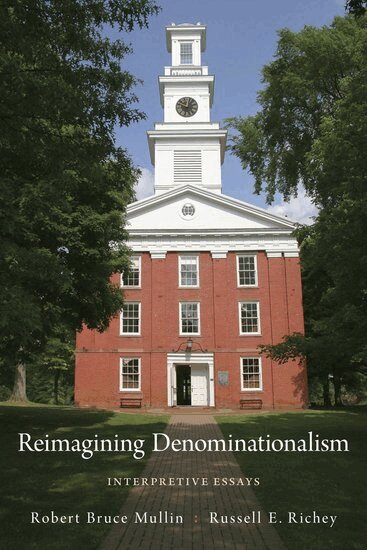
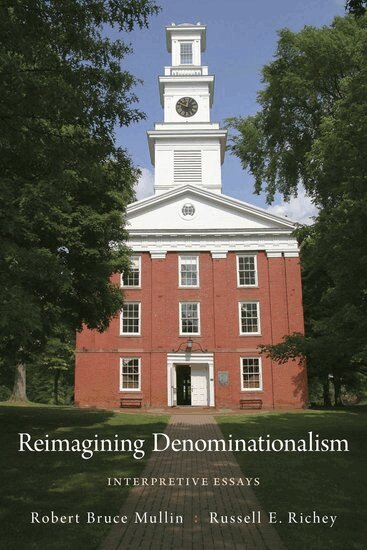
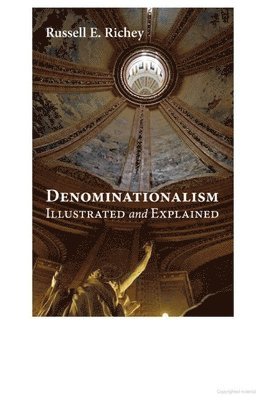
Denominationalism--that "free market" mode of organizing religious life which, some say, manages to combine traditional religious claims with a free society in a peculiarly American way--is the subject of the previously unpublished papers in this collection. No institution, the editors argue, is as crucial for the understanding of American religious life, yet so much in need of reassessment as the denomination. In a wide-ranging collection of articles, a distinguished set of commentators on American religion examine the denomination's past and present roles, its definable nature, and its evolution over time. The study of denominations, the authors suggest sheds light on broader understandings of American religious and cultural life. The contributors--scholars of the Roman Catholic, Protestant, Jewish, Mormon, and African-American traditions--explore the state and history of denominational studies in America, suggesting new models and approaches drawn from anthropology, sociology, theology, history, and history of religions. They offer provocative case studies that reimagine denominational studies.
Inbunden, Engelska, 2015
805 kr
Skickas inom 5-8 vardagar
During the nineteenth century, camp meetings became a signature program of American Methodists and an extraordinary engine for their remarkable evangelistic outreach. Methodism in the American Forest explores the ways in which Methodist preachers interacted with and utilized the American woodland, and the role camp meetings played in the denomination's spread across the country. Half a century before they made themselves such a home in the woods, the people and preachers learned the hard way that only a fool would adhere to John Wesley's mandate for preaching in fields of the New World. Under the blazing American sun, Methodist preachers found a better outdoor sanctuary for larger gatherings: under the shade of great oaks, a natural cathedral, where they held forth with fervid sermons. The American forests, argues Russell E. Richey, served the preachers in another important way. The remote, garden-like solitude provided them with a place to seek counsel from the Holy Spirit, serving as a kind of Gethsemane. As seen by the American Methodists, the forest was also a desolate wilderness, and a means for them to connect with Israel's wilderness years after the Exodus and Jesus's forty days in the desert after his baptism by John. Undaunted, the preachers slashed their way through, following America's expanding settlement, and gradually sacralizing American woodlands as cathedral, confessional, and spiritual challenge-as shady grove, as garden, and as wilderness. The threefold forest experience became a Methodist standard. The meeting of Methodism's basic governing body, the quarterly conference, brought together leadership of all levels. The event stretched to two days in length and soon great crowds were drawn by the preaching and eventually the sacraments that were on offer. Camp meetings, if not a Methodist invention, became the movement's signature, a development that Richey tracks throughout the years that Methodism matured, becoming a central denomination in America's religious landscape.
E-bok
PDF, Engelska, 2015745 kr
Läs direkt efter köp
Winner of the 2015 Saddleback Selection Award from the Historical Society of The United Methodist ChurchDuring the nineteenth century, camp meetings became a signature program of American Methodists and an extraordinary engine for their remarkable evangelistic outreach. Methodism in the American Forest explores the ways in which Methodist preachers interacted with and utilized the American woodland, and the role camp meetings played in the denomination''s spread across the country.Half a century before they made themselves such a home in the woods, the people and preachers learned the hard way that only a fool would adhere to John Wesley''s mandate for preaching in fields of the New World. Under the blazing American sun, Methodist preachers sought and found a better outdoor sanctuary for large gatherings: under the shade of great oaks, a natural cathedral where they held forth with fervid sermons. The American forests, argues Russell E. Richey, served the preachers in several important ways. Like a kind of Gethesemane, the remote, garden-like solitude provided them with a place to seek counsel from the Holy Spirit. They also saw the forest as a desolate wilderness, and a means for them to connect with Israel''s years after the Exodus and Jesus''s forty days in the desert after his baptism by John.The dauntless preachers slashed their way through, following America''s expanding settlement, and gradually sacralizing American woodlands as cathedral, confessional, and spiritual challenge-as shady grove, as garden, and as wilderness. The threefold forest experience became a Methodist standard. The meeting of Methodism''s basic governing body, the quarterly conference, brought together leadership of all levels. The event stretched to two days in length and soon great crowds were drawn by the preaching and eventually the sacraments that were on offer. Camp meetings, if not a Methodist invention, became the movement''s signature, a development that Richey tracks throughout the years that Methodism matured, to become a central denomination in America''s religious landscape.
Häftad, Engelska, 2012
458 kr
Skickas inom 5-8 vardagar
Denominationalism--that ''free market'' mode of organizing religious life which, some say, manages to combine traditional religious claims with a free society in a peculiarly American way--is the subject of the previously unpublished papers in this collection. No institution, the editors argue, is as crucial for the understanding of American religious life, yet so much in need of reassessment as the denomination. In a wide-ranging collection of articles, a distinguished set of commentators on American religion examine the denomination's past and present roles, its definable nature, and its evolution over time. The study of denominations, the authors show, sheds light on broader understandings of American religious and cultural life. The contributors--scholars of the Roman Catholic, Protestant, Jewish, Mormon, and African-American traditions--explore the state and history of denominational studies in America, suggesting new models and approaches drawn from anthropology, sociology, theology, history, and history of religions. They offer provocative case studies that reimagine denominational studies.
Inbunden, Engelska, 1991
285 kr
Skickas inom 10-15 vardagar
Offering a revisionist reading of American Methodism, this book goes beyond the limits of institutional history by suggesting a new and different approach to the examination of denominations. Russell E. Richey identifies within Methodism four distinct "languages" and explores the self-understanding that each language offers the early Methodists. One of these, a pietistic or evangelical vernacular, commonly employed in sermons, letters, and journals, is Richey's focus and provides a way for him to reconsider critical interpretive issues in American religious historiography and the study of Methodism. Richey challenges some important historical conventions, for instance, that the crucial changes in American Methodism occurred in 1784 when ties with John Wesley and Britain were severed, arguing instead for important continuities between the first and subsequent decades of Methodist experience.As Richey shows, the pietistic vernacular did not displace other Methodist languagesWesleyan, Anglican, or the language of American political discoursenor can it supplant them as interpretive devices. Instead, attention to the vernacular severs to highlight the tensions among the other Methodist languages and to suggest something of the complexity of early Methodist discourse. It reveals the incomplete connections made among the several languages, the resulting imprecisions and confusions that derived from using idioms from different languages, and the ways the Methodists drew upon the distinct languages during times of stress, change, and conflict.
Häftad, Engelska, 1999
265 kr
Skickas inom 5-8 vardagar
Häftad, Engelska, 1996
265 kr
Skickas inom 5-8 vardagar
Häftad, Engelska, 1997
330 kr
Skickas inom 5-8 vardagar
Häftad, Engelska, 2010
537 kr
Skickas inom 5-8 vardagar
Häftad, Engelska, 2000
515 kr
Skickas inom 5-8 vardagar
Häftad, Engelska, 1993
461 kr
Skickas inom 5-8 vardagar
Häftad, Engelska, 2005
243 kr
Skickas inom 5-8 vardagar
Häftad, Engelska, 2009
504 kr
Skickas inom 5-8 vardagar
Inbunden, Engelska, 2013
612 kr
Skickas inom 5-8 vardagar
Häftad, Engelska, 2018
229 kr
Skickas inom 5-8 vardagar
Häftad, Engelska, 2010
341 kr
Skickas inom 5-8 vardagar
Häftad, Engelska, 2013
352 kr
Skickas inom 5-8 vardagar
E-bok
Engelska, 2013606 kr
Läs direkt efter köp
Evidence of mainstream denominational decline virtually throws itself in our faces--growing religious pluralism in North America; the decline over the last half century in the salience, prestige, power, and vitality of Protestant denominational leadership; slippage in mainline membership and corresponding growth, vigor, visibility, and political prowess of conservative, evangelical, and fundamentalist bodies; patterns of congregational independence, including loosening of or removal of denominational identity, particularly in signage, and the related marginal loyalty of members; emergence of megachurches, with resources and the capacity to meet needs heretofore supplied by denominations (training, literature, expertise); growth within mainline denominations of caucuses and their alignment into broad progressive or conservative camps, often with connections to similar camps in other denominations; widespread suspicion of, indeed hostility towards, the centers and symbols of denominational identity--the regional and national headquarters; migration of individuals and families through various religious identities, sometimes out of classic Christianity altogether. Denominationalism looks doomed and is so proclaimed. It may be. However, viewing the sweep of Anglo-American history, this volume suggests how much denominations and denominationalism have changed, how resilient they have proved, how significant these structures of religious belonging have been in providing order and direction to American society, and how such enduring purposes find ever new structural/institutional expression.
E-bok
PDF, Engelska, 2010557 kr
Läs direkt efter köp
With Protestantism now experiencing a decline in growth and expansion, many people are concerned about the future of denominations. Church budgets are being slashed, and dissident groups are increasing in number on the denominational fringe. To provide a better understanding of and respect for the potentials and limitations of denominations, Dr. Richey presents the varying perspectives of acknowledged authorities to explain first of all what denominationalism, a basic form of the American church, is. How did denominationalism begin, what is its essence, and what is the denominational pattern of the Christian church? Ten articles explore these questions from different viewpoints and give alternative explanations. Dr. Richey provides an introduction to each of the articles, calling attention to its particular contributions and divergences from other interpretations while raising important critical questions. The question What is the future of denominations? cannot be answered without a more explicit understanding of the phenomenon of denominationalism. The articles presented here, together with their introductions, represent Russell Richey's attempt to penetrate both the vagueness that surrounds denominationalism and the causes of the current malaise afflicting individual denominations.
E-bok
PDF, Engelska, 2018328 kr
Läs direkt efter köp
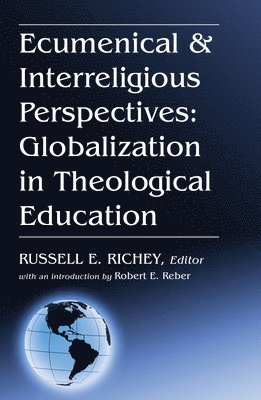
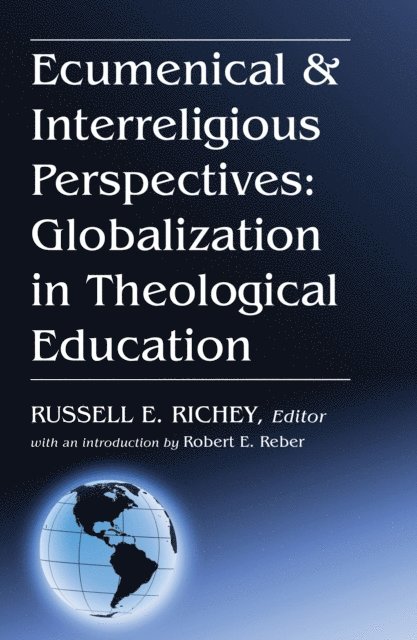
Ecumenical & Interreligious Perspectives: Globalization in Theological Education is a collection of articles on the wide-ranging effects of ecumenism on theological education. Fifteen eminent historians, theologians, missiologists, Christian educators, and ecumenists in the United Methodist Church and other denominations have addressed such topics as the critical redefinition of ecumenism, global inclusiveness, and the cultural assumptions implicit in interreligious dialogue. These important essays show that the seminaries are responding to the new global awareness with vigor and sensitivity. Together, they give us a picture of theological education that is spiritually and intellectually prepared to face the challenges of the twenty-first century.
Häftad, Engelska, 2022
374 kr
Skickas inom 5-8 vardagar