Ruth Murray-Webster – författare
Visar alla böcker från författaren Ruth Murray-Webster. Handla med fri frakt och snabb leverans.
23 produkter
Making Risky and Important Decisions
A Leader’s Guide
Av Ruth Murray-Webster, David Hillson
Häftad, 2021
488 kr
Lägg i varukorg
This book offers a practical insight to leaders who need to make good decisions in risky and important situations. The authors describe a process for making risk-intelligent decisions, explaining complex ideas simply, and mapping a route through the myriad interrelated influences when groups make …
Managing Group Risk Attitude
Av Ruth Murray-Webster, David Hillson
Inbunden, 2008
2200 kr
Lägg i varukorg
This book builds on the authors' previous title Understanding and Managing Risk Attitude but this time looks exclusively at the challenges of understanding and managing those attitudes adopted by groups of people when faced with making decisions that they perceive as risky and important. The book …
Understanding and Managing Risk Attitude
Av David Hillson, Ruth Murray-Webster
Häftad, 2007
773 kr
Lägg i varukorg
Despite many years of development, risk management remains problematic for the majority of organizations. One common challenge is the human dimension, in other words, the way people perceive risk and risk management. Risk management processes and techniques are operated by people, each of whom is a …
Making Risky and Important Decisions
A Leader’s Guide
Av David Hillson, Ruth Murray-Webster
E-bok, 2021
571 kr
Lägg i varukorg
This book offers a practical insight to leaders who need to make good decisions in risky and important situations. The authors describe a process for making risk-intelligent decisions, explaining complex ideas simply, and mapping a route through the myriad interrelated influences when groups make …
Making Risky and Important Decisions
A Leader’s Guide
Av David Hillson, Ruth Murray-Webster
E-bok, 2021
571 kr
Lägg i varukorg
This book offers a practical insight to leaders who need to make good decisions in risky and important situations. The authors describe a process for making risk-intelligent decisions, explaining complex ideas simply, and mapping a route through the myriad interrelated influences when groups make …
Making Risk Management Work
Engaging People to Identify, Own and Manage Risk
Av Penny Pullan, Ruth Murray-Webster
E-bok, 2022
571 kr
Lägg i varukorg
Making risk management work means engaging people to identify, own and manage risk. Many organisations have spent considerable time and money setting up risk frameworks, processes, and supporting tools, but these have failed to deliver value. Instead, they should focus on the people. Bringing …
Making Risk Management Work
Engaging People to Identify, Own and Manage Risk
Av Penny Pullan, Ruth Murray-Webster
E-bok, 2022
571 kr
Lägg i varukorg
Making risk management work means engaging people to identify, own and manage risk. Many organisations have spent considerable time and money setting up risk frameworks, processes, and supporting tools, but these have failed to deliver value. Instead, they should focus on the people. Bringing …
Making Risky and Important Decisions
A Leader’s Guide
Av Ruth Murray-Webster, David Hillson
Inbunden, 2021
1269 kr
Lägg i varukorg
This book offers a practical insight to leaders who need to make good decisions in risky and important situations. The authors describe a process for making risk-intelligent decisions, explaining complex ideas simply, and mapping a route through the myriad interrelated influences when groups make …
Making Risk Management Work
Engaging People to Identify, Own and Manage Risk
Av Ruth Murray-Webster, Penny Pullan
Inbunden, 2022
2106 kr
Lägg i varukorg
Making risk management work means engaging people to identify, own and manage risk. Many organisations have spent considerable time and money setting up risk frameworks, processes, and supporting tools, but these have failed to deliver value. Instead, they should focus on the people.Bringing …
Making Risk Management Work
Engaging People to Identify, Own and Manage Risk
Av Ruth Murray-Webster, Penny Pullan
Häftad, 2022
524 kr
Lägg i varukorg
Making risk management work means engaging people to identify, own and manage risk. Many organisations have spent considerable time and money setting up risk frameworks, processes, and supporting tools, but these have failed to deliver value. Instead, they should focus on the people.Bringing …
Managing Group Risk Attitude
Av Ruth Murray-Webster, David Hillson
Häftad, 2024
653 kr
Lägg i varukorg
This book builds on the authors' previous title Understanding and Managing Risk Attitude but this time looks exclusively at the challenges of understanding and managing those attitudes adopted by groups of people when faced with making decisions that they perceive as risky and important. The book …
Short Guide to Risk Appetite
Av David Hillson, Ruth Murray-Webster
Inbunden, 2017
3070 kr
Lägg i varukorg
How much risk should we take? A Short Guide to Risk Appetite sets out to help all those who need to decide how much risk can be taken in a particular risky and important situation. David Hillson and Ruth Murray-Webster introduce the RARA Model to explain the complementary and central roles of Risk …
Understanding and Managing Risk Attitude
Av David Hillson, Ruth Murray-Webster
Inbunden, 2017
3161 kr
Lägg i varukorg
Despite many years of development, risk management remains problematic for the majority of organizations. One common challenge is the human dimension, in other words, the way people perceive risk and risk management. Risk management processes and techniques are operated by people, each of whom is a …
Managing Group Risk Attitude
Av David Hillson, Ruth Murray-Webster
E-bok, 2016
724 kr
Lägg i varukorg
This book builds on the authors'' previous title Understanding and Managing Risk Attitude but this time looks exclusively at the challenges of understanding and managing those attitudes adopted by groups of people when faced with making decisions that they perceive as risky and important. The book …
Managing Group Risk Attitude
Av David Hillson, Ruth Murray-Webster
E-bok, 2016
724 kr
Lägg i varukorg
This book builds on the authors'' previous title Understanding and Managing Risk Attitude but this time looks exclusively at the challenges of understanding and managing those attitudes adopted by groups of people when faced with making decisions that they perceive as risky and important. The book …
Understanding and Managing Risk Attitude
Av Ruth Murray-Webster, David Hillson
E-bok, 2017
840 kr
Lägg i varukorg
Despite many years of development, risk management remains problematic for the majority of organizations. One common challenge is the human dimension, in other words, the way people perceive risk and risk management. Risk management processes and techniques are operated by people, each of whom is a …
Understanding and Managing Risk Attitude
Av Ruth Murray-Webster, David Hillson
E-bok, 2017
858 kr
Lägg i varukorg
Despite many years of development, risk management remains problematic for the majority of organizations. One common challenge is the human dimension, in other words, the way people perceive risk and risk management. Risk management processes and techniques are operated by people, each of whom is a …
Short Guide to Risk Appetite
Av Ruth Murray-Webster, David Hillson
E-bok, 2017
678 kr
Lägg i varukorg
How much risk should we take? A Short Guide to Risk Appetite sets out to help all those who need to decide how much risk can be taken in a particular risky and important situation. David Hillson and Ruth Murray-Webster introduce the RARA Model to explain the complementary and central roles of Risk …
Short Guide to Risk Appetite
Av Ruth Murray-Webster, David Hillson
E-bok, 2017
678 kr
Lägg i varukorg
How much risk should we take? A Short Guide to Risk Appetite sets out to help all those who need to decide how much risk can be taken in a particular risky and important situation. David Hillson and Ruth Murray-Webster introduce the RARA Model to explain the complementary and central roles of Risk …
Short Guide to Risk Appetite
Av David Hillson, Ruth Murray-Webster
Häftad, 2012
578 kr
Lägg i varukorg
How much risk should we take? A Short Guide to Risk Appetite sets out to help all those who need to decide how much risk can be taken in a particular risky and important situation. David Hillson and Ruth Murray-Webster introduce the RARA Model to explain the complementary and central roles of Risk …
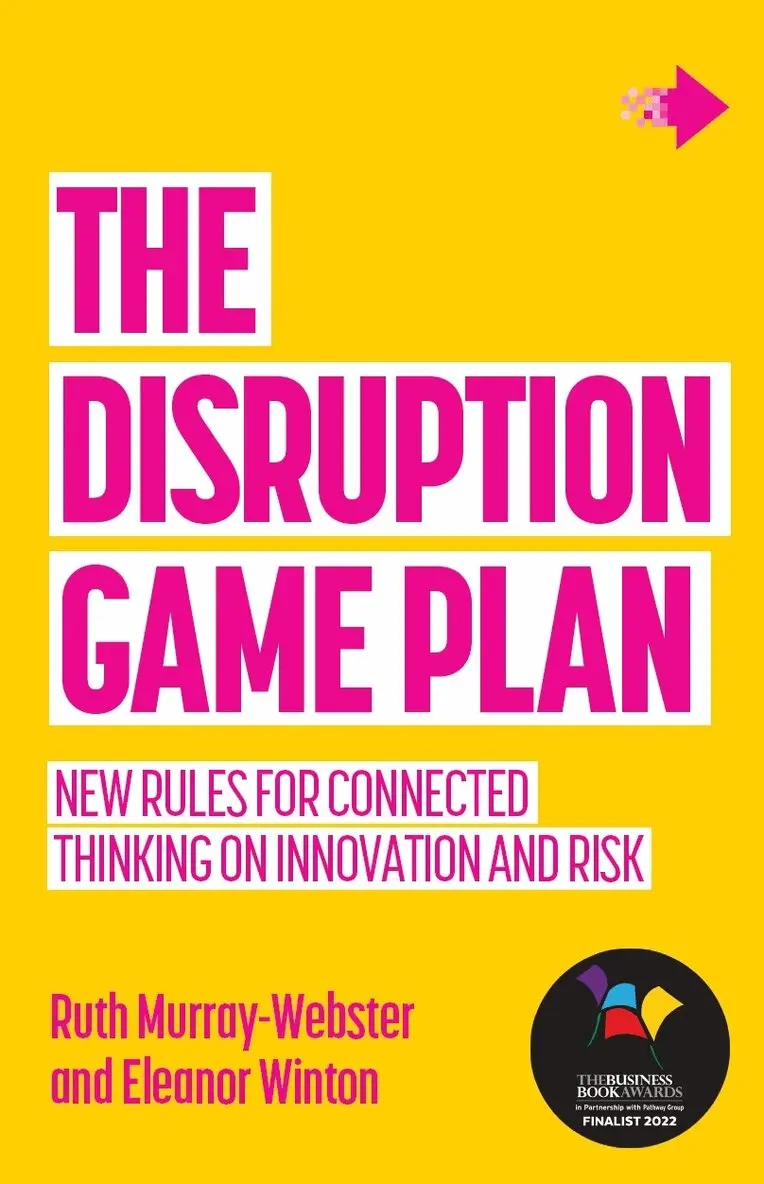
Disruption Game Plan
New rules for connected thinking on innovation and risk
Av Ruth Murray-Webster, Eleanor Winton
Häftad, 2021
309 kr
Lägg i varukorg
***BUSINESS BOOK AWARDS 2022 SHORTLISTED TITLE***Disruption is everywhere: it presents both great opportunities and significant threats.Do you know how to shape your strategy to respond?What if you had a game plan to navigate disruption?The Disruption Game Plan presents a tried and tested framework …
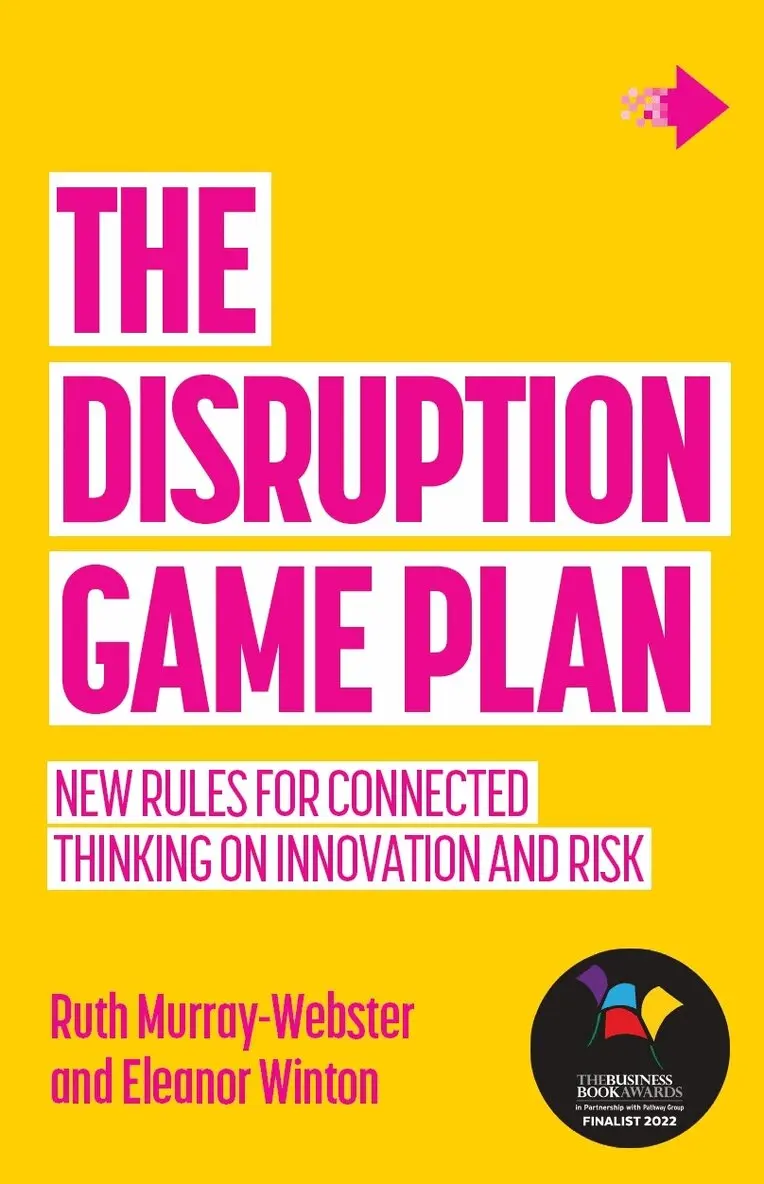
Disruption Game Plan
New rules for connected thinking on innovation and risk
Av Ruth Murray-Webster, Eleanor Winton
Inbunden, 2025
385 kr
Kommande
***BUSINESS BOOK AWARDS 2022 SHORTLISTED TITLE***Disruption is everywhere: it presents both great opportunities and significant threats.Do you know how to shape your strategy to respond?What if you had a game plan to navigate disruption?The Disruption Game Plan presents a tried and tested framework …
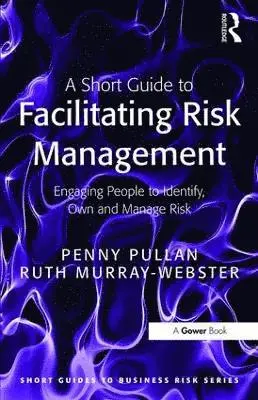
A Short Guide to Facilitating Risk Management: Engaging People to Identify, Own and Manage Risk
Av Penny Pullan, Ruth Murray-Webster
Häftad
333 kr
Tillfälligt slut