Scott P. Mainwaring - Böcker
Visar alla böcker från författaren Scott P. Mainwaring. Handla med fri frakt och snabb leverans.
4 produkter
4 produkter
410 kr
Skickas inom 7-10 vardagar
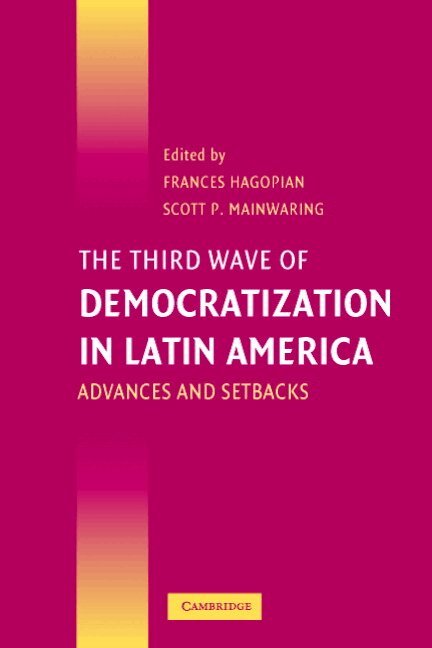
The late twentieth century witnessed the birth of an impressive number of new democracies in Latin America. This wave of democratization since 1978 has been by far the broadest and most durable in the history of Latin America, but many of the resulting democratic regimes also suffer from profound deficiencies. What caused democratic regimes to emerge and survive? What are their main achievements and shortcomings? This volume offers an ambitious and comprehensive overview of the unprecedented advances as well as the setbacks in the post-1978 wave of democratization. It seeks to explain the sea change from a region dominated by authoritarian regimes to one in which openly authoritarian regimes are the rare exception, and it analyzes why some countries have achieved striking gains in democratization while others have experienced erosions. The book presents general theoretical arguments about what causes and sustains democracy and analyses of nine compelling country cases.
1 160 kr
Skickas inom 7-10 vardagar
The late twentieth century witnessed the birth of an impressive number of new democracies in Latin America. This wave of democratization since 1978 has been by far the broadest and most durable in the history of Latin America, but many of the resulting democratic regimes also suffer from profound deficiencies. What caused democratic regimes to emerge and survive? What are their main achievements and shortcomings? This volume offers an ambitious and comprehensive overview of the unprecedented advances as well as the setbacks in the post-1978 wave of democratization. It seeks to explain the sea change from a region dominated by authoritarian regimes to one in which openly authoritarian regimes are the rare exception, and it analyzes why some countries have achieved striking gains in democratization while others have experienced erosions. The book presents general theoretical arguments about what causes and sustains democracy and analyses of nine compelling country cases.
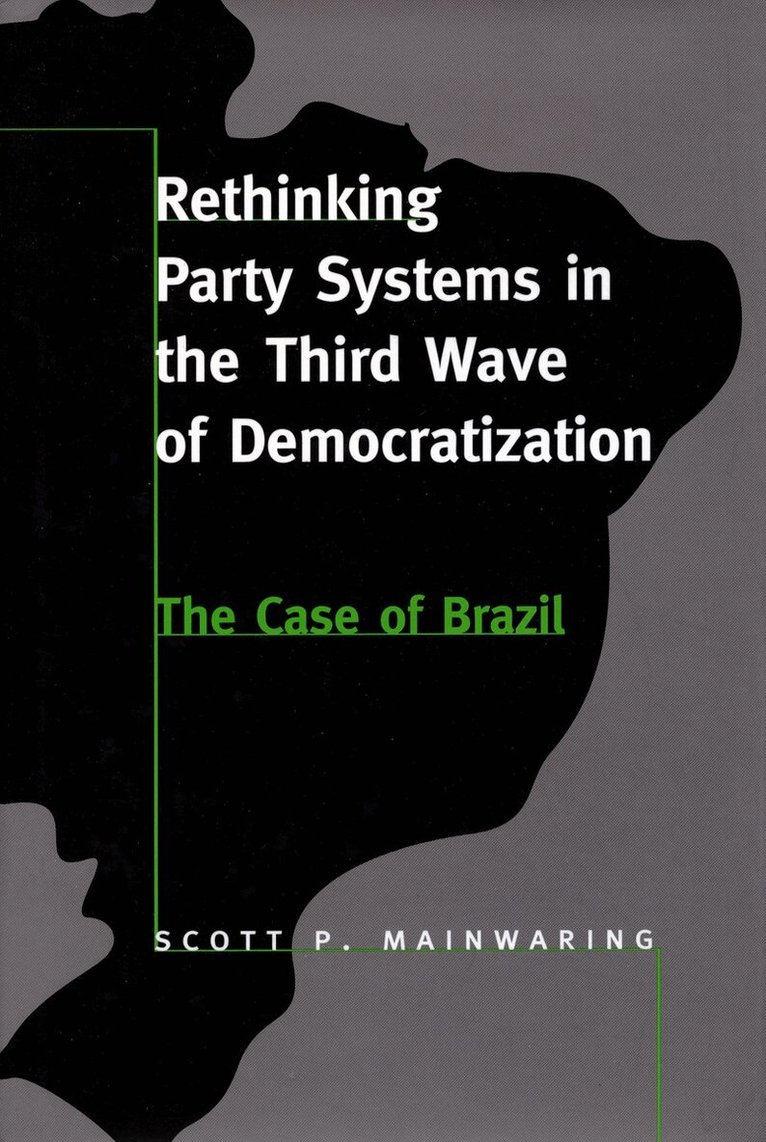
Rethinking Party Systems in the Third Wave of Democratization
The Case of Brazil
Inbunden, Engelska, 1999
1 686 kr
Skickas inom 10-15 vardagar
Among the many countries that underwent transitions to democracy in recent decades, only Russia is as important to the United States and the world as Brazil. The fifth-largest country and population in the world, with nearly one-half the inhabitants of Latin America, Brazil has the world's ninth-richest economy. Given the nation's size and influence, its capacity to achieve stable democracy and economic growth will have global impact. Understanding democracy in Brazil is therefore a crucial task, one which this book undertakes.Theoretically, the author argues that most party systems in the third wave of democratization, after 1974, have distinctive features that require us to reformulate theories about party systems generally; previous works have paid scant attention to the importance of variance in the degree of institutionalization of party systems. The author also argues that many third-wave cases underscore the need to focus on the capacity of the state and political elites to structure and restructure party systems from below.Empirically, the author studies the Brazilian party system and democratization, with particular reference to the 1979-96 period. He underscores the weakness of the party system and the resulting problems of democratization. He argues that the party system is poorly institutionalized, explores the reasons for the difficulties of party building, and addresses the consequences of weak institutionalization, which leads him to reaffirm the central significance of parties in the face of widespread skepticism about their importance.
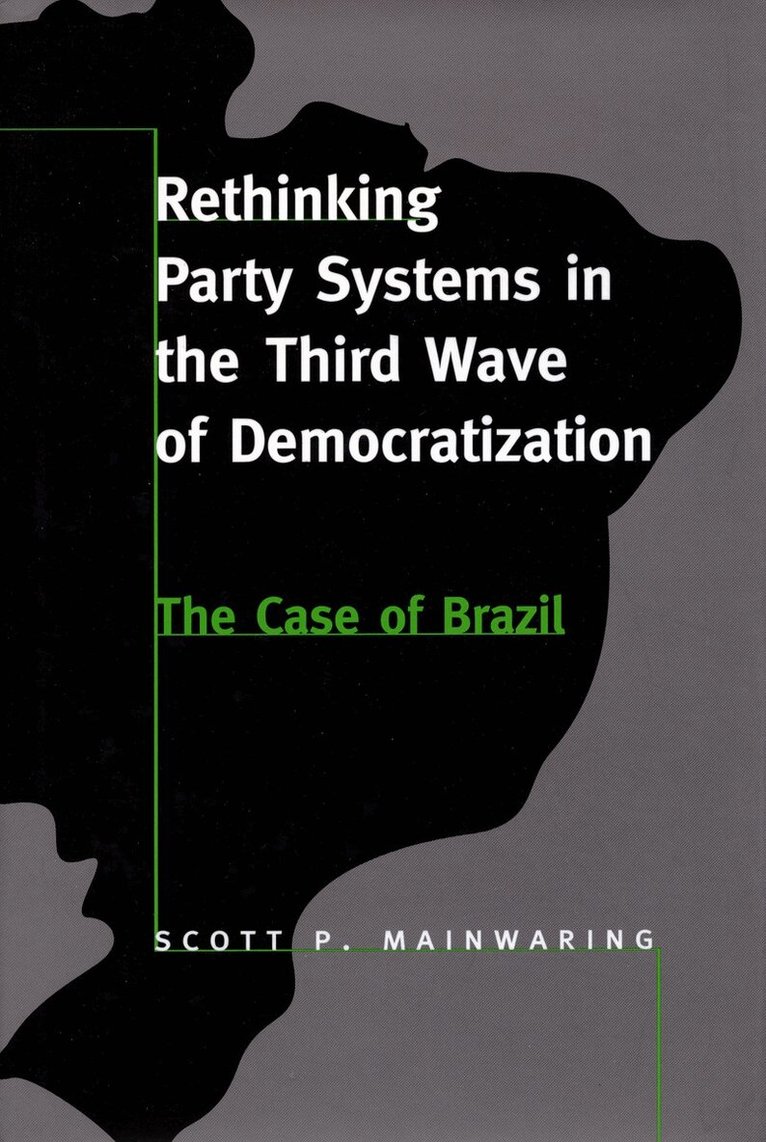
Rethinking Party Systems in the Third Wave of Democratization
The Case of Brazil
Häftad, Engelska, 1999
418 kr
Skickas inom 7-10 vardagar
Among the many countries that underwent transitions to democracy in recent decades, only Russia is as important to the United States and the world as Brazil. The fifth-largest country and population in the world, with nearly one-half the inhabitants of Latin America, Brazil has the world's ninth-richest economy. Given the nation's size and influence, its capacity to achieve stable democracy and economic growth will have global impact. Understanding democracy in Brazil is therefore a crucial task, one which this book undertakes.Theoretically, the author argues that most party systems in the third wave of democratization, after 1974, have distinctive features that require us to reformulate theories about party systems generally; previous works have paid scant attention to the importance of variance in the degree of institutionalization of party systems. The author also argues that many third-wave cases underscore the need to focus on the capacity of the state and political elites to structure and restructure party systems from below.Empirically, the author studies the Brazilian party system and democratization, with particular reference to the 1979-96 period. He underscores the weakness of the party system and the resulting problems of democratization. He argues that the party system is poorly institutionalized, explores the reasons for the difficulties of party building, and addresses the consequences of weak institutionalization, which leads him to reaffirm the central significance of parties in the face of widespread skepticism about their importance.