Serge M. Garcia - Böcker
Visar alla böcker från författaren Serge M. Garcia. Handla med fri frakt och snabb leverans.
3 produkter
3 produkter
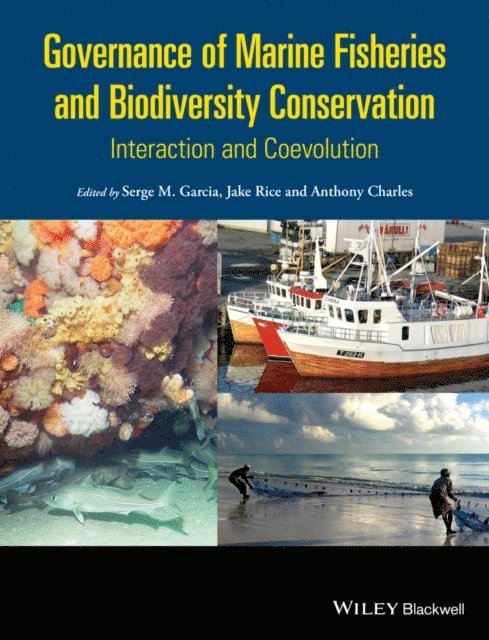
Governance of Marine Fisheries and Biodiversity Conservation
Interaction and Co-evolution
Inbunden, Engelska, 2014
2 337 kr
Skickas inom 11-20 vardagar
Governance of Marine Fisheries and Biodiversity Conservation explores governance of the world’s oceans with a focus on the impacts of two inter-connected but historically separate streams of governance: one for fisheries, the other for biodiversity conservation. Chapters, most co-authored by leading experts from both streams, investigate the interaction of these governance streams from ecological, economic, social and legal perspectives, with emphasis on policies, institutions processes, and outcomes on scales from the global to the local community, and with coverage of a range of themes and regions of the world. The book opens with chapters setting the historical context for the two marine governance streams, and framing the book’s exploration of whether, as the streams increasingly interact, there will be merger or collision, convergence or co-evolution. The concluding chapter synthesizes the insights from throughout the book, relative to the questions posed in the opening chapters. It also draws conclusions about future needs and directions in the governance of marine fisheries and biodiversity, vital to the future of the world’s oceans. With cutting edge chapters written by many leading international experts in fisheries management and biodiversity conservation, and edited by three leading figures in this crucially important subject, Governance of Marine Fisheries and Biodiversity Conservation is an essential purchase for fisheries scientists, economists, resource managers and policymakers, and all those working in fields of biodiversity conservation, marine ecology, and coastal livelihoods. Libraries in all universities and research establishments where environmental and/or marine studies, conservation, ocean policy and law, biological and life sciences, and fisheries management are studied and taught, should have copies of this most important book.
2 053 kr
Tillfälligt slut
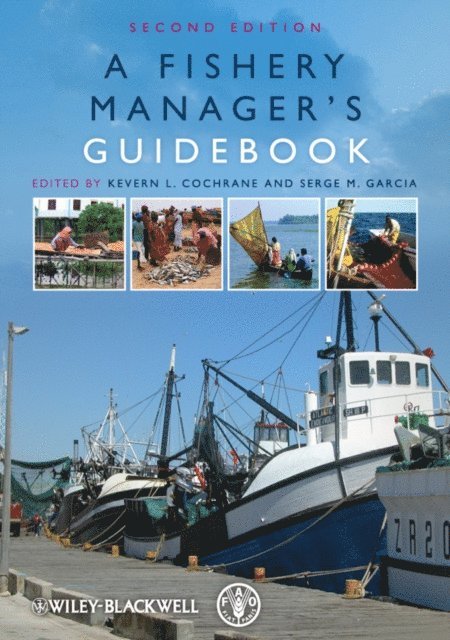
Co-published with the Food and Agriculture Organization of the United Nations. Fisheries management is the process that has evolved to try to ensure that fisheries operate in a manner that provides the immediate benefits in a sustainable manner. The widely accepted goal is that the full range of benefits should not only be available for this generation but for generations to come. Fisheries management has been successful in some cases but there have also been many, many cases of failure.This volume is intended to contribute to improving this unsatisfactory state by addressing the widespread need for information and guidance on the broad and often complex task of fisheries management. It is an updated and expanded edition of the first version of "A fishery manager's guidebook" which was published as a FAO Fisheries Technical Paper in 2002.The major part of this new edition is divided into five parts intended to cover the range of concerns, tools and techniques essential to the modern fisheries manager, whether that manager is an individual or a formal or informal group. Following the Introduction: Part I examines the primary dimensions of fisheries: biological, ecological, social and economicPart II looks at the legal and institutional characteristics of fisheriesPart III explores the tools that fishery managers have to achieve the objectives expected from a fisheryPart IV discusses the role of scientific information of indicators and reference pointsPart V moves into implementation of fisheries management and includes a chapter on special considerations in small-scale fisheriesThis landmark publication is aimed at fishery managers and scientists. All libraries in research establishments and universities where fisheries and aquatic sciences are studied and taught will need copies of this important volume.Fisheries around the world make essential contributions to human well-being including the provision of basic food supplies, employment, recreational opportunities, foreign currency and others, providing benefits to hundreds of millions of people. Despite these benefits, our record of managing fisheries so that the benefits can be sustained has been poor, at best, and most fisheries around the world are experiencing serious ecological, social or economic problems and usually all three. Today there is global concern about the state of fishery resources and aquatic ecosystems, their resilience to future stresses such as climate change and their ability to continue to provide benefits.
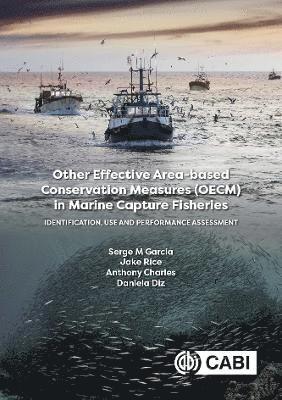
Other Effective Area-based Conservation Measures (OECM) in Marine Capture Fisheries
Identification, Use and Performance Assessment
Inbunden, Engelska, 2025
1 388 kr
Skickas inom 7-10 vardagar
With threats to global biodiversity growing, it is increasingly necessary to examine the frameworks we employ to ensure conservation is successful and effective. Conservation of the ocean and its biodiversity can thus take many forms and area-based fisheries management has been used for centuries to improve the performance of fisheries and reduce their ecological impact. Such measures have also developed and in 2010 the Convention on Biological Diversity (CBD) recognized the importance of protected areas and Other Effective Area-based Conservation Measures (OECMs) in reversing biodiversity loss. Other Effective Area-based Conservation Measures (OECMs) are thus geographically defined sites outside of protected areas that can achieve the sustained long-term conservation of biodiversity and they can be managed by government organisations, indigenous peoples or local communities. The book is an updated version of a report prepared by members of the IUCN Fisheries Expert Group in 2021, following their close involvement in the elaboration and adoption of the concept of OECMs, and subsequent developments at international and national levels. This book focuses on OECMs as applied in marine capture fisheries, referred to as "fishery-OECMs". Included in the book are: A detailed description of this new instrument for managing fisheries and conservation. A complete account of the background and development of the OECM concept. Identification of how OECMs can be used to further economic and conservation goals. This book describes the OECM concept in the context of marine capture fisheries to inform those working, interested or involved in fisheries, conservation and the environment. It also reviews the opportunities and challenges presented when identifying, using and maintaining effective long-term fishery-OECMs, thus ensuring the effective management of fisheries and the conservation of marine biodiversity.