Shantha Liyanage – författare
Visar alla böcker från författaren Shantha Liyanage. Handla med fri frakt och snabb leverans.
7 produkter
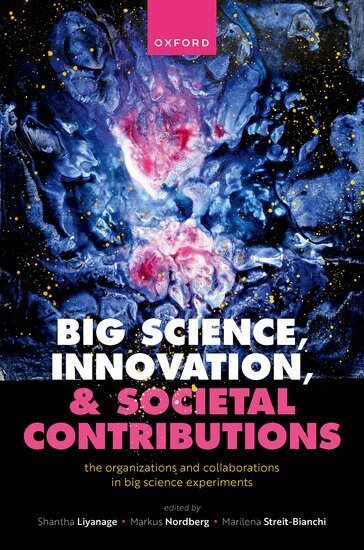
Big Science, Innovation, and Societal Contributions
The Organisations and Collaborations in Big Science Experiments
Av Shantha Liyanage, Markus Nordberg m. fl.
Inbunden, 2024
535 kr
Lägg i varukorg
Big Science, Innovation, and Societal Contributions offers a connection between Big Science and its societal impacts from a multidisciplinary perspective, drawing on physics and astrophysics scholars to explain the reasoning behind their work, and how such knowledge can be applied to everyday …
Big Science, Innovation, and Societal Contributions
The Organisations and Collaborations in Big Science Experiments
Av Marilena Streit-Bianchi, Markus Nordberg m. fl.
E-bok, 2024
535 kr
Lägg i varukorg
Big Science, Innovation, and Societal Contributions offers a connection between Big Science and its societal impacts from a multidisciplinary perspective, drawing on physics and astrophysics scholars to explain the reasoning behind their work, and how such knowledge can be applied to everyday life. …
Big Science, Innovation, and Societal Contributions
The Organisations and Collaborations in Big Science Experiments
Av Marilena Streit-Bianchi, Markus Nordberg m. fl.
E-bok, 2024
532 kr
Lägg i varukorg
Big Science, Innovation, and Societal Contributions offers a connection between Big Science and its societal impacts from a multidisciplinary perspective, drawing on physics and astrophysics scholars to explain the reasoning behind their work, and how such knowledge can be applied to everyday …
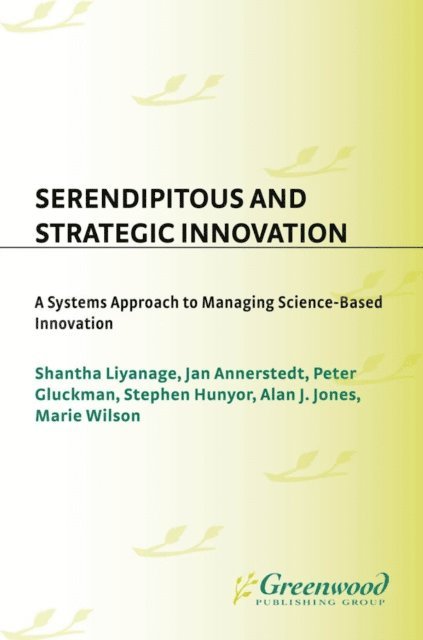
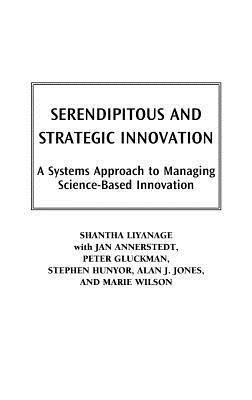
Serendipitous and Strategic Innovation
A Systems Approach to Managing Science-Based Innovation
E-bok, 2005
1178 kr
Lägg i varukorg
Innovation is a time-consuming process that involves invention as a beginning and a marketable service or product as an end. But innovation itself, once concluded, is not necessarily a constructive act as some innovations yield positive and some negative results. The way we recognize and develop …
Serendipitous and Strategic Innovation
A Systems Approach to Managing Science-Based Innovation
Inbunden, 2005
1102 kr
Lägg i varukorg
Innovation is a time-consuming process that involves invention as a beginning and a marketable service or product as an end. But innovation itself, once concluded, is not necessarily a constructive act as some innovations yield positive and some negative results. The way we recognize and develop …
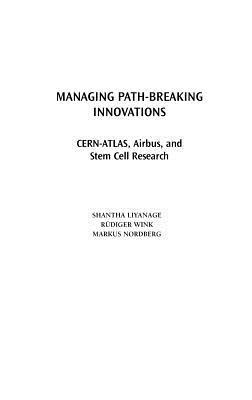
Managing Path-Breaking Innovations
CERN-ATLAS, Airbus, and Stem Cell Research
Av Shantha Liyanage, Rudiger Wink m. fl.
Inbunden, 2006
1070 kr
Lägg i varukorg
Path-breaking innovations are about instigating fundamental changes in people, organizations, communities, and economies. They are complex, continuous, and evolutionary processes that take considerable time, resources, and the efforts of many individuals and organizations to be accomplished …
Managing Path-Breaking Innovations
Cern-Atlas, Airbus, and Stem Cell Research
Av Shantha Liyanage, Rudiger Wink m. fl.
E-bok, 2006
1166 kr
Lägg i varukorg
Path-breaking innovations are about instigating fundamental changes in people, organizations, communities, and economies. They are complex, continuous, and evolutionary processes that take considerable time, resources, and the efforts of many individuals and organizations to be accomplished …