Siri Wiig - Böcker
Visar alla böcker från författaren Siri Wiig. Handla med fri frakt och snabb leverans.
5 produkter
5 produkter
545 kr
Skickas inom 5-8 vardagar
615 kr
Skickas inom 5-8 vardagar
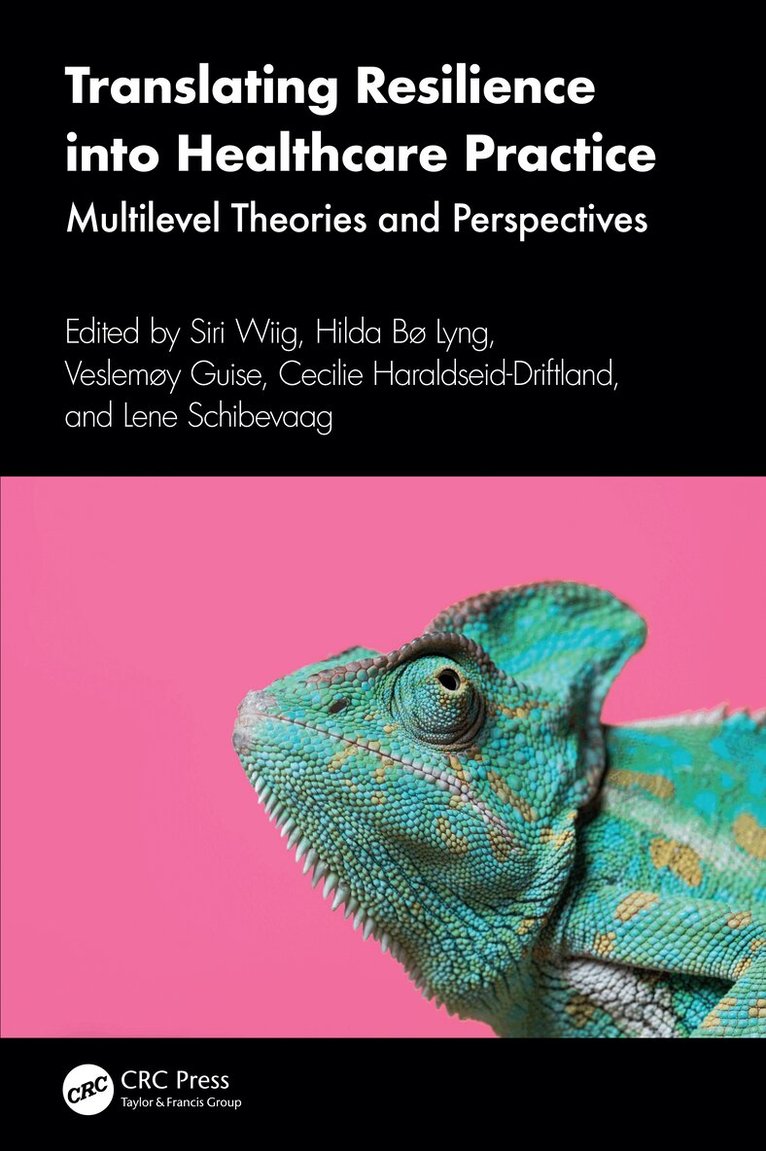
Translating Resilience into Healthcare Practice
Multilevel Theories and Perspectives
Inbunden, Engelska, 2026
2 325 kr
Kommande
Resilience in healthcare (RiH) is more relevant than ever. Global health crises, increasing service complexity, resource constraints, shortages of qualified professionals, and rapid technological development all demand continuous adaptation from stakeholders at every level of the healthcare system. Amid these challenges, ensuring high-quality care requires a deeper understanding of how systems, teams, and individuals respond and adapt.This book explores resilience as a multi-level phenomenon and positions adaptive capacity as the cornerstone of care quality. It expands the perspective of resilience beyond frontline staff to include patients and families, managers, teams, organizations, and policymakers as stakeholders in maintaining and improving healthcare quality. With its findings from the RiH research program (RiH, 2018–2024), a large-scale international study, this book addresses knowledge gaps and real-world challenges. It presents a view of what enables resilient performance (RP) across healthcare systems and settings, from regulatory bodies and policy institutions to hospitals, primary care, nursing homes, and home care services. It provides the reader with examples, frameworks, and lessons learned that support cross-sector learning and practical implementation.Translating Resilience into Healthcare Practice is an essential read for researchers, educators, and professionals working in healthcare quality and safety, resilience engineering, human factors, medicine, nursing, and social care.
536 kr
Skickas inom 10-15 vardagar
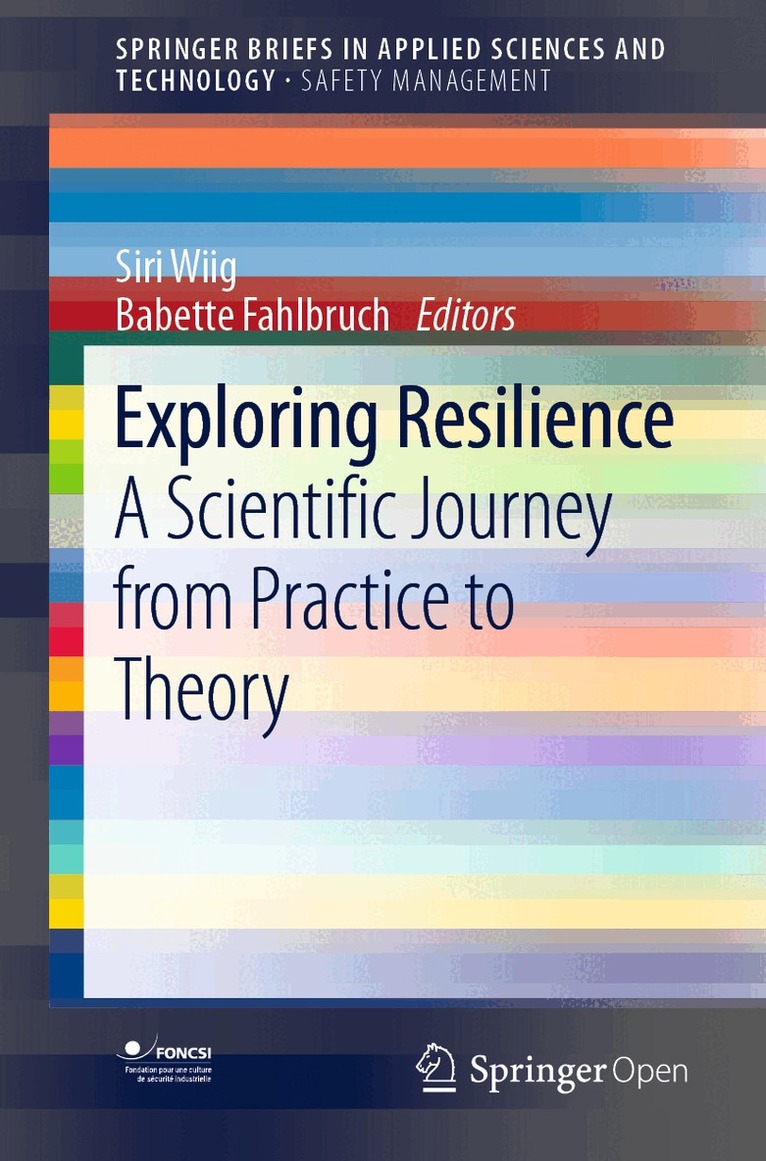
Resilience has become an important topic on the safety research agenda and in organizational practice. Most empirical work on resilience has been descriptive, identifying characteristics of work and organizing activity which allow organizations to cope with unexpected situations. Fewer studies have developed testable models and theories that can be used to support interventions aiming to increase resilience and improve safety. In addition, the absent integration of different system levels from individuals, teams, organizations, regulatory bodies, and policy level in theory and practice imply that mechanisms through which resilience is linked across complex systems are not yet well understood. Scientific efforts have been made to develop constructs and models that present relationships; however, these cannot be characterized as sufficient for theory building. There is a need for taking a broader look at resilience practices as a foundation for developing a theoretical framework that canhelp improve safety in complex systems.This book does not advocate for one definition or one field of research when talking about resilience; it does not assume that the use of resilience concepts is necessarily positive for safety. We encourage a broad approach, seeking inspiration across different scientific and practical domains for the purpose of further developing resilience at a theoretical and an operational level of relevance for different high-risk industries. The aim of the book is twofold:1. To explore different approaches for operationalization of resilience across scientific disciplines and system levels.2. To create a theoretical foundation for a resilience framework across scientific disciplines and system levels.By presenting chapters from leading international authors representing different research disciplines and practical fields we develop suggestions and inspiration for the research community and practitioners in high-risk industries.This book is Open Access under a CC-BY licence.
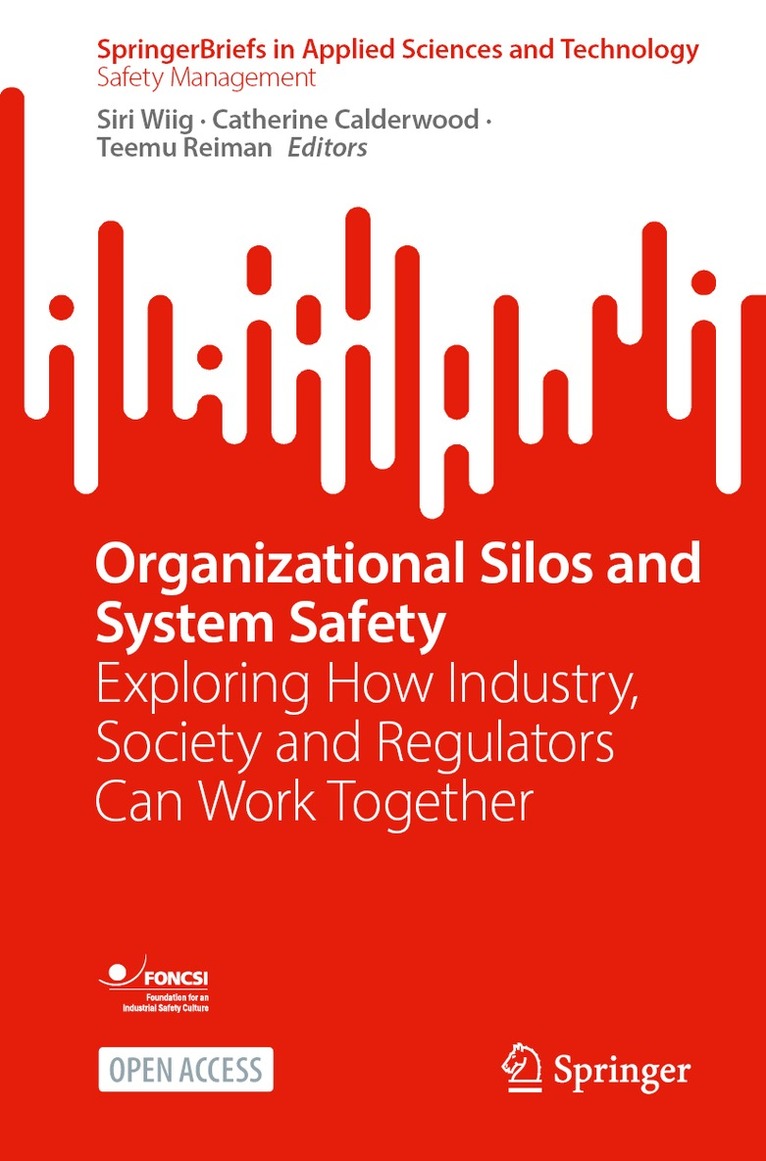
Organizational Silos and System Safety
Exploring How Industry, Society and Regulators Can Work Together
Häftad, Engelska, 2026
598 kr
Kommande
This open access book explores the complex relationship between siloed operations and performance, focussing on high-consequence sectors such as safety-critical industries and healthcare. It asks why silos form and analyses their benefits and disadvantages for social systems: more efficient working and faster development of skills within the working group at the cost of retarded information sharing, misunderstanding and potential threats to safety. Different case studies of practices and organizational innovations that encourage cross-fertilization and cross-sectoral learning are presented. The brief analyses the role of context and adaptation when learning and transferring safety interventions and improvement efforts within and across industry sectors, and studies the common barriers of ‘not invented here’, ‘we are special’, suspicion and poor communication.The ideas set out in Organizational Silos and System Safety are of interest to research communities in safety science, organizational performance and management, to practitioners and to policy-makers in high-hazard industry sectors. They can help develop cross-sector and cross-level learning and improvement.