Stacey Knobler – författare
529 kr
Skickas
691 kr
Läs direkt efter köp
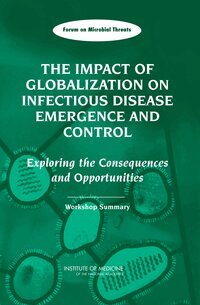
Globalization is by no means a new phenomenon; transcontinental trade and the movement of people date back at least 2,000 years, to the era of the ancient Silk Road trade route. The global spread of infectious disease has followed a parallel course. Indeed, the emergence and spread of infectious disease are, in a sense, the epitome of globalization. Although some experts mark the fall of the Berlin Wall as the beginning of this new era of globalization, others argue that it is not so new. The future of globalization is still in the making. Despite the successful attempts of the developed world during the course of the last century to control many infectious diseases and even to eradicate some deadly afflictions, 13 million people worldwide still die from such diseases every year.On April 16 and 17, 2002, the Forum on Emerging Infections held a working group discussion on the influence of globalization on the emergence and control of infectious diseases. The contents of the unattributed sections are based on the presentations and discussions that took place during the workshop. The Impact of Globalization on Infectious Disease Emergence and Control report summarizes the presentations and discussions related to the increasing cross-border and cross-continental movements of people and how this could exacerbate the emergence and global spread of infectious diseases. This report also summarizes the means by which sovereign states and nations must adopt a global public health mind-set and develop a new organizational framework to maximize the opportunities and overcome the challenges created by globalization and build the necessary capacity to respond effectively to emerging infectious disease threats.
950 kr
Läs direkt efter köp
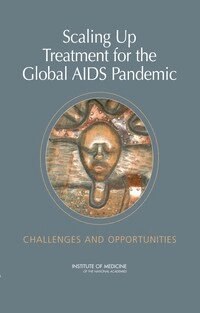
An estimated forty million people carry the human immunodeficiency virus (HIV), and five million more become newly infected annually. In recent years, many HIV-infected patients in wealthy nations have enjoyed significantly longer, good-quality lives as a result of antiretroviral therapy (ART). However, most infected individuals live in the poorest regions of the world, where ART is virtually nonexistent. The consequent death toll in these regions—especially sub-Saharan Africa—is begetting economic and social collapse.
To inform the multiple efforts underway to deploy antiretroviral drugs in resource-poor settings, the Institute of Medicine committee was asked to conduct an independent review and assessment of rapid scale-up ART programs. It was also asked to identify the components of effective implementation programs.
At the heart of the committee''s report lie five imperatives:
Immediately introduce and scale up ART programs in resource-poor settings. Devise strategies to ensure high levels of patient adherence to complicated treatment regimens. Rapidly address human-resource shortages to avoid the failure of program implementation. Continuously monitor and evaluate the programs to form the most effective guidelines and treatment regimens for each population. Prepare to sustain ART for decades.725 kr
Läs direkt efter köp
570 kr
Läs direkt efter köp
797 kr
Läs direkt efter köp
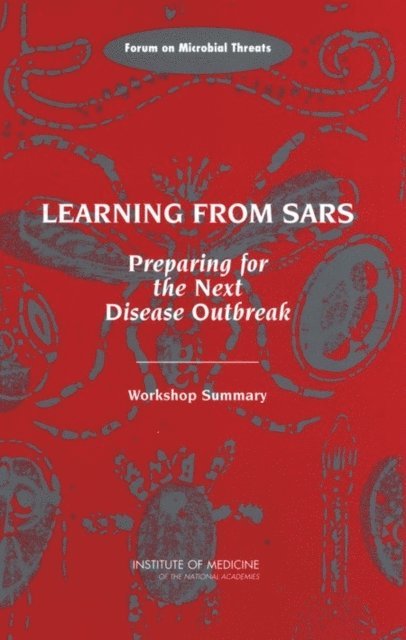
The emergence of severe acute respiratory syndrome (SARS) in late 2002 and 2003challenged the global public health community to confront a novel epidemic thatspread rapidly from its origins in southern China until it had reached more than 25other countries within a matter of months. In addition to the number of patientsinfected with the SARS virus, the disease had profound economic and political repercussionsin many of the affected regions. Recent reports of isolated new SARS casesand a fear that the disease could reemerge and spread have put public health officialson high alert for any indications of possible new outbreaks. This report examinesthe response to SARS by public health systems in individual countries, the biologyof the SARS coronavirus and related coronaviruses in animals, the economic andpolitical fallout of the SARS epidemic, quarantine law and other public health measuresthat apply to combating infectious diseases, and the role of international organizationsand scientific cooperation in halting the spread of SARS. The report providesan illuminating survey of findings from the epidemic, along with an assessment ofwhat might be needed in order to contain any future outbreaks of SARS or otheremerging infections.
510 kr
Läs direkt efter köp
398 kr
Läs direkt efter köp
648 kr
Läs direkt efter köp
An estimated forty million people carry the human immunodeficiency virus (HIV), and five million more become newly infected annually. In recent years, many HIV-infected patients in wealthy nations have enjoyed significantly longer, good-quality lives as a result of antiretroviral therapy (ART). However, most infected individuals live in the poorest regions of the world, where ART is virtually nonexistent. The consequent death toll in these regions—especially sub-Saharan Africa—is begetting economic and social collapse.
To inform the multiple efforts underway to deploy antiretroviral drugs in resource-poor settings, the Institute of Medicine committee was asked to conduct an independent review and assessment of rapid scale-up ART programs. It was also asked to identify the components of effective implementation programs.
At the heart of the committee''s report lie five imperatives:
Immediately introduce and scale up ART programs in resource-poor settings. Devise strategies to ensure high levels of patient adherence to complicated treatment regimens. Rapidly address human-resource shortages to avoid the failure of program implementation. Continuously monitor and evaluate the programs to form the most effective guidelines and treatment regimens for each population. Prepare to sustain ART for decades.563 kr
Läs direkt efter köp
The emergence of severe acute respiratory syndrome (SARS) in late 2002 and 2003challenged the global public health community to confront a novel epidemic thatspread rapidly from its origins in southern China until it had reached more than 25other countries within a matter of months. In addition to the number of patientsinfected with the SARS virus, the disease had profound economic and political repercussionsin many of the affected regions. Recent reports of isolated new SARS casesand a fear that the disease could reemerge and spread have put public health officialson high alert for any indications of possible new outbreaks. This report examinesthe response to SARS by public health systems in individual countries, the biologyof the SARS coronavirus and related coronaviruses in animals, the economic andpolitical fallout of the SARS epidemic, quarantine law and other public health measuresthat apply to combating infectious diseases, and the role of international organizationsand scientific cooperation in halting the spread of SARS. The report providesan illuminating survey of findings from the epidemic, along with an assessment ofwhat might be needed in order to contain any future outbreaks of SARS or otheremerging infections.
598 kr
Läs direkt efter köp
Globalization is by no means a new phenomenon; transcontinental trade and the movement of people date back at least 2,000 years, to the era of the ancient Silk Road trade route. The global spread of infectious disease has followed a parallel course. Indeed, the emergence and spread of infectious disease are, in a sense, the epitome of globalization. Although some experts mark the fall of the Berlin Wall as the beginning of this new era of globalization, others argue that it is not so new. The future of globalization is still in the making. Despite the successful attempts of the developed world during the course of the last century to control many infectious diseases and even to eradicate some deadly afflictions, 13 million people worldwide still die from such diseases every year.On April 16 and 17, 2002, the Forum on Emerging Infections held a working group discussion on the influence of globalization on the emergence and control of infectious diseases. The contents of the unattributed sections are based on the presentations and discussions that took place during the workshop. The Impact of Globalization on Infectious Disease Emergence and Control report summarizes the presentations and discussions related to the increasing cross-border and cross-continental movements of people and how this could exacerbate the emergence and global spread of infectious diseases. This report also summarizes the means by which sovereign states and nations must adopt a global public health mind-set and develop a new organizational framework to maximize the opportunities and overcome the challenges created by globalization and build the necessary capacity to respond effectively to emerging infectious disease threats.
548 kr
Skickas inom 5-8 vardagar
617 kr
Tillfälligt slut
763 kr
Tillfälligt slut
863 kr
Tillfälligt slut
704 kr
Tillfälligt slut