Stannard - Böcker
Visar alla böcker från författaren Stannard. Handla med fri frakt och snabb leverans.
2 produkter
2 produkter
349 kr
Skickas inom 5-8 vardagar
David Stannard's book focuses on the larger social and cultural issues involved in the invasion of America by European nations. The first two chapters of the book describe the Americas prior to this invasion and detail the variety of rich cultures that existed then. Another chapter deals with the Spanish and Portuguese invasion of Central and South America and describes the devastation left inthe wake of these invasions. A fourth chapter describes the effects of English invaders in North America and of the further suppression of native peoples in American colonial times. In the final section, titles "Sex, Race, and Holy War," two chapters examine the kind of people who waged these "holy" wars and focus on the cultural sources and the ideological content of their invasion efforts. There is also an Epilogue, and an Appendix titled "On Racism and Genocide." This is a highly controversial book that is certain to have a major place in the Columbus Anniversary discussions next year. It is an angry, provocative book. In contrast to other recent books on the subject, however. Stannard's book is by a recognized scholar (who has already written a well-received monograph Before the Horror on the South Pacific aspects of the subject) and has based his study on wide historical research.
1 712 kr
Skickas inom 7-10 vardagar
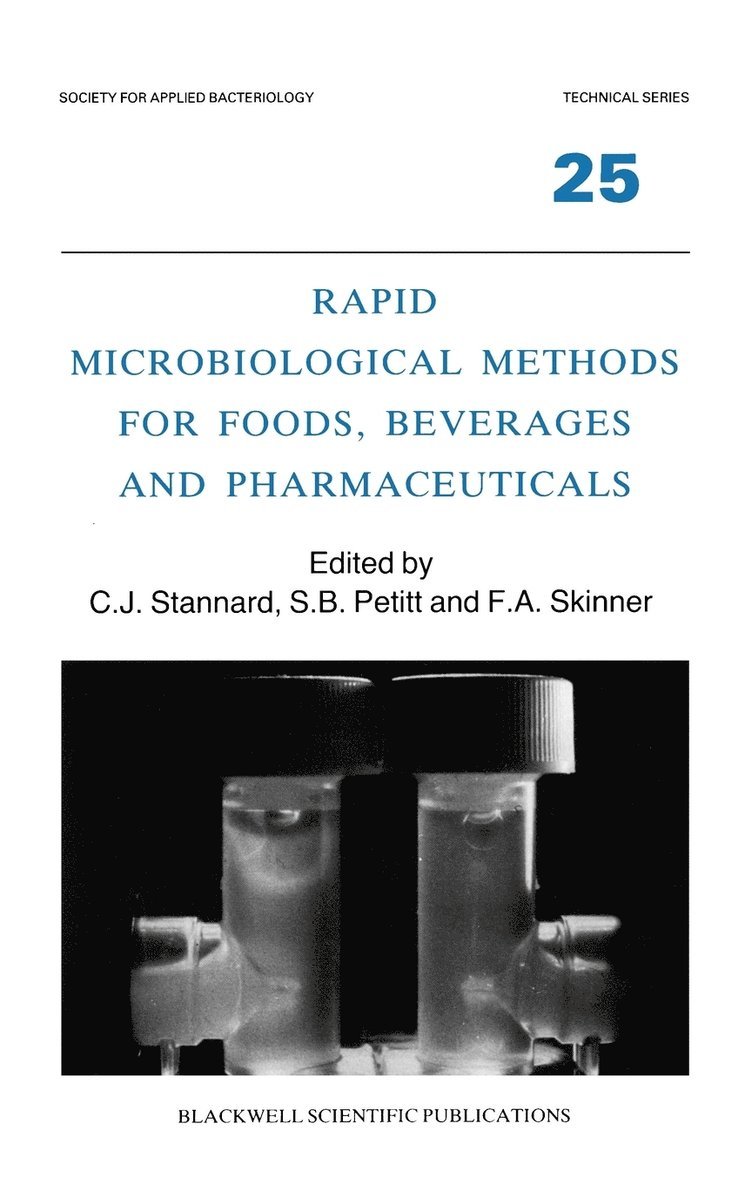
This book considers the rapid microbiological techniques that are now increasingly used in industry as alternatives to more conventional methods. Although many of the pioneering studies in this field have taken place in clinical laboratories, the materials listed and organisms sought for foods, beverages and pharmaceuticals are much more varied. In this volume, leading experts from research and industry review the wide variety of approaches that are needed in an industrial setting. The methods described include electrometric techniques, ATP assay, and immunological methods for a wide range of organisms from salmonellas to viruses, each chapter drawing on the authors direct experience in industry to give a highly practical guide. The book should prove invaluable to those in the food, beverage and pharmaceutical industries, or in research and training, who require an up-to-date survey of the use of rapid microbiological methods.