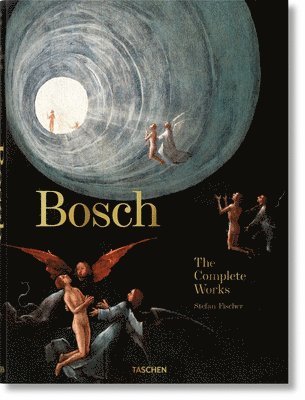
Stefan Fischer – författare
1 658 kr
Skickas inom 3-6 vardagar
931 kr
Skickas inom 5-8 vardagar
Song of Songs in Sense, Sound and Space
1 247 kr
Skickas inom 5-8 vardagar
1 697 kr
Läs direkt efter köp
How come we ought to do things? Current metanormative debates often suffer from the fact that authors implicitly use adequacy conditions not shared by their opponents. This leads to an unsatisfying dialectical gridlock (Chang): One author accuses her opponents of not being able to account for stuff she judges essential, but the opponents do not think this to be a major flaw. In an attempt to meet the problem of gridlock head-on, the current investigation approaches oughtness differently.
I start with the introduction of a grounding framework for thinking about oughtness that allows a lucid presentation of the views on the market. It soon becomes clear that one necessary part of any plausible assessment of accounts of oughtness is a discussion of their adequacy conditions. I continue with a detailed evaluation of four different accounts, as presented by Halbig (2007), Schroeder (2007), Stemmer (2006), and Scanlon (2014). My main result is that desire-based or Humean theories of oughtness are more plausible because desire-independent accounts fail to explain something crucial: the for-me character of oughtness. Based on the insights gathered thus far, I then develop a new Humean theory – metaethical conativism – and defend it against some historically influential objections.
1 712 kr
Läs direkt efter köp
How come we ought to do things? Current metanormative debates often suffer from the fact that authors implicitly use adequacy conditions not shared by their opponents. This leads to an unsatisfying dialectical gridlock (Chang): One author accuses her opponents of not being able to account for stuff she judges essential, but the opponents do not think this to be a major flaw. In an attempt to meet the problem of gridlock head-on, the current investigation approaches oughtness differently.
I start with the introduction of a grounding framework for thinking about oughtness that allows a lucid presentation of the views on the market. It soon becomes clear that one necessary part of any plausible assessment of accounts of oughtness is a discussion of their adequacy conditions. I continue with a detailed evaluation of four different accounts, as presented by Halbig (2007), Schroeder (2007), Stemmer (2006), and Scanlon (2014). My main result is that desire-based or Humean theories of oughtness are more plausible because desire-independent accounts fail to explain something crucial: the for-me character of oughtness. Based on the insights gathered thus far, I then develop a new Humean theory – metaethical conativism – and defend it against some historically influential objections.
1 679 kr
Skickas inom 5-8 vardagar
261 kr
Läs direkt efter köp
261 kr
Läs direkt efter köp
824 kr
Skickas inom 3-6 vardagar
352 kr
Skickas inom 3-6 vardagar
352 kr
Skickas inom 3-6 vardagar
363 kr
Skickas inom 3-6 vardagar
254 kr
Läs direkt efter köp
254 kr
Läs direkt efter köp
254 kr
Läs direkt efter köp
254 kr
Läs direkt efter köp
345 kr
Läs direkt efter köp
345 kr
Läs direkt efter köp
254 kr
Läs direkt efter köp
254 kr
Läs direkt efter köp
254 kr
Läs direkt efter köp
254 kr
Läs direkt efter köp
345 kr
Läs direkt efter köp
345 kr
Läs direkt efter köp
345 kr
Läs direkt efter köp
345 kr
Läs direkt efter köp
345 kr
Läs direkt efter köp
345 kr
Läs direkt efter köp
381 kr
Läs direkt efter köp
381 kr
Läs direkt efter köp