Steffen Haug – författare
Visar alla böcker från författaren . Handla med fri frakt och snabb leverans.
3 produkter
3 produkter
Häftad, Tyska, 2026
482 kr
Kommande
At the beginning of the 20th century, a materialist theory emerged that dealt with the economic and social conditions of art production. This was accompanied by a critique of the previous academic canon, now considering formerly excluded everyday objects, children’s drawings, folk art or photographs as the material conditions of a culture. Collections of artworks and artefacts became contexts of thought leading to a redefinition of the relationship between history, form, and society. The contributions to this volume discuss how collections of materials and pictures were tied to theoretical assumptions and had an effect on thought processes. Examples cited include Frederik Antal, Walter Benjamin, Bernard Berenson, Wilhelm Fraenger, Sigmund Freud, Henri Foçillon, Vernon Lee, Meyer Schapiro and Aby Warburg.
E-bok
PDF, Tyska, 20191 184 kr
Läs direkt efter köp
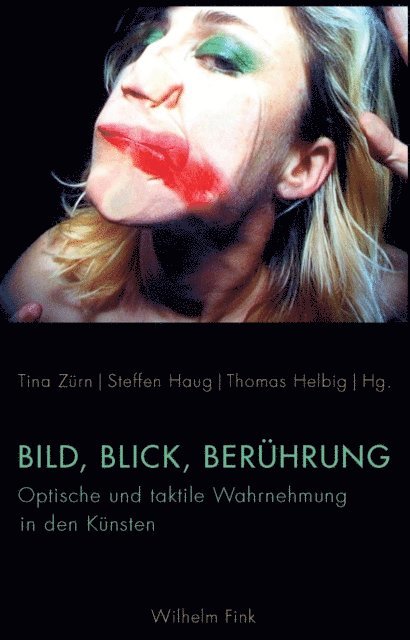
Digitale Kulturtechniken beeinflussen das Verhältnis von Bild, Blick und Berührung grundlegend. Der Band ist der Frage gewidmet, wie sich unsere visuelle und taktile Wahrnehmung historisch herausgebildet hat und aktuell verändert.Welche Auswirkungen hat das Berührungsgebot von Tastbildschirmen auf die Kunstrezeption? Wandelt sich aufgrund der neuen Vorrangstellung der Hand etwas an unserem Tast-Verlangen gegenüber den Werken der Kunst? Oder befriedigen wir diese Lust im Umgang mit den Alltagsbildern, die mit einer Wischbewegung hervorgezaubert und wieder zum Verschwinden gebracht werden? Mit welchen Werken antworten Künstlerinnen und Künstler auf den Dualismus von Sehen und Tasten? Einerseits geht es um eine Standort-Bestimmung der Gegenwart. Von ebenso großer Bedeutung ist die Wahrnehmungsgeschichte optisch-taktiler Erkenntnisprozesse. Das digitale Zeitalter wird sich in diese Geschichte einreihen und sie zugleich verändern.
Inbunden, Tyska, 2026
634 kr
Tillfälligt slut
Over the last two decades, Gregor Wedekind has written extensively on Paul Klee and his time. Moving beyond art historical questions, the essays in this volume emphasize the intellectual and historical contexts of Klee's art, thereby deepening the understanding of modernism. Wedekind illuminates the artist's engagement with philosophy, literature and theory, as well as the significance of psychology, ethnology and contemporary political history for his work and thought. As a whole, this anthology provides new, critical insight onto the artist's complex oeuvre. By positioning Klee in the intellectual debates of his time, Wedekind opens up various approaches to his pictorial world.