Stéphane Roussel – författare
1 543 kr
Skickas inom 5-8 vardagar
438 kr
Skickas inom 10-15 vardagar
471 kr
Läs direkt efter köp
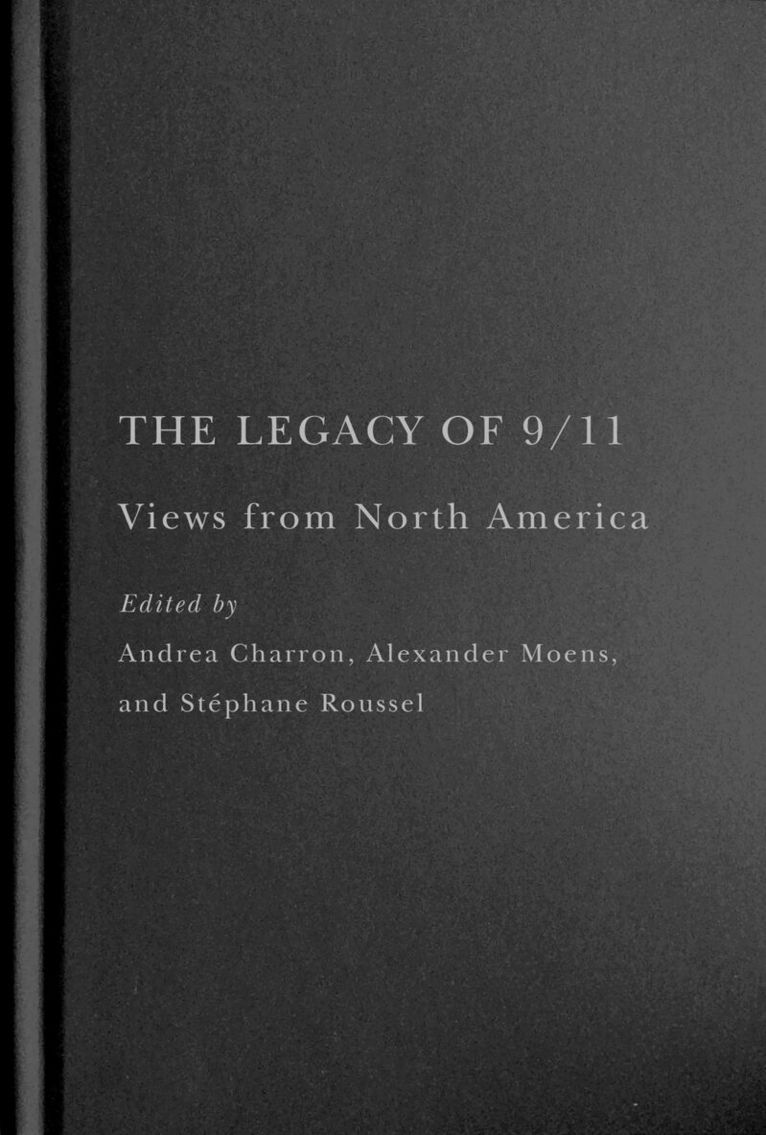
While 9/11 was understood at the time as a world-changing event in international relations, its uneven aftermath and the long-term effects for North America could not have been predicted. Twenty years later, The Legacy of 9/11 explores the political, economic, security and defence, and trade and border implications of the event. Written by a team of North American experts across many fields, the book foregrounds the fallout of 9/11 in Mexico and Canada as opposed to the more commonly discussed impact on the United States. Looking at the event and its aftermath through four lenses – ideas about North America; border, trade, and economics; security and society; and defence – contributors analyze the complex legacy of 9/11. Rather than serving as a catalyst to create an integrated, trilateral continent, 9/11 entrenched the North America we have today: three separate states with emphasis on two very different borders.From a reconsideration of internationalism, a rise in populism, and a shift in migration patterns to the interventions in Afghanistan and Iraq, The Legacy of 9/11 uncovers how successive North American governments reacted in surprising ways to the world-altering attack.
471 kr
Läs direkt efter köp
While 9/11 was understood at the time as a world-changing event in international relations, its uneven aftermath and the long-term effects for North America could not have been predicted. Twenty years later, The Legacy of 9/11 explores the political, economic, security and defence, and trade and border implications of the event. Written by a team of North American experts across many fields, the book foregrounds the fallout of 9/11 in Mexico and Canada as opposed to the more commonly discussed impact on the United States. Looking at the event and its aftermath through four lenses – ideas about North America; border, trade, and economics; security and society; and defence – contributors analyze the complex legacy of 9/11. Rather than serving as a catalyst to create an integrated, trilateral continent, 9/11 entrenched the North America we have today: three separate states with emphasis on two very different borders.From a reconsideration of internationalism, a rise in populism, and a shift in migration patterns to the interventions in Afghanistan and Iraq, The Legacy of 9/11 uncovers how successive North American governments reacted in surprising ways to the world-altering attack.
2 438 kr
Skickas inom 10-15 vardagar
629 kr
Skickas inom 10-15 vardagar
720 kr
Läs direkt efter köp
With contributions from some of Canada''s leading historians and political scientists, Escott Reid: Diplomat and Scholar offers a fresh perspective on the life and career of one of the most important public intellectuals and diplomats in twentieth-century Canada, critically exploring the tensions between Reid''s progressive idealism and the world in which he lived.Jack Granatstein introduces Reid and the forces that shaped his progressive idealism in the 1920s and 1930s. Hector Mackenzie assesses Reid''s contribution to the creation of the United Nations in the mid-1940s, while David Haglund and Stéphane Roussel examine Reid''s crucial role in the negotiations to establish the North Atlantic Treaty Organization. Greg Donaghy, Bruce Muirhead, and Alyson King write, respectively, about Reid as high commissioner to India, as an important influence on World Bank policy in the early 1960s, and, finally, as founding principal of York University''s Glendon College.The authors challenge critics who dismiss Reid as an impractical and ineffectual idealist, demonstrating that his approach to policy-making was sophisticated and his idealism tempered by an astute grasp of the competing interests of a range of national and bureaucratic powers. Reid''s reflections on Canada''s place in the world remain as relevant and provocative today as when he wrote them.
706 kr
Läs direkt efter köp
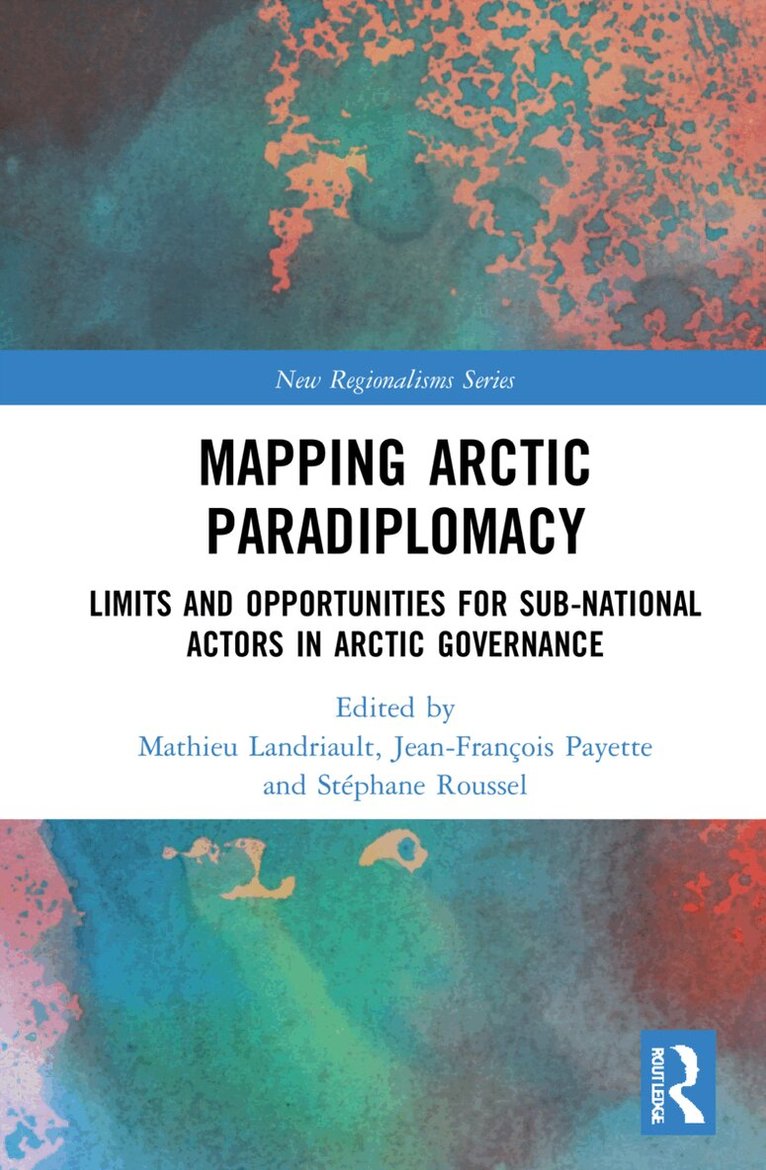
This book analyses the possibilities and limitations that sub-national actors face when developing diplomatic activities in the Arctic region.
Sub-national actors, such as civil society groups and sub-national governments or administrations, have been active in international relations for decades. They face specific political and economic limitations on the international scene as non-sovereign entities. This book investigates how these actors have developed their international presence in the Arctic region. It analyzes the diplomatic activities of states, provinces, regional administrations, and multilateral forums made of sub-national governments to offer comparative insights on the strategies, interests, and activities of sub-national governments. Alaska, Scotland, Quebec, Yakutsk, and Indigenous People’s organizations are among the examples covered in this book that have forged bilateral and multilateral relations to promote and defend their interests and values. Moreover, sovereign states are often using these sub-national actors to further their own interests, as exemplified in this book in how Russia and China harnessed the potential of sub-national governments to align with their Arctic policies.
The volume will be useful to academics and graduate students of Arctic politics, international relations, comparative politics, comparative federalism, foreign policy, and global governance.
706 kr
Läs direkt efter köp
This book analyses the possibilities and limitations that sub-national actors face when developing diplomatic activities in the Arctic region.
Sub-national actors, such as civil society groups and sub-national governments or administrations, have been active in international relations for decades. They face specific political and economic limitations on the international scene as non-sovereign entities. This book investigates how these actors have developed their international presence in the Arctic region. It analyzes the diplomatic activities of states, provinces, regional administrations, and multilateral forums made of sub-national governments to offer comparative insights on the strategies, interests, and activities of sub-national governments. Alaska, Scotland, Quebec, Yakutsk, and Indigenous People’s organizations are among the examples covered in this book that have forged bilateral and multilateral relations to promote and defend their interests and values. Moreover, sovereign states are often using these sub-national actors to further their own interests, as exemplified in this book in how Russia and China harnessed the potential of sub-national governments to align with their Arctic policies.
The volume will be useful to academics and graduate students of Arctic politics, international relations, comparative politics, comparative federalism, foreign policy, and global governance.
374 kr
Läs direkt efter köp
374 kr
Läs direkt efter köp