Stephen A. Krawetz – författare
Visar alla böcker från författaren . Handla med fri frakt och snabb leverans.
7 produkter
7 produkter
Inbunden, Engelska, 1999
1 613 kr
Skickas inom 10-15 vardagar
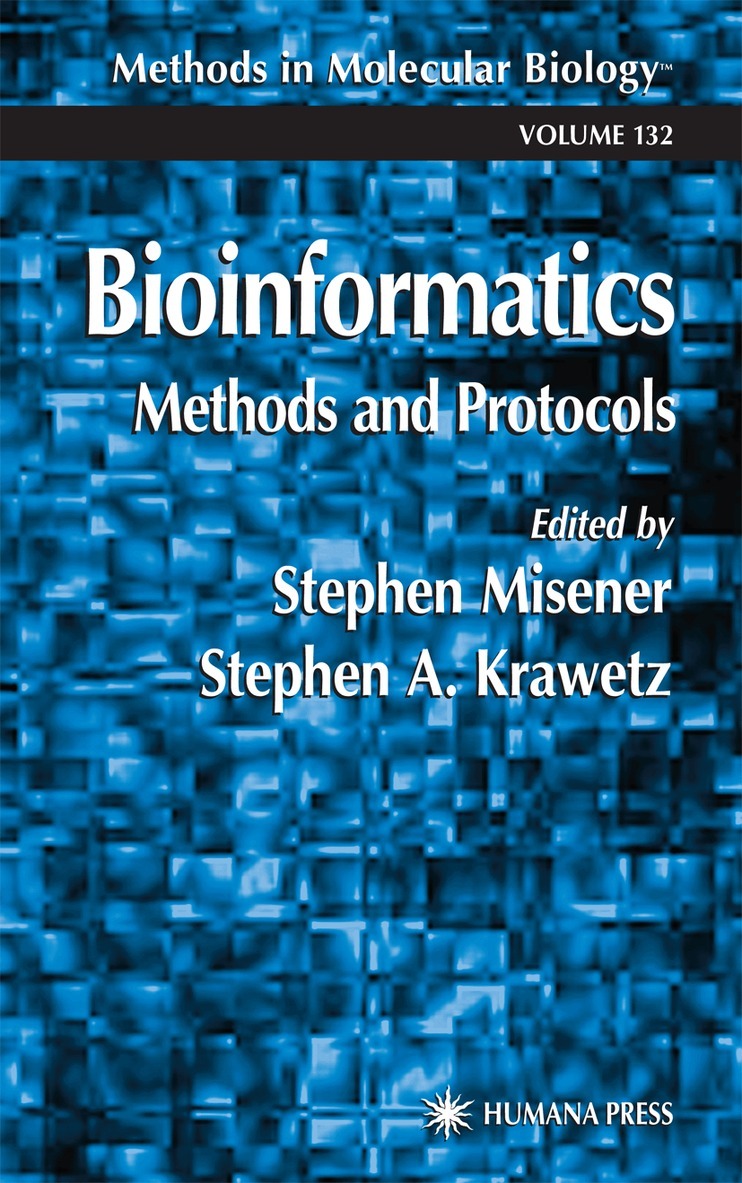
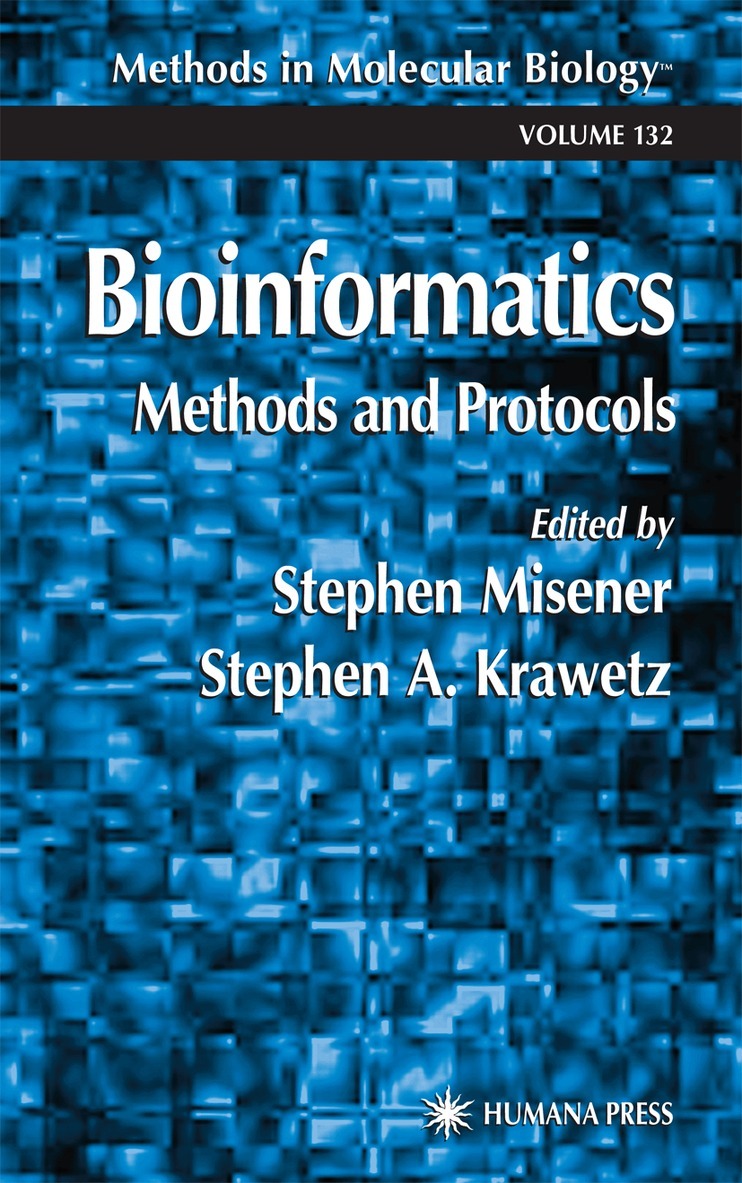
Computers have become an essential component of modern biology. They help to manage the vast and increasing amount of biological data and continue to play an integral role in the discovery of new biological relationships. This in silico approach to biology has helped to reshape the modern biological sciences. With the biological revolution now among us, it is imperative that each scientist develop and hone today’s bioinformatics skills, if only at a rudimentary level. Bioinformatics Methods and Protocols was conceived as part of the Methods in Molecular Biology series to meet this challenge and to provide the experienced user with useful tips and an up-to-date overview of current developments. It builds upon the foundation that was provided in the two-volume set published in 1994 entitled Computer Analysis of Sequence Data. We divided Bioinformatics Methods and Protocols into five parts, including a thorough survey of the basic sequence analysis software packages that are available at most institutions, as well as the design and implemen- tion of an essential introductory Bioinformatics course. In addition, we included sections describing specialized noncommercial software, databases, and other resources available as part of the World Wide Web and a stimul- ing discussion of some of the computational challenges biologists now face and likely future solutions.
Inbunden, Engelska, 2026
2 368 kr
Kommande
This book provides a comprehensive primer on human reproduction, beginning with normal pre-implantation embryo development. It starts with gametogenesis, followed by fertilization, embryo development, and implantation, with each section describing the molecular aspects of each phase. The focus then moves to highlight putative factors that influence fertility, such as environment and lifestyle, while examining molecular and genetic factors associated with both male and female infertility.Besides providing insights into the fundamental processes of gametogenesis and fertilization, the book highlights new and emerging trends in infertility and assisted reproduction research and care within the context of Bioethics, and emerging technologies like AI.Thus, several chapters in this book serve as a valuable reference for in vitro fertilization (IVF) and other assisted reproductive therapy (ART) procedures, describing various methods and tools available for IVF and offering insight into the critical role of the embryology laboratory. Advanced issues of assisted reproduction are outlined in detail, providing readers with a thorough understanding of current practices and emerging technologies. With a dedicated chapter on the bioethics of advanced assisted reproductive technologies, the book exposes readers to the ethical considerations that accompany developments in this field.This volume is a valuable resource for medical and basic science students, healthcare professionals, embryologists, reproductive endocrinologists, and researchers in the field of reproductive medicine. It will also be of interest to bioethicists, genetic counsellors, and anyone seeking a deeper understanding of human reproduction and assisted reproductive technologies. The broad subject areas covered include reproductive biology, embryology, infertility, in vitro fertilization, molecular genetics, bioethics, and clinical reproductive medicine.The chapters in this book were originally published in the journal Systems Biology in Reproductive Medicine and are accompanied by a new Introduction and multiple-choice review questions that conclude every chapter, reinforcing key concepts and facilitating learning.
Inbunden, Engelska, 2003
2 996 kr
Skickas inom 10-15 vardagar
to Bioinformatics A Theoretical and Practical Approach Edited by Stephen A. Krawetz, PhD Wayne State University School of Medicine, Detroit MI and David D. Womble, PhD Wayne State University School of Medicine, Detroit, MI ~ Springer Science+ ~ Business Media, LLC © 2003 Springer Science+Business Media New York Originally published by Humana Press !ne. in 2003 Softcover reprint of the hardcover 1 st edition 2003 humanapress.com Ali rights reserved. No part of this book may be reproduced, stored in a retrieval system, or transmitted in any form or by any means, electronic, mechanical, photocopying, microfilming, recording, or otherwise without written permission from the Publisher. Ali papers, comments, opinions, conclusions, or recommendations are those of the author(s), and do not necessarily reflect the views of the publisher. This publication is printed on acid-free paper. G) ANSI Z39.48-1984 (American Standards Institute) Permanence of Paper for Printed Library Materials. Production Editor: Mark J. Breaugh. Cover design by Patricia F. Cleary and Paul A. Thiessen. Cover illustration by Paul A. Thiessen, chemicalgraphics.com.
Häftad, Engelska, 2003
2 462 kr
Skickas inom 10-15 vardagar
to Bioinformatics A Theoretical and Practical Approach Edited by Stephen A. Krawetz, PhD Wayne State University School of Medicine, Detroit MI and David D. Womble, PhD Wayne State University School of Medicine, Detroit, MI ~ Springer Science+ ~ Business Media, LLC © 2003 Springer Science+Business Media New York Originally published by Humana Press !ne. in 2003 Softcover reprint of the hardcover 1 st edition 2003 humanapress.com Ali rights reserved. No part of this book may be reproduced, stored in a retrieval system, or transmitted in any form or by any means, electronic, mechanical, photocopying, microfilming, recording, or otherwise without written permission from the Publisher. Ali papers, comments, opinions, conclusions, or recommendations are those of the author(s), and do not necessarily reflect the views of the publisher. This publication is printed on acid-free paper. G) ANSI Z39.48-1984 (American Standards Institute) Permanence of Paper for Printed Library Materials. Production Editor: Mark J. Breaugh. Cover design by Patricia F. Cleary and Paul A. Thiessen. Cover illustration by Paul A. Thiessen, chemicalgraphics.com.
E-bok
Engelska, 20082 044 kr
Läs direkt efter köp
Computers have become an essential component of modern biology. They help to manage the vast and increasing amount of biological data and continue to play an integral role in the discovery of new biological relationships. This in silico approach to biology has helped to reshape the modern biological sciences. With the biological revolution now among us, it is imperative that each scientist develop and hone today’s bioinformatics skills, if only at a rudimentary level. Bioinformatics Methods and Protocols was conceived as part of the Methods in Molecular Biology series to meet this challenge and to provide the experienced user with useful tips and an up-to-date overview of current developments. It builds upon the foundation that was provided in the two-volume set published in 1994 entitled Computer Analysis of Sequence Data. We divided Bioinformatics Methods and Protocols into five parts, including a thorough survey of the basic sequence analysis software packages that are available at most institutions, as well as the design and implemen- tion of an essential introductory Bioinformatics course. In addition, we included sections describing specialized noncommercial software, databases, and other resources available as part of the World Wide Web and a stimul- ing discussion of some of the computational challenges biologists now face and likely future solutions.
E-bok
PDF, Engelska, 20033 148 kr
Läs direkt efter köp
to Bioinformatics A Theoretical and Practical Approach Edited by Stephen A. Krawetz, PhD Wayne State University School of Medicine, Detroit MI and David D. Womble, PhD Wayne State University School of Medicine, Detroit, MI ~ Springer Science+ ~ Business Media, LLC © 2003 Springer Science+Business Media New York Originally published by Humana Press !ne. in 2003 Softcover reprint of the hardcover 1 st edition 2003 humanapress.com Ali rights reserved. No part of this book may be reproduced, stored in a retrieval system, or transmitted in any form or by any means, electronic, mechanical, photocopying, microfilming, recording, or otherwise without written permission from the Publisher. Ali papers, comments, opinions, conclusions, or recommendations are those of the author(s), and do not necessarily reflect the views of the publisher. This publication is printed on acid-free paper. G) ANSI Z39.48-1984 (American Standards Institute) Permanence of Paper for Printed Library Materials. Production Editor: Mark J. Breaugh. Cover design by Patricia F. Cleary and Paul A. Thiessen. Cover illustration by Paul A. Thiessen, chemicalgraphics.com.
Häftad, Engelska, 2010
1 608 kr
Skickas inom 10-15 vardagar
Computers have become an essential component of modern biology. They help to manage the vast and increasing amount of biological data and continue to play an integral role in the discovery of new biological relationships. This in silico approach to biology has helped to reshape the modern biological sciences. With the biological revolution now among us, it is imperative that each scientist develop and hone today’s bioinformatics skills, if only at a rudimentary level. Bioinformatics Methods and Protocols was conceived as part of the Methods in Molecular Biology series to meet this challenge and to provide the experienced user with useful tips and an up-to-date overview of current developments. It builds upon the foundation that was provided in the two-volume set published in 1994 entitled Computer Analysis of Sequence Data. We divided Bioinformatics Methods and Protocols into five parts, including a thorough survey of the basic sequence analysis software packages that are available at most institutions, as well as the design and implemen- tion of an essential introductory Bioinformatics course. In addition, we included sections describing specialized noncommercial software, databases, and other resources available as part of the World Wide Web and a stimul- ing discussion of some of the computational challenges biologists now face and likely future solutions.