Stephen Carney – författare
656 kr
Skickas inom 10-15 vardagar
2 241 kr
Skickas inom 10-15 vardagar
1 479 kr
Skickas inom 10-15 vardagar
454 kr
Läs direkt efter köp
454 kr
Läs direkt efter köp
435 kr
Skickas inom 10-15 vardagar
408 kr
Skickas inom 10-15 vardagar
408 kr
Skickas inom 10-15 vardagar
1 278 kr
Skickas inom 10-15 vardagar
395 kr
Skickas inom 10-15 vardagar
752 kr
Läs direkt efter köp
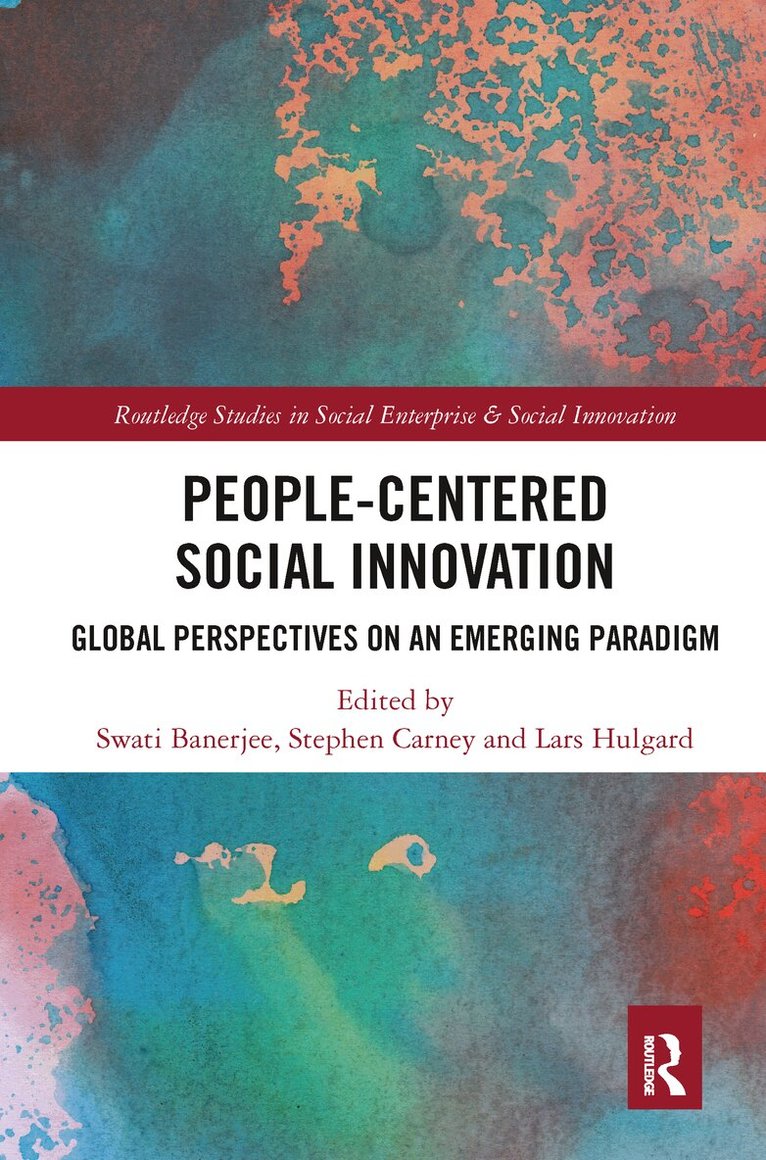
Social Innovation is emerging as an alternate interdisciplinary development pathway of knowledge and practice that aims to understand and address contemporary complexities and multi – dimensional social realities. BEPA (2011) defines social innovation as, ‘innovations that are social in both their ends and means’. However, though Social Innovation is a widely-used term; its conceptual understanding and the specific relation to social change remains under explored.
People Centered Social Innovation: Global perspectives on an Emerging Paradigm attempts to revisit and extend the existing understanding of Social Innovation in practice by focusing upon the lived realities of marginalized groups and communities. The emerging field of people-centered development is placed in dialogue with theory and concepts from the more established field of social innovation to create a new approach; one that adopts a global perspective, engaging with very different experiences of marginality across the global north and south. Theoretically, ‘People Centered Social Innovation: Global Perspectives on an Emerging Paradigm’ draws upon ‘northern’ understandings of change and improvement as well as ‘southern’ theory concerns for epistemological diversity and meaning making. The result is an experiment aimed at reimagining research and practice that seriously needs to center the actor in processes of social transformation.
752 kr
Läs direkt efter köp
Social Innovation is emerging as an alternate interdisciplinary development pathway of knowledge and practice that aims to understand and address contemporary complexities and multi – dimensional social realities. BEPA (2011) defines social innovation as, ‘innovations that are social in both their ends and means’. However, though Social Innovation is a widely-used term; its conceptual understanding and the specific relation to social change remains under explored.
People Centered Social Innovation: Global perspectives on an Emerging Paradigm attempts to revisit and extend the existing understanding of Social Innovation in practice by focusing upon the lived realities of marginalized groups and communities. The emerging field of people-centered development is placed in dialogue with theory and concepts from the more established field of social innovation to create a new approach; one that adopts a global perspective, engaging with very different experiences of marginality across the global north and south. Theoretically, ‘People Centered Social Innovation: Global Perspectives on an Emerging Paradigm’ draws upon ‘northern’ understandings of change and improvement as well as ‘southern’ theory concerns for epistemological diversity and meaning making. The result is an experiment aimed at reimagining research and practice that seriously needs to center the actor in processes of social transformation.
1 479 kr
Skickas inom 10-15 vardagar
426 kr
Läs direkt efter köp
426 kr
Läs direkt efter köp
774 kr
Skickas inom 5-8 vardagar
Enacting the University: Danish University Reform in an Ethnographic Perspective
1 042 kr
Skickas inom 10-15 vardagar
1 328 kr
Läs direkt efter köp
This book examines the transformative power and the limitations of one of Europe’s most significant university reforms from an ethnographic and historical perspective. It incorporates voices positioned across university and policy-making hierarchies in its analysis of how Danish universities have been transformed. To do this, the book continually juxtaposes two meanings of ‘enactment’: a top-down view based on laws and institutional power, and a bottom-up view of multiple actors shaping their institution in day-to-day life and in actively contested changes. By conceiving of the university as ‘enacted’ in both ways at once, the book explores how and why the university comes to be imagined and instantiated in new ways.
The book traces the arguments for reform through a two-decade long, dynamic struggle between international forums and national industrial, political and academic interests over the definition of the university. It discusses which ideas finally became dominant and how this happened. It looks at government reforms from 2003 onwards, and, by means of notable ‘telling moments’, explains how the governance and management of the university were transformed. It examines how academics found room to manoeuvre between contesting discourses that affect their identity and work. Finally, it shows how students engaged with new versions of historical debates about their participation in shaping their own education, their institution and society.