Stephen Lin - Böcker
Visar alla böcker från författaren Stephen Lin. Handla med fri frakt och snabb leverans.
4 produkter
4 produkter
Del 11241 - Lecture Notes in Computer Science
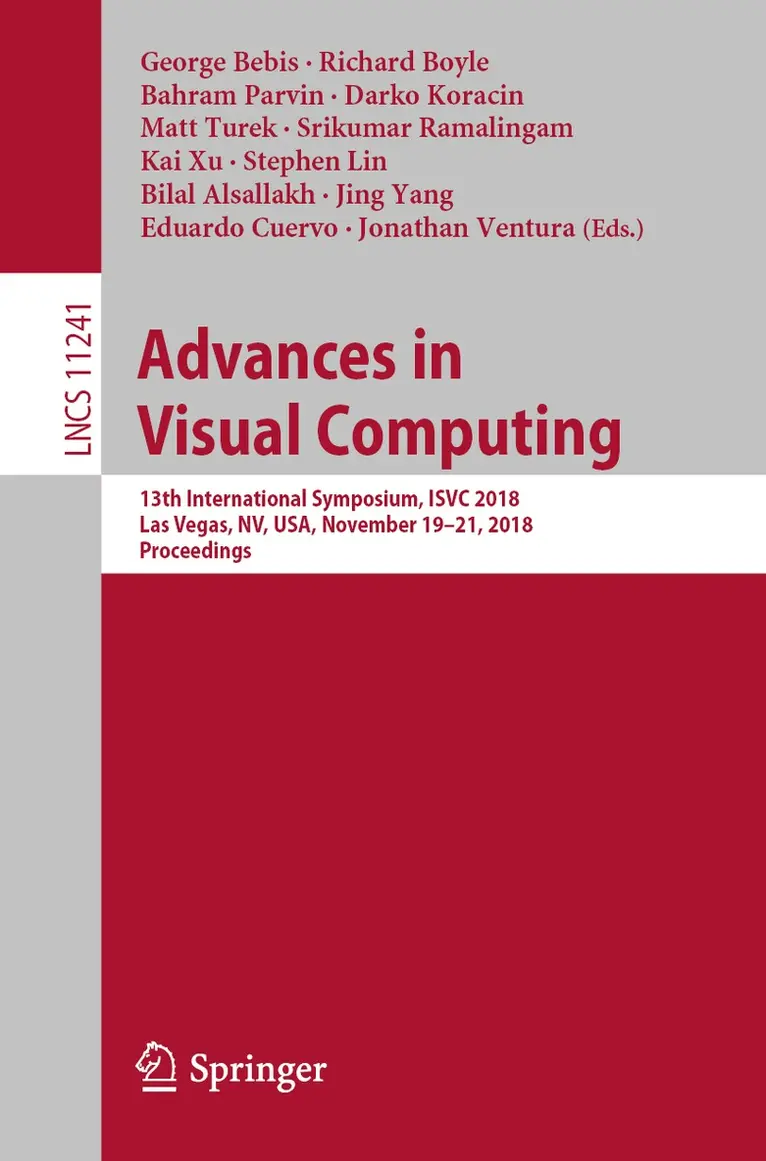
Advances in Visual Computing
13th International Symposium, ISVC 2018, Las Vegas, NV, USA, November 19 – 21, 2018, Proceedings
Häftad, Engelska, 2018
552 kr
Skickas inom 10-15 vardagar
This book constitutes the refereed proceedings of the 13th International Symposium on Visual Computing, ISVC 2018, held in Las Vegas, NV, USA in November 2018.The total of 66 papers presented in this volume was carefully reviewed and selected from 91 submissions. The papers are organized in topical sections named: ST: computational bioimaging; computer graphics; visual surveillance; pattern recognition; vitrual reality; deep learning; motion and tracking; visualization; object detection and recognition; applications; segmentation; and ST: intelligent transportation systems.
Advances in Image and Video Technology
Third Pacific Rim Symposium, PSIVT 2009, Tokyo, Japan, January 13-16, 2009, Proceedings
Häftad, Engelska, 2008
1 640 kr
Skickas inom 10-15 vardagar
This book constitutes the refereed proceedings of the Third Pacific Rim Symposium on Image and Video Technology, PSIVT 2008, held in Tokyo, Japan, in January 2009. The 39 revised full papers and 57 posters were carefully reviewed and selected from 247 submissions. The symposium features 8 major themes including all aspects of image and video technology: image sensors and multimedia hardware; graphics and visualization; image and video analysis; recognition and retrieval; multi-view imaging and processing; computer vision applications; video communications and networking; and multimedia processing. The papers are organized in topical sections on faces and pedestrians; panoramic images; local image analysis; organization and grouping; multiview geometry; detection and tracking; computational photography and forgeries; coding and steganography; recognition and search; and reconstruction and visualization.
1 096 kr
Skickas inom 10-15 vardagar
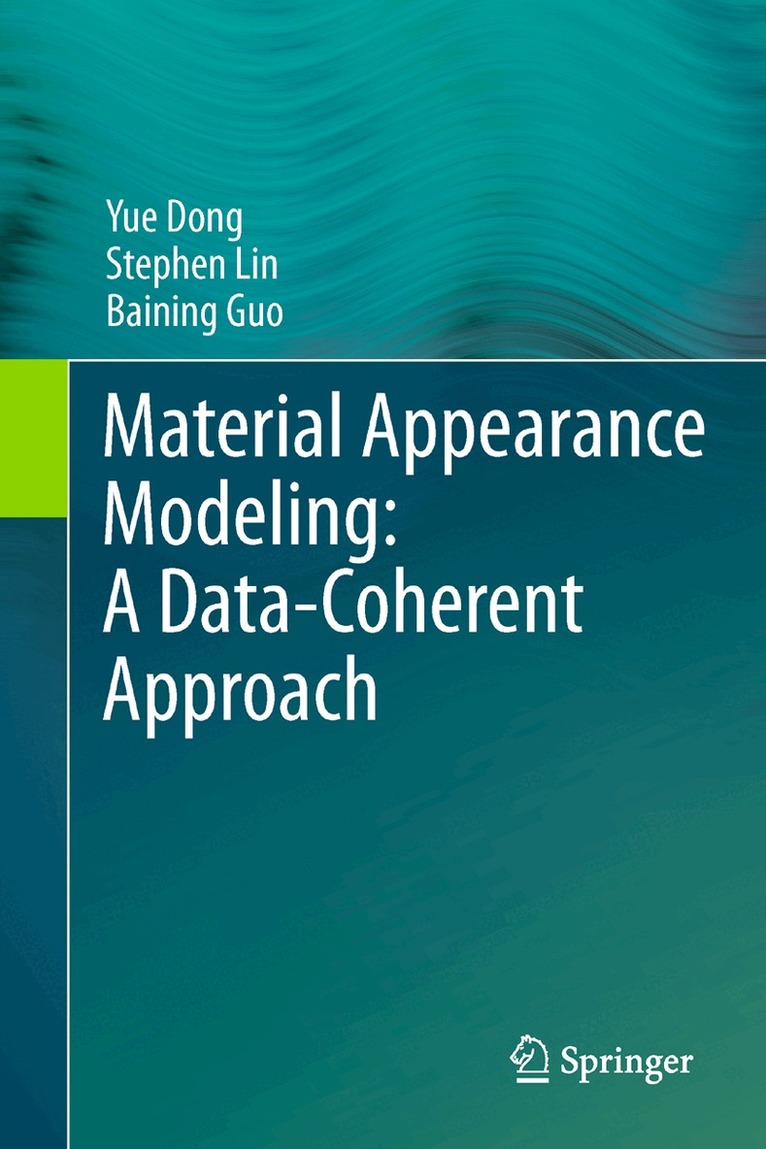
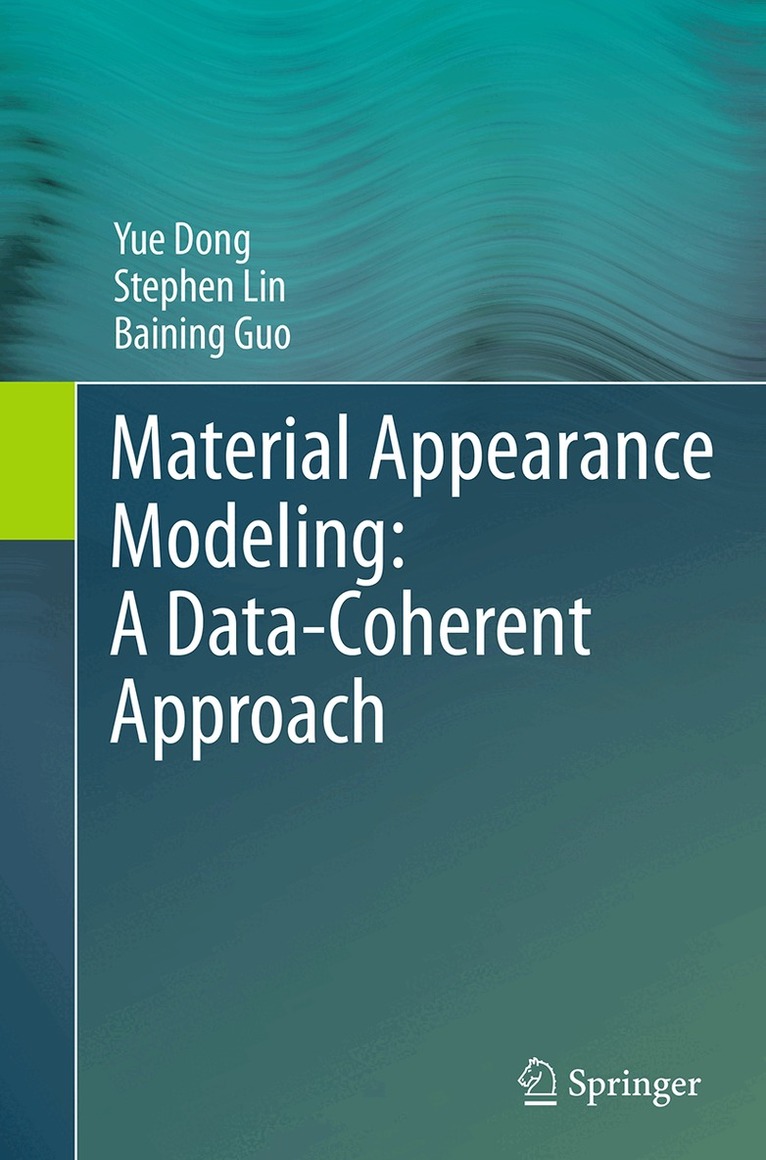
A principal aim of computer graphics is to generate images that look as real as photographs. Realistic computer graphics imagery has however proven to be quite challenging to produce, since the appearance of materials arises from complicated physical processes that are difficult to analytically model and simulate, and image-based modeling of real material samples is often impractical due to the high-dimensional space of appearance data that needs to be acquired.This book presents a general framework based on the inherent coherency in the appearance data of materials to make image-based appearance modeling more tractable. We observe that this coherence manifests itself as low-dimensional structure in the appearance data, and by identifying this structure we can take advantage of it to simplify the major processes in the appearance modeling pipeline. This framework consists of two key components, namely the coherence structure and the accompanying reconstruction method to fully recover the low-dimensional appearance data from sparse measurements. Our investigation of appearance coherency has led to three major forms of low-dimensional coherence structure and three types of coherency-based reconstruction upon which our framework is built.This coherence-based approach can be comprehensively applied to all the major elements of image-based appearance modeling, from data acquisition of real material samples to user-assisted modeling from a photograph, from synthesis of volumes to editing of material properties, and from efficient rendering algorithms to physical fabrication of objects. In this book we present several techniques built on this coherency framework to handle various appearance modeling tasks both for surface reflections and subsurface scattering, the two primary physical components that generate material appearance. We believe that coherency-based appearance modeling will make it easier and more feasible for practitioners to bring computer graphics imagery to life.This book is aimed towards readers with an interest in computer graphics. In particular, researchers, practitioners and students will benefit from this book by learning about the underlying coherence in appearance structure and how it can be utilized to improve appearance modeling. The specific techniques presented in our manuscript can be of value to anyone who wishes to elevate the realism of their computer graphics imagery. For understanding this book, an elementary background in computer graphics is assumed, such as from an introductory college course or from practical experience with computer graphics.
1 096 kr
Skickas inom 10-15 vardagar
A principal aim of computer graphics is to generate images that look as real as photographs. Realistic computer graphics imagery has however proven to be quite challenging to produce, since the appearance of materials arises from complicated physical processes that are difficult to analytically model and simulate, and image-based modeling of real material samples is often impractical due to the high-dimensional space of appearance data that needs to be acquired.This book presents a general framework based on the inherent coherency in the appearance data of materials to make image-based appearance modeling more tractable. We observe that this coherence manifests itself as low-dimensional structure in the appearance data, and by identifying this structure we can take advantage of it to simplify the major processes in the appearance modeling pipeline. This framework consists of two key components, namely the coherence structure and the accompanying reconstruction method to fully recover the low-dimensional appearance data from sparse measurements. Our investigation of appearance coherency has led to three major forms of low-dimensional coherence structure and three types of coherency-based reconstruction upon which our framework is built.This coherence-based approach can be comprehensively applied to all the major elements of image-based appearance modeling, from data acquisition of real material samples to user-assisted modeling from a photograph, from synthesis of volumes to editing of material properties, and from efficient rendering algorithms to physical fabrication of objects. In this book we present several techniques built on this coherency framework to handle various appearance modeling tasks both for surface reflections and subsurface scattering, the two primary physical components that generate material appearance. We believe that coherency-based appearance modeling will make it easier and more feasible for practitioners to bring computer graphics imagery to life.This book is aimed towards readers with an interest in computer graphics. In particular, researchers, practitioners and students will benefit from this book by learning about the underlying coherence in appearance structure and how it can be utilized to improve appearance modeling. The specific techniques presented in our manuscript can be of value to anyone who wishes to elevate the realism of their computer graphics imagery. For understanding this book, an elementary background in computer graphics is assumed, such as from an introductory college course or from practical experience with computer graphics.