Stephen T. Casper – författare
Visar alla böcker från författaren Stephen T. Casper. Handla med fri frakt och snabb leverans.
4 produkter
4 produkter
Inbunden, Engelska, 2024
1 411 kr
Skickas inom 7-10 vardagar
In this bold reconsideration of the human sciences, an interdisciplinary team employ an expanded theoretical and geographical critical lens centering the notion of the encounter. Drawing insights from Indigenous and Latin American Studies, nine case studies delve into the dynamics of encounters between researchers, intermediaries, and research subjects in imperial and colonial contexts across the Americas and Pacific. Essays explore ethical considerations and knowledge production practices that prevailed in field and expedition science, custodial institutions, and governance debates. They reevaluate how individuals and communities subjected to research projects embraced, critiqued, or subverted them. Often, research subjects expressed their own aspirations, asserted sovereignty or autonomy, and exercised forms of power through interactions or acts of refusal. This book signals the transformative potential of Indigenous Studies and Latin American Studies for shaping future scholarship on the history of the human sciences. This title is also available as Open Access on Cambridge Core.
E-bok
PDF, Engelska, 20241 651 kr
Läs direkt efter köp
E-bok
Engelska, 20241 651 kr
Läs direkt efter köp
Del 20 - Rochester Studies in Medical History
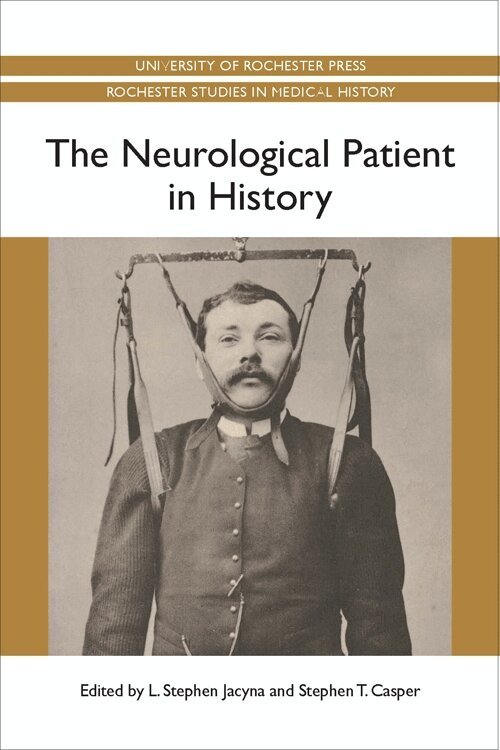
Neurological Patient in History
Häftad, Engelska, 2014
356 kr
Skickas inom 5-8 vardagar
Essays from noted contributors trace the evolution of the neurological patient's role, treatment, and place in the history of medicine.Parkinson's, Alzheimer's, Tourette's, multiple sclerosis, stroke: all are neurological illnesses that create dysfunction, distress, and disability. With their symptoms ranging from impaired movement and paralysis to hallucinationsand dementia, neurological patients present myriad puzzling disorders and medical challenges. Throughout the nineteenth and twentieth centuries countless stories about neurological patients appeared in newspapers, books, medical papers, and films. Often the patients were romanticized; indeed, it was common for physicians to cast neurological patients in a grand performance, allegedly giving audiences access to deep philosophical insights about the meaning of life and being.Beyond these romanticized images, however, the neurological patient was difficult to diagnose. Experiments often approached unethical realms, and treatment created challenges for patients, courts, caregivers, and even for patient advocacy organizations. In this kaleidoscopic study, the contributors illustrate how the neurological patient was constructed in history and came to occupy its role in Western culture. Stephen T. Casper is assistant professor in Humanities and Social Sciences at Clarkson University. L. Stephen Jacyna is reader in the History of Medicine and Director of the Centre for the History of Medicine at University College London.