Steven F. Kruger - Böcker
Visar alla böcker från författaren Steven F. Kruger. Handla med fri frakt och snabb leverans.
6 produkter
6 produkter
413 kr
Skickas inom 7-10 vardagar
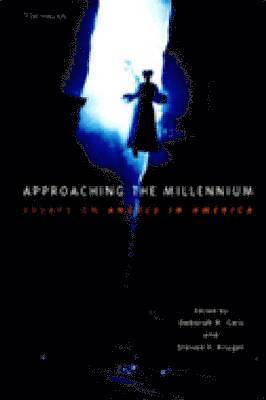
Tony Kushner's complex and demanding play Angels in America: A Gay Fantasia on National Themes has been the most talked about, analyzed, and celebrated play of the decade. The critic Harold Bloom has included Kushner's play in his "Western canon" alongside Shakespeare and the Bible, and drama scholar John M. Clum has termed it "a turning point in the history of gay drama, the history of American drama, and of American literary culture." While we might be somewhat wary of the instant canonization that such critical assessments confer, clearly Kushner's play is an important work, honored by the Pulitzer Prize, thought worthy of recognition on "purely aesthetic" grounds at the same time that it has been embraced--and occasionally rejected--for its politics. Kushner's play explicitly positions itself in the current American conflict over identity politics, yet also situates that debate in a broader historical context: the American history of McCarthyism, of immigration and the "melting pot," of westward expansion, and of racist exploitation. Furthermore, the play enters into the politically volatile struggles of the AIDS crisis, struggles themselves interconnected with the politics of sexuality, gender, race, and class. The original essays in Approaching the Millennium explore the complexities of the play and situate it in its particular, conflicted historical moment. The contributors help us understand and appreciate the play as a literary work, as theatrical text, as popular cultural phenomenon, and as political reflection and intervention. Specific topics include how the play thematizes gender and sexuality, race and ethnicity; the postmodern incarnation of the Brechtian epic; AIDS and the landscape of American politics. The range of different international productions of Angels in America provides a rich basis for discussion of its production history, including the linguistic and cultural shifts required in its "translation" from one stage to the next. The last section of Approaching the Millennium includes interviews with Tony Kushner and other key creators and players involved in the original productions of Angels. The interviews explore issues raised earlier in the volume and dialogues between the creative artists who have shaped the play and the critics and "theatricians" engaged in responding to it. Contributors to this volume are Arnold Aronson, Art Borreca, Gregory W. Bredbeck, Michael Cadden, Nicholas de Jongh, Allen J. Frantzen, Stanton B. Garner, Deborah R. Geis, Martin Harries, Steven F. Kruger, James Miller, Framji Minwalla, Donald Pease, Janelle Reinelt, David Román, David Savran, Ron Scapp, and Alisa Solomon. Deborah Geis is Associate Professor of English, Queens College, City University of New York. Steven F. Kruger is Professor and Chair of the Department of English, Queens College, City University of New York.
629 kr
Skickas inom 7-10 vardagar
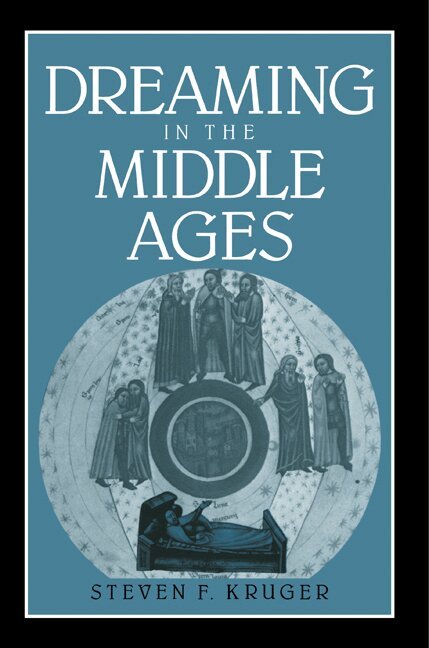
This wide-ranging study examines the role of the dream in medieval culture with reference to philosophical, legal and theological writings as well as literary and autobiographical works. Stephen Kruger studies the development of theories of dreaming, from the Neoplatonic and patristic writers to late medieval re-interpretations, and shows how these theories relate to autobiographical accounts and to more popular treatments of dreaming. He considers previously neglected material including one important dream vision by Nicole Oresme, and arrives at a new understanding of this literary genre, and of medieval attitudes to dreaming in general.
Del 14 - Cambridge Studies in Medieval Literature
Dreaming in the Middle Ages
Inbunden, Engelska, 1992
1 431 kr
Skickas inom 7-10 vardagar
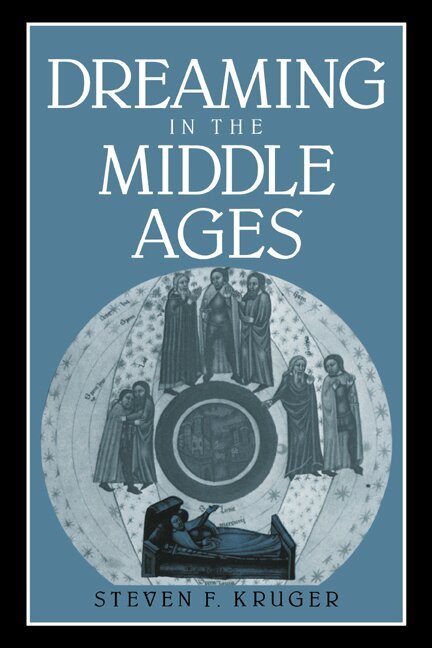
This wide-ranging study examines the role of the dream in medieval culture with reference to philosophical, legal and theological writings as well as literary and autobiographical works. Stephen Kruger studies the development of theories of dreaming, from the Neoplatonic and patristic writers to late medieval re-interpretations, and shows how these theories relate to autobiographical accounts and to more popular treatments of dreaming. He considers previously neglected material including one important dream vision by Nicole Oresme, and arrives at a new understanding of this literary genre, and of medieval attitudes to dreaming in general.
2 419 kr
Skickas inom 10-15 vardagar
This is the first book-length study of the rich fiction that has emerged from the AIDS crisis. Examining first the ways in which scientific discourse on AIDS has reflected ideologies of gender and sexuality-such as the construction of AIDS as a disease of gay men, part of a battle over masculinity, and thus largely excluding women with AIDS from public attention-the book considers how such discourses have shaped narrative understandings of AIDS. On the one hand, AIDS is seen as an invariably fatal weakening of an individual's bodily defenses, a depiction often used to reconfirm an identification between disease and a weak and vulnerable gayness. On the other hand, AIDS is understood in terms of an epidemic attributable to gay immorality or unnaturalness. The fiction of AIDS depends upon these two narratives, with one major subgenre of AIDS novel presenting narratives of personal illness, decline, and death, and a second focusing on epidemic spread. These novels also question the narrative structures upon which they depend, intervening particularly against the homophobia of those structures, though also sometimes reinforcing it.
269 kr
Skickas inom 7-10 vardagar
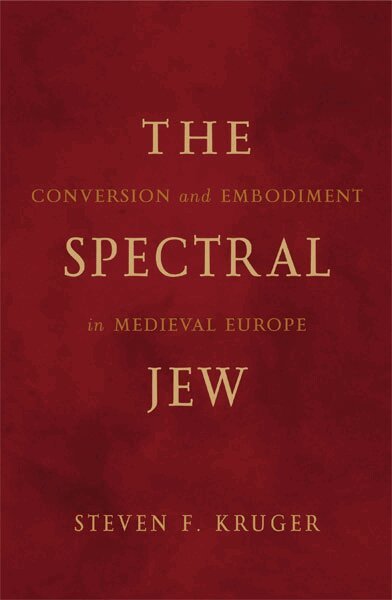
Medieval European culture encompassed Judaic, Christian, Muslim, and pagan societies, forming a complex matrix of religious belief, identity, and imagination. Through incisive readings of a broad range of medieval texts and informed by poststructuralist, queer, and feminist theories, The Spectral Jew traces the Jewish presence in Western Europe to show how the body, gender, and sexuality were at the root of the construction of medieval religious anxieties, inconsistencies, and instabilities. Looking closely at how medieval Jewish and Christian identities are distinguished from each other, yet intimately intertwined, Kruger demonstrates how Jews were often corporealized in ways that posited them as inferior to Christians—archaic and incapable of change—even as the two mutually shaped each other. But such attempts to differentiate Jews and Christians were inevitably haunted by the knowledge that Christianity had emerged out of Judaism and was, in its own self-understanding, a community of converts. Examining the points of contact between Christian and Jewish communities, Kruger discloses the profound paradox of the Jew as different in all ways, yet capable of converting to fully Christian status. He draws from central medieval authors and texts such as Peter Damian, Guibert of Nogent, the Barcelona Disputation, and the Hebrew chronicles of the First Crusade, as well as lesser known writings such as the disputations of Ceuta, Majorca, and Tortosa and the immensely popular Dialogues of Peter Alfonsi. By putting the conversion narrative at the center of this analysis, Kruger exposes it as a disruption of categories rather than a smooth passage and reveals the prominent role Judaism played in the medieval Christian imagination. Steven F. Kruger is professor of English and medieval studies at Queens College and the Graduate Center, CUNY. He is author of several books and editor with Glenn Burger of Queering the Middle Ages (Minnesota, 2001).
817 kr
Skickas inom 10-15 vardagar
This is the first book-length study of the rich fiction that has emerged from the AIDS crisis. Examining first the ways in which scientific discourse on AIDS has reflected ideologies of gender and sexuality-such as the construction of AIDS as a disease of gay men, part of a battle over masculinity, and thus largely excluding women with AIDS from public attention-the book considers how such discourses have shaped narrative understandings of AIDS. On the one hand, AIDS is seen as an invariably fatal weakening of an individual's bodily defenses, a depiction often used to reconfirm an identification between disease and a weak and vulnerable gayness. On the other hand, AIDS is understood in terms of an epidemic attributable to gay immorality or unnaturalness. The fiction of AIDS depends upon these two narratives, with one major subgenre of AIDS novel presenting narratives of personal illness, decline, and death, and a second focusing on epidemic spread. These novels also question the narrative structures upon which they depend, intervening particularly against the homophobia of those structures, though also sometimes reinforcing it.