Sue Taylor Parker - Böcker
Visar alla böcker från författaren Sue Taylor Parker. Handla med fri frakt och snabb leverans.
12 produkter
12 produkter
692 kr
Skickas inom 7-10 vardagar
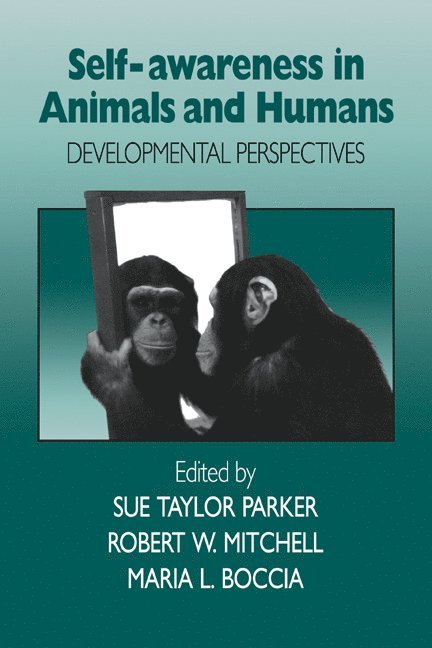
Self-Awareness in Animals and Humans, a collection of original articles on self-awareness in monkeys, apes, humans, and other species, focuses on controversies about how to measure self-awareness, which species are capable of self-awareness and which are not, and why. Several chapters focus on the controversial question of whether gorillas, like other great apes and human infants, are capable of mirror self-recognition (MSR) or whether they are anomalously unable to do so. Other chapters focus on whether macaque monkeys are capable of MSR. The focus of the chapters is both comparative and developmental: several contributors explore the value of frameworks from human developmental psychology for comparative studies. This dual focus - comparative and developmental - reflects the interdisciplinary nature of the volume, which brings together biological anthropologists, comparative and developmental psychologists, and cognitive scientists from Japan, France, Spain, Hungary, New Zealand, Scotland and the United States.
560 kr
Skickas inom 7-10 vardagar
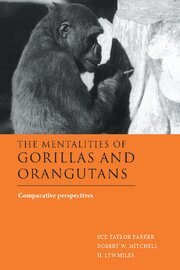
Research on the mental abilities of chimpanzees and bonobos has been widely celebrated and used in reconstructions of human evolution. In contrast, less attention has been paid to the abilities of gorillas and orangutans. This 1999 volume aims to help complete the picture of hominoid cognition by bringing together the work on gorillas and orangutans and setting it in comparative perspective. The introductory chapters set the evolutionary context for comparing cognition in gorillas and orangutans to that of chimpanzees, bonobos and humans. The remaining chapters focus primarily on the kinds and levels of intelligence displayed by orangutans and gorillas compared to other great apes, including performances in the classic domains of tool use and tool making, imitation, self-awareness, social communication and symbol use. All those wanting more information on the mental abilities of these sometimes neglected, but important primates will find this book a treasure trove.
'Language' and Intelligence in Monkeys and Apes
Comparative Developmental Perspectives
Häftad, Engelska, 1994
634 kr
Skickas inom 7-10 vardagar
This is the first collection of articles completely and explicitly devoted to the new field of 'comparative developmental evolutionary psychology' - that is, to studies of primate abilities based on frameworks drawn from developmental psychology and evolutionary biology. These frameworks include Piagetian and neo-Piagetian models as well as psycholinguistic ones. The articles in this collection - originating in Japan, Spain, Italy, France, Canada and the United States - represent a variety of backgrounds in human and nonhuman primate research, including psycholinguistics, developmental psychology, cultural and physical anthropology, ethology, and comparative psychology. The book focuses on such areas as the nature of culture, intelligence, language, and imitation; the differences among species in mental abilities and developmental patterns; and the evolution of life histories and of mental abilities and their neurological bases. The species studied include the African grey parrot, cebus and macaque monkeys, gorillas, orangutans, and both common and pygmy chimpanzees.
1 784 kr
Skickas inom 7-10 vardagar
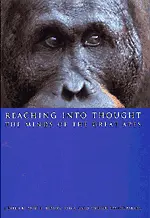
What special qualities of mind set the great apes apart from other nonhuman primates, and indeed from ourselves? In this book, field and laboratory researchers show that the great apes have high level abilities in both social and ecological domains, including tool use, pretense, self-awareness, deception, consolation, teaching and culture itself. Great apes are also shown to be capable of thinking at symbolic levels, traditionally considered to be uniquely human. Here, the mechanisms involved in building these abilities - especially the lengthy developmental and 'enculturation' processes - are emphasized, showing how new discoveries are changing views on how primates and human intelligence evolved. This book is for anyone interested in current research and theoretical views of great ape cognition.
1 653 kr
Skickas inom 7-10 vardagar
Research on the mental abilities of chimpanzees and bonobos has been widely celebrated and used in reconstructions of human evolution. In contrast, less attention has been paid to the abilities of gorillas and orangutans. This 1999 volume aims to help complete the picture of hominoid cognition by bringing together the work on gorillas and orangutans and setting it in comparative perspective. The introductory chapters set the evolutionary context for comparing cognition in gorillas and orangutans to that of chimpanzees, bonobos and humans. The remaining chapters focus primarily on the kinds and levels of intelligence displayed by orangutans and gorillas compared to other great apes, including performances in the classic domains of tool use and tool making, imitation, self-awareness, social communication and symbol use. All those wanting more information on the mental abilities of these sometimes neglected, but important primates will find this book a treasure trove.
744 kr
Skickas inom 7-10 vardagar
What special qualities of mind set the great apes apart from other nonhuman primates, and indeed from ourselves? In this book, field and laboratory researchers show that the great apes have high level abilities in both social and ecological domains, including tool use, pretense, self-awareness, deception, consolation, teaching and culture itself. Great apes are also shown to be capable of thinking at symbolic levels, traditionally considered to be uniquely human. Here, the mechanisms involved in building these abilities - especially the lengthy developmental and 'enculturation' processes - are emphasized, showing how new discoveries are changing views on how primates and human intelligence evolved. This book is for anyone interested in current research and theoretical views of great ape cognition.
1 520 kr
Skickas inom 10-15 vardagar
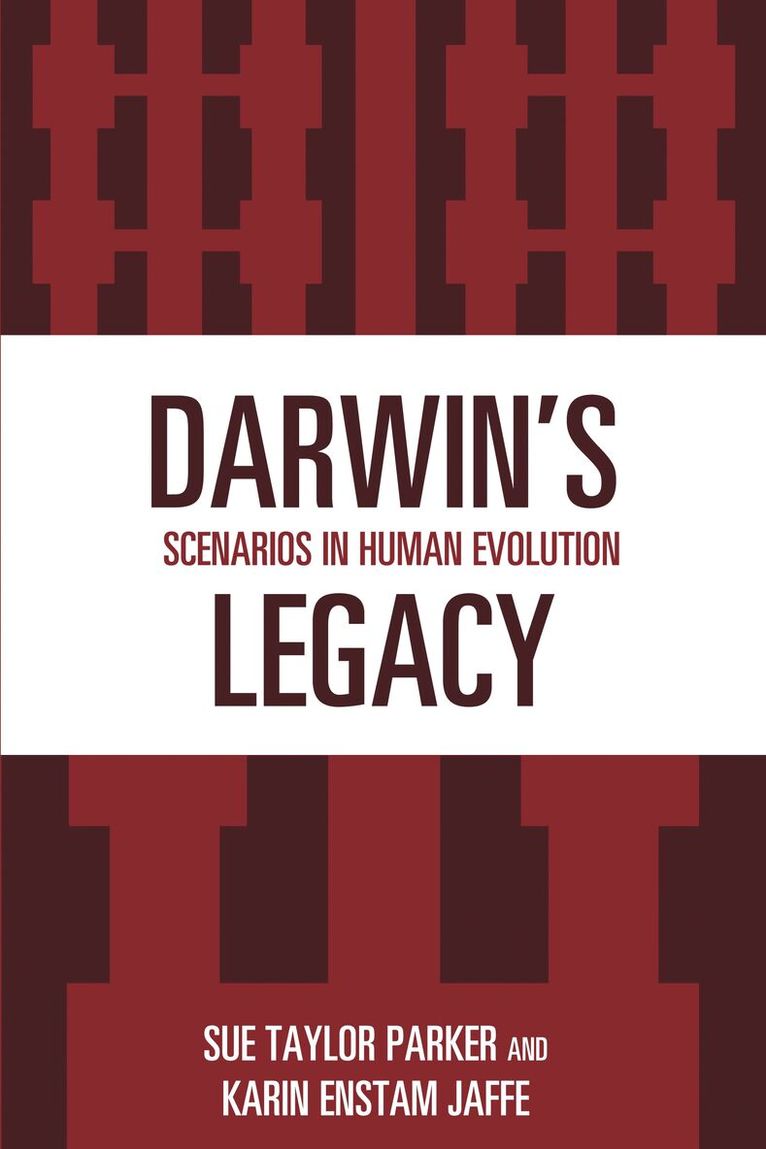
DarwinOs Legacy: Scenarios in Human Evolution compares ideas about human evolution Darwin published in The Descent of Man in 1891 to 30 scenarios about the evolution of such unique human characteristics as bipedalism, hairless skin, secondary sex characters, language and culture that anthropologists and psychologists published between 1950 and 2006. It evaluates ideas about hunting and scavenging, aimed throwing, primitive warfare, aquatic life, courtship, and sign language in light of modern data on genetics, stone tools, fossils, and primate behavior. Parallels between DarwinOs ideas and those of modern researchers are striking.
585 kr
Skickas inom 10-15 vardagar
DarwinOs Legacy: Scenarios in Human Evolution compares ideas about human evolution Darwin published in The Descent of Man in 1891 to 30 scenarios about the evolution of such unique human characteristics as bipedalism, hairless skin, secondary sex characters, language and culture that anthropologists and psychologists published between 1950 and 2006. It evaluates ideas about hunting and scavenging, aimed throwing, primitive warfare, aquatic life, courtship, and sign language in light of modern data on genetics, stone tools, fossils, and primate behavior. Parallels between DarwinOs ideas and those of modern researchers are striking.
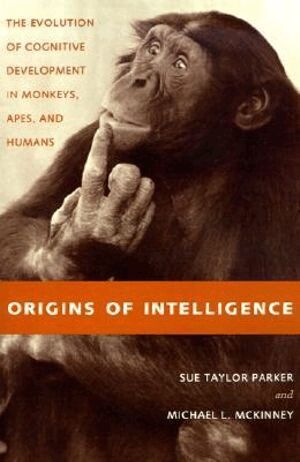
Origins of Intelligence
The Evolution of Cognitive Development in Monkeys, Apes, and Humans
Häftad, Engelska, 2000
441 kr
Skickas inom 5-8 vardagar
Since Darwin's time, comparative psychologists have searched for a good way to compare cognition in humans and nonhuman primates. In Origins of Intelligence, Sue Parker and Michael McKinney offer such a framework and make a strong case for using human development theory (both Piagetian and neo-Piagetian) to study the evolution of intelligence across primate species. Their approach is comprehensive, covering a broad range of social, symbolic, physical, and logical domains, which fall under the all-encompassing and much-debated term intelligence. A widely held theory among developmental psychologists and social and biological anthropologists is that cognitive evolution in humans has occurred through juvenilization-the gradual accentuation and lengthening of childhood in the evolutionary process. In this work, however, Parker and McKinney argue instead that new stages were added at the end of cognitive development in our hominid ancestors, coining the term adultification by terminal extension to explain this process.Drawing evidence from scores of studies on monkeys, great apes, and human children, this book provides unique insights into ontogenetic constraints that have interacted with selective forces to shape the evolution of cognitive development in our lineage.
1 258 kr
Skickas inom 10-15 vardagar
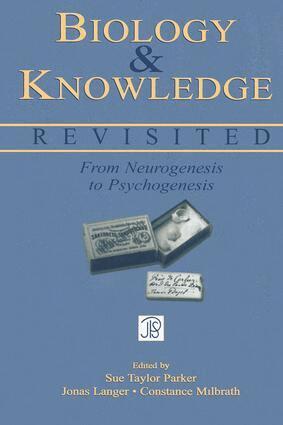
Based on the Annual Symposium of the Jean Piaget Society, Biology and Knowledge Revisited focuses on the classic issue of the relationship between nature and nurture in cognitive and linguistic development, and their neurological substrates.Contributors trace the history of ideas concerning the relationship between evolution and development, and bring powerful new conceptual systems and research data to bear on understanding the problem of experience-contingent brain development and evolution. They focus on processes of phenotype construction - which fill the gap between genes and behavior - and demonstrate that evolutionary psychological models of innate mental modules are incompatible with what is known about these processes. This book presents exciting new approaches to the development and evolution of cognitive and linguistic abilities.Returning to the broad evolutionary theme of a previous meeting, the symposium focused on specifically constructivist approaches to neurogenesis and language acquisition, and their evolution. It was organized around ideas about the relationship between development and evolution raised in Piaget's books. Research in this arena has yielded cutting-edge insight into behavioral influences on brain plasticity.Two of its subthemes run throughout - a critique of modularity models popular among evolutionary psychologies and the prescient yet flawed nature of Piaget's critique of the modern synthesis of evolution. As a result, Biology and Knowledge Revisited is intended for developmental psychologists, psycholinguists, biological anthropologists, evolutionary psychologists, and philosophers of science.
309 kr
Skickas inom 7-10 vardagar
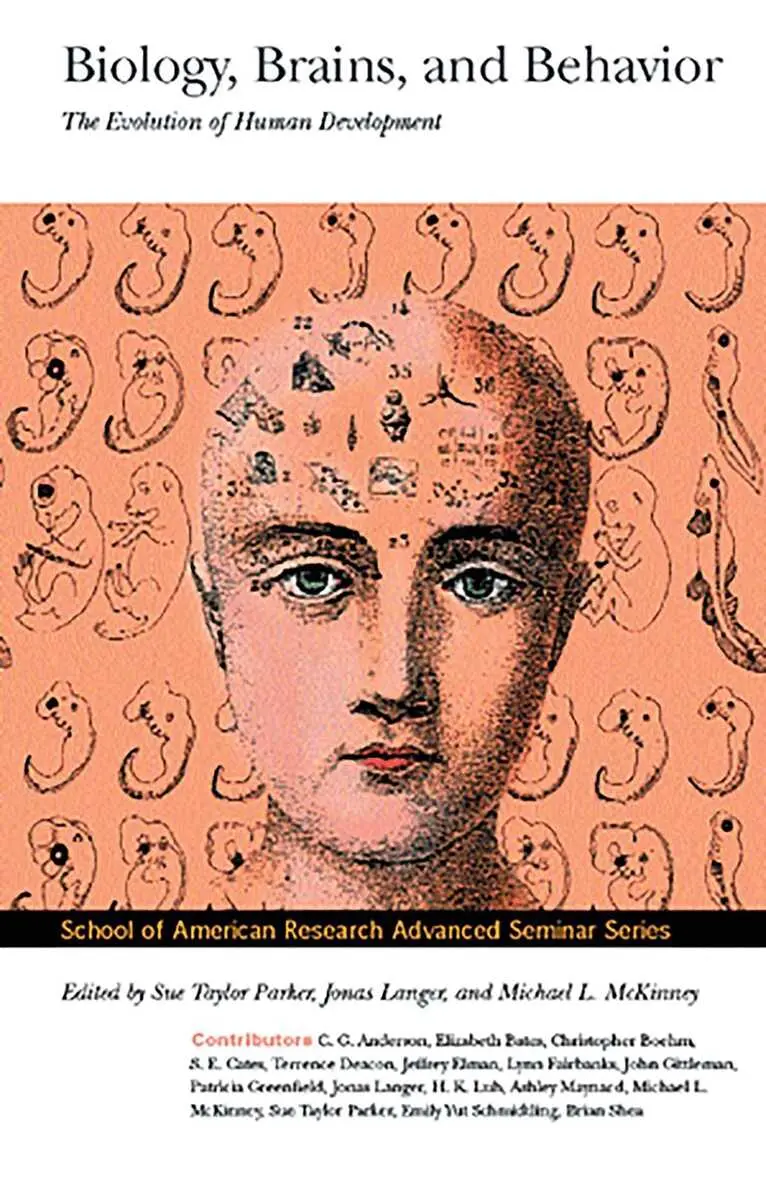
An exciting new cross-disciplinary field of biocultural research is emerging at the start of the twenty-first century: developmental evolutionary biology. Looking at the behaviorial ontogeny of primates, the authors--leading scholars of biological anthropology, evolutionary biology, developmental psychology, and cognitive neuroscience--pose questions that probe our fundamental understanding of the human species. The authors postulate answers that will change the way we look at how cognition, language, and behavior develop in primates.
481 kr
Skickas inom 10-15 vardagar
Based on the Annual Symposium of the Jean Piaget Society, Biology and Knowledge Revisited focuses on the classic issue of the relationship between nature and nurture in cognitive and linguistic development, and their neurological substrates.Contributors trace the history of ideas concerning the relationship between evolution and development, and bring powerful new conceptual systems and research data to bear on understanding the problem of experience-contingent brain development and evolution. They focus on processes of phenotype construction - which fill the gap between genes and behavior - and demonstrate that evolutionary psychological models of innate mental modules are incompatible with what is known about these processes. This book presents exciting new approaches to the development and evolution of cognitive and linguistic abilities.Returning to the broad evolutionary theme of a previous meeting, the symposium focused on specifically constructivist approaches to neurogenesis and language acquisition, and their evolution. It was organized around ideas about the relationship between development and evolution raised in Piaget's books. Research in this arena has yielded cutting-edge insight into behavioral influences on brain plasticity.Two of its subthemes run throughout - a critique of modularity models popular among evolutionary psychologies and the prescient yet flawed nature of Piaget's critique of the modern synthesis of evolution. As a result, Biology and Knowledge Revisited is intended for developmental psychologists, psycholinguists, biological anthropologists, evolutionary psychologists, and philosophers of science.