T. Dunbar Moodie – författare
Visar alla böcker från författaren T. Dunbar Moodie. Handla med fri frakt och snabb leverans.
3 produkter
3 produkter
Del 51 - Perspectives on Southern Africa
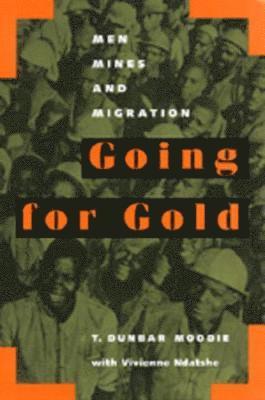
Going for Gold
Men, Mines, and Migration
Häftad, Engelska, 1994
419 kr
Skickas inom 5-8 vardagar
This book tells the story of the lives of migrant black African men who work on the South African gold mines, told from their own point of view and, as much as possible, in their own words. Dunbar Moodie examines the operation of local power structures and resistances, changes in production techniques, the limits and successes of unionization, and the nature of ethnic conflicts at different periods and on different terrains of struggle. He treats his subject thematically and historically, examining how notions of integrity, manhood, sexuality, work, power, solidarity, and violence have all changed over time, especially with the shift to a proletarianized work force on the mines in the 1970s. Moodie integrates analyses of individual life-strategies with theories of social change, illuminating the ways in which these play off each other in historically significant ways. He shows how human beings (in this case, African men) build integrity and construct their own social order, even in situations of apparent total repression.
E-bok
PDF, Engelska, 2017384 kr
Läs direkt efter köp
The re-emergence of debates on the decolonisation of knowledge has revived interest in the National Question, which began over a century ago and remains unresolved. Tensions that were suppressed and hidden in the past are now being openly debated. Despite this, the goal of one united nation living prosperously under a constitutional democracy remains elusive. This edited volume examines the way in which various strands of left thought have addressed the National Question, especially during the apartheid years, and goes on to discuss its relevance for South Africa today and in the future. Instead of imposing a particular understanding of the National Question, the editors identified a number of political traditions and allowed contributors the freedom to define the question as they believed appropriate – in other words, to explain what they thought was the Unresolved National Question. This has resulted in a rich tapestry of interweaving perceptions. The volume is structured in two parts. The first examines four foundational traditions: Marxism-Leninism (the Colonialism of a Special Type thesis); the Congress tradition; the Trotskyist tradition; and Africanism. The second part explores the various shifts in the debate from the 1960s onwards, and includes chapters on Afrikaner nationalism, ethnic issues, black consciousness, feminism, workerism and constitutionalism. The editors hope that by revisiting the debates not popularly known among the scholarly mainstream, this volume will become a catalyst for an enriched debate on our identity and our future.
E-bok
Engelska, 2017384 kr
Läs direkt efter köp
The re-emergence of debates on the decolonisation of knowledge has revived interest in the National Question, which began over a century ago and remains unresolved. Tensions that were suppressed and hidden in the past are now being openly debated. Despite this, the goal of one united nation living prosperously under a constitutional democracy remains elusive. This edited volume examines the way in which various strands of left thought have addressed the National Question, especially during the apartheid years, and goes on to discuss its relevance for South Africa today and in the future. Instead of imposing a particular understanding of the National Question, the editors identified a number of political traditions and allowed contributors the freedom to define the question as they believed appropriate – in other words, to explain what they thought was the Unresolved National Question. This has resulted in a rich tapestry of interweaving perceptions. The volume is structured in two parts. The first examines four foundational traditions: Marxism-Leninism (the Colonialism of a Special Type thesis); the Congress tradition; the Trotskyist tradition; and Africanism. The second part explores the various shifts in the debate from the 1960s onwards, and includes chapters on Afrikaner nationalism, ethnic issues, black consciousness, feminism, workerism and constitutionalism. The editors hope that by revisiting the debates not popularly known among the scholarly mainstream, this volume will become a catalyst for an enriched debate on our identity and our future.