Tara Becker – Författare
Visar alla böcker från författaren Tara Becker. Handla med fri frakt och snabb leverans.
5 produkter
5 produkter
356 kr
Tillfälligt slut
Sex, gender identity, and sexual orientation are key indicators of the demographic diversity in the United States. Sex and gender are often conflated under the assumptions that they are mutually determined and do not differ from each other; however, the growing visibility of transgender and intersex populations, as well as efforts to improve the measurement of sex and gender across many scientific fields, has demonstrated the need to reconsider how sex, gender, and the relationship between them are conceptualized. This is turn affects sexual orientation, because it is defined on the basis of the relationship between a person's own sex or gender and that of their actual or preferred partners. Sex, gender, and sexual orientation are core aspects of identity that shape opportunities, experiences with discrimination, and outcomes through the life course; therefore, it is crucial that measures of these concepts accurately capture their complexity.Recognition of the diversity within the lesbian, gay, bisexual, transgender, queer, intersex, and other sexual and gender minorities - the LGBTQI+ population - has also led to a reexamination of how the concepts of sex, gender identity, and sexual orientation are measured. Better measurement will improve the ability to identify sexual and gender minority populations and understand the challenges they face. LGBTQI+ people continue to experience disparate and inequitable treatment, including harassment, discrimination, and violence, which in turn affects outcomes in many areas of everyday life, including health and access to health care services, economic and educational attainment, and family and social support. Though knowledge of these disparities has increased significantly over the past decade, glaring gaps remain, often driven by a lack of reliable data.Measuring Sex, Gender Identity, and Sexual Orientation recommends that the National Institutes of Health (NIH) adopt new practices for collecting data on sex, gender, and sexual orientation - including collecting gender data by default, and not conflating gender with sex as a biological variable. The report recommends standardized language to be used in survey questions that ask about a respondent's sex, gender identity, and sexual orientation. Better measurements will improve data quality, as well as the NIH's ability to identify LGBTQI+ populations and understand the challenges they face.
472 kr
Tillfälligt slut
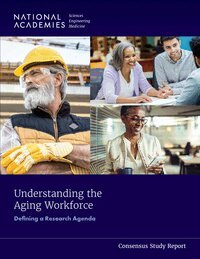
The aging population of the United States has significant implications for the workforce - challenging what it means to work and to retire in the U.S. In fact, by 2030, one-fifth of the population will be over age 65. This shift has significant repercussions for the economy and key social programs. Due to medical advancements and public health improvements, recent cohorts of older adults have experienced better health and increasing longevity compared to earlier cohorts. These improvements in health enable many older adults to extend their working lives. While higher labor market participation from this older workforce could soften the potential negative impacts of the aging population over the long term on economic growth and the funding of Social Security and other social programs, these trends have also occurred amidst a complicating backdrop of widening economic and social inequality that has meant that the gains in health, improvements in mortality, and access to later-life employment have been distributed unequally.Understanding the Aging Workforce: Defining a Research Agenda offers a multidisciplinary framework for conceptualizing pathways between work and nonwork at older ages. This report outlines a research agenda that highlights the need for a better understanding of the relationship between employers and older employees; how work and resource inequalities in later adulthood shape opportunities in later life; and the interface between work, health, and caregiving. The research agenda also identifies the need for research that addresses the role of workplaces in shaping work at older ages, including the role of workplace policies and practices and age discrimination in enabling or discouraging older workers to continue working or retire.
1 517 kr
Tillfälligt slut
The past century has witnessed remarkable advances in life expectancy in the United States and throughout the world. In 2010, however, progress in life expectancy in the United States began to stall, despite continuing to increase in other high-income countries. Alarmingly, U.S. life expectancy fell between 2014 and 2015 and continued to decline through 2017, the longest sustained decline in life expectancy in a century (since the influenza pandemic of 1918-1919). The recent decline in U.S. life expectancy appears to have been the product of two trends: (1) an increase in mortality among middle-aged and younger adults, defined as those aged 25-64 years (i.e., "working age"), which began in the 1990s for several specific causes of death (e.g., drug- and alcohol-related causes and suicide); and (2) a slowing of declines in working-age mortality due to other causes of death (mainly cardiovascular diseases) after 2010.High and Rising Mortality Rates among Working Age Adults highlights the crisis of rising premature mortality that threatens the future of the nation's families, communities, and national wellbeing. This report identifies the key drivers of increasing death rates and disparities in working-age mortality over the period 1990 to 2017; elucidates modifiable risk factors that could alleviate poor health in the working-age population, as well as widening health inequalities; identifies key knowledge gaps and make recommendations for future research and data collection to fill those gaps; and explores potential policy implications. After a comprehensive analysis of the trends in working-age mortality by age, sex, race/ethnicity, and geography using the most up-to-date data, this report then looks upstream to the macrostructural factors (e.g., public policies, macroeconomic trends, social and economic inequality, technology) and social determinants (e.g., socioeconomic status, environment, social networks) that may affect the health of working-age Americans in multiple ways and through multiple pathways.
Journey from Fear to Freedom
A Woman's Guide to Rediscovering the Life She Always Imagined
Inbunden, Engelska, 2018
290 kr
Skickas inom 5-8 vardagar
Journey from Fear to Freedom
A Woman's Guide to Rediscovering the Life She Always Imagined
Häftad, Engelska, 2018
103 kr
Skickas inom 5-8 vardagar