Tara Hamling – författare
Visar alla böcker från författaren Tara Hamling. Handla med fri frakt och snabb leverans.
7 produkter
7 produkter
588 kr
Tillfälligt slut
A Day at Home in Early Modern England: Material Culture and Domestic Life, 1500-1700
Inbunden, Engelska, 2017
544 kr
Tillfälligt slut
2 273 kr
Skickas inom 10-15 vardagar
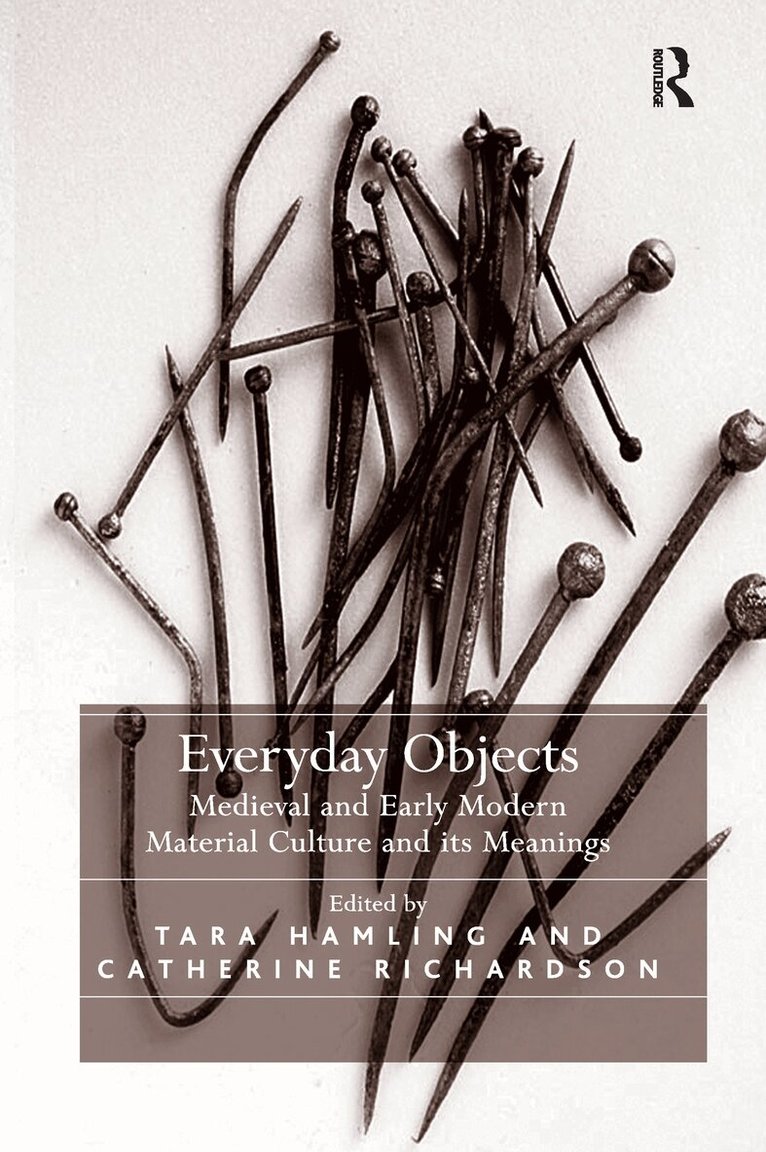
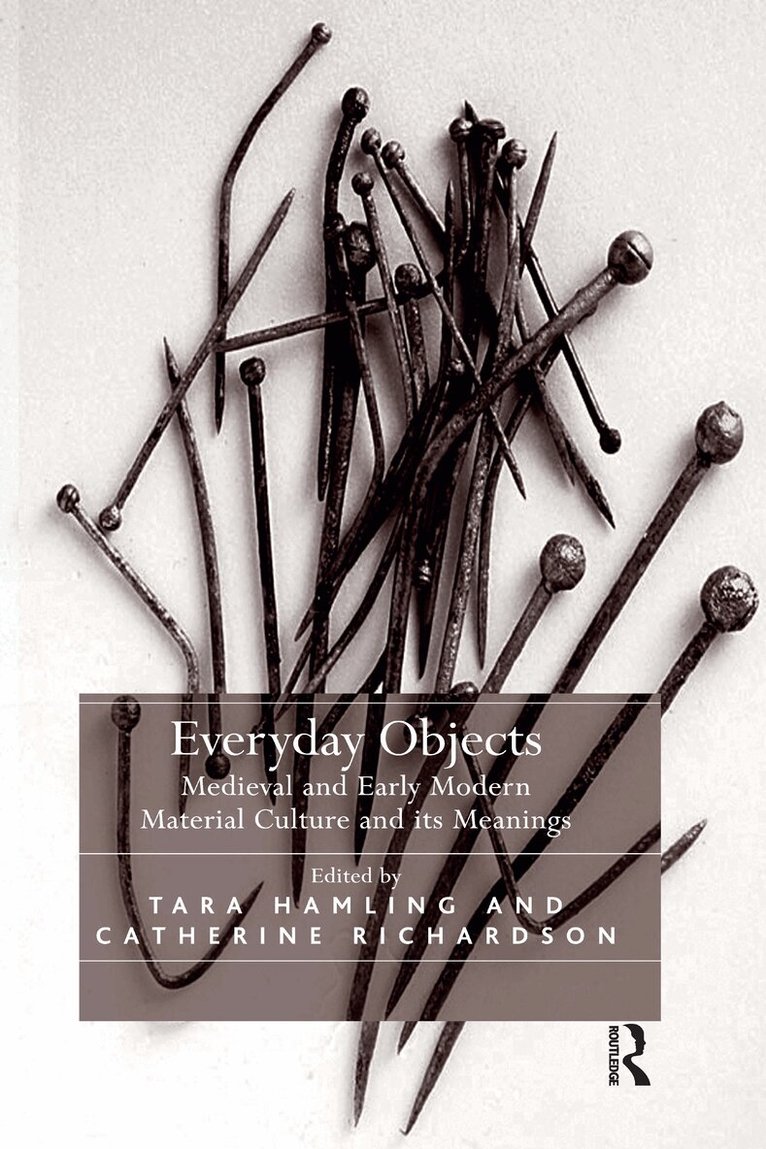
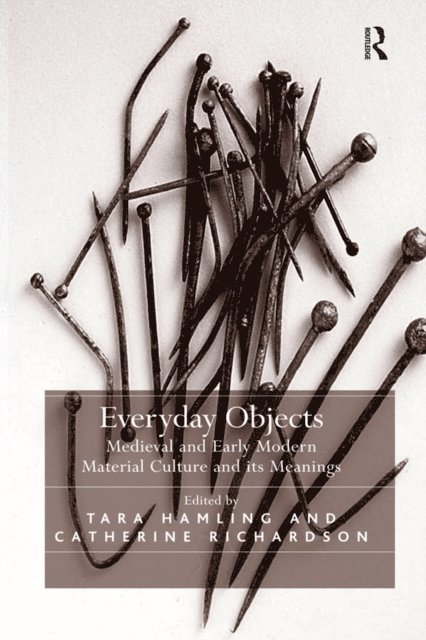
This book is about the objects people owned and how they used them. Twenty-three specially written essays investigate the type of things that might have been considered 'everyday objects' in the medieval and early modern periods, and how they help us to understand the daily lives of those individuals for whom few other types of evidence survive - for instance people of lower status and women of all status groups. Everyday Objects presents new research by specialists from a range of disciplines to assess what the study of material culture can contribute to our understanding of medieval and early modern societies. Extending and developing key debates in the study of the everyday, the chapters provide analysis of such things as ceramics, illustrated manuscripts, pins, handbells, carved chimneypieces, clothing, drinking vessels, bagpipes, paintings, shoes, religious icons and the built fabric of domestic houses and guild halls. These things are examined in relation to central themes of pre-modern history; for instance gender, identity, space, morality, skill, value, ritual, use, belief, public and private behaviour, continental influence, materiality, emotion, technical innovation, status, competition and social mobility. This book offers both a collection of new research by a diverse range of specialists and a source book of current methodological approaches for the study of pre-modern material culture. The multi-disciplinary analysis of these 'everyday objects' by archaeologists, art historians, literary scholars, historians, conservators and museum practitioners provides a snapshot of current methodological approaches within the humanities. Although analysis of material culture has become an increasingly important aspect of the study of the past, previous research in this area has often remained confined to subject-specific boundaries. This book will therefore be an invaluable resource for researchers and students interested in learning about important new work which demonstrates the potential of material culture study to cut across traditional historiographies and disciplinary boundaries and access the lived experience of individuals in the past.
658 kr
Skickas inom 10-15 vardagar
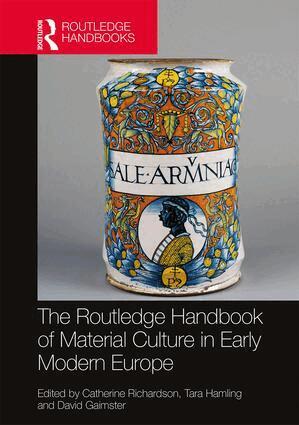
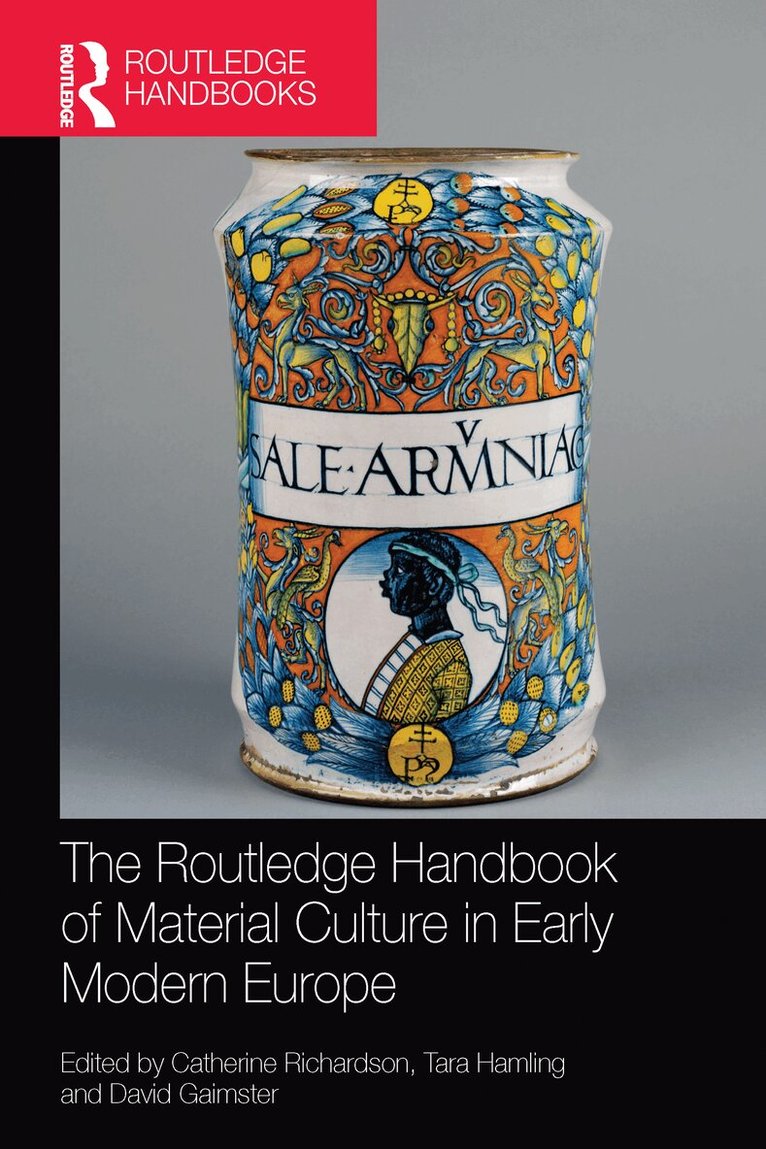
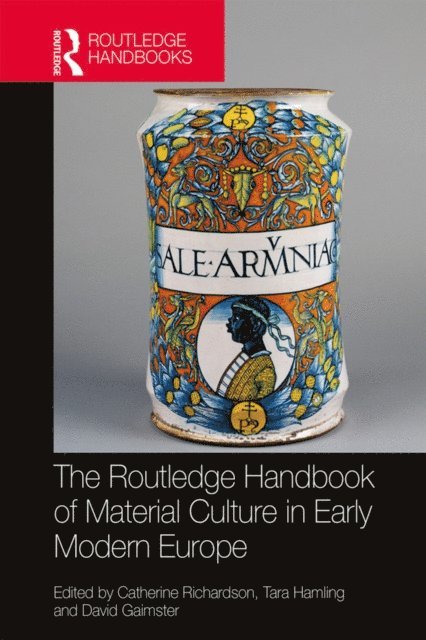
The Routledge Handbook of Material Culture in Early Modern Europe marks the arrival of early modern material culture studies as a vibrant, fully-established field of multi-disciplinary research.The volume provides a rounded, accessible collection of work on the nature and significance of materiality in early modern Europe – a term that embraces a vast range of objects as well as addressing a wide variety of human interactions with their physical environments. This stimulating view of materiality is distinctive in asking questions about the whole material world as a context for lived experience, and the book considers material interactions at all social levels.There are 27 chapters by leading experts as well as 13 feature object studies to highlight specific items that have survived from this period (defined broadly as c.1500–c.1800). These contributions explore the things people acquired, owned, treasured, displayed and discarded, the spaces in which people used and thought about things, the social relationships which cluster around goods – between producers, vendors and consumers of various kinds – and the way knowledge travels around those circuits of connection. The content also engages with wider issues such as the relationship between public and private life, the changing connections between the sacred and the profane, or the effects of gender and social status upon lived experience.Constructed as an accessible, wide-ranging guide to research practice, the book describes and represents the methods which have been developed within various disciplines for analysing pre-modern material culture. It comprises four sections which open up the approaches of various disciplines to non-specialists: ‘Definitions, disciplines, new directions’, ‘Contexts and categories’, ‘Object studies’ and ‘Material culture in action’.This volume addresses the need for sustained, coherent comment on the state, breadth and potential of this lively new field, including the work of historians, art historians, museum curators, archaeologists, social scientists and literary scholars. It consolidates and communicates recent developments and considers how we might take forward a multi-disciplinary research agenda for the study of material culture in periods before the mass production of goods.
658 kr
Skickas inom 10-15 vardagar
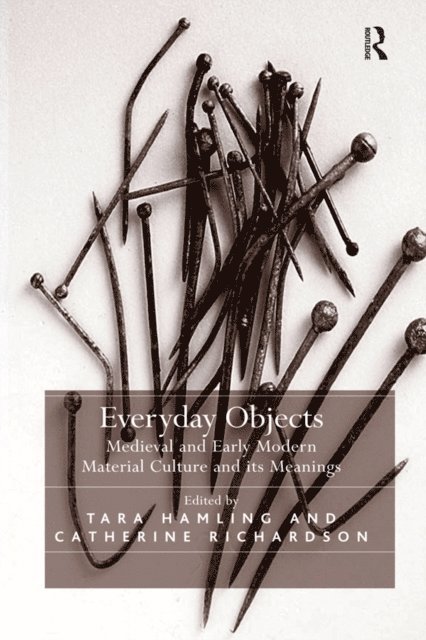
This book is about the objects people owned and how they used them. Twenty-three specially written essays investigate the type of things that might have been considered 'everyday objects' in the medieval and early modern periods, and how they help us to understand the daily lives of those individuals for whom few other types of evidence survive - for instance people of lower status and women of all status groups. Everyday Objects presents new research by specialists from a range of disciplines to assess what the study of material culture can contribute to our understanding of medieval and early modern societies. Extending and developing key debates in the study of the everyday, the chapters provide analysis of such things as ceramics, illustrated manuscripts, pins, handbells, carved chimneypieces, clothing, drinking vessels, bagpipes, paintings, shoes, religious icons and the built fabric of domestic houses and guild halls. These things are examined in relation to central themes of pre-modern history; for instance gender, identity, space, morality, skill, value, ritual, use, belief, public and private behaviour, continental influence, materiality, emotion, technical innovation, status, competition and social mobility. This book offers both a collection of new research by a diverse range of specialists and a source book of current methodological approaches for the study of pre-modern material culture. The multi-disciplinary analysis of these 'everyday objects' by archaeologists, art historians, literary scholars, historians, conservators and museum practitioners provides a snapshot of current methodological approaches within the humanities. Although analysis of material culture has become an increasingly important aspect of the study of the past, previous research in this area has often remained confined to subject-specific boundaries. This book will therefore be an invaluable resource for researchers and students interested in learning about important new work which demonstrates the potential of material culture study to cut across traditional historiographies and disciplinary boundaries and access the lived experience of individuals in the past.
2 202 kr
Skickas inom 10-15 vardagar
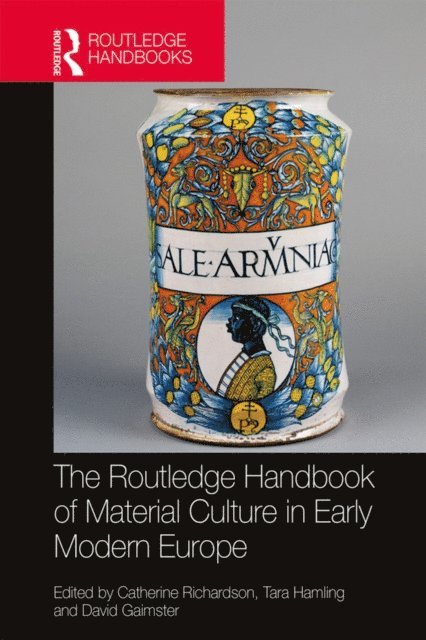
The Routledge Handbook of Material Culture in Early Modern Europe marks the arrival of early modern material culture studies as a vibrant, fully-established field of multi-disciplinary research.The volume provides a rounded, accessible collection of work on the nature and significance of materiality in early modern Europe – a term that embraces a vast range of objects as well as addressing a wide variety of human interactions with their physical environments. This stimulating view of materiality is distinctive in asking questions about the whole material world as a context for lived experience, and the book considers material interactions at all social levels.There are 27 chapters by leading experts as well as 13 feature object studies to highlight specific items that have survived from this period (defined broadly as c.1500–c.1800). These contributions explore the things people acquired, owned, treasured, displayed and discarded, the spaces in which people used and thought about things, the social relationships which cluster around goods – between producers, vendors and consumers of various kinds – and the way knowledge travels around those circuits of connection. The content also engages with wider issues such as the relationship between public and private life, the changing connections between the sacred and the profane, or the effects of gender and social status upon lived experience.Constructed as an accessible, wide-ranging guide to research practice, the book describes and represents the methods which have been developed within various disciplines for analysing pre-modern material culture. It comprises four sections which open up the approaches of various disciplines to non-specialists: ‘Definitions, disciplines, new directions’, ‘Contexts and categories’, ‘Object studies’ and ‘Material culture in action’.This volume addresses the need for sustained, coherent comment on the state, breadth and potential of this lively new field, including the work of historians, art historians, museum curators, archaeologists, social scientists and literary scholars. It consolidates and communicates recent developments and considers how we might take forward a multi-disciplinary research agenda for the study of material culture in periods before the mass production of goods.
1 326 kr
Tillfälligt slut
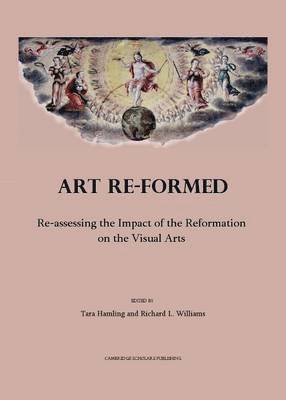
This book fundamentally reassesses traditional understandings of the impact of the Reformation on the visual arts in Britain. It answers the surprising lack of a standard art-historical volume on the subject by bringing together the work of leading authorities in the fields of art history, Reformation history and literary studies, together with ground-breaking research by younger scholars. Combining a range of interdisciplinary approaches and perspectives the book presents a survey of post-Reformation visual imagery in Britain from the period 1550-1640.The book overturns long-held assumptions that the Protestant prohibition of devotional images in churches extended to religious imagery in all contexts, including private houses. It does this by shifting its focus from iconoclasm, to the theme of “re-forming” which examines the many ways in which the visual arts were reshaped and adapted to meet the changing demands of post-Reformation society. Some pre-Reformation images were refashioned or re-contextualised, and traditional religious iconography could be transformed through an interaction with texts or even through the choice of materials. This theme is examined in the book through case-studies drawn from a wide range of media; from prints and paintings to plasterwork and the ephemera of funeral pageantry. The significance of the location of imagery is also emphasised through examples drawn from the formal spaces of churches or a town hall to the private spaces of private houses belonging to courtiers and non-elite members of society. Developments in Britain are related to the wider European context with chapters on the impact of the Reformation on visual representation in Germany and Poland. What emerges from this is a radically different conception of the impact of the Reformation as not simply and exclusively destructive but also as a dynamic and creative process of cultural transformation.The volume includes a wealth of illustrations, many in colour, of little-known or understudied material from Britain and Northern Europe. It cuts across traditional boundaries made between `fine’ arts and `decorative’ arts, and between objects created for the court elite and those further down the social scale. The book not only provides a fundamental source of reference for art-historians and scholars of the Reformation, it opens up new areas of enquiry for the future.“I believe this book will become a fundamental source of reference for historians and art historians alike. It comprehensively overturns the orthodoxy that religious imagery had no place in English culture from the latter part of the sixteenth century onwards. The book is also of great significance for the ways in which it places developments in England in a European context, with important contributions on the impact of the Reformation on modes of representation in Germany and Poland. Its importance is further demonstrated by the ways in which it offers a series of stimulating reflections on post-Reformation representation in a variety of media, ranging from plasterwork to funeral pageantry, and addresses issues of imagery in relation to text as well as to particular locations. It both effectively surveys the period from 1550 to 1640 and opens up new areas of enquiry for the future.”Dr Susan Foister, National Gallery, London“Art-Reformed is a well-conceived and timely collection containing essays by some of the leading figures in art history, literature and history. A work that rethinks our understanding of art and the production of images in the sixteenth century has been necessary for many years and Tara Hamling and Richard Williams’ excellent book finally provides us with this. Until now it has been possible to argue that the Reformation brought in its wake a suspicion of images that led to the development of portrait painting as the only way of producing art works. Art-Reformed explodes this reductive myth, showing how images were redeployed and re-used, how popular images proliferated after the Reformation, and how art in public spaces differed from that in domestic interiors. Every scholar working on the sixteenth century ought to read this collection, not just art historians, as it shows how hesitantly and tentatively the Reformation advanced, and how a historically nuanced and informed reading of images transforms our understanding of the culture of the period. Art-Reformed is not simply a fine collection of essays, it conveys all the excitement that pioneering scholarship should provide.”Professor Andrew Hadfield, Head of Department, English Department and Director of the Centre for Early Modern Studies, The University of Sussex“This book fills a crucial gap in relating religious reform to the visual arts in early modern Britain. It engages with the enduring assumption that in Calvinist Europe the old religious subject matter of painting and the visual arts was proscribed, and that the second generation of reformers in Britain embraced an `iconophobia’ in which images connected with religion were generally avoided and repudiated. The editors have assembled an excellent team of contributors, including some of the foremost established authorities in the field, such as Margaret Aston and Karen Hearn, and younger scholars with important things to say, such as Tara Hamling and Helen Pierce. This is perhaps the most important conclusion to emerge from an excellent collection of essays which will have a considerable impact on the fields of art history and Reformation studies.”Dr Richard Cust, Reader in Early Modern History, Centre for Reformation and Early Modern Studies, University of Birmingham