• Fri frakt över 249 kr
  • •
  • Snabba leveranser
  • •
  • Billiga böcker
Kundservice

Du är på sajten för privatpersoner.

Företag, bibliotek eller offentlig verksamhet?

Du handlar på classic.bokus.com, där alla dina funktioner finns intakta.
Till classic.bokus.com
Bokus logotyp. Gå till startsidan.
  • Erbjudanden
  • Nyheter
  • Student
  • Topplistor
  • Barn & ungdom
  • Bokus Play
  • E-böcker
  • Pocketböcker
  • Spel & pussel

10% studentrabatt med kod TERM26

Sidfot

Mina sidor

    Hjälp

    • Kundservice
    • Vanliga frågor och svar
    • Frakt och leverans
    • Retur vid ångerrätt
    • Reklamera vara
    • Betalning
    • Köpvillkor
    • Allmänna villkor
    • Information om webbplatsens tillgänglighet

    Om Bokus

    • Om oss
    • Pressrum
    • För studenter
    • För företag
    • För bibliotek och offentlig verksamhet
    • För leverantörer
    • Hållbarhet

    Populärt

    • Aktuella erbjudanden
    • Presentkort
    • Studentlitteratur
    • Nya böcker
    • Topplistor
    • Signerade böcker
    • Engelska böcker

    Inspiration

    • Boktips
    • BookTok
    • Populära bokserier
    • Barnbokskaraktärer
    • Populära författare
    Logotyp för Bokus
    Följ oss på Facebook (extern länk)Följ oss på Instagram (extern länk)Följ oss på YouTube (extern länk)Följ oss på TikTok (extern länk)
    bokus @ CookiesAnpassa cookiesIntegritetspolicyKöpvillkor
    Till Citymail hemsida (extern länk)Till Budbee hemsida (extern länk)Till Postnord hemsida (extern länk)Till Schenker hemsida (extern länk)Till Early Bird hemsida (extern länk)Till Walleys hemsida (extern länk)
    1. Samhälle och politik
    2. Samhälle och kultur
    3. Kultur och medier
    4. Kulturvetenskap

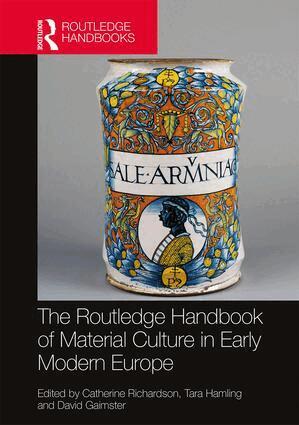
    Routledge Handbook of Material Culture in Early Modern Europe

    AvCatherine Richardson,Tara Hamling

    Inbunden, Engelska, 2016

    Del i serien Routledge History Handbooks

    2 506 kr

    Beställningsvara. Skickas inom 10-15 vardagar. Fri frakt över 249 kr.

    Beskrivning

    The Routledge Handbook of Material Culture in Early Modern Europe marks the arrival of early modern material culture studies as a vibrant, fully-established field of multi-disciplinary research.The volume provides a rounded, accessible collection of work on the nature and significance of materiality in early modern Europe – a term that embraces a vast range of objects as well as addressing a wide variety of human interactions with their physical environments. This stimulating view of materiality is distinctive in asking questions about the whole material world as a context for lived experience, and the book considers material interactions at all social levels.There are 27 chapters by leading experts as well as 13 feature object studies to highlight specific items that have survived from this period (defined broadly as c.1500–c.1800). These contributions explore the things people acquired, owned, treasured, displayed and discarded, the spaces in which people used and thought about things, the social relationships which cluster around goods – between producers, vendors and consumers of various kinds – and the way knowledge travels around those circuits of connection. The content also engages with wider issues such as the relationship between public and private life, the changing connections between the sacred and the profane, or the effects of gender and social status upon lived experience.Constructed as an accessible, wide-ranging guide to research practice, the book describes and represents the methods which have been developed within various disciplines for analysing pre-modern material culture. It comprises four sections which open up the approaches of various disciplines to non-specialists: ‘Definitions, disciplines, new directions’, ‘Contexts and categories’, ‘Object studies’ and ‘Material culture in action’.This volume addresses the need for sustained, coherent comment on the state, breadth and potential of this lively new field, including the work of historians, art historians, museum curators, archaeologists, social scientists and literary scholars. It consolidates and communicates recent developments and considers how we might take forward a multi-disciplinary research agenda for the study of material culture in periods before the mass production of goods.

    Produktinformation

    • Utgivningsdatum:2016-09-16
    • Mått:174 x 246 x 27 mm
    • Vikt:1 420 g
    • Format:Inbunden
    • Språk:Engelska
    • Serie:Routledge History Handbooks
    • Antal sidor:486
    • Förlag:Taylor & Francis Ltd
    • ISBN:9781409462699

    Utforska kategorier

    • Kulturvetenskap inom Samhälle och politik
    • Europas historia inom Historia och arkeologi

    Mer om författaren

    Dr Catherine Richardson is a Reader in Renaissance Studies at the University of Kent, UK.Dr Tara Hamling is a Senior Lecturer in History at the University of Birmingham, UK.Professor David Gaimster is Director of the Hunterian at the University of Glasgow, UK.

    Innehållsförteckning

    • List of FiguresSECTION 1: DEFINITIONS, DISCIPLINES, NEW DIRECTIONSIntroductionCatherine Richardson, Tara Hamling and David GaimsterChapter 1: Global Things: Europe’s Early Modern Material TransformationGiorgio RielloChapter 2: Cognitive History and Material CultureJohn Sutton and Nicholas KeeneSECTION 2: CONTEXTS AND CATEGORIESChapter 3: Maps and Material CultureBernhard KleinChapter 4: The Royal CourtGlenn RichardsonChapter 5: The Material Culture of Early Modern ChurchesAndrew SpicerChapter 6: Public Buildings in Early Modern EuropeKate GilesChapter 7: Domestic Buildings: Understanding Houses and SocietyChris KingChapter 8: Materiality and the Streetlife of the Early Modern CityAndrew GordonChapter 9: Materiality, Nature and the BodyErin Sullivan and Andrew WearChapter 10: Mortuary CultureHarold MytumChapter 11: ClothingMaria HaywardChapter 12: Getting Down from the Table: Early Modern Foodways and Material CultureSara PennellChapter 13: Arms and ArmourDavid GrummittChapter 14: Material TextsFrances Maguire and Helen SmithSECTION 3: OBJECT STUDIESObject Study 1: The Panyer Alley BoyAndrew GordonObject Study 2: Abraham Ortelius, his epitome of the theatre of the worldeDelia GarrattObject Study 3: ‘The Persian Sibyl’ Banqueting TrencherVictoria JacksonObject Study 4: A ‘Witch-bottle’Ann-Sophie ThwaiteObject Study 5: A Drug JarHannah LeeObject Study 6: A ShoehornSophie CopeObject Study 7: A Maiolica plateHollie ChungObject study 8: ‘Concealed’ leather shoesPeter HewittObject Study 9: Manuscript Directions for Weaving BraidsJan SibthorpeObject Study 10: The Balsambüchse – a Portable Seventeenth-Century Medicine CabinetLuisa CoscarelliObject Study 11: The Maidstone HelmetMalcolm MercerObject Study 12: A Dutch carved cupboardTara HamlingObject Study 13: An Embroidered MirrorClaire CanavanSECTION 4: MATERIAL CULTURE IN ACTIONChapter 15: The Material Culture of Lineage in late-Tudor and early-Stuart EnglandRichard CustChapter 16: The Malleable Moment in English Portraiture, c. 1540-1640Robert TittlerChapter 17: Is This a Man I See Before Me?: Early Modern Masculinities and the New MaterialismsAmanda BaileyChapter 18: In Praise of Clean Linen: Laundering Humours on the Early Modern English Stage Natasha Korda and Eleanor LoweChapter 19: Early Modern Religious Objects or Objects of Belief?Suzanna Ivanič Chapter 20: The Material Culture of Piety in the Italian Renaissance: Re-touching the Rosary Irene Galandra Cooper and Mary LavenChapter 21: Early Modern Spaces and Olfactory TracesDavid Karmon and Christy AndersonChapter 22: Musical Sound and Material CultureFlora DennisChapter 23: Lasting Impressions of the Common WoodcutPatricia Fumerton and Megan Palmer-Browne, with William PalmerChapter 24: Baroque Sculpture: Materiality and the Question of MovementNigel LlewellynChapter 25: Rights of Privacy in Early Modern English HouseholdsLena Cowen OrlinChapter 26: Antwerp and the ‘Material Renaissance’: Exploring the social and economic significance of crystal glass and majolica in the sixteenth centuryInneke Baatsen, Bruno Blondé and Carolien De StaelenChapter 27: I Say ‘Shard’, You Say ‘Sherd’: contrasting and complimentary approaches to a piece of early modern ‘venice glass’Angela McShane and Nigel Jeffries