Taylor Owen - Böcker
Visar alla böcker från författaren Taylor Owen. Handla med fri frakt och snabb leverans.
9 produkter
9 produkter
254 kr
Skickas inom 5-8 vardagar
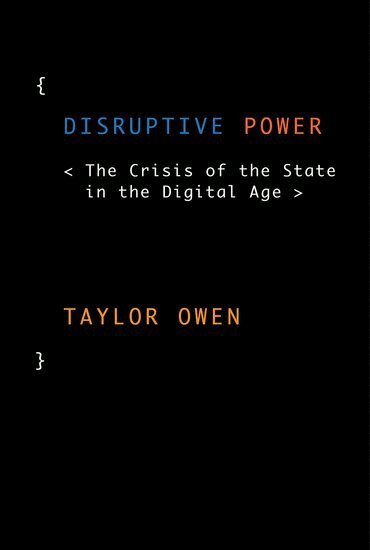
Anonymous. WikiLeaks. The Syrian Electronic Army. Edward Snowden. Bitcoin. The Arab Spring. Five years ago, these terms were meaningless to the vast majority of people in the world. Today, they and many like them dominate the news and keep policymakers, security experts, and military and intelligence officials up at night. These groups and individuals are enabled and empowered by digital technology to confound and provoke the state in a way not possible before the Internet revolution. They are representative of a wide range of 21st century global actors and a new form of 21st century power: disruptive power.In Disruptive Power, Taylor Owen provides a sweeping look at the way that digital technologies are shaking up the workings of the institutions that have traditionally controlled international affairs: humanitarianism, diplomacy, war, journalism, activism, and finance. The traditional nation state system and the subsequent multinational system were founded on and have long functioned through a concentration of power in the state, through the military, currency controls, foreign policy, the rule of law, and so on. In this book, Owen argues that in every aspect of international affairs, the digitally enabled are changing the way the world works and disrupting the institutions that once held a monopoly on power. Each chapter of Owen's book looks at a different aspect of international affairs, profiling the disruptive innovators and demonstrating how they are challenging existing power structures for good and ill. Owen considers what constitutes successful online international action, what sorts of technologies are being used as well as what these technologies might look like a decade from now, and what new institutions will be needed to moderate the new power structures and ensure accountability. With cutting edge analysis of the fast-changing relationship between the declining state and increasingly powerful non-state actors, Disruptive Power is the essential road map for navigating a networked world.
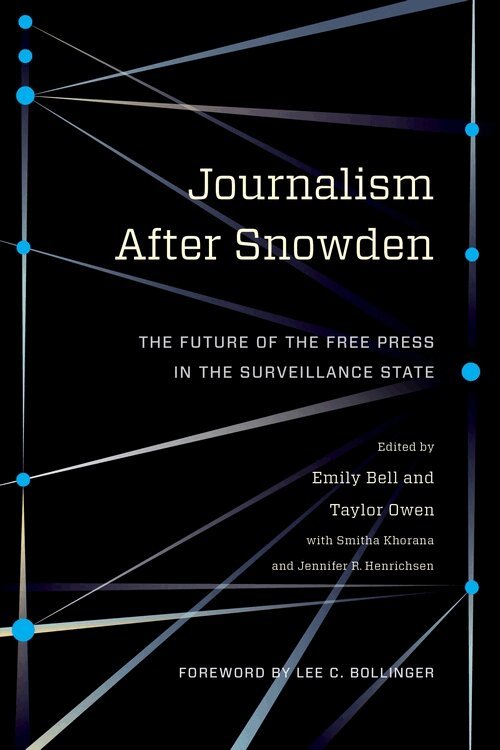
Journalism After Snowden
The Future of the Free Press in the Surveillance State
Inbunden, Engelska, 2017
2 127 kr
Skickas inom 3-6 vardagar
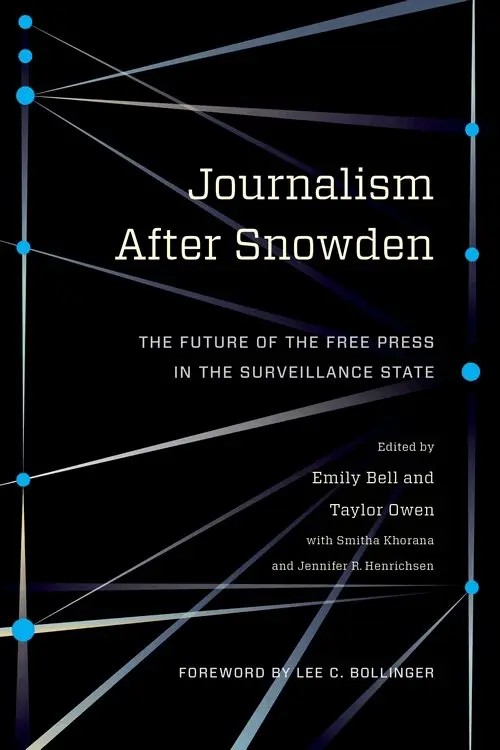
Edward Snowden's release of classified NSA documents exposed the widespread government practice of mass surveillance in a democratic society. The publication of these documents, facilitated by three journalists, as well as efforts to criminalize the act of being a whistleblower or source, signaled a new era in the coverage of national security reporting. The contributors to Journalism After Snowden analyze the implications of the Snowden affair for journalism and the future role of the profession as a watchdog for the public good. Integrating discussions of media, law, surveillance, technology, and national security, the book offers a timely and much-needed assessment of the promises and perils for journalism in the digital age. Journalism After Snowden is essential reading for citizens, journalists, and academics in search of perspective on the need for and threats to investigative journalism in an age of heightened surveillance.The book features contributions from key players involved in the reporting of leaks of classified information by Edward Snowden, including Alan Rusbridger, former editor-in-chief of The Guardian; ex-New York Times executive editor Jill Abramson; legal scholar and journalist Glenn Greenwald; and Snowden himself. Other contributors include dean of Columbia Graduate School of Journalism Steve Coll, Internet and society scholar Clay Shirky, legal scholar Cass Sunstein, and journalist Julia Angwin. Topics discussed include protecting sources, digital security practices, the legal rights of journalists, access to classified data, interpreting journalistic privilege in the digital age, and understanding the impact of the Internet and telecommunications policy on journalism. The anthology's interdisciplinary nature provides a comprehensive overview and understanding of how society can protect the press and ensure the free flow of information.
Journalism After Snowden
The Future of the Free Press in the Surveillance State
Häftad, Engelska, 2017
287 kr
Skickas inom 7-10 vardagar
Edward Snowden's release of classified NSA documents exposed the widespread government practice of mass surveillance in a democratic society. The publication of these documents, facilitated by three journalists, as well as efforts to criminalize the act of being a whistleblower or source, signaled a new era in the coverage of national security reporting. The contributors to Journalism After Snowden analyze the implications of the Snowden affair for journalism and the future role of the profession as a watchdog for the public good. Integrating discussions of media, law, surveillance, technology, and national security, the book offers a timely and much-needed assessment of the promises and perils for journalism in the digital age. Journalism After Snowden is essential reading for citizens, journalists, and academics in search of perspective on the need for and threats to investigative journalism in an age of heightened surveillance.The book features contributions from key players involved in the reporting of leaks of classified information by Edward Snowden, including Alan Rusbridger, former editor-in-chief of The Guardian; ex-New York Times executive editor Jill Abramson; legal scholar and journalist Glenn Greenwald; and Snowden himself. Other contributors include dean of Columbia Graduate School of Journalism Steve Coll, Internet and society scholar Clay Shirky, legal scholar Cass Sunstein, and journalist Julia Angwin. Topics discussed include protecting sources, digital security practices, the legal rights of journalists, access to classified data, interpreting journalistic privilege in the digital age, and understanding the impact of the Internet and telecommunications policy on journalism. The anthology's interdisciplinary nature provides a comprehensive overview and understanding of how society can protect the press and ensure the free flow of information.
3 025 kr
Skickas inom 10-15 vardagar
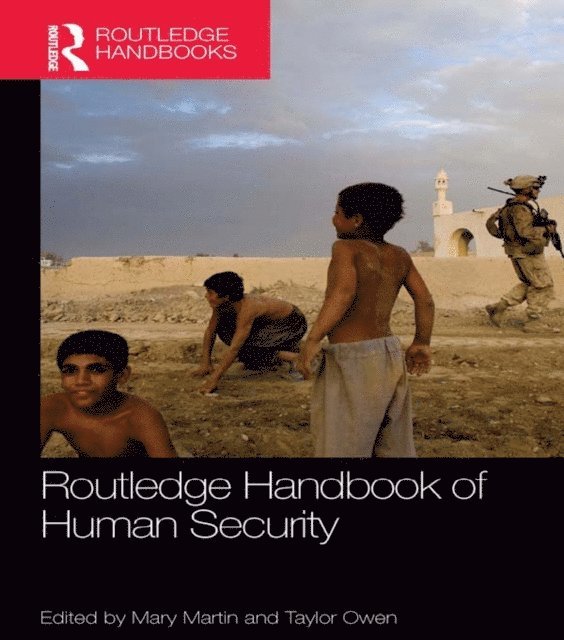
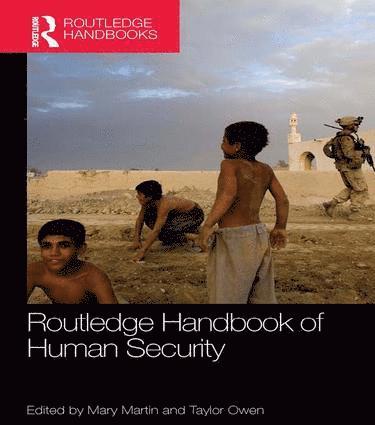
This Handbook will serve as a standard reference guide to the subject of human security, which has grown greatly in importance over the past twenty years. Human security has been part of academic and policy discourses since it was first promoted by the UNDP in its 1994 Human Development Report. Filling a clear gap in the current literature, this volume brings together some of the key scholars and policy-makers who have contributed to its emergence as a mainstream concept, including Nobel prize winner Amartya Sen and Sadako Ogata, who jointly chaired the 2001 Commission on Human Security. Drawing upon a range of theoretical and empirical analyses, the Handbook provides examples of the use of human security in policies as diverse as disaster management, arms control and counter-terrorism, and in different geographic and institutional settings from Asia to Africa, and the UN. It also raises important questions about how the concept might be adapted and operationalised in future.Over the course of the book, the authors draw on three key aspects of human security thinking: Theoretical issues to do with defining human security as a specific discourse Human security from a policy and institutional perspective, and how it is operationalised in different policy and geographic contexts Case studies and empirical work Featuring some of the leading scholars in the field, the Routledge Handbook of Human Security will be essential reading for all students of human security, critical security, conflict and development, peace and conflict studies, and of great interest to students of international security and IR in general.
697 kr
Skickas inom 10-15 vardagar
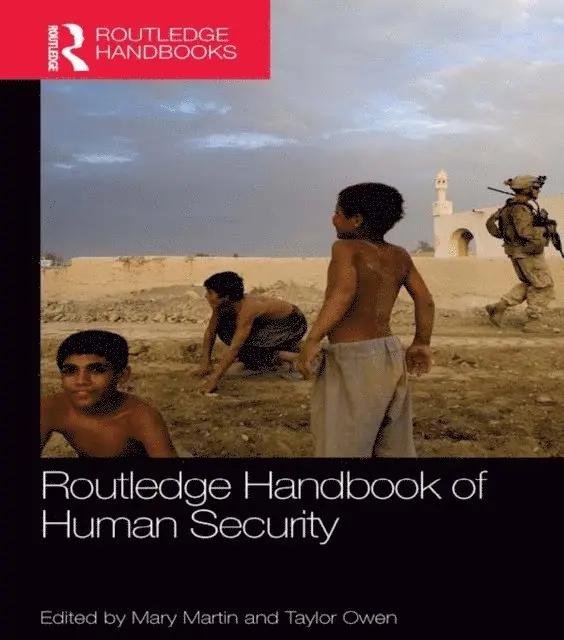
This Handbook will serve as a standard reference guide to the subject of human security, which has grown greatly in importance over the past twenty years. Human security has been part of academic and policy discourses since it was first promoted by the UNDP in its 1994 Human Development Report. Filling a clear gap in the current literature, this volume brings together some of the key scholars and policy-makers who have contributed to its emergence as a mainstream concept, including Nobel prize winner Amartya Sen and Sadako Ogata, who jointly chaired the 2001 Commission on Human Security. Drawing upon a range of theoretical and empirical analyses, the Handbook provides examples of the use of human security in policies as diverse as disaster management, arms control and counter-terrorism, and in different geographic and institutional settings from Asia to Africa, and the UN. It also raises important questions about how the concept might be adapted and operationalised in future.Over the course of the book, the authors draw on three key aspects of human security thinking: Theoretical issues to do with defining human security as a specific discourse Human security from a policy and institutional perspective, and how it is operationalised in different policy and geographic contexts Case studies and empirical work Featuring some of the leading scholars in the field, the Routledge Handbook of Human Security will be essential reading for all students of human security, critical security, conflict and development, peace and conflict studies, and of great interest to students of international security and IR in general.
322 kr
Kommande
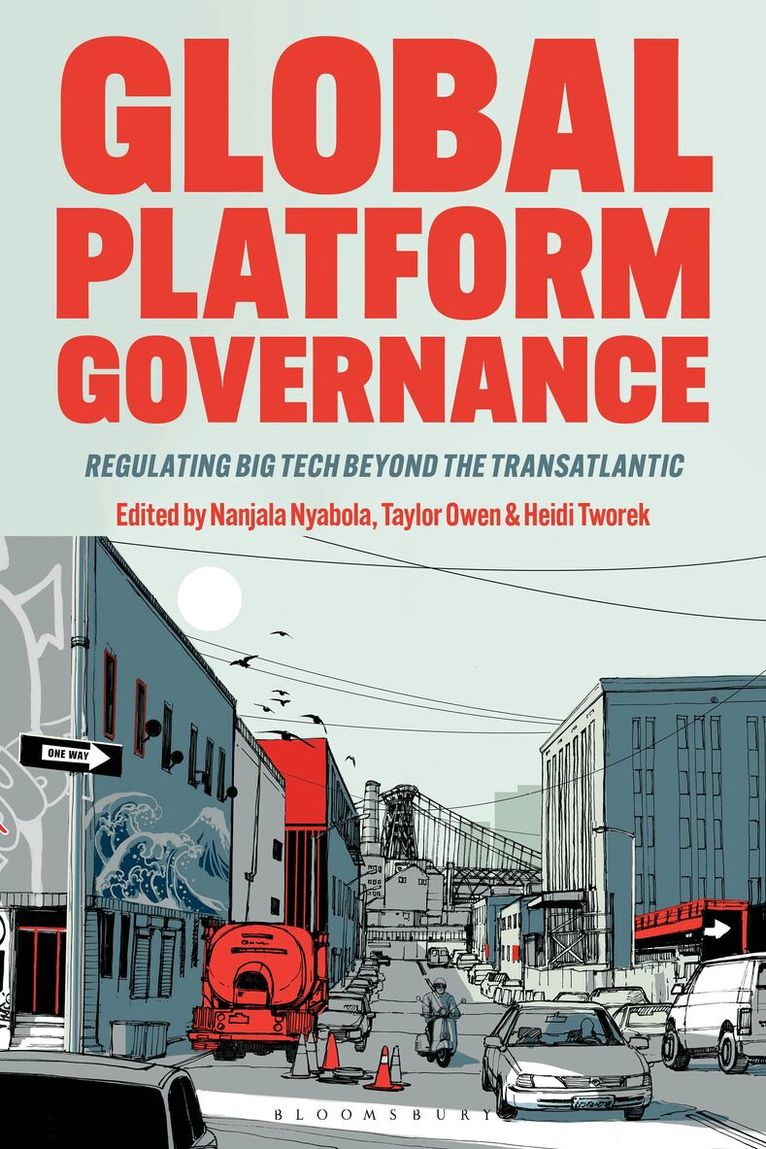
This is a field-defining open access playbook for identifying and responding to the global regulatory challenges created by large digital platforms.Here Nanjala Nyabola, Taylor Owen, and Heidi Tworek gather leading scholars and practitioners from around the world to deliberate key issues emerging from digital platforms across four topics: content, data, competition and infrastructure. From hate speech to disinformation, from algorithms to AI, from monopolistic tech giants to disruptive start-ups, and from 5G to cloud computing to the internet of things, this book offers exhaustive coverage of issues related to platform governance. Along the way, it pushes scholarly, practitioner, and policymaker communities to address the global nature of this challenge and to take seriously diverse global approaches to owning and regulating platforms. The eBook editions of this book are available open access under a CC BY-NC-ND 4.0 licence on bloomsburycollections.com. Open access was funded by University of British Columbia, Canada, and McGill University, Canada.
951 kr
Kommande
This is a field-defining open access playbook for identifying and responding to the global regulatory challenges created by large digital platforms.Here Nanjala Nyabola, Taylor Owen, and Heidi Tworek gather leading scholars and practitioners from around the world to deliberate key issues emerging from digital platforms across four topics: content, data, competition and infrastructure. From hate speech to disinformation, from algorithms to AI, from monopolistic tech giants to disruptive start-ups, and from 5G to cloud computing to the internet of things, this book offers exhaustive coverage of issues related to platform governance. Along the way, it pushes scholarly, practitioner, and policymaker communities to address the global nature of this challenge and to take seriously diverse global approaches to owning and regulating platforms. The eBook editions of this book are available open access under a CC BY-NC-ND 4.0 licence on bloomsburycollections.com. Open access was funded by University of British Columbia, Canada, and McGill University, Canada.
298 kr
Skickas inom 7-10 vardagar
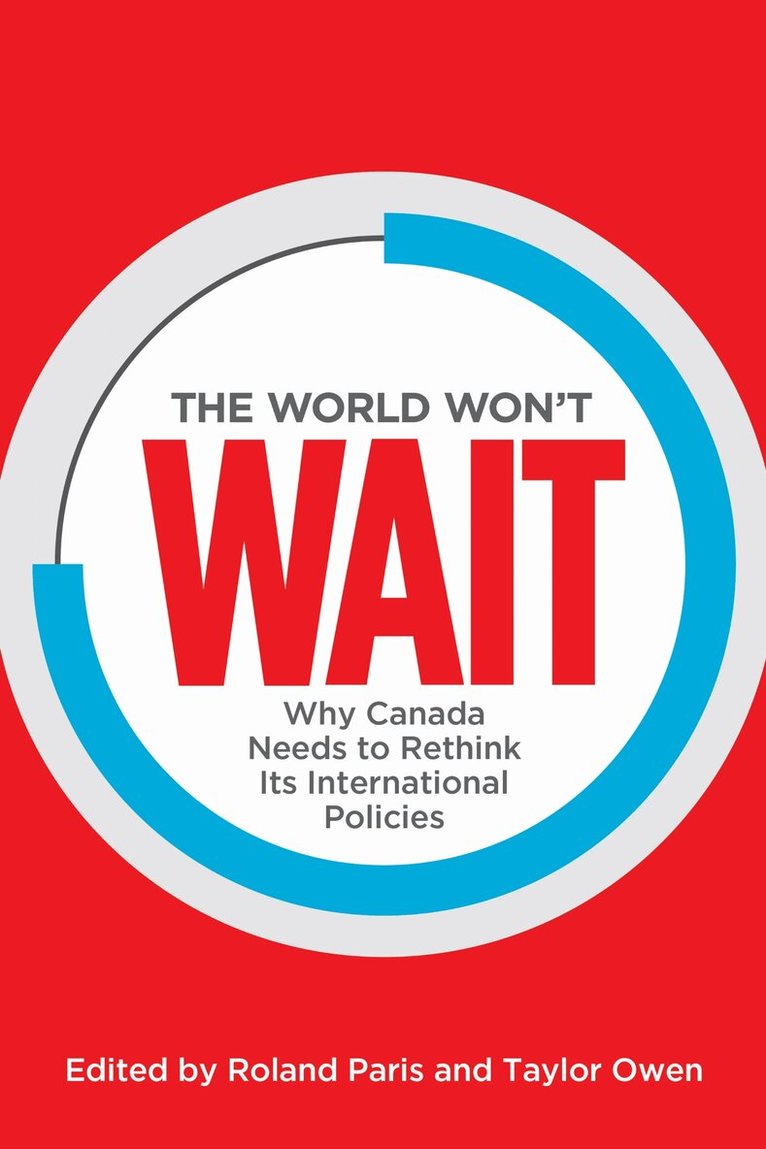
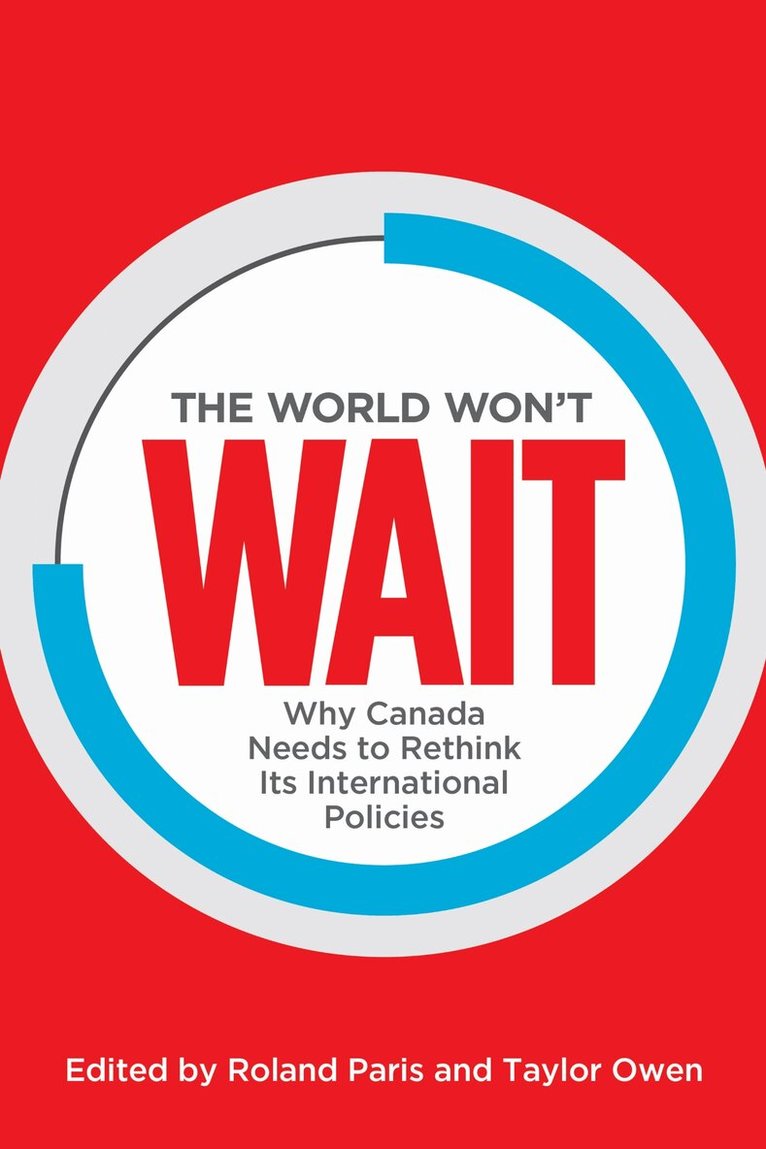
The need for an ambitious and forward-looking Canadian international strategy has never been greater. The worldwide changes that jeopardize Canadian security and prosperity are profound, ranging from the globalization of commerce, crime, and political extremism to the impact of climate change on the economy and environment. The reaction from Canada’s policymakers, at least so far, has been underwhelming.In The World Won’t Wait, some of Canada’s brightest thinkers respond. Covering both classic foreign policy issues such as international security, human rights, and global institutions and emerging issues like internet governance, climate change, and sustainable development, their essays offer fresh and provocative responses to today’s challenges and opportunities. The proposals are striking and the contributors diverse: Toronto’s chief city planner makes the case that Canada needs a global urban agenda, while a prominent mining executive explains how to revitalize the country’s position as a world leader in the sector. Their essays are sure to spark the kind of debate that Canada requires if its international policy is to evolve into the twenty-first century.
11 358 kr
Tillfälligt slut
Human security is understood as a response to the proliferation of new security threats which fit awkwardly within the relatively narrow confines of the traditional, state-centric national security paradigm. Human Security is a field of study that has emerged over the last 20 years. It is a sub-section of security studies but encompass a diverse range of academic disciplines and policy discourses (development studies, international relations, environmental studies, public health, economics, gender issues, human rights and foreign policy). It is also increasingly being adopted by policy-makers from individual nation states (Canada and Japan), bodies (European Union and the African Union) as well as institutionalized by the United Nations, and used by non-state actors in such as NGOs and the corporate sector. This volume serves as a valuable compilation of a disparate discourse, and a core reference for scholars and practitioners in a wide range of fields. Volume One: Concept and CritiqueVolume Two : As Critical Theory Volume Three: Policy and AdvocacyVolume Four: Methodologies and Tools