Tetsuya Sumi - Böcker
Visar alla böcker från författaren Tetsuya Sumi. Handla med fri frakt och snabb leverans.
4 produkter
4 produkter
1 319 kr
Kommande
A unique feature of this book is that it deals with sustainable management of river sediments by explicitly incorporating sediment management in the planning, design and operation of dams, both to extend reservoir life and to minimize downstream impacts of sediment starvation. This book takes a river system perspective first, explaining how dams (and other anthropic actions such as aggregate mining) disrupt continuity of sediment transport, the consequences of that disruption, and opportunities to sustainably manage sediments, especially by passing sediments through or around dams. The book also addresses the likely consequences of climate change on reservoir operation and sediment supply and transport. It is not the first book about reservoir sediment management, nor the most comprehensive. Rather, it has more emphasis on geomorphic and ecological processes in the larger fluvial system, emphasizes the fact that sustainable sediment management techniques could be applied much more widely than they are now, and it offers guidance as to when different techniques are applicable. It also explicitly critiques the conventional economics used in dam planning, and proposes alternative formulations that explicitly account for intergenerational equity as it relates to natural river systems and infrastructure (Annandale 2013).What the Book CoversThe book begins with an overview of river basin processes, including sediment transport, and effects of changed sediment supply (chapters 1-3). Chapter 4 covers upstream sediment management approaches such as check dams and soil conservation. Chapters 5-7 summarize sustainable sediment management in (and around/through) reservoirs. Chapter 8 explores sediment management in dam removals, usually the biggest issue in such projects. Chapter 9 provides a long-term perspective and explores the economics of managing reservoir capacity. Chapter 10 presents a set of case studies that compellingly illustrate the issues involved and opportunities to enhance sustainability, and Chapter 11 presents policy recommendations. The book will include simple, effective diagrams explaining fluvial geomorphic processes, human alterations, and sustainable sediment management techniques. Two examples are presented here. Figure 1, first published in Kondolf (1994), shows the zones of erosion, transport, and deposition of the ideal fluvial system as described by Schumm (1977), but with the addition of the analogy of a conveyor belt to emphasize that, viewed in geologic time, sediment is inevitably moving downstream through the zone of transport, and disruptions to this movement will have consequences. This figure has been reproduced and modified in subsequent publications by numerous authors. Figure 2, first published in Kondolf and Piégay (2010), depicts a fluvial system debouching on the coast and the effect of various anthropic actions on sediment production, transport, and deposition, and consequences for channel and coastal landforms.Contents1. Introduction (10pp)- continuity of fluxes through rivers: water, sediment, nutrients, biota- role of sediment in river systems- reservoirs and sustainable water supply and hydropower- influence of climate change2. Rivers, basins, and sediment processes (25pp)- Basin, idealized zones of erosion, transport, & deposition- coarse vs fine sediments- bedload vs suspended, bed material load vs washload- channel form and process, vegetation- sediment supply to coasts & deltas- role of sediments in fluvial ecology3. Changes in Sediment Supply (25pp)- mapping of sediment yield- effects of land use change (eg road construction, depopulation of rural areas)- effects of dams, `transparent’ vs `black hole’ reservoirs - effects of sand and gravel mining- anticipated effects of climate change5. Reservoir Sedimentation Management (40pp) - Upstream sediment supply management approaches- Routing - Sediment Removal - Efficiency of management strategies6. Sediment management and environmental consequences downstream of dams (40pp)- impact of dams on sediment budgets for rivers downstream of dams- ecological considerations related to sediment downstream of the dam. - remedial measures to offset downstream impacts- impacts of reservoir flushing- impacts of dredging (sediment discharge into the river vs. upland discharge)- impacts of reservoir sluicing flows - impacts of bypassing flows below reservoirs - coastal impacts and mitigation- impacts of reservoirs vs. other stressors (instream aggregate mining, flood channels, river training, elimination of floodplain storage, etc.)7. Managing sediment through multiple reservoirs (10pp)- sediment management for dams in series- sediment management for dams in parallel- the concept of dam cascades as a strategy to minimize overall impacts8. Sediment management during dam removal (15pp)- principles, techniques- case study: Elwha and Glines Canyon Dams, Elwha River - case study: San Clemente Dam, Carmel River9. Planning and managing reservoirs for sustainability (15pp)- intergenerational equity - balancing development (social) and environmental needs - reservoir storage – a renewable or exhaustible resource?- economics of exhaustible resources - dam siting- anticipating future sediment management in dam design- anticipating climate change- monitoring and evaluating effectiveness of sediment management10. Case studies (30pp) 5-6 to be selected from those listed below and others, for geographic and topical diversity- Mekong River –cumulative sediment trapping, delta impacts- Prado Dam, Santa Ana River – removing sediment from reservoir and introducing it downstream - Tarbela Dam – poor design and planning, effects on downstream river and infrastructure, sediment removal order of magnitude more expensive than original cost to build dam - Nile River – projected cumulative sediment trapping, transboundary impacts- Mississippi River – sediment starvation in delta- San Gabriel River – sediment routing, political constraints in urban area- Dahan River – sabo dams, Barlin dam failure, density current venting through Shihman Reservoir - Rhone River - ecological flushing - Kurobe River – coordinated flushing- Asahi River – bypassing11. Policy Recommendations (20pp)- all dam proposals/plans should address sedimentation- plan over sufficiently large temporal & spatial scales (addressing transboundary issues)- adopt a life-cycle approach to design/management of reservoirs- dams are not the only factor: - manage construction aggregate supply and demand on regional scale - consider channel-floodplain sediment exchange (eg, overbank sedimentation processes)
5 010 kr
Skickas inom 7-10 vardagar
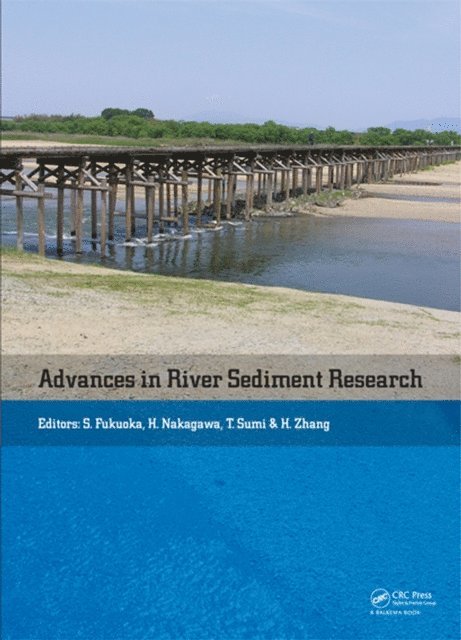
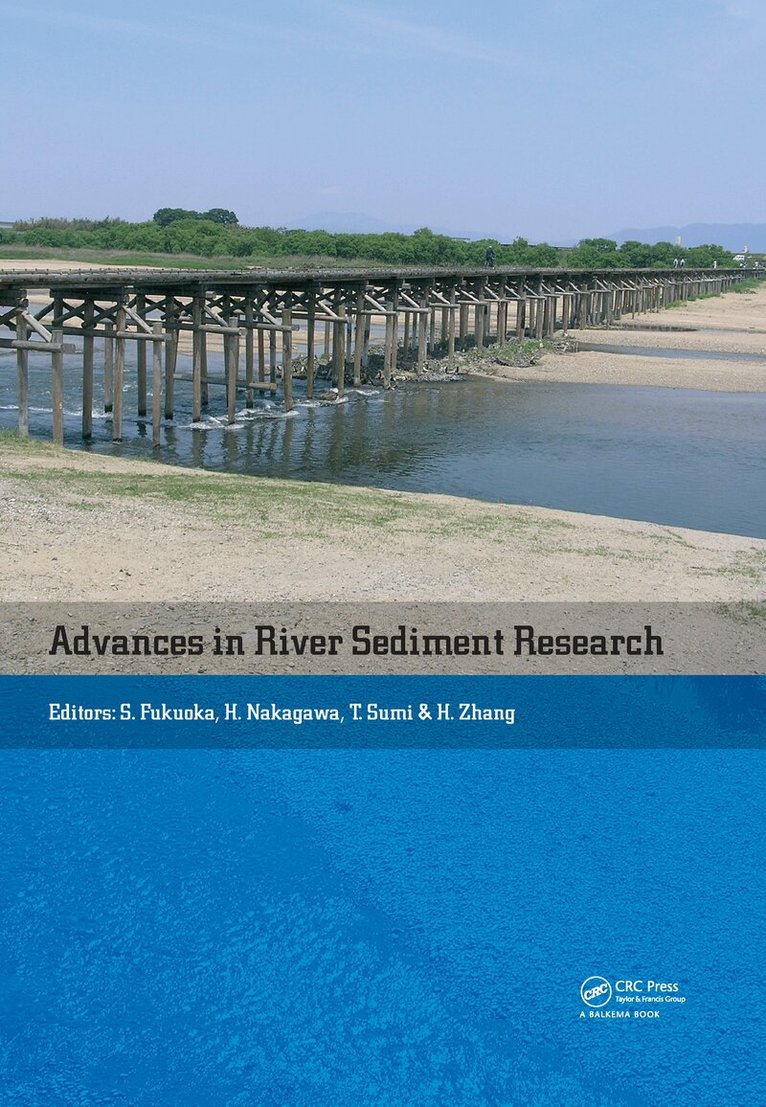
Sediments, which constitute the surface of the Earth, start their journey to rivers with the energy obtained from rainfalls, fl oods and other natural processes. Due to transport of sediments, rivers develop with various appearances and functions, and play a crucial role in the activities of human beings and the life cycles of other species. River sediment, as a conventional topic for river management, has been the topic of continuing research since ancient times, and since then significant progresses in river sediment research has been made. Nowadays, river sediment is much more connected to the activities of mankind and other species, following the increasing awareness of the co-existence of humans and nature.Advances in River Sediment Research comprises the proceedings of the 12th International Symposium on River Sedimentation (ISRS2013, Kyoto, Japan, 2-5 September 2013). The book contains two keynote papers and 274 peer-reviewed regular contributions from all over the world, and covers recent accomplishments in theoretical developments, numerical simulations, laboratory experiments, field investigations and management methodologies of river sediment related issues. The book may serve as a reference book for graduate students, researchers, engineers and practitioners in disciplines of hydraulic, environmental, agricultural and geological engineering.
Wadi Flash Floods
Challenges and Advanced Approaches for Disaster Risk Reduction
Inbunden, Engelska, 2021
534 kr
Skickas inom 10-15 vardagar
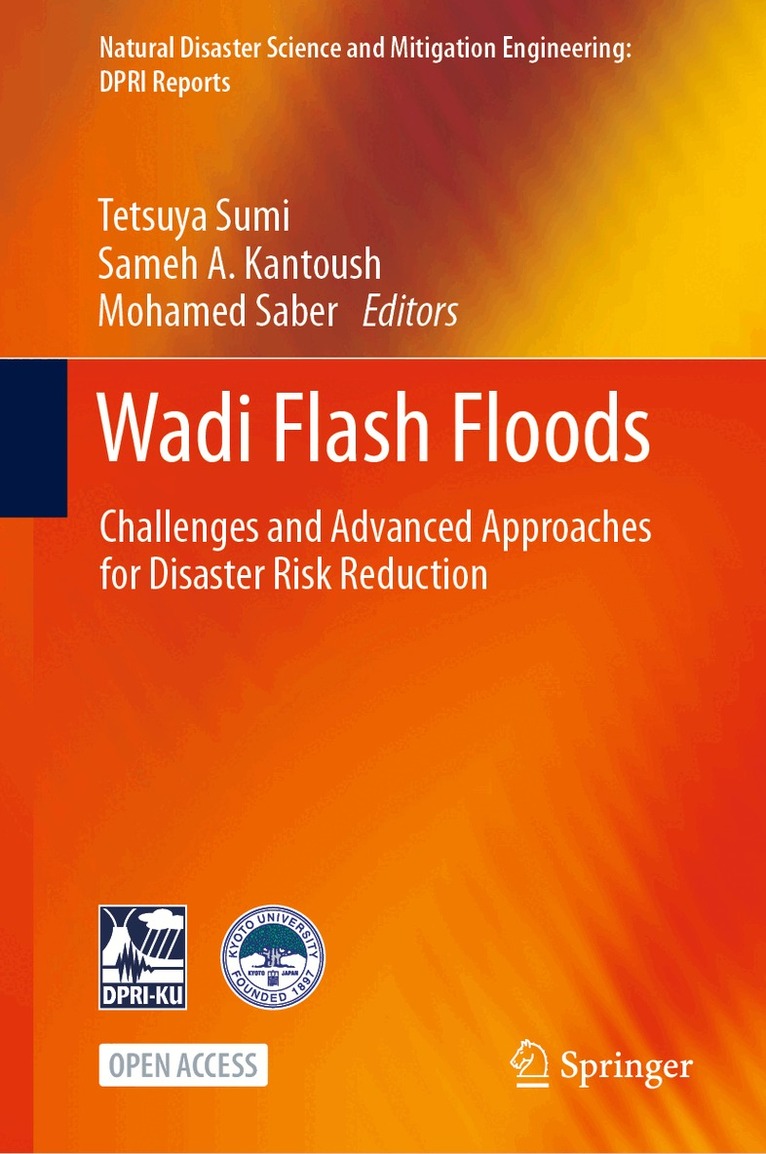
This open access book brings together research studies, developments, and application-related flash flood topics on wadi systems in arid regions. The major merit of this comprehensive book is its focus on research and technical papers as well as case study applications in different regions worldwide that cover many topics and answer several scientific questions.The book chapters comprehensively and significantly highlight different scientific research disciplines related to wadi flash floods, including climatology, hydrological models, new monitoring techniques, remote sensing techniques, field investigations, international collaboration projects, risk assessment and mitigation, sedimentation and sediment transport, and groundwater quality and quantity assessment and management.In this book, the contributing authors (engineers, researchers, and professionals) introduce their recent scientific findings to develop suitable, applicable, and innovative tools forforecasting, mitigation, and water management as well as society development under seven main research themes as follows:Part 1. Wadi Flash Flood Challenges and StrategiesPart 2. Hydrometeorology and Climate ChangesPart 3. Rainfall–Runoff Modeling and ApproachesPart 4. Disaster Risk Reduction and MitigationPart 5. Reservoir Sedimentation and Sediment YieldPart 6. Groundwater ManagementPart 7. Application and Case StudiesThe book includes selected high-quality papers from five series of the International Symposium on Flash Floods in Wadi Systems (ISFF) that were held in 2015, 2016, 2017, 2018, and 2020 in Japan, Egypt, Oman, Morocco, and Japan, respectively. These collections of chapters could provide valuable guidance and scientific content not only for academics, researchers, and students but also for decision-makers in the MENA region and worldwide.
Wadi Flash Floods
Challenges and Advanced Approaches for Disaster Risk Reduction
Häftad, Engelska, 2021
429 kr
Skickas inom 10-15 vardagar
This open access book brings together research studies, developments, and application-related flash flood topics on wadi systems in arid regions. The major merit of this comprehensive book is its focus on research and technical papers as well as case study applications in different regions worldwide that cover many topics and answer several scientific questions.The book chapters comprehensively and significantly highlight different scientific research disciplines related to wadi flash floods, including climatology, hydrological models, new monitoring techniques, remote sensing techniques, field investigations, international collaboration projects, risk assessment and mitigation, sedimentation and sediment transport, and groundwater quality and quantity assessment and management.In this book, the contributing authors (engineers, researchers, and professionals) introduce their recent scientific findings to develop suitable, applicable, and innovative tools forforecasting, mitigation, and water management as well as society development under seven main research themes as follows:Part 1. Wadi Flash Flood Challenges and StrategiesPart 2. Hydrometeorology and Climate ChangesPart 3. Rainfall–Runoff Modeling and ApproachesPart 4. Disaster Risk Reduction and MitigationPart 5. Reservoir Sedimentation and Sediment YieldPart 6. Groundwater ManagementPart 7. Application and Case StudiesThe book includes selected high-quality papers from five series of the International Symposium on Flash Floods in Wadi Systems (ISFF) that were held in 2015, 2016, 2017, 2018, and 2020 in Japan, Egypt, Oman, Morocco, and Japan, respectively. These collections of chapters could provide valuable guidance and scientific content not only for academics, researchers, and students but also for decision-makers in the MENA region and worldwide.