Thomas M. Duffy – författare
2 892 kr
Skickas inom 10-15 vardagar
955 kr
Skickas inom 10-15 vardagar
694 kr
Skickas inom 10-15 vardagar
1 023 kr
Skickas inom 10-15 vardagar
1 144 kr
Läs direkt efter köp
Learner-Centered Theory and Practice in Distance Education: Cases From Higher Education brings the voice of the learning sciences to the study and design of distance learning. The contributors examine critical issues in the design of theoretically and pedagogically based distance education programs. Eight distance education programs are described in enough detail to allow readers with different interests to understand the pedagogical approaches and the implications of implementing those approaches. Issues of theory, pedagogy, design, assessment, communities of practice, collaboration, and faculty development are discussed.Each section of the book includes: *a primary chapter written by an author or authors involved with a distance education program that reflects learner-centered principles;*a formal reaction to the chapter by a specialist from the learning sciences, educational evaluation and policy, administration, or the corporate sector with expertise in issues of distance learning; and *an edited transcript of the authors'' discussion of the primary chapter held at a symposium at the Asilomar Conference Center. A final "summing up" section offers two perspectives--from leading scholars outside the fields of instructional design, evaluation, and the learning sciences--on the approaches and thinking reflected in the rest of the book. This book is essential for researchers, as well as all those engaged in delivering, supporting, or administrating distance education programs at the post-secondary level. The descriptions, strategies, and principles will inform the design of continuing education, as well as degree-based education and corporate education and training, and distance education programs for adults.
1 144 kr
Läs direkt efter köp
Learner-Centered Theory and Practice in Distance Education: Cases From Higher Education brings the voice of the learning sciences to the study and design of distance learning. The contributors examine critical issues in the design of theoretically and pedagogically based distance education programs. Eight distance education programs are described in enough detail to allow readers with different interests to understand the pedagogical approaches and the implications of implementing those approaches. Issues of theory, pedagogy, design, assessment, communities of practice, collaboration, and faculty development are discussed.Each section of the book includes: *a primary chapter written by an author or authors involved with a distance education program that reflects learner-centered principles;*a formal reaction to the chapter by a specialist from the learning sciences, educational evaluation and policy, administration, or the corporate sector with expertise in issues of distance learning; and *an edited transcript of the authors'' discussion of the primary chapter held at a symposium at the Asilomar Conference Center. A final "summing up" section offers two perspectives--from leading scholars outside the fields of instructional design, evaluation, and the learning sciences--on the approaches and thinking reflected in the rest of the book. This book is essential for researchers, as well as all those engaged in delivering, supporting, or administrating distance education programs at the post-secondary level. The descriptions, strategies, and principles will inform the design of continuing education, as well as degree-based education and corporate education and training, and distance education programs for adults.
1 078 kr
Läs direkt efter köp
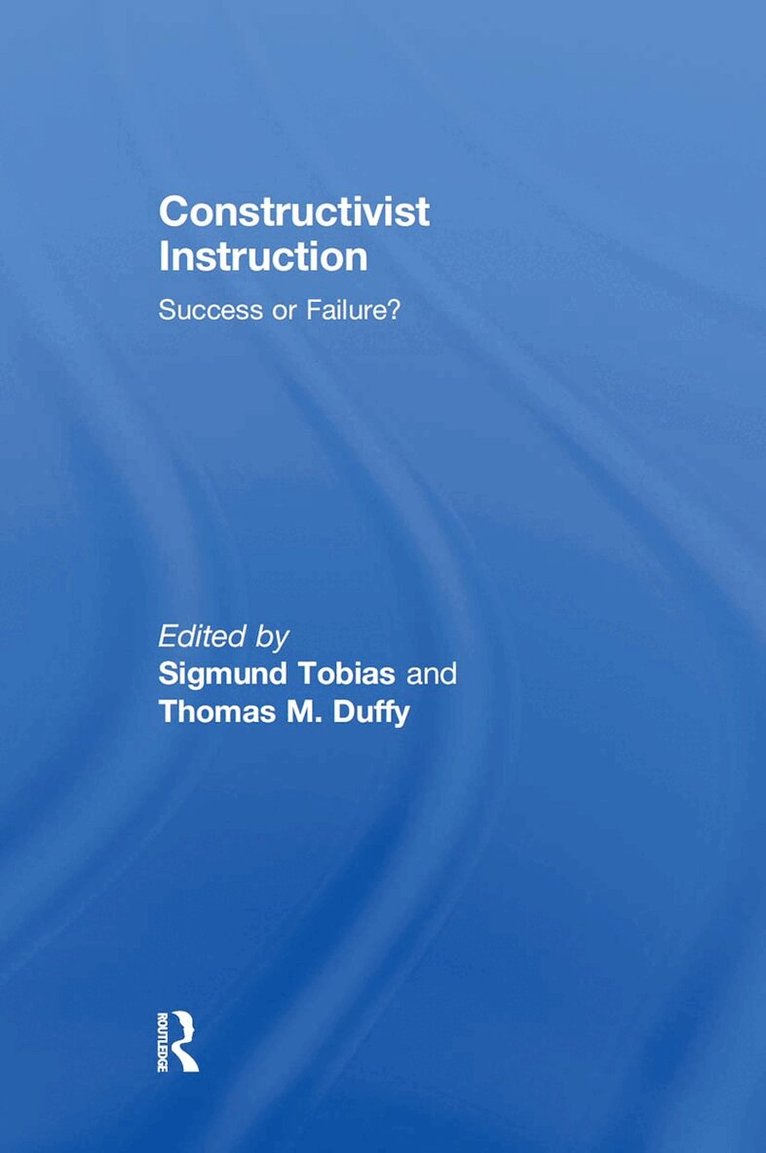
Constructivist Instruction: Success or Failure? brings together leading thinkers from both sides of the hotly debated controversy about constructivist approaches to instruction. Although constructivist theories and practice now dominate the fields of the learning sciences, instructional technology, curriculum and teaching, and educational psychology, they have also been the subject of sharp criticism regarding sparse research support and adverse research findings. This volume presents:
the evidence for and against constructivism;
the challenges from information-processing theorists; and
commentaries from leading researchers in areas such as text comprehension, technology, as well as math and science education, who discuss the constructivist framework from their perspectives.
Chapters present detailed views from both sides of the controversy. A distinctive feature of the book is the dialogue built into it between the different positions. Each chapter concludes with discussions in which two authors with opposing views raise questions about the chapter, followed by the author(s)’ responses to those questions; for some chapters there are several cycles of questions and answers. These discussions, and concluding chapters by the editors, clarify, and occasionally narrow the differences between positions and identify needed research.
1 078 kr
Läs direkt efter köp
Constructivist Instruction: Success or Failure? brings together leading thinkers from both sides of the hotly debated controversy about constructivist approaches to instruction. Although constructivist theories and practice now dominate the fields of the learning sciences, instructional technology, curriculum and teaching, and educational psychology, they have also been the subject of sharp criticism regarding sparse research support and adverse research findings. This volume presents:
the evidence for and against constructivism;
the challenges from information-processing theorists; and
commentaries from leading researchers in areas such as text comprehension, technology, as well as math and science education, who discuss the constructivist framework from their perspectives.
Chapters present detailed views from both sides of the controversy. A distinctive feature of the book is the dialogue built into it between the different positions. Each chapter concludes with discussions in which two authors with opposing views raise questions about the chapter, followed by the author(s)’ responses to those questions; for some chapters there are several cycles of questions and answers. These discussions, and concluding chapters by the editors, clarify, and occasionally narrow the differences between positions and identify needed research.
817 kr
Läs direkt efter köp
This book is about the implications of constructivism for instructional design practices, and more importantly, it is about a dialogue between instructional developers and learning theorists. Working with colleagues in each discipline, the editors were amazed to find a general lack of familiarity with each others'' work. From an instructional design perspective, it seems that the practice of instructional design must be based on some conception of how people learn and what it means to learn. From a learning theory perspective, it seems obvious that the value of learning theory rests in the ability to predict the impact of alternative learning environments or instructional practices on what is learned. Thus the interchange of ideas between these disciplines is essential. As a consequence of both the information rich environment and the technological capability, business is seen moving away from a fixed curriculum and toward providing information and instruction when it is needed. These changes bring about a window of opportunity establishing a dialogue that will provide for a richer understanding of learning and the instructional environment required to achieve that learning. The editors hope that this book is the beginning of the conversation and that it will serve to spur continued conversation between those involved in learning theory and those involved in the design of instruction.
817 kr
Läs direkt efter köp
This book is about the implications of constructivism for instructional design practices, and more importantly, it is about a dialogue between instructional developers and learning theorists. Working with colleagues in each discipline, the editors were amazed to find a general lack of familiarity with each others'' work. From an instructional design perspective, it seems that the practice of instructional design must be based on some conception of how people learn and what it means to learn. From a learning theory perspective, it seems obvious that the value of learning theory rests in the ability to predict the impact of alternative learning environments or instructional practices on what is learned. Thus the interchange of ideas between these disciplines is essential. As a consequence of both the information rich environment and the technological capability, business is seen moving away from a fixed curriculum and toward providing information and instruction when it is needed. These changes bring about a window of opportunity establishing a dialogue that will provide for a richer understanding of learning and the instructional environment required to achieve that learning. The editors hope that this book is the beginning of the conversation and that it will serve to spur continued conversation between those involved in learning theory and those involved in the design of instruction.
2 545 kr
Skickas inom 10-15 vardagar
783 kr
Läs direkt efter köp
1 459 kr
Läs direkt efter köp
1 171 kr
Skickas inom 10-15 vardagar
363 kr
Tillfälligt slut
575 kr
Läs direkt efter köp