Thomas Oliver Beebee - Böcker
Visar alla böcker från författaren Thomas Oliver Beebee. Handla med fri frakt och snabb leverans.
12 produkter
12 produkter
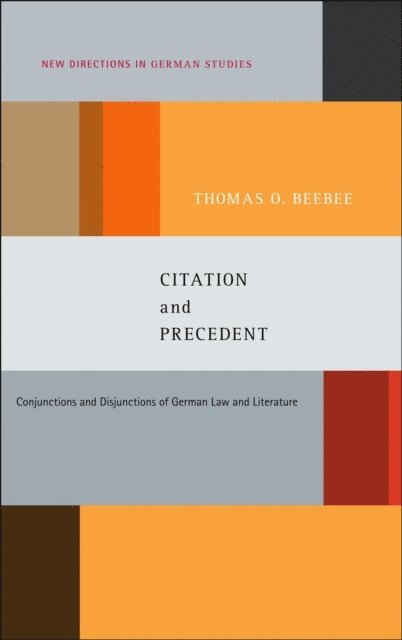
Citation and Precedent
Conjunctions and Disjunctions of German Law and Literature
Inbunden, Engelska, 2011
2 108 kr
Skickas inom 10-15 vardagar
This book traces a history of the sometimes fraught relationship between German law and literature in the modern period, from Grimm to Schmitt. Among Western literatures, only the German-speaking countries can boast a list of world-class writers such as Goethe, Hoffmann, Kleist, Kafka, Schmitt, and Schlink who were trained as legal scholars. Yet this list only scratches the surface of the complex interactions between German law and literature. It can be supplemented, for example, with the unique interventions of the legal system into literature, ranging from early 20th century attempts to save literature from the tidal wave of Schund (pulp fiction) to audiences suing theaters over the improper production of classics in the 21st. The long list of instances where German literature cites law, or where German law serves literature as a precedent, signal the dream of German culture for a unity of interests and objectives between spheres of activity. Yet the very vitality of this dream stems from real historical and social processes that increasingly autonomize and separate these domains from each other.Beebee examines the history of this dialectical tension through close readings of numerous cases in the modern era, ranging from Grimm to Schmitt. This series offers a forum for the publication of new works in all areas of German Studies (German, Austrian, and Swiss literature, culture, and cinema from any period). New Directions in German Studies welcomes proposals that offer a fresh perspective on any vibrant aspect of the field. A long and venerable tradition of "Germanistik" has been opened up in exciting ways in the past few decades. The series taps into that tradition and its growth into "German Studies," reframing aspects of the discipline in light of concerns germane to these fields: German, Austrian, or Swiss national identity and aesthetics; historical approaches to German-language literature and cinema; the legacy of the Holocaust and its influence on aesthetics; politics and aesthetics; issues of canonization and periodization; the place of gender, queer, and postcolonial studies within German Studies; the aesthetics of exile; myth and national identity; cross-cultural dialogues and aesthetics; material culture; German-language aesthetics and globalization.We welcome interdisciplinary approaches to the analysis of the rich intellectual and cultural histories of the German-speaking countries and areas. We are interested in projects focusing on hitherto under represented authors and filmmakers as well as those that seek to reframe canonical works in light of new perspectives and methodologies.
607 kr
Skickas inom 10-15 vardagar
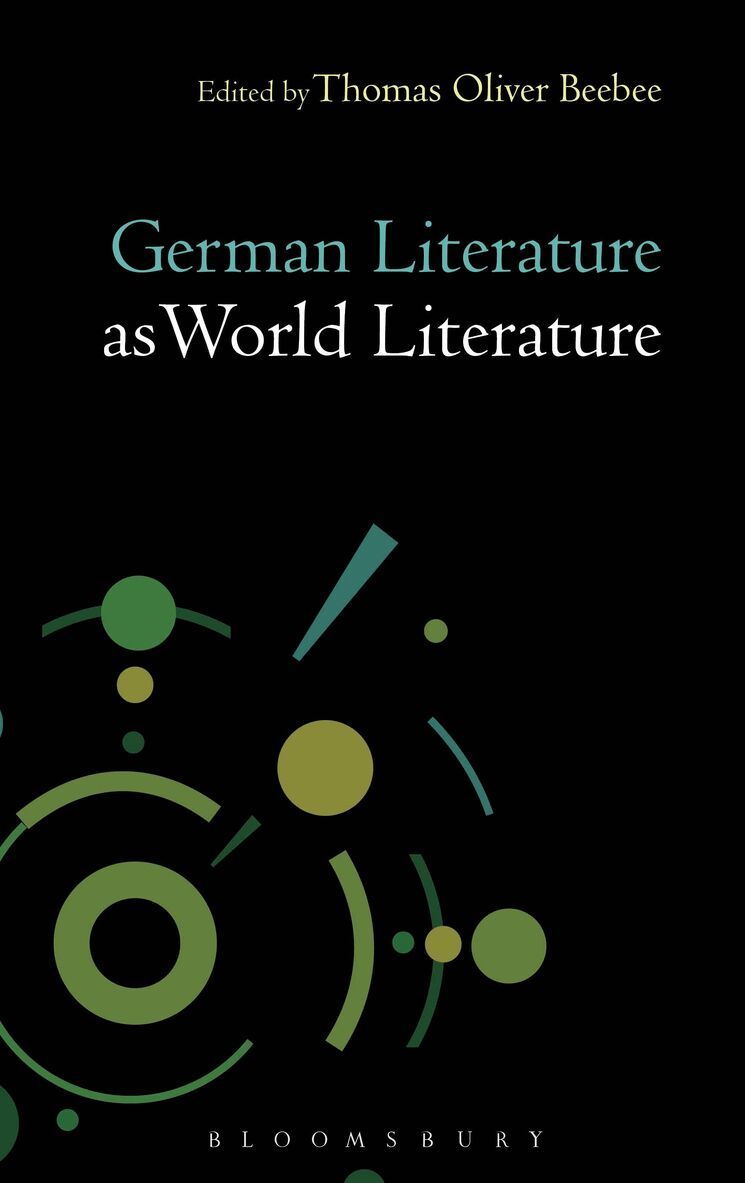
This new collection investigates German literature in its international dimensions. While no single volume can deal comprehensively with such a vast topic, the nine contributors cover a wide historical range, with a variety of approaches and authors represented. Together, the essays begin to adumbrate the systematic nature of the relations between German national literature and world literature as these have developed through institutions, cultural networks, and individual authors.In the last two decades, discussions of world literature—literature that resonates beyond its original linguistic and cultural contexts—have come increasingly to the forefront of theoretical investigations of literature. One reason for the explosion of world literature theory, pedagogy and methodology is the difficulty of accomplishing either world literature criticism, or world literary history. The capaciousness, as well as the polylingual and multicultural features of world literature present formidable obstacles to its study, and call for a collaborative approach that conjoins a variety of expertise. To that end, this collection contributes to the critical study of world literature in its textual, institutional, and translatorial reality, while at the same time highlighting a question that has hitherto received insufficient scholarly attention: what is the relation between national and world literatures, or, more specifically, in what senses do national literatures systematically participate in (or resist) world literature?
2 108 kr
Skickas inom 10-15 vardagar
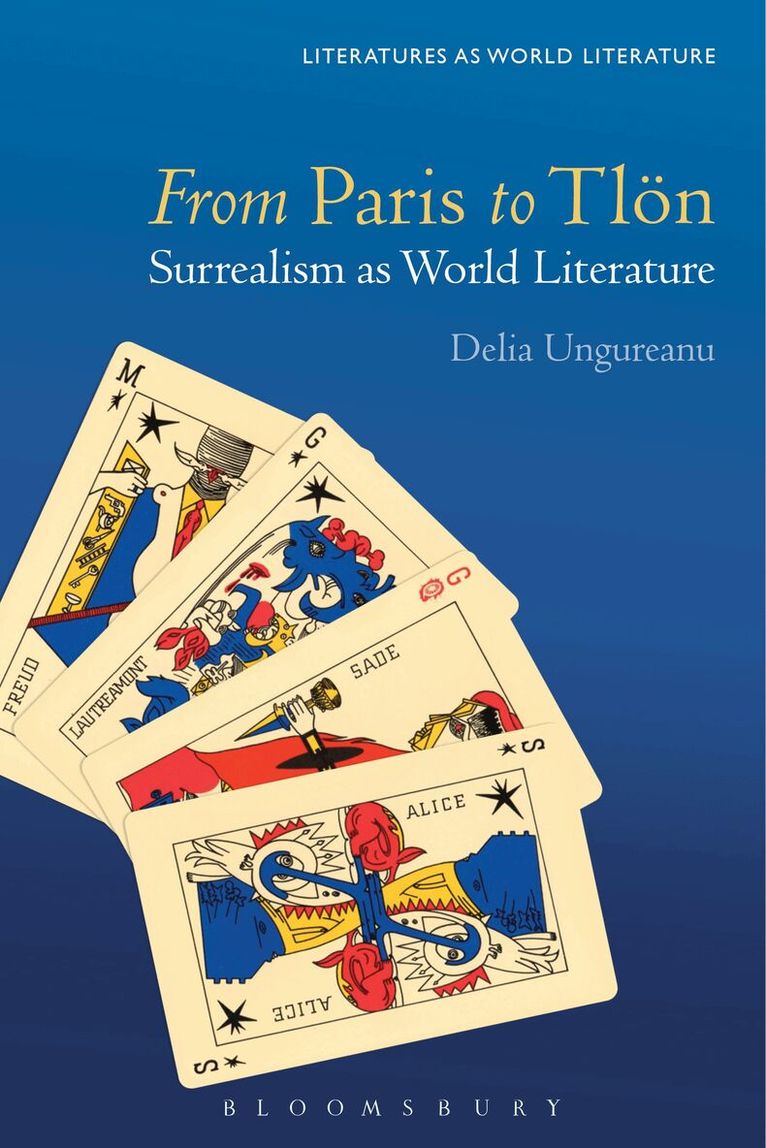
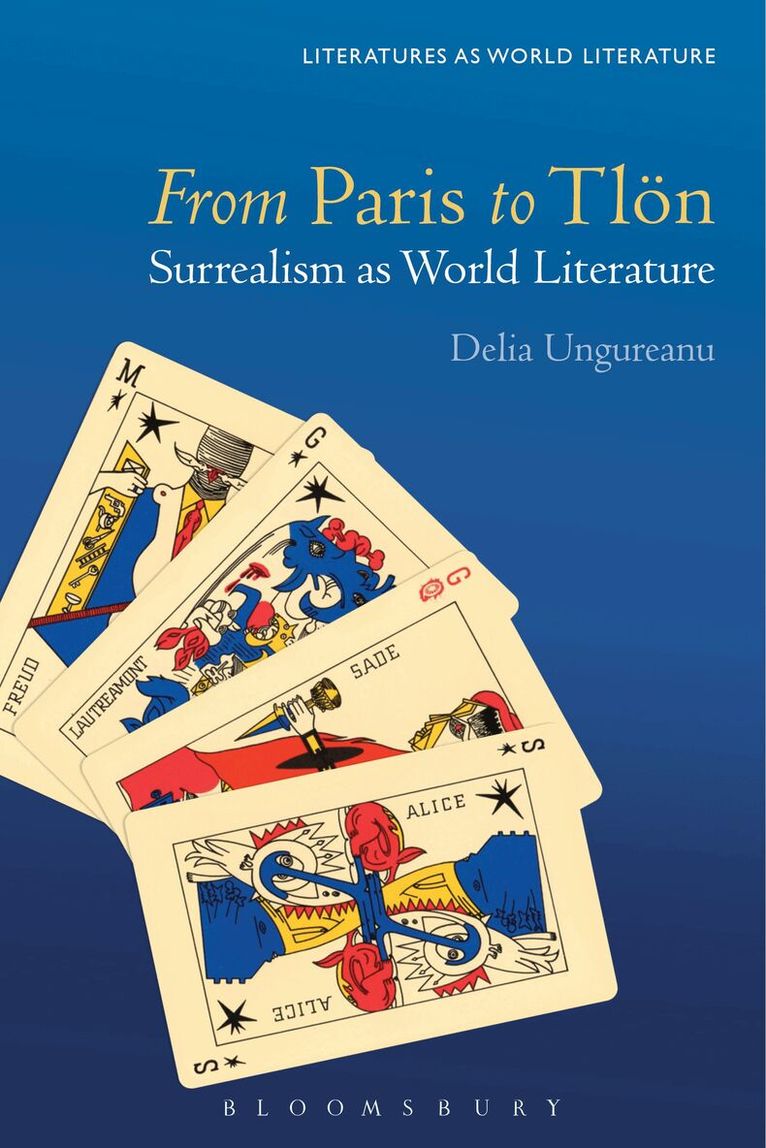
Best International Debut in 2017 (awarded by Romanian General and Comparative Literature Association) Most Prestigious Publication in the Humanities (awarded by the Senate of the University of Bucharest)Surrealism began as a movement in poetry and visual art, but it turned out to have its widest impact worldwide in fiction—including in major world writers who denied any connection to surrealism at all. At the heart of this book are discoveries Delia Ungureanu has made in the archives of Harvard’s Widener and Houghton libraries, where she has found that Jorge Luis Borges and Vladimir Nabokov were greatly indebted to surrealism for the creation of the pivotal characters who brought them world fame: Pierre Menard and Lolita. In From Paris to Tlön: Surrealism as World Literature, Ungureanu explores the networks of transmission and transformation that turned an avant-garde Parisian movement into a global literary phenomenon.From Paris to Tlön gives a fresh account of surrealism’s surprising success, exploring the process of artistic transfer by which the surrealist object rapidly evolved from a purely poetic conception to a mainstay of surrealist visual art and then a key element in late modernist and postmodern fiction, from Borges and Nabokov to such disparate writers as Gabriel García Márquez, Haruki Murakami, and Orhan Pamuk in the 21st century.
1 544 kr
Skickas inom 10-15 vardagar
Honorable Mention, Harry Levin Prize, 2022 (American Comparative Literature Association)Beyond English: World Literature and India radically alters the debates on world literature that hinge on the model of circulation and global capital by deeply engaging with the idea of the world and world-making in South Asia. Tiwari argues that Indic words for world (vishva, jagat, sansar) offer a nuanced understanding of world literature that is antithetical to a commodified and standardized monolingual globe. She develops a comparative study of the concept of “world literature” (vishva sahitya) in Rabindranath Tagore’s works, the desire for a new world in the lyrics of the Hindi shadowism (chhayavaad) poets, and world-making in Thakazhi Sivasankara Pillai’s Chemmeen (1956) and Arundhati Roy’s The God of Small Things (1997).By emphasizing the centrality of “literature” (sahitya) through a close reading of texts, Tiwari orients world literature toward comparative literature and comparative literature toward a worldliness that is receptive to the poetics of a world in its original language and in translation.
561 kr
Skickas inom 10-15 vardagar
Best International Debut in 2017 (awarded by Romanian General and Comparative Literature Association) Most Prestigious Publication in the Humanities (awarded by the Senate of the University of Bucharest)Surrealism began as a movement in poetry and visual art, but it turned out to have its widest impact worldwide in fiction—including in major world writers who denied any connection to surrealism at all. At the heart of this book are discoveries Delia Ungureanu has made in the archives of Harvard’s Widener and Houghton libraries, where she has found that Jorge Luis Borges and Vladimir Nabokov were greatly indebted to surrealism for the creation of the pivotal characters who brought them world fame: Pierre Menard and Lolita. In From Paris to Tlön: Surrealism as World Literature, Ungureanu explores the networks of transmission and transformation that turned an avant-garde Parisian movement into a global literary phenomenon.From Paris to Tlön gives a fresh account of surrealism’s surprising success, exploring the process of artistic transfer by which the surrealist object rapidly evolved from a purely poetic conception to a mainstay of surrealist visual art and then a key element in late modernist and postmodern fiction, from Borges and Nabokov to such disparate writers as Gabriel García Márquez, Haruki Murakami, and Orhan Pamuk in the 21st century.
1 544 kr
Skickas inom 10-15 vardagar
"A model of academic praxis." - Public BooksElena Ferrante as World Literature is the first English-language monograph on Italian writer Elena Ferrante, whose four Neapolitan Novels (2011-2014) became a global phenomenon. The book proposes that Ferrante constructs a theory of feminine experience which serves as the scaffolding for her own literary practice. Drawing on the writer’s entire textual corpus to date, Stiliana Milkova examines the linguistic, psychical, and corporeal-spatial realities that constitute the female subjects Ferrante has theorized. At stake in Ferrante’s theory/practice is the articulation of a feminine subjectivity that emerges from the structures of patriarchal oppression and that resists, bypasses, or subverts these very structures. Milkova’s inquiry proceeds from Ferrante’s theory of frantumaglia and smarginatura to explore mechanisms for controlling and containing the female body and mind, forms of female authorship and creativity, and corporeal negotiations of urban topography and patriarchal space. Elena Ferrante as World Literature sets forth an interdisciplinary framework for understanding Ferrante's texts and offers an account of her literary and cultural significance today.
499 kr
Skickas inom 10-15 vardagar
"A model of academic praxis." - Public BooksElena Ferrante as World Literature is the first English-language monograph on Italian writer Elena Ferrante, whose four Neapolitan Novels (2011-2014) became a global phenomenon. The book proposes that Ferrante constructs a theory of feminine experience which serves as the scaffolding for her own literary practice. Drawing on the writer’s entire textual corpus to date, Stiliana Milkova examines the linguistic, psychical, and corporeal-spatial realities that constitute the female subjects Ferrante has theorized. At stake in Ferrante’s theory/practice is the articulation of a feminine subjectivity that emerges from the structures of patriarchal oppression and that resists, bypasses, or subverts these very structures. Milkova’s inquiry proceeds from Ferrante’s theory of frantumaglia and smarginatura to explore mechanisms for controlling and containing the female body and mind, forms of female authorship and creativity, and corporeal negotiations of urban topography and patriarchal space. Elena Ferrante as World Literature sets forth an interdisciplinary framework for understanding Ferrante's texts and offers an account of her literary and cultural significance today.
469 kr
Skickas inom 10-15 vardagar
Honorable Mention, Harry Levin Prize, 2022 (American Comparative Literature Association)Beyond English: World Literature and India radically alters the debates on world literature that hinge on the model of circulation and global capital by deeply engaging with the idea of the world and world-making in South Asia. Tiwari argues that Indic words for world (vishva, jagat, sansar) offer a nuanced understanding of world literature that is antithetical to a commodified and standardized monolingual globe. She develops a comparative study of the concept of “world literature” (vishva sahitya) in Rabindranath Tagore’s works, the desire for a new world in the lyrics of the Hindi shadowism (chhayavaad) poets, and world-making in Thakazhi Sivasankara Pillai’s Chemmeen (1956) and Arundhati Roy’s The God of Small Things (1997).By emphasizing the centrality of “literature” (sahitya) through a close reading of texts, Tiwari orients world literature toward comparative literature and comparative literature toward a worldliness that is receptive to the poetics of a world in its original language and in translation.
1 160 kr
Skickas inom 10-15 vardagar
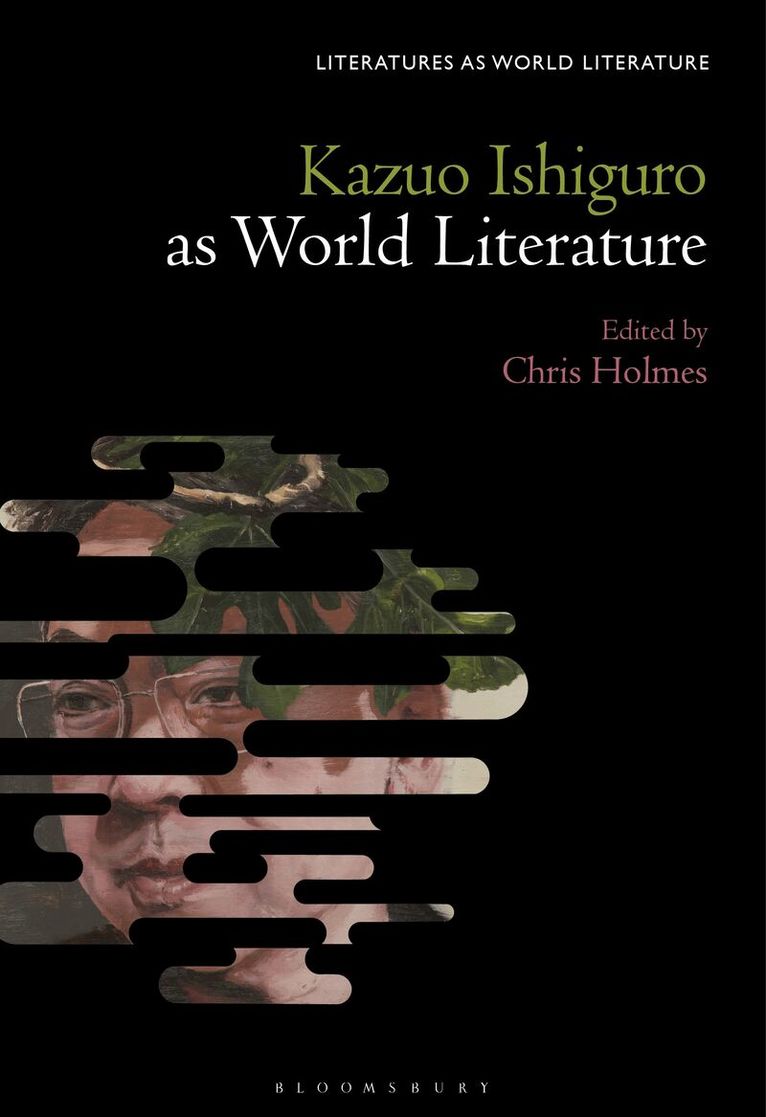
A study of how Kazuo Ishiguro’s novels respond to and represent the world through characters that are profoundly limited in their understanding of the systems that bind them.How has a writer known principally for his contained domestic novels come to represent the most dynamic elements of world literature? In Kazuo Ishiguro Against World Literature, Chris Holmes expands our understanding of how world literature engages with the most pressing crises of the 20th and 21st centuries by examining Ishiguro’s fascination with characters who are profoundly constrained in their ability to understand global systems to which they are subject. Rather than following the established pattern of so-called global novels, which crisscross the planet exhibiting a knowing cosmopolitanism, Ishiguro’s fictional engagement with the world comes principally in the form of characters who are cut off from the global systems that abuse them. By examining the ways in which Ishiguro foregrounds the in-process thinking of those who fail to comprehend their place in the flow of politics, culture, and ideas, Holmes positions Ishiguro as the great chronicler of everyday lives, and as such, prepares a mode of reading world literature that questions the assumptions for how we live and think with others when each of us is deeply limited.
481 kr
Kommande
A study of how Kazuo Ishiguro’s novels respond to and represent the world through characters that are profoundly limited in their understanding of the systems that bind them.How has a writer known principally for his contained domestic novels come to represent the most dynamic elements of world literature? In Kazuo Ishiguro Against World Literature, Chris Holmes expands our understanding of how world literature engages with the most pressing crises of the 20th and 21st centuries by examining Ishiguro’s fascination with characters who are profoundly constrained in their ability to understand global systems to which they are subject. Rather than following the established pattern of so-called global novels, which crisscross the planet exhibiting a knowing cosmopolitanism, Ishiguro’s fictional engagement with the world comes principally in the form of characters who are cut off from the global systems that abuse them. By examining the ways in which Ishiguro foregrounds the in-process thinking of those who fail to comprehend their place in the flow of politics, culture, and ideas, Holmes positions Ishiguro as the great chronicler of everyday lives, and as such, prepares a mode of reading world literature that questions the assumptions for how we live and think with others when each of us is deeply limited.
1 958 kr
Skickas inom 10-15 vardagar
This new collection investigates German literature in its international dimensions. While no single volume can deal comprehensively with such a vast topic, the nine contributors cover a wide historical range, with a variety of approaches and authors represented. Together, the essays begin to adumbrate the systematic nature of the relations between German national literature and world literature as these have developed through institutions, cultural networks, and individual authors.In the last two decades, discussions of world literature—literature that resonates beyond its original linguistic and cultural contexts—have come increasingly to the forefront of theoretical investigations of literature. One reason for the explosion of world literature theory, pedagogy and methodology is the difficulty of accomplishing either world literature criticism, or world literary history. The capaciousness, as well as the polylingual and multicultural features of world literature present formidable obstacles to its study, and call for a collaborative approach that conjoins a variety of expertise. To that end, this collection contributes to the critical study of world literature in its textual, institutional, and translatorial reality, while at the same time highlighting a question that has hitherto received insufficient scholarly attention: what is the relation between national and world literatures, or, more specifically, in what senses do national literatures systematically participate in (or resist) world literature?
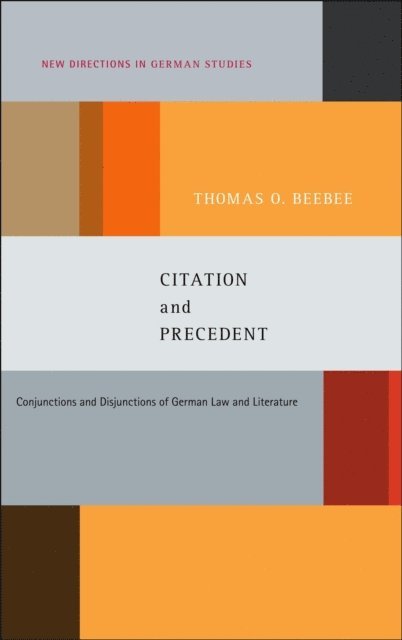
Citation and Precedent
Conjunctions and Disjunctions of German Law and Literature
Häftad, Engelska, 2014
515 kr
Skickas inom 10-15 vardagar
Among Western literatures, only the German-speaking countries can boast a list of world-class writers such as Goethe, Hoffmann, Kleist, Kafka, Schmitt, and Schlink who were trained as legal scholars. Yet this list only hints at the complex interactions between German law and literature. It can be supplemented, for example, with the unique interventions of the legal system into literature, ranging from attempts to save literature from the tidal wave of Schund (pulp fiction) in the early twentieth century to audiences suing theaters over the improper production of classics in the twenty-first. The long list of instances where German literature cites law, or where German law serves literature as a precedent, signal the dream of German culture of a unity of interests and objectives between spheres of activity. Yet the very vitality of this dream stems from real historical and social processes that increasingly autonomize and separate these domains from each other.Beebee examines the history of this dialectical tension through close readings of numerous cases in the modern era, ranging from Grimm to Schmitt.