Thomas Wynn - Böcker
Visar alla böcker från författaren Thomas Wynn. Handla med fri frakt och snabb leverans.
17 produkter
17 produkter
1 110 kr
Skickas inom 5-8 vardagar
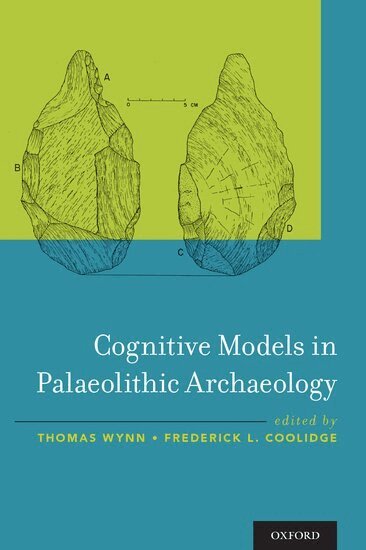
How did human thought evolve into the highly complex process it is today? In the field of evolutionary cognitive archaeology, cognitive science and archaeology intersect to provide a more complete and grounded picture of the mind. With the combination of cognitive theories and archaeological evidence, this burgeoning field is only beginning to tap into the potential for a better understanding of the development of specific cognitive abilities.Cognitive Models in Palaeolithic Archaeology explores hominin cognitive development by applying formal cognitive models to analyze prehistoric remains from the entire range of the Palaeolithic, from the earliest stone tools 3.3 million years ago to artistic developments that emerged 50,000 years ago. Several different cognitive models are presented, including expert cognition, information processing, material engagement theory, embodied/extended cognition, neuroaesthetics, visual resonance theory, theory of mind, and neuronal recycling. By examining archaeological remains, and thereby past activities and behavior, through the grounded lenses of these models, a mosaic pattern of human cognitive evolution emerges. This volume, authored by many leading authorities in the field of cognitive archaeology, will attract scholars and students of cognitive evolution and paleoanthropology, who will find a new understanding of hominin cognitive evolution and substantive conclusions about our hominin evolution as opportunities for further research.
611 kr
Skickas inom 5-8 vardagar
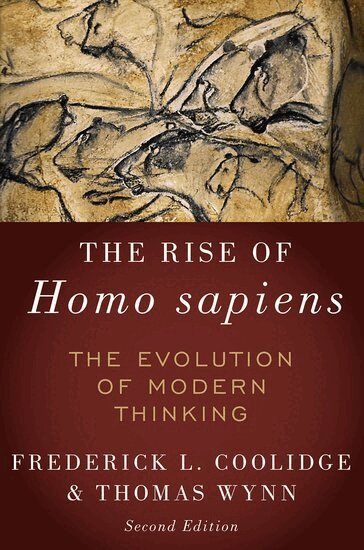
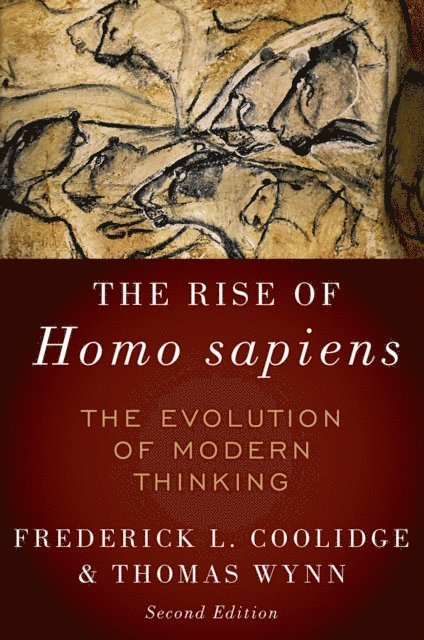
The Rise of Homo sapiens provides an unrivalled interdisciplinary introduction to the subject of hominin cognitive evolution that is appropriate for general audiences and students in psychology, archaeology, and anthropology.The book includes chapters on neural anatomy, working memory, evolutionary methods, and non-human primate cognition, but the bulk of the text reviews major developments in cognition over the span of hominin evolution from the ape-like cognition of Ardipithecus to the final developments that enabled the modern mind. The most provocative chapters of the first edition - the explicit discussion of the role of sleep in hominin evolution and the difference between Neandertal and modern human cognition - incorporate significant developments in both areas since the publication of the first edition. This revised edition updates the former text and adds greater emphasis to the growing fields of epigenetic inheritance, embodied cognition, and neuroaesthetics. The new edition provides greater emphasis on role and status of Homo heidelbergensis.
2 878 kr
Skickas inom 5-8 vardagar
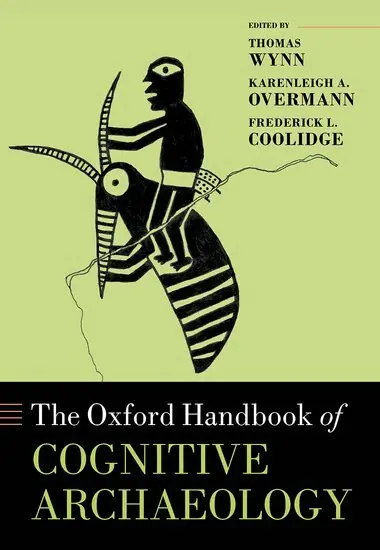
Cognitive Archaeology is a relatively young though fast growing discipline. The intellectual heart of cognitive archaeology is archaeology, the discipline that investigates the only direct evidence of the actions and decisions of prehistoric people. Its theories and methods are an eclectic mix of psychological, neuroscientific, paleoneurological, philosophical, anthropological, ethnographic, comparative, aesthetic, and experimental theories, methods, and models, united only by their focus on cognition. The Oxford Handbook of Cognitive Archaeology is a landmark publication, showcasing the theories, methods, and accomplishments of archaeologists who investigate the human mind, including its evolutionary development, its ideation (thoughts and beliefs), and its very nature-through material forms. The volume encompasses the wide spectrum of the discipline, showcasing contributions from more than 50 established and emerging scholars from Europe, Africa, Asia, Australia, and the Americas. Prominent among these are contributions that discuss the epistemological frameworks of both the evolutionary and ideational approaches and the leading theories that ground interpretations. Significantly, the majority of chapters deliver substantive contributions that analyze specific examples of material culture, from the oldest known stone tools to ceramic and rock art traditions of the recent millennium. These examples include the gamut of methods and techniques, including typology, replication studies, chaînes operatoires, neuroarchaeology, ethnographic comparison, and the direct historical approach. In addition, the book begins with retrospective essays by several of the pioneers of cognitive archaeology, presenting a broad range of state-of-the-art investigations into cognitive abilities, tackling thorny issues like the cognitive status of Neandertals, and concluding with speculative essays about the future of an archaeology of mind, and of the mind itself.
1 317 kr
Skickas inom 5-8 vardagar
Reading Drama in Eighteenth-Century France is the first book-length study of how plays were read in eighteenth-century France and, relatedly, of closet drama: excessive plays that cannot be performed within the playhouse's confines and which thus appeal to the reader's imagination. This period in France was characterized by 'théâtromanie', a craze that encompassed the page as well as the stage. The book's first part surveys the historical context in which plays were read and offers a theoretical model for understanding this practice. The eighteenth-century closet was valued as a privileged site of reading. Although scholars routinely present this room as a place of calm reflection, Thomas Wynn develops a framework (derived in part from queer theory) to argue that it fosters passionate and disruptive pleasures that elude the coercive normativity of the playhouse. To explore the multipositional experience of reading plays in this period, Wynn turns to the journal Mercure de France, whose extensive reviews help us to think about geographies of reading, coercion, and autonomy. The second part examines how dramatists exploited the critical, imaginative, and formal potential of the reading experience. It offers close analysis of several closet plays: comedies depicting the dispute between Jesuits and Jansenists in the 1730s; Hénault's historical drama François II, roi de France (1747); and erotic plays from the end of the period. The study concludes with an account of Rétif de La Bretonne's Le Drame de la vie (1793)--an extreme and arguably unsurpassed example of closet drama. Ultimately, this book shows, closet drama is not failed theatre but rather an indisputable part of the lively, passionate, and combative theatrical culture of eighteenth-century France.
270 kr
Skickas inom 5-8 vardagar
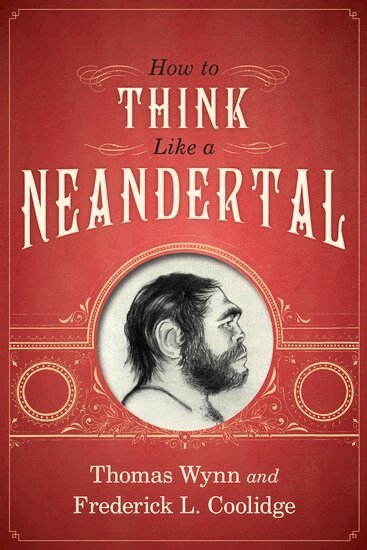
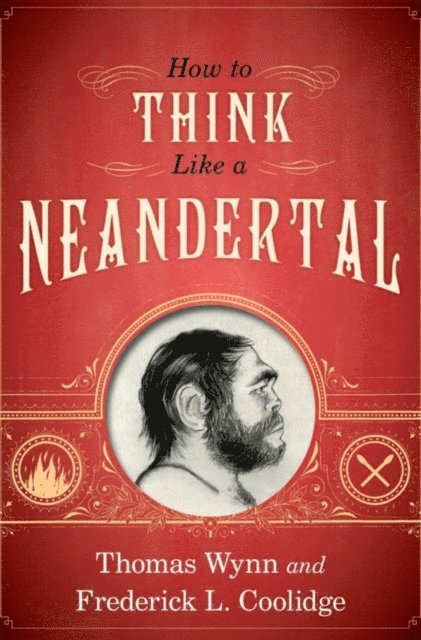
There have been many books, movies, and even TV commercials featuring Neandertals--some serious, some comical. But what was it really like to be a Neandertal? How were their lives similar to or different from ours?In How to Think Like a Neandertal, archaeologist Thomas Wynn and psychologist Frederick L. Coolidge team up to provide a brilliant account of the mental life of Neandertals, drawing on the most recent fossil and archaeological remains. Indeed, some Neandertal remains are not fossilized, allowing scientists to recover samples of their genes--one specimen had the gene for red hair and, more provocatively, all had a gene called FOXP2, which is thought to be related to speech. Given the differences between their faces and ours, their voices probably sounded a bit different, and the range of consonants and vowels they could generate might have been different. But they could talk, and they had a large (perhaps huge) vocabulary--words for places, routes, techniques, individuals, and emotions. Extensive archaeological remains of stone tools and living sites (and, yes, they did often live in caves) indicate that Neandertals relied on complex technical procedures and spent most of their lives in small family groups. The authors sift the evidence that Neandertals had a symbolic culture--looking at their treatment of corpses, the use of fire, and possible body coloring--and conclude that they probably did not have a sense of the supernatural. The book explores the brutal nature of their lives, especially in northwestern Europe, where men and women with spears hunted together for mammoths and wooly rhinoceroses. They were pain tolerant, very likely taciturn, and not easy to excite. Wynn and Coolidge offer here an eye-opening portrait of Neandertals, painting a remarkable picture of these long-vanished people and providing insight, as they go along, into our own minds and culture.
366 kr
Skickas inom 5-8 vardagar
There have been many books, movies, and even TV commercials featuring Neandertals--some serious, some comical. But what was it really like to be a Neandertal? How were their lives similar to or different from ours?In How to Think Like a Neandertal, archaeologist Thomas Wynn and psychologist Frederick L. Coolidge team up to provide a brilliant account of the mental life of Neandertals, drawing on the most recent fossil and archaeological remains. Indeed, some Neandertal remains are not fossilized, allowing scientists to recover samples of their genes--one specimen had the gene for red hair and, more provocatively, all had a gene called FOXP2, which is thought to be related to speech. Given the differences between their faces and ours, their voices probably sounded a bit different, and the range of consonants and vowels they could generate might have been different. But they could talk, and they had a large (perhaps huge) vocabulary--words for places, routes, techniques, individuals, and emotions. Extensive archaeological remains of stone tools and living sites (and, yes, they did often live in caves) indicate that Neandertals relied on complex technical procedures and spent most of their lives in small family groups. The authors sift the evidence that Neandertals had a symbolic culture--looking at their treatment of corpses, the use of fire, and possible body coloring--and conclude that they probably did not have a sense of the supernatural. The book explores the brutal nature of their lives, especially in northwestern Europe, where men and women with spears hunted together for mammoths and wooly rhinoceroses. They were pain tolerant, very likely taciturn, and not easy to excite. Wynn and Coolidge offer here an eye-opening portrait of Neandertals, painting a remarkable picture of these long-vanished people and providing insight, as they go along, into our own minds and culture.
733 kr
Skickas inom 10-15 vardagar
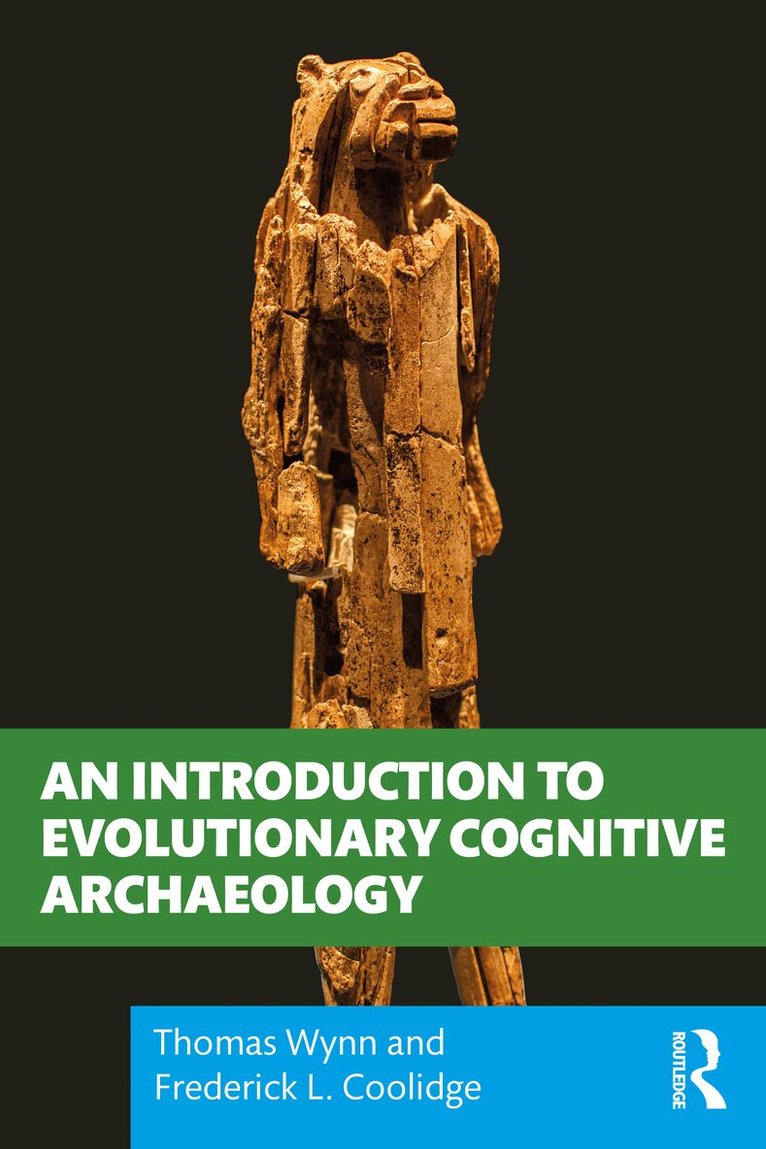
An Introduction to Evolutionary Cognitive Archaeology is the first concise introduction that lays out the epistemological foundations of evolutionary cognitive archaeology in a way that is accessible to students. The volume is divided into three sections. The first section situates cognitive archaeology in the pantheon of archaeological approaches and distinguishes between ideational cognitive archaeology and evolutionary cognitive archaeology. This is followed by a close look at the nature of cognitive archaeological inferences and concludes with brief summaries of the major methods of evolutionary cognitive archaeology. The second section of the book introduces the reader to a variety of cognitive phenomena that are accessible using the methods of cognitive archaeology: memory, technical cognition, spatial cognition, social cognition, art and aesthetics, and symbolism and language. The third section presents a brief outline of hominin cognitive evolution from the perspective of evolutionary cognitive archaeology. The authors divide the archaeological record into three major phases: The Bipedal Apes—3.3 million-1.7 million years ago; The Axe Age—1.7 million-300,000 years ago; and The Emergence of Modern Thinking—300,000–12,000 years ago.An Introduction to Evolutionary Cognitive Archaeology is an essential text for undergraduate students, graduate students, and scholars across the behavioral and social sciences interested in learning about cognitive archaeology, including psychologists, philosophers, anthropologists, and archaeologists.
2 150 kr
Skickas inom 10-15 vardagar
An Introduction to Evolutionary Cognitive Archaeology is the first concise introduction that lays out the epistemological foundations of evolutionary cognitive archaeology in a way that is accessible to students. The volume is divided into three sections. The first section situates cognitive archaeology in the pantheon of archaeological approaches and distinguishes between ideational cognitive archaeology and evolutionary cognitive archaeology. This is followed by a close look at the nature of cognitive archaeological inferences and concludes with brief summaries of the major methods of evolutionary cognitive archaeology. The second section of the book introduces the reader to a variety of cognitive phenomena that are accessible using the methods of cognitive archaeology: memory, technical cognition, spatial cognition, social cognition, art and aesthetics, and symbolism and language. The third section presents a brief outline of hominin cognitive evolution from the perspective of evolutionary cognitive archaeology. The authors divide the archaeological record into three major phases: The Bipedal Apes—3.3 million-1.7 million years ago; The Axe Age—1.7 million-300,000 years ago; and The Emergence of Modern Thinking—300,000–12,000 years ago.An Introduction to Evolutionary Cognitive Archaeology is an essential text for undergraduate students, graduate students, and scholars across the behavioral and social sciences interested in learning about cognitive archaeology, including psychologists, philosophers, anthropologists, and archaeologists.
385 kr
Skickas inom 7-10 vardagar
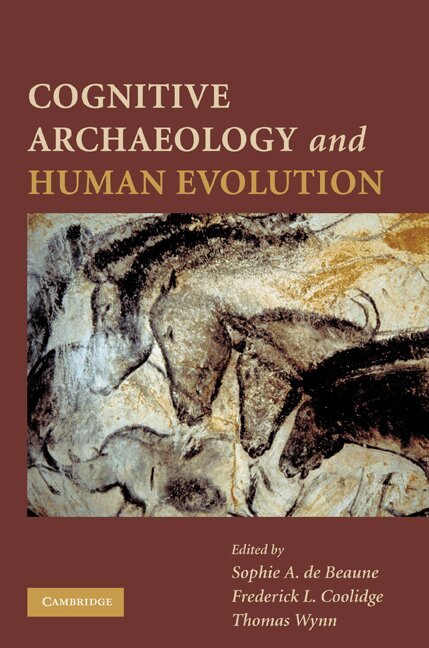
Cognitive Archaeology and Human Evolution presented new directions in the study of cognitive archaeology. Seeking to understand the conditions that led to the development of a variety of cognitive processes during evolution, it uses evidence from empirical studies and offers theoretical speculations about the evolution of modern thinking as well. The twelve essays, written by an international team of scholars, represent an eclectic array of interests, methods, and theories about evolutionary cognitive archaeology. Collectively, they consider whether the processes in the development of human cognition simply made a better use of anatomical and cerebral structures already in place at the beginning of hominization. They also consider the possibility of an active role of hominoids in their own development and query the impact of hominoid activity in the emergence of new cognitive abilities.
679 kr
Skickas inom 7-10 vardagar
Cognitive Archaeology and Human Evolution presented new directions in the study of cognitive archaeology. Seeking to understand the conditions that led to the development of a variety of cognitive processes during evolution, it uses evidence from empirical studies and offers theoretical speculations about the evolution of modern thinking as well. The twelve essays, written by an international team of scholars, represent an eclectic array of interests, methods, and theories about evolutionary cognitive archaeology. Collectively, they consider whether the processes in the development of human cognition simply made a better use of anatomical and cerebral structures already in place at the beginning of hominization. They also consider the possibility of an active role of hominoids in their own development and query the impact of hominoid activity in the emergence of new cognitive abilities.
1 771 kr
Skickas inom 7-10 vardagar
Sade’s rehabilitation as a major Enlightenment writer has hitherto not extended to a re-evaluation of his dramatic works. With a theoretical framework inspired by psychoanalysis and dramatic theory, and attentive to eighteenth-century theoretical debates, Thomas Wynn demonstrates the value of these neglected works. This is the first study to consider the nature and implications of Sade’s dramatic aesthetic, and to define the erotic quality of spectatorship in his experimental plays.Challenging the assumption that the gaze is sadistic, the author uses insights from film theory to argue that Sade adapts contemporary theatrical texts and practice to create an aesthetic distinct from that of his novels. Rather than replicate the style of such works as Les Cent vingt journées de Sodome, Sade’s drama anticipates a masochistic model, as theorised by Theodor Reik and Gilles Deleuze. This analysis of Sadean spectatorship takes a thematic rather than chronological or text-by-text approach. The author argues that Sade, as an atheist materialist, focuses on the structural elements of theatre to produce visual pleasure rather than moral improvement, and that he elaborates an insistently visual dramatic aesthetic, a mode analogous to the linguistic saturation of the novels’ tout dire.With reference to eighteenth-century obscene drama, theatre architecture and the history of visuality, the author explores the paradox that Sade’s theatre is meant not for the stage, but for the private imagination. His visionary theatre is an example of the late eighteenth-century sublime, an aesthetic of the ineffable and the unrepresentable which, in its emphasis on the survival of the demeaned individual, structurally resembles masochism.Without deforming his technique or strategy, the author shows that Sade’s voluptuous theatre – like his fiction – addresses an individual whose sovereignty in a godless world is intimately linked to the independent imagination. This book will be of interest to all those working in eighteenth-century drama and theory of spectatorship.
Œuvres complètes de Voltaire (Complete Works of Voltaire) 61B
Theatre 1766-1767
Inbunden, Franska, 2012
2 496 kr
Skickas inom 7-10 vardagar
1 771 kr
Skickas inom 7-10 vardagar
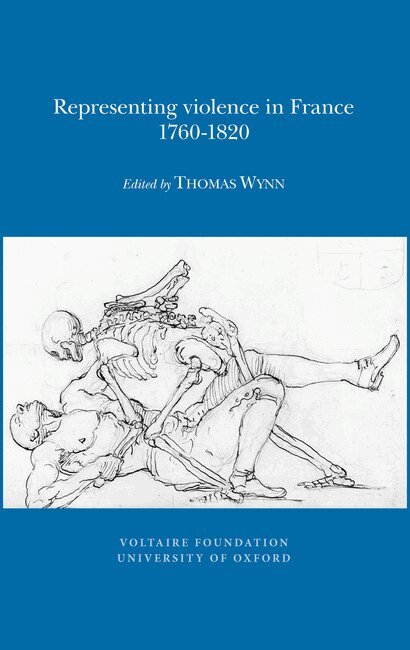
Violence was an inescapable part of people’s daily lives in eighteenth-century France. The Revolution in general and the Terror in particular were marked by intense outbursts of political violence, whilst the abuse of wives, children and servants was still rife in the home. But the representation of violence in its myriad forms remains aesthetically troublesome.Drawing on correspondence, pamphlets, novels and plays, authors analyse the portrayal of violence as a rational act, the basis of (re)written history, an expression of institutional power, and a challenge to morality. Contributions include explorations of:the use of the dream sequence in fiction to comprehend violence;how rhetoric can manipulate violent historical truth as documented by Burke in his Reflections on the Revolution in France;the political implications of commemorating the massacre at the Tuileries of 10 August 1792;how Sade’s graphic descriptions of violence placed the reader in a morally ambivalent position;the differing responses of individuals subjected to brutal incarceration at Vincennes and the Bastille;the constructive force of violence as a means of creating a sense of self.
Del 58 - Œuvres complètes de Voltaire (Complete Works of Voltaire)
Œuvres complètes de Voltaire (Complete Works of Voltaire) 58
Oeuvres de 1764
Inbunden, Franska, 2016
2 441 kr
Skickas inom 7-10 vardagar
Œuvres complètes de Voltaire (Complete Works of Voltaire) 20C
Micromegas and other texts (1738-1742)
Inbunden, Franska, 2017
2 289 kr
Skickas inom 7-10 vardagar
2 220 kr
Skickas inom 7-10 vardagar
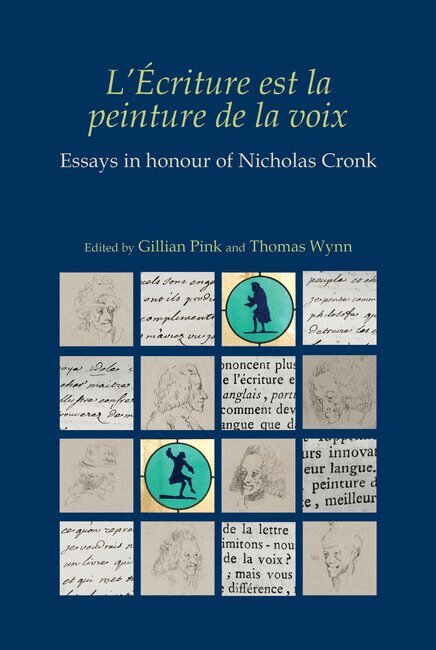
L’Écriture est la peinture de la voix honours and celebrates the inestimable contributions that Professor Nicholas Cronk has made to our understanding of the Enlightenment. As director of the University of Oxford’s Voltaire Foundation, he has played a decisive role in eighteenth-century studies. In particular he has shaped our knowledge of Voltaire as a writer, celebrity and era-defining figure whose influence has continued to be felt through the centuries. Comprising essays by a host of internationally eminent scholars, this volume is a fitting tribute to the esteem and affection in which Nicholas Cronk is held as a colleague, teacher and mentor. These sixteen essays reflect his varied research interests, exploring questions central to the eighteenth century, such as the writing process, justice, revolution, as well as the legacy of the Enlightenment, and focussing on the central figure in Nicholas Cronk’s research: Voltaire. In sections devoted to Voltaire’s writing practices, to his involvement in political, literary and religious polemics, and finally to his legacy, the essays build on Nicholas Cronk’s scholarship and editorial achievements, opening up a new chapter in research on Voltaire.This volume is complemented by an online collection of essays which speak to other topics central to Nicholas Cronk’s interests, such as authorial identities, correspondence and aesthetics. The collection is published Open Access and is available to read on Modern Languages Open: https://modernlanguagesopen.org/collections/lecriture-nicholas-cronk
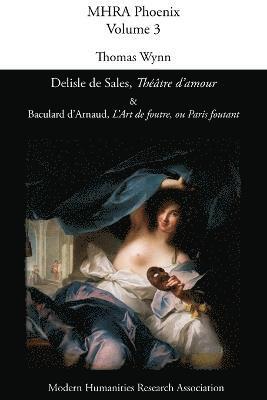
Delisle De Sales,Theatre D'amour & Baculard D'arnaud, L'art De Foutre, Ou Paris Foutant
Häftad, Franska, 2011
318 kr
Skickas inom 5-8 vardagar